
Feta in Filo Pastry with Honey: Crispy Baked Parcels
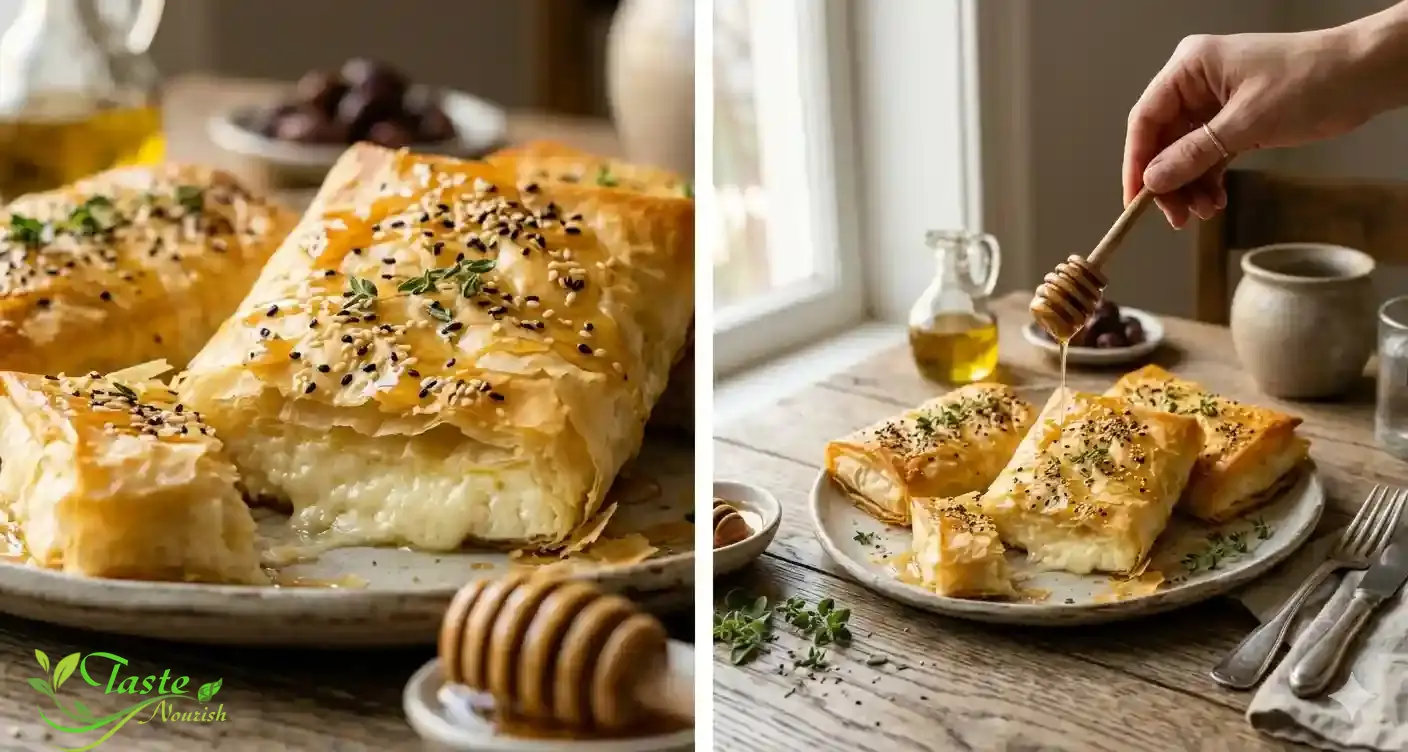
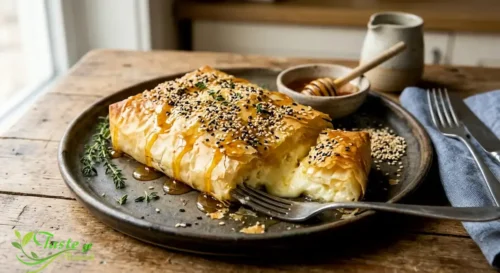
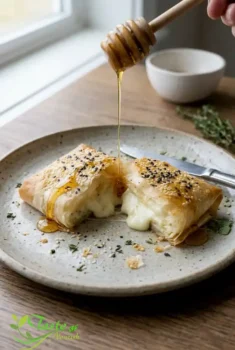
Feta in filo pastry is a block of salty, creamy cheese inside a crisp shell. The outside crackles under a fork, and the inside turns soft and spoonable without running all over the pan. It takes about 30 minutes of hands-on work and a handful of ingredients. It works as an appetizer, a light lunch with salad, or part of a mezze spread.
Two decisions shape the result: choosing feta that holds its shape, and keeping it dry. This version bakes slabs cut from a whole block, each wrapped in three buttered sheets of filo. The honey goes on after baking, so the sugar never scorches.
Quick Answer: How Do You Bake Feta in Filo Pastry?
Feta in filo pastry is a block of feta cut into slabs, wrapped in three brushed layers of filo, and baked at 400°F for 18 to 22 minutes until deeply golden and crisp. Finish with honey and black pepper while hot. Pat the cheese dry first so the pastry stays crisp rather than steaming.
Recipe at a Glance
| Detail | Information |
|---|---|
| Recipe type | Appetizer, light lunch, or mezze side dish |
| Prep time | 30 minutes (includes a 10-minute chill) |
| Cook time | 18 to 22 minutes |
| Total time | About 50 minutes |
| Yield | 4 parcels (4 appetizer servings, or 2 light lunches) |
| Difficulty | Easy to moderate |
Key Takeaways
- Feta in filo pastry needs a pasteurized block of feta packed in brine, not crumbles. Rinse it briefly and dry it well.
- Three sheets of filo per parcel, each brushed with fat, give a crisp shell that is still sturdy enough to hold a hot, softened slab of cheese.
- Bake at 400°F and judge doneness by color and sound, not just the clock.
- Add the honey after baking. Honey inside the parcel seeps through the seams and scorches.
- Feta is a high-sodium cheese, so keep the sides fresh and unsalted.
- Freeze the parcels unbaked, not baked.
What Makes This Feta in Filo Pastry Different
Most feta-and-filo recipes mix crumbled cheese with eggs, herbs, or spinach, then fold it into triangles or a pie. This one keeps the cheese whole. A single slab means one clear flavor, and the interior turns custardy instead of dense. The method is also simpler than triangle folding, because each parcel is just a rolled rectangle.
Feta softens and turns creamy in the oven, but it does not melt into a flowing pool the way mozzarella does. That is why the slab format works. The cheese stays put as long as the seams are sealed.
Ingredients for Feta in Filo Pastry
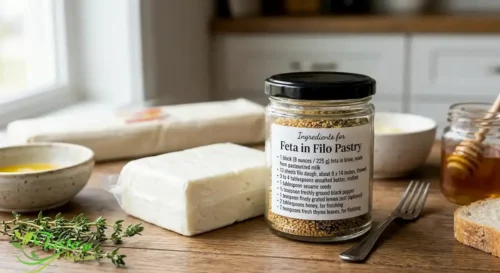
- 1 block (8 ounces / 225 g) feta in brine, made from pasteurized milk
- 12 sheets filo dough, about 9 x 14 inches, thawed
- 3 to 4 tablespoons unsalted butter, melted
- 1 tablespoon sesame seeds
- ½ teaspoon freshly ground black pepper
- 1 teaspoon finely grated lemon zest (optional)
- 2 tablespoons honey, for finishing
- 2 teaspoons fresh thyme leaves, for finishing
Ingredient Notes
Buy feta as a block packed in brine. Crumbled feta cannot be cut into clean slabs, and it crumbles out of the wrapper. The brined block is also creamier. Check the label for pasteurized milk. The CDC advises buying soft cheeses only when the label says pasteurized, especially for people at higher risk from Listeria, such as those who are pregnant.
Filo sheets come in two common sizes. If yours measure about 14 x 18 inches, cut each sheet in half crosswise to get roughly 9 x 14 inches. Whatever the size, you need 12 usable pieces.
Butter browns more deeply and tastes richer. Olive oil gives a lighter, crisper, more Greek-style shell.
Substitutions
- Olive oil for butter: a true equivalent for crispness, with a more savory flavor and a slightly paler color.
- Dried oregano for fresh thyme: use ½ teaspoon and add it to the cheese before wrapping. Dried oregano on top of the pastry can taste bitter once it browns.
- Maple syrup for honey: works well, though it tastes less floral. This is a flavor trade-off.
- Puff pastry for filo: not a substitute. It bakes up thick and bready, and the dish becomes a different recipe.
How to Make Feta in Filo Pastry
1. Thaw the filo. Leave it in its package in the refrigerator overnight, then set it on the counter for about 30 minutes before you start. Filo that is still cold tears when you unroll it.
2. Heat the oven. Set the rack in the middle and preheat to 400°F. Line a rimmed baking sheet with parchment.
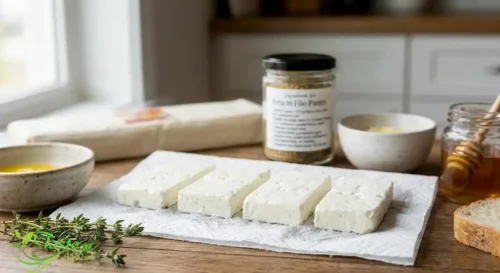
3. Prepare the feta. Drain the block and rinse it briefly under cold water. Cut it into 4 slabs about ¾ inch thick. Pat each slab dry with paper towels and let them sit on fresh towels for 10 minutes. Season both sides with the pepper and lemon zest.
4. Set up your station. Unroll the filo and cut the sheets to size if needed. Cover the stack with a slightly damp, clean kitchen towel. Melt the butter and keep a pastry brush nearby.
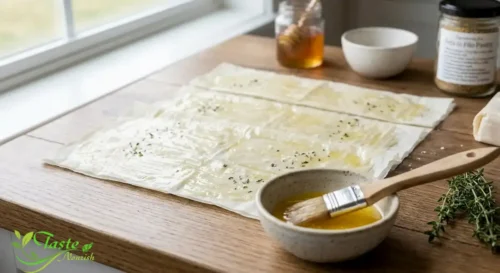
5. Build each stack. Place one sheet with a short edge facing you and brush it lightly with butter from edge to edge. Add a second sheet and brush again, then a third sheet, brushed lightly. The sheets should look glossy, not wet.
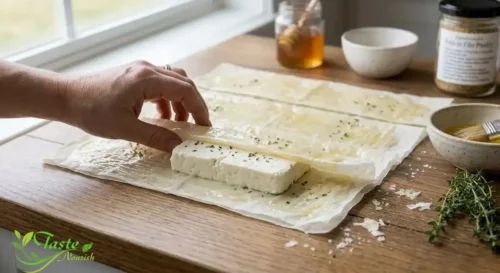
6. Wrap the cheese. Set a slab about 1½ inches up from the short edge, centered. Fold that edge over the cheese, fold in both sides, and roll up toward the far edge into a tight rectangle. Brush the seam with butter to seal it. Repeat with the remaining slabs.
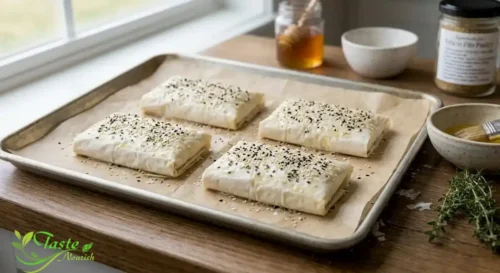
7. Chill and top. Set the parcels seam-side down on the baking sheet, about 2 inches apart. Brush the tops with butter and sprinkle with sesame seeds. Refrigerate for 10 minutes while the oven finishes heating. Cold butter sets the layers so they hold their shape.
8. Bake. Bake for 18 to 22 minutes, until the parcels are deep golden brown and the layers look blistered and shatter-crisp. Gently press the side of one with a spatula. The cheese should give under the pastry without leaking.
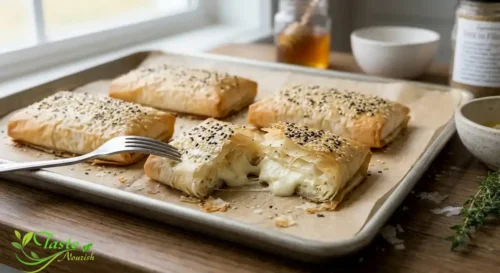
9. Finish. Let the parcels rest for 3 minutes so the center is not scalding. Drizzle with honey and scatter the thyme over the top.
Oven strength varies. A hot oven with a dark pan can brown the bottoms in 16 to 17 minutes, while a lighter pan may need the full 22. Check the underside of one parcel at the 16-minute mark.
Technique Notes: Choosing the Feta and Handling the Filo
Why feta in brine matters
Brined block feta has a higher moisture content than crumbled feta, which stays creamy inside the pastry. That same moisture is also the main threat to the bottom layer. Rinsing removes surface brine, and drying removes the water. If you skip it, the base of the parcel can steam and turn soft.
Keeping filo workable
Thin filo dries in minutes once it is exposed to air, which is when it cracks and flakes. Work with one stack at a time, and keep the rest under the damp towel. If a sheet tears slightly, it is fine. Layer it into the stack and brush as usual, since the other two sheets cover the gap.
Why three sheets
Two sheets can break at the seam and let the cheese leak. Four or more sheets bake into a thick, doughy edge. Three brushed sheets give a crisp shell that is still sturdy.
From My Kitchen
I recommend rinsing the block of feta briefly and drying it on paper towels, because a drier surface helps the bottom layer of filo crisp instead of steaming. I also recommend keeping the honey outside the parcel. When it is sealed inside, it tends to seep through the seams and scorch on the pan. For the cleanest slices, cut the block while it is still cold from the refrigerator.
Common Problems and How to Fix Them
| Problem | Why it happens | Fix |
|---|---|---|
| Cheese leaks out during baking | The seam was loosely folded or not sealed, so the softening cheese found a gap. | Roll tightly, brush the seam with butter, and bake seam-side down. |
| Soggy bottom | Wet cheese released moisture, or butter pooled under the parcel. | Dry the feta well, use parchment, and brush the filo evenly rather than heavily. |
| Pale, leathery pastry | Too little fat between layers, or an oven that runs cool. | Brush every sheet and confirm the oven temperature with an oven thermometer. |
| Cracked, flaky filo while wrapping | The sheets dried out while exposed to air. | Keep the stack covered with a damp towel and wrap one parcel at a time. |
| Too salty | Brined feta can be very salty, depending on the brand. | Rinse the block, and serve with unsalted sides such as plain greens or fruit. |
Recipe Variations
- Hot honey: warm the honey for 20 seconds in the microwave with a pinch of red pepper flakes or Aleppo pepper, then drizzle over the baked parcels.
- Herb and lemon: press chopped fresh dill or mint onto the feta slabs with the lemon zest before wrapping.
- Nutty finish: scatter toasted, chopped pistachios or walnuts over the honey after baking. Adding them before baking would let them burn.
Serving Suggestions
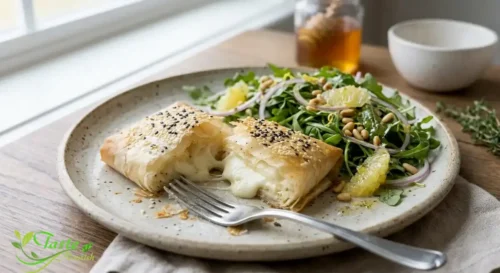
Serve the parcels warm, since filo softens as it sits. An arugula salad with lemon and olive oil balances the richness. Sliced cucumbers and tomatoes, olives, or roasted red peppers work well alongside, as do fresh figs or grapes if you like sweet and salty together. For a drink, try a dry white wine such as Assyrtiko or sauvignon blanc, or sparkling water with lemon.
Nutrition Information
These values are approximate and based on one parcel, assuming four servings and the ingredients above. Brands vary, so use them as an estimate rather than an exact count.
| Per parcel (estimate) | Amount |
|---|---|
| Calories | About 360 |
| Protein | About 11 g |
| Fat | About 22 g |
| Carbohydrates | About 33 g |
| Sodium | About 650 mg |
Feta is a salty cheese. USDA FoodData Central’s entry for feta lists roughly 265 calories and more than 900 milligrams of sodium per 100 grams. The FDA notes that the Daily Value for sodium is less than 2,300 milligrams per day, so a single parcel can account for roughly a quarter of that. If you are watching your sodium, rinse the cheese well and serve one parcel per person with plenty of vegetables.
Storing, Freezing, and Reheating Feta in Filo Pastry
Refrigerating leftovers
Baked parcels are best eaten right away, but leftovers keep. USDA’s Food Safety and Inspection Service says to refrigerate leftovers within two hours and use them within three to four days. Store them in a shallow airtight container. Expect the pastry to soften overnight.
Reheating
Reheat on a baking sheet in a 350°F oven for 10 to 12 minutes, until hot all the way through and the pastry has crisped again. The same FSIS guidance says leftovers should reach 165°F, so check the center with a food thermometer. A microwave is safe but will leave the filo soft and chewy.
Freezing the unbaked parcels
Freeze the parcels before baking rather than after. Wrap them as directed, skip the chill and sesame seeds, and freeze on a tray until solid, then transfer to a freezer bag. Bake straight from frozen at 400°F, adding roughly 8 to 12 minutes, and add the sesame seeds before they go in. FSIS notes that food kept constantly at 0°F stays safe, and storage times are about quality. For the best texture, I would use frozen parcels within about two months. Baked parcels do not freeze well, because the filo turns soggy on thawing.
Make-ahead tips
You can wrap the parcels up to 4 hours ahead. Cover them loosely and keep them on the parchment-lined sheet in the refrigerator, then brush with butter and add the sesame seeds just before baking. For longer than that, freeze them.
Feta in Filo Pastry with Honey Recipe FAQs
Is filo the same as phyllo?
Yes. Both spellings refer to the same paper-thin pastry dough, and packages may use either one.
Does feta melt in the oven?
It softens and turns creamy, but it does not flow like mozzarella. That is why a slab holds its shape inside the filo, as long as the seams are sealed.
Can I use crumbled feta?
Not for this recipe. Crumbles cannot be wrapped into a clean slab and will spill out. If you only have crumbled feta, press it into a firm cake with a little olive oil and chill it first, though the texture will be less creamy.
Is this safe to eat during pregnancy?
The label is the important detail. Choose feta made from pasteurized milk, as the CDC advises for soft cheeses. Since individual guidance can differ, check with your healthcare provider about eating cooked soft cheese.
How do I make it less salty?
Rinse the block under cold water, soak it in cold water for about 15 minutes if your brand is especially salty, and then pat it very dry. Serve it with unsalted sides to balance the cheese.
Can I use butter and olive oil together?
Yes. Brushing the inner layers with olive oil and the outer sheet with butter gives you some of the browning and flavor of each. Use the same total amount, about 3 to 4 tablespoons.
Feta in Filo Pastry with Honey
4
servings30
minutes20
minutes360
kcalCrisp, golden parcels of baked feta wrapped in three layers of buttered filo, finished with honey and thyme.
Ingredients
1 block (8 ounces / 225 g) feta in brine, made from pasteurized milk
12 sheets filo dough, about 9 x 14 inches, thawed
3 to 4 tablespoons unsalted butter, melted
1 tablespoon sesame seeds
½ teaspoon freshly ground black pepper
1 teaspoon finely grated lemon zest (optional)
2 tablespoons honey, for finishing
2 teaspoons fresh thyme leaves, for finishing
Directions
- Leave the filo in its package in the refrigerator overnight, then set it on the counter for about 30 minutes before you start.
- Set the rack in the middle and preheat to 400°F. Line a rimmed baking sheet with parchment.
- Drain the block and rinse it briefly under cold water. Cut it into 4 slabs about ¾ inch thick. Pat each slab dry with paper towels and let them sit on fresh towels for 10 minutes. Season both sides with the pepper and lemon zest.
- Unroll the filo and cut the sheets to size if needed. Cover the stack with a slightly damp, clean kitchen towel. Melt the butter and keep a pastry brush nearby.
- Place one sheet with a short edge facing you and brush it lightly with butter from edge to edge. Add a second sheet and brush again, then a third sheet, brushed lightly.
- Set a slab about 1½ inches up from the short edge, centered. Fold that edge over the cheese, fold in both sides, and roll up toward the far edge into a tight rectangle. Brush the seam with butter to seal it. Repeat with the remaining slabs.
- Set the parcels seam-side down on the baking sheet, about 2 inches apart. Brush the tops with butter and sprinkle with sesame seeds. Refrigerate for 10 minutes while the oven finishes heating.
- Bake for 18 to 22 minutes, until the parcels are deep golden brown and the layers look blistered and shatter-crisp. Gently press the side of one with a spatula. The cheese should give under the pastry without leaking.
- Let the parcels rest for 3 minutes so the center is not scalding. Drizzle with honey and scatter the thyme over the top.
Conclusion
Feta in filo pastry is simple to make once the cheese is dry and the filo stays covered. Three brushed sheets, a tight seam, and a honey finish are enough to turn a block of cheese into something that feels like a restaurant starter. Serve the parcels within ten minutes of leaving the oven, while the shell is still crackling.
References
- Cheese, feta. U.S. Department of Agriculture, FoodData Central. https://fdc.nal.usda.gov/fdc-app.html#/food-details/173420/nutrients
- Sodium in Your Diet: Use the Nutrition Facts Label and Reduce Your Intake. U.S. Food and Drug Administration. https://www.fda.gov/food/nutrition-education-resources-materials/sodium-your-diet
- Check the Cheese, Avoid Listeria. Centers for Disease Control and Prevention. https://stacks.cdc.gov/view/cdc/37331
- Leftovers and Food Safety. U.S. Department of Agriculture, Food Safety and Inspection Service. https://www.fsis.usda.gov/food-safety/safe-food-handling-and-preparation/food-safety-basics/leftovers-and-food-safety
- Freezing and Food Safety. U.S. Department of Agriculture, Food Safety and Inspection Service. https://www.fsis.usda.gov/food-safety/safe-food-handling-and-preparation/food-safety-basics/freezing-and-food-safety