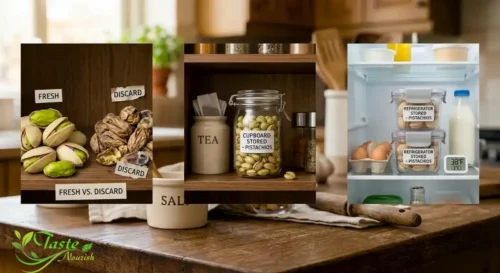
Pistachios are too good, and too pricey, to lose to stale, soggy, or off-tasting nuts. Knowing how to store pistachios comes down to a few simple habits: a truly airtight container, a cool and dry spot, and the right choice between cupboard, fridge, and freezer. This guide shows you exactly what to do, how to spot nuts that have turned, and how to bring soft pistachios back to life.
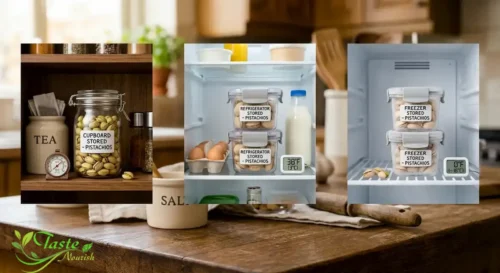
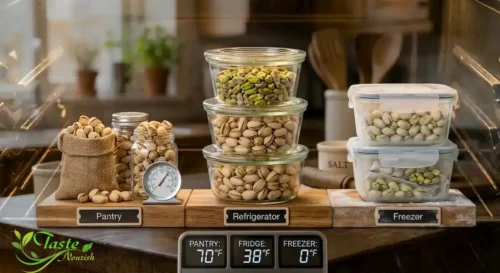
How to store pistachios depends on how quickly you will eat them. For a few weeks to a few months, use an airtight container in a cool, dark, dry cupboard. For several months up to about a year, keep the sealed container in the refrigerator. For a year or longer, freeze them in a rigid airtight container or a freezer bag with the air pressed out. These times describe how long pistachios stay at their best quality, not a point at which they suddenly become unsafe.
What Makes Stored Pistachios Go Stale
Pistachios are rich in fat, and fat reacts with oxygen over time, especially when it is warm. The result is rancidity: a flat, bitter, or paint-like taste that gets stronger the longer the nuts sit. Light and heat speed the process up, which is why a bag on a sunny counter or above the stove ages faster than one in a back cupboard.
UC Davis Postharvest Technology Center’s pistachio postharvest handling guidance recommends keeping stored pistachios from exceeding 68°F (20°C) to prevent the lipid oxidation that causes rancidity, and lists 32–50°F (0–10°C) as the optimum range. The same page notes that the lower the temperature, the longer the storage life. A typical refrigerator sits comfortably inside that range, while a warm kitchen often does not.
Humidity matters too, but in two directions. Too much moisture makes pistachios soft and chewy and encourages mold, and too little makes them brittle. A sealed container handles both problems by keeping the nuts at the moisture level they came with. The same fat-oxidation logic explains why bottled oils dull over time, and our olive oil storage guide shows how light, heat, and container choice affect a fat-rich pantry staple.
How to Store Pistachios Step by Step
1. Start with dry nuts. If the pistachios feel damp or soft straight from the package, do not seal them away yet. Spread them on a tray and let them air-dry for a few hours first, because trapped moisture is the main route to mold.
2. Move them out of the bag. Retail bags, even resealable ones, let air in over time. Transfer the pistachios to a container with a tight seal.
3. Fill the container so there is little empty space. Less air above the nuts means less oxygen contact. If you have eaten half the bag, switch to a smaller container.
4. Choose the right location. Pick a cool, dark cupboard away from the stove, dishwasher, and sunny windows for short-term storage, or the refrigerator or freezer for longer storage.
5. Label the container. Write the date you opened or froze them. Pistachios look the same at three months and nine months, so a date saves guessing.
6. Reseal quickly after each use. Leaving a container open on the counter while you snack lets in humid air, which is how crisp nuts end up soft.
How to Store Pistachios in the Pantry, Fridge, or Freezer
Pantry or Cupboard
A cupboard works well for pistachios you plan to finish in a few weeks. It works best in a cool kitchen. If your home regularly runs warm, especially in summer, the nuts will lose quality faster, and the refrigerator is the better choice.
Refrigerator
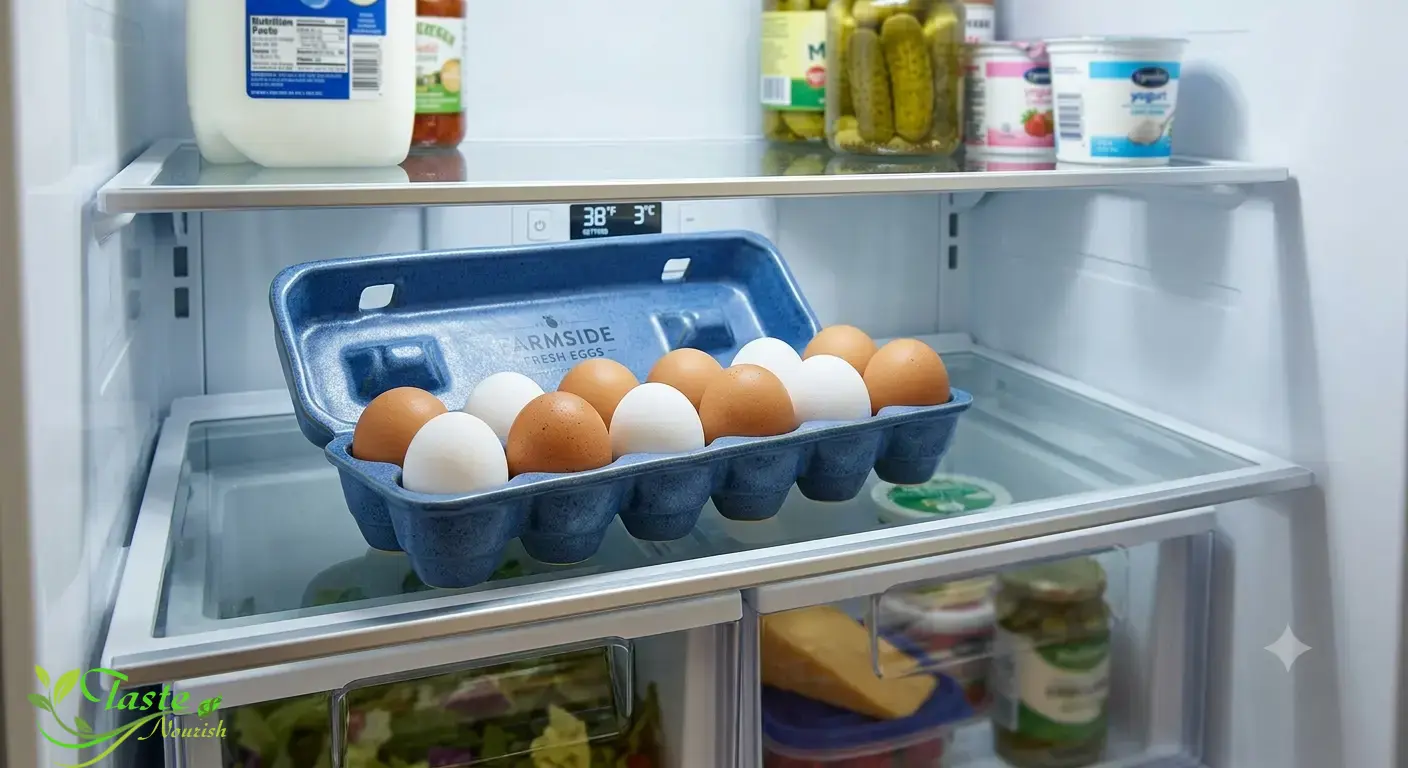
The fridge is the best everyday option for most households because it keeps pistachios cool without freezing them. The only real risk is odor: nuts absorb smells from onions, leftovers, and cut produce, so the container must be truly airtight.
Freezer
The freezer is the right place for large bags, bulk purchases, and anything you will not touch for many months. UC Davis notes that pistachios can be stored frozen for a year or longer and remain in good condition.
Pistachio Shelf Life by Storage Method
Published shelf-life estimates for pistachios vary quite a bit between sources, because storage temperature, packaging, and whether the nuts are raw or roasted all change the result. Treat these as practical quality windows, not safety deadlines.
Where
Best Quality Window (Approximate)
Best For
Cool, dark cupboard
A few weeks up to about 3–6 months; cooler is longer
Everyday snacking from a small container
Refrigerator
About 6–12 months
Warm kitchens and larger quantities
Freezer
A year or longer
Bulk bags and long-term stock
How to Freeze Pistachios Without Freezer Burn
Pistachios are low in moisture, so they freeze well and do not turn into a solid block. They can be frozen in the shell or shelled, raw or roasted.
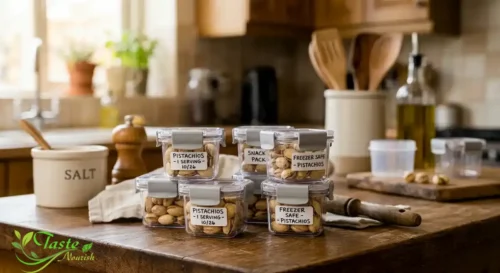
Divide them into portions you will use in one go, such as a cup or two, so you never have to thaw the whole batch.
Pack each portion into a rigid, airtight container with a tight lid. A freezer bag also works if you press out as much air as possible. Rigid containers have the edge because they prevent crushing and block freezer odors more reliably.
Label with the date and freeze.
When you are ready to use them, let the sealed container come to room temperature before opening it. Opening a cold container lets humid air condense on the nuts, and they turn soft.
Try not to freeze and thaw the same batch repeatedly. Each cycle gives condensation another chance to form, which is the reason for small portions in the first place.
How to Store Shelled Pistachios Versus In-Shell Pistachios
Many sources claim shelled pistachios go stale faster than in-shell ones, but the difference is smaller than with some other nuts. Pistachio shells are naturally split open, so they provide only partial protection from air. In-shell pistachios may hold their flavor a little longer, but airtight packaging matters more than whether the shell is on.
To store shelled pistachios, use a smaller container, because the exposed kernels have more surface in contact with air and absorb odors easily. In-shell pistachios take more room, so a large lidded tub or a big freezer bag works better. Keep a separate bowl for the empty shells while you snack, since shells left in a container trap moisture.
Roasted and salted pistachios often taste best when eaten sooner, but the same rules apply: airtight, cool, dry. Chopped or ground pistachios have far more exposed surface than whole nuts, so they stale faster and belong in the fridge or freezer from the start. The reasoning is the same as for ground flaxseed, and our guide to grinding flax seeds at home explains why fresh-ground meal and small batches keep better.
Best Containers for Storing Pistachios
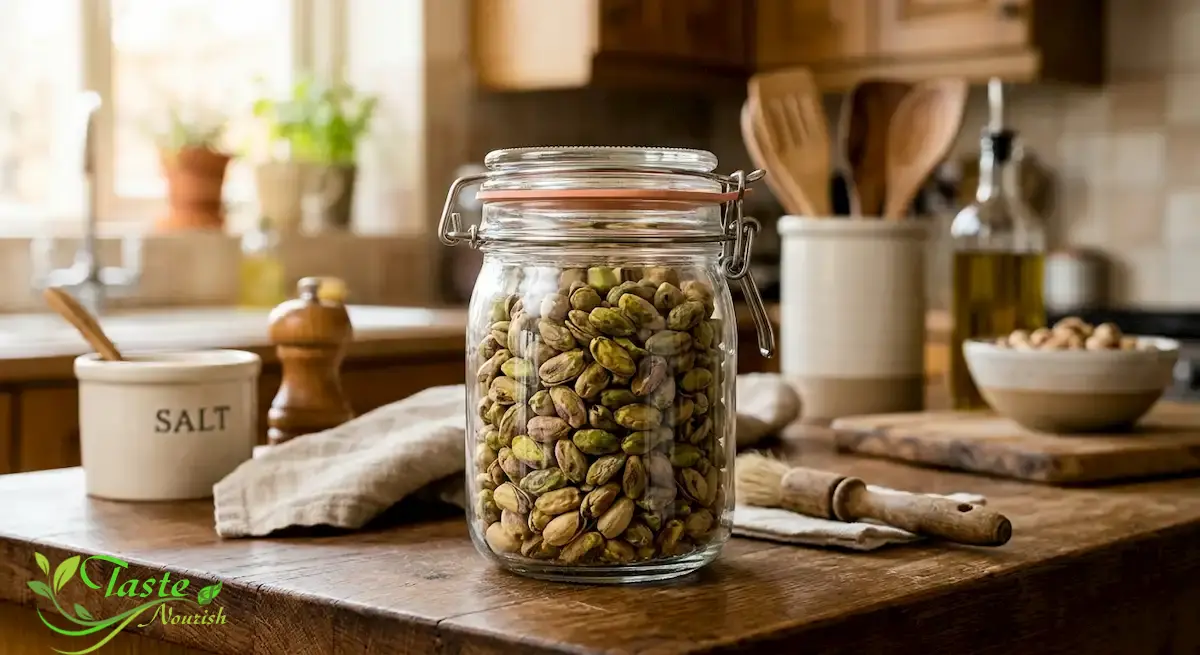
Glass jars with gasket lids: They seal well, do not hold odors, and let you see how much is left. Keep them out of direct light.
Rigid plastic containers with locking lids: These are lightweight, stack in the freezer, and protect in-shell nuts from crushing.
Freezer bags: Good for freezer storage if you squeeze out the air, but less protective against crushing.
Vacuum-sealed bags: The best choice for long freezer storage, because removing air slows rancidity. Seal shelled nuts gently so they do not shatter.
The original bag, clipped shut, is the weakest option. Use it only as a short-term holder before you transfer the nuts.
How to Tell If Pistachios Have Gone Bad
Most spoiled pistachios announce themselves before you eat them. Check these signs before using nuts that have been stored for a long time:
Smell: Fresh pistachios smell mildly sweet and nutty. A sharp, sour, or paint-like odor means the fats have turned rancid.
Mold or discoloration: Fuzzy spots, dark patches, or an unusual color are reasons to discard the whole batch, not just the affected nuts.
Shriveled kernels: Dried-out, shrunken nuts are past their best.
Pests: Webbing, tiny holes, or larvae in the container mean pantry insects have found them.
The National Cancer Institute’s overview of aflatoxins and how to reduce exposure advises discarding nuts that look moldy, discolored, or shriveled, because some molds that grow on nuts can produce toxins. Do not taste a questionable pistachio to decide. If the smell is off or anything looks wrong, throw the batch out.
Keep quality and safety separate in your mind. A best-by date is the manufacturer’s estimate of peak flavor, and nuts that are a little stale are disappointing rather than dangerous. Visible mold is a different matter, and it means the nuts should go in the trash.
How to Revive Soft Pistachios
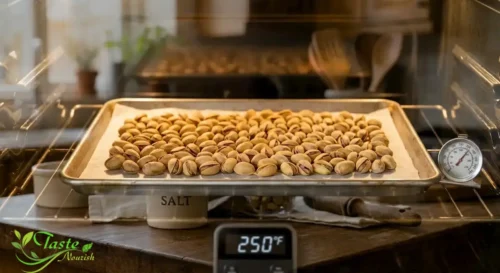
If pistachios have simply gone soft or chewy from humidity, and they smell normal, you can restore much of the crunch in the oven. Spread them in a single layer on a baking sheet and warm them at 200°F (93°C) for about 10 to 15 minutes. Let them cool completely before sealing them in a container, since warm nuts release steam that makes them soft again. For the full oven method and how to judge doneness, see our guide to roasting pistachios at home.
This only fixes moisture. Toasting will not rescue rancid or moldy pistachios.
Common Mistakes When Storing Pistachios
Leaving the bag on the counter. Light, warmth, and air exposure add up. Move them to a container and a cupboard.
Using a loosely closed container. A lid that does not seal tightly lets in humid air and odors. Choose a gasket jar or locking lid.
Storing them next to the stove or dishwasher. Repeated heat accelerates rancidity even in a cupboard. Pick a cooler spot.
Opening a cold container immediately. Condensation forms on cold nuts. Let the sealed container warm to room temperature first.
Freezing one large lump of nuts. Thawing the whole batch each time you want a handful repeats the condensation problem. Freeze small portions.
Storing them near strong-smelling foods in the fridge. Pistachios take on odors. Use a truly airtight container and keep it away from onions and leftovers.
Mixing new and old nuts. Topping up a jar with fresh pistachios hides how old the bottom layer is. Finish a batch before starting another.
Practical Tips for Keeping Pistachios Crisp
Buy the size you will realistically finish. A big warehouse bag is a bargain only if you freeze part of it right away.
Keep a small snacking jar in the cupboard and the rest of the supply in the freezer, refilling the jar every week or two.
Press a layer of parchment or wax paper onto the surface of nuts in a half-empty jar to reduce air contact.
Store chopped pistachios for baking in the freezer, and use them straight from frozen in cookies, cakes, and toppings.
Use a marker to write the date directly on the lid or a piece of tape, not the bag, so the label survives the freezer.
How to Store Pistachios FAQs
Do pistachios need to be refrigerated?
Not always. A sealed container in a cool, dark cupboard is fine for a few weeks. Refrigerate them if your kitchen is warm, if you buy in bulk, or if you want them to keep their crunch for several months.
Can I leave pistachios in the original bag?
Only for a short time. Most bags are not truly airtight once opened, even with a zipper, so transferring them to a sealed container protects flavor and crunch much better.
Why have my pistachios gone soft?
They have absorbed moisture from the air, usually because the container was not sealed or was opened while cold. If they smell normal and show no mold, you can crisp them in a low oven.
Do roasted or salted pistachios last as long as raw ones?
Roasted and salted pistachios often hold their best flavor for a shorter time than raw ones, though the difference depends on the brand and storage. Store them the same way, airtight and cool, and plan to eat them sooner.
Should I freeze pistachios in the shell or shelled?
Either works. In-shell nuts take more room but are less likely to crush, while shelled nuts pack tightly and are ready to use. Whichever you choose, divide them into small portions in airtight containers.
Do pistachios attract pantry bugs?
They can, especially in paper or thin plastic bags. Airtight glass or rigid plastic containers keep pantry insects out, and the freezer stops any activity if you suspect an infestation in a new bag.
Are pistachios safe to eat after the date on the bag?
The date reflects peak quality, not safety. Check the smell and appearance, and discard the nuts if there is any mold, discoloration, or an off odor, regardless of the date.
Key Takeaways: How to Store Pistachios
How to store pistachios comes down to controlling air, heat, light, and moisture, and an airtight container handles most of that.
A cool, dark cupboard suits short-term use, the refrigerator suits months, and the freezer suits a year or longer.
Freeze in small portions and let the sealed container warm to room temperature before opening it.
Discard pistachios that smell like paint or old oil, or that show mold, discoloration, or insects, and never taste questionable nuts to check.
Soft but fresh-smelling pistachios can be re-crisped in a 200°F (93°C) oven for 10 to 15 minutes.
Conclusion
Knowing how to store pistachios mostly means choosing the right place for the time you need, then sealing them well. Keep a small supply handy in the cupboard, move the rest to the fridge or freezer, and label everything with a date. Do that, and every handful tastes close to the day you bought it.
**Hanan Abo Samra** shares practical cooking insights, delicious recipes, and evidence-based nutrition information. Drawing on more than 20 years of hands-on cooking experience, she creates helpful food content that combines everyday cooking knowledge with information from reliable scientific sources. Her goal is to help readers better understand the foods they eat, explore their nutritional benefits, and prepare delicious meals with confidence.