
Turkey Meatball Appetizer Recipe (Easy & Freezer-Friendly)
Quick Answer: Turkey Meatball Appetizer
To make a turkey meatball appetizer, soak panko breadcrumbs in milk to form a panade, mix it with ground turkey, egg, Parmesan, garlic, and herbs, then shape into 1-inch balls and bake at 400°F for 18 to 20 minutes, until they reach an internal temperature of 165°F. The panade is what keeps lean ground turkey from drying out in the oven. Serve warm with toothpicks and a dipping sauce such as marinara, sweet chili sauce, or garlic-Parmesan cream.
Key Takeaways
- A milk-and-breadcrumb panade is the single most important step in this turkey meatball appetizer — it prevents the dry, dense texture lean ground turkey is prone to.
- Use 93% lean ground turkey rather than 99% fat-free turkey; the extra fat keeps the meatballs moist and flavorful.
- Mix the meat just until combined. Overworking the mixture activates proteins in the meat that make meatballs bouncy and tough.
- Bake at 400°F and confirm doneness with a food thermometer at 165°F rather than relying on time or color alone.
- These freeze well both raw and cooked, making this turkey meatball appetizer a genuinely make-ahead party food.
What Makes This Turkey Meatball Appetizer Work
Ground turkey behaves differently than ground beef or pork. It has less intramuscular fat, so it cooks up drier and firmer if handled the same way. Appetizer-sized meatballs make this more noticeable, since a small ball of meat has a higher surface-to-center ratio and cooks through fast, leaving little room for error.
This recipe addresses that directly with a panade, a paste of bread and milk stirred into the meat mixture. The starch in the bread traps moisture and releases it slowly as the meatballs bake, so the inside stays tender instead of tightening up. Parmesan and aromatics are folded into the panade before the turkey goes in, which seasons the meat evenly without requiring extra mixing.
Ingredients
This makes about 30 bite-sized meatballs, enough for 8 to 10 people as part of an appetizer spread.
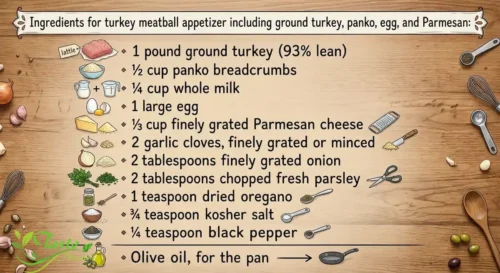
- 1 pound ground turkey (93% lean)
- ½ cup panko breadcrumbs
- ¼ cup whole milk
- 1 large egg
- ⅓ cup finely grated Parmesan cheese
- 2 garlic cloves, finely grated or minced
- 2 tablespoons finely grated onion
- 2 tablespoons chopped fresh parsley
- 1 teaspoon dried oregano
- ¾ teaspoon kosher salt
- ¼ teaspoon black pepper
- Olive oil, for the pan
Ingredient Notes
- 1 pound ground turkey (93% lean): The 7% fat content is what keeps these moist. Fat-free (99% lean) turkey will taste noticeably dry and pasty once baked.
- ½ cup panko breadcrumbs: Panko’s coarser, drier crumb absorbs milk without turning gummy. Regular fine breadcrumbs work in a pinch, but the texture will be slightly denser.
- ¼ cup whole milk: Forms the panade with the breadcrumbs. Low-fat or plant-based milk will work but contribute less richness.
- 1 large egg: Binds the mixture so the meatballs hold together on a toothpick.
- ⅓ cup finely grated Parmesan cheese: Adds salt, savoriness, and a small amount of fat.
- 2 garlic cloves, finely grated or minced: Grating on a microplane distributes garlic evenly through such a small amount of meat per ball.
- 2 tablespoons finely grated onion: Grated rather than diced so it disappears into the mixture instead of leaving crunchy pieces in a bite-sized meatball.
- 2 tablespoons chopped fresh parsley: Fresh herb flavor and color; dried parsley can replace it at one-third the amount but will be less vibrant.
- 1 teaspoon dried oregano
- ¾ teaspoon kosher salt: Bite-sized meatballs need proportionally more seasoning than large ones, since each piece is mostly surface.
- ¼ teaspoon black pepper
- Olive oil, for the pan: A light coating helps the bottoms brown instead of steam.
How to Prepare the Ingredients
Grate the onion on the fine side of a box grater instead of dicing it. This releases the onion’s moisture directly into the mixture and avoids raw, crunchy bits that stand out in a one-inch meatball. Grate the garlic the same way for even distribution.
Let the panko and milk sit together for a full 5 minutes before adding anything else. The breadcrumbs need that time to fully hydrate and turn into a soft, cohesive paste. If you skip ahead, the breadcrumbs stay slightly gritty and won’t blend as smoothly into the meat.
How to Make Turkey Meatball Appetizer
1. Preheat and prep. Preheat the oven to 400°F. Line a rimmed baking sheet with parchment paper and brush lightly with olive oil.
2. Build the panade. In a large bowl, stir together the panko and milk. Let sit for 5 minutes, until it forms a thick, paste-like consistency.
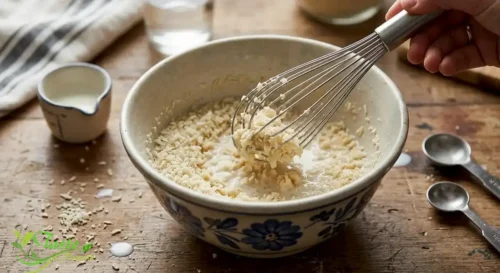
3. Season the panade. Add the egg, Parmesan, garlic, onion, parsley, oregano, salt, and pepper to the panade. Whisk together until evenly combined. Seasoning the panade first, rather than sprinkling seasoning directly onto the meat, means every bit of turkey gets evenly flavored with minimal mixing.
4. Add the turkey. Add the ground turkey to the bowl. Using your hands or a fork, mix just until no dry streaks of breadcrumb remain, about 15 to 20 seconds. The mixture should look uniform but still feel loose and light, not dense or pasty.
5. Portion the meatballs. Using a small cookie scoop or a rounded tablespoon, portion the mixture into 1-inch balls. Roll each gently between your palms — just enough to round it, without pressing or compacting it. A scoop keeps every meatball the same size, which means they’ll all finish cooking at the same time.
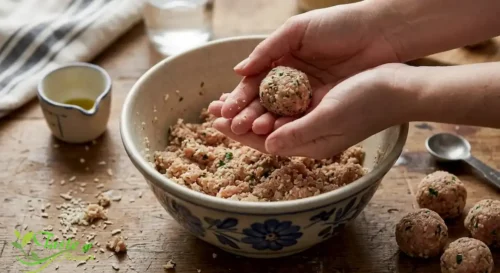
6. Arrange and bake. Place the meatballs about 1 inch apart on the prepared baking sheet so hot air can circulate around each one. Bake for 18 to 20 minutes, until the meatballs are firm to the touch, lightly golden on top, and register 165°F on an instant-read thermometer inserted into the center of a few meatballs.
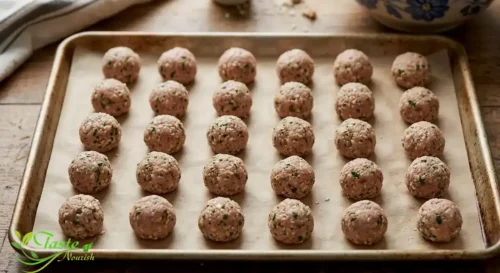
7. Rest briefly before serving. Let the meatballs sit on the pan for 2 to 3 minutes off the heat. This short rest lets the juices redistribute through the meatball instead of running out the moment you bite in.
How to Get the Best Texture
Three things determine whether this turkey meatball appetizer turns out tender or tough: fat content, mixing time, and doneness.
Fat content — 93% lean turkey has enough fat to baste the meat from the inside as it bakes. Fat-free turkey has almost nothing to keep it moist once the proteins tighten up in the oven.
Mixing time — Ground meat contains a protein called myosin that becomes sticky and elastic when worked too much, the same reaction that gives sausage its springy bite. For meatballs, that’s undesirable — it makes them dense and rubbery instead of tender. Mix only until the ingredients disappear into the meat.
Doneness — Because these are small, they go from perfectly cooked to overbaked within a couple of minutes. Pull them the moment they hit 165°F rather than leaving them in for extra color.
How to Get the Best Flavor
Salt does more work in a bite-sized meatball than in a large one, since there’s less interior volume to dilute it. If you’re unsure about the seasoning level, cook a small test patty in a skillet for a minute per side, taste it, and adjust the salt in the remaining mixture before shaping the rest.
Parmesan contributes salt and umami, so taste it in context with the salt you’ve added rather than seasoning by feel alone. If you like a brighter flavor, a small squeeze of lemon juice or extra chopped parsley stirred in right before serving works well without altering the recipe itself.
How to Serve Turkey Meatball Appetizer
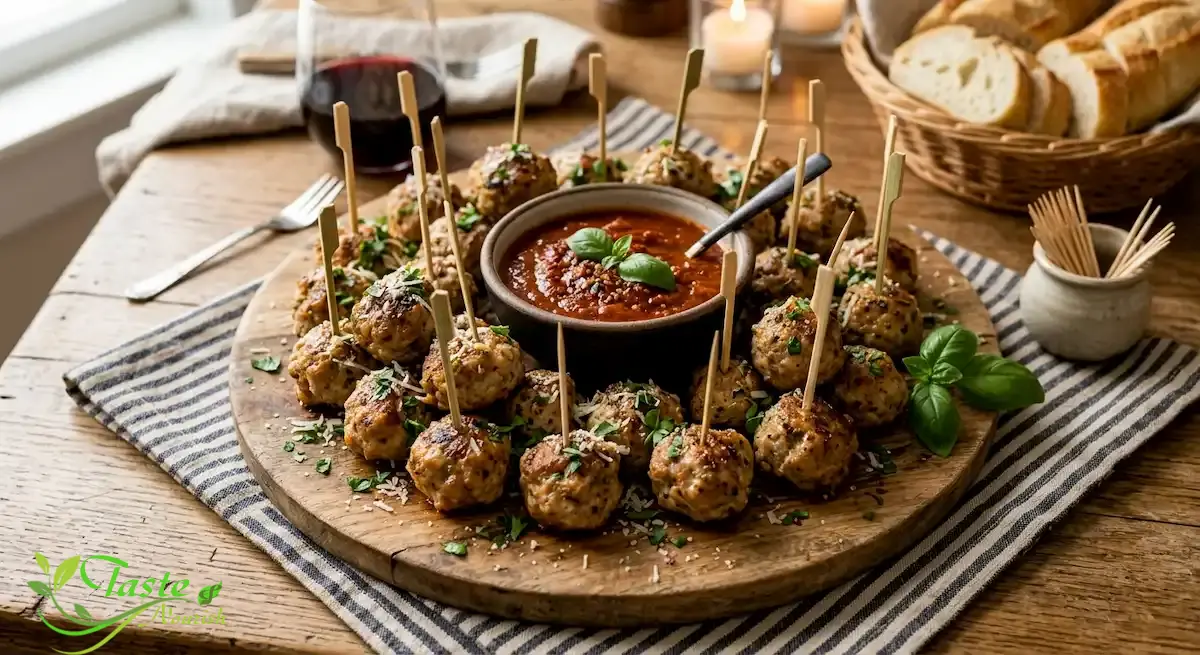
Serve the meatballs warm, not straight out of a 400°F oven — a few minutes of resting keeps guests from burning their mouths while the meatballs are still hot enough to be appetizing. Set them out on a platter with toothpicks alongside, or spear each meatball individually ahead of time for a grab-and-go setup.
A small bowl of dipping sauce in the center of the platter, with the meatballs arranged around it, keeps the sauce from soaking into the ones on the bottom. A scattering of chopped parsley over the top adds color without any extra effort.
Best Dips or Sauces to Serve With It
- Marinara: The classic pairing — warm marinara balances the richness of the Parmesan and turkey.
- Sweet chili sauce: Adds sweetness and a mild kick that plays well with the garlic and oregano.
- Garlic-Parmesan cream sauce: A heavier option that leans into the same flavors already in the meatballs.
- Honey mustard: A tangy contrast if you want something less rich on the platter.
Make-Ahead Instructions
You can mix and shape the meatballs up to a day ahead. Arrange them on a parchment-lined tray, cover tightly, and refrigerate until you’re ready to bake. Bake straight from the refrigerator; they may need an extra minute or two in the oven since they’re starting out cold.
You can also bake the meatballs fully ahead of time, then reheat them just before guests arrive, using the reheating method below to protect their texture.
Storage
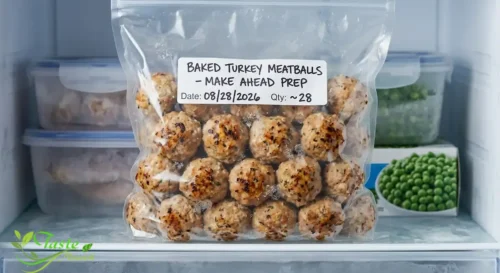
Let cooked meatballs cool, then store them in an airtight container in the refrigerator. According to USDA guidance on leftovers, cooked leftovers should go into the refrigerator within 2 hours of cooking and are good for 3 to 4 days. If the meatballs have been sitting out at a party, don’t leave them at room temperature longer than that 2-hour window before refrigerating what’s left.
Can You Freeze Turkey Meatball Appetizer?
Yes — this is one of the more freezer-friendly appetizers you can make, in either raw or cooked form.
To freeze raw — Shape the meatballs and arrange them in a single layer on a parchment-lined tray, without letting them touch. Freeze until solid, about 2 hours, then transfer to a freezer bag or airtight container. Freezing them flat first keeps them from fusing into one block. Bake from frozen, adding roughly 5 to 8 extra minutes, and confirm doneness at 165°F with a thermometer rather than guessing from the added time.
To freeze cooked — Cool the baked meatballs completely, then freeze the same way — flat on a tray first, then bagged once solid.
Per USDA guidance on freezing, food held at 0°F stays safe indefinitely, though quality — moisture and flavor — gradually declines the longer it’s frozen; for best quality, use frozen meatballs within a few months rather than storing them indefinitely. Thaw overnight in the refrigerator before reheating for the most even results.
How to Reheat Turkey Meatball Appetizer
Reheat in a 350°F oven, covered loosely with foil, for about 10 to 12 minutes if thawed, or longer if reheating from frozen. The foil traps steam and keeps the meatballs from drying out further. You can also warm them in a covered skillet with a few spoonfuls of marinara or broth, which bastes them as they heat through.
If reheating from frozen, whichever meat food is served warm afterward should still register a hot, steaming internal temperature before eating; a microwave works in a pinch but tends to make the exterior slightly rubbery compared to the oven or skillet method.
Common Mistakes
- Using fat-free (99% lean) ground turkey. Without enough fat, the meatballs dry out in the oven no matter how carefully you bake them. Stick with 93% lean turkey for this recipe.
- Skipping the panade. Mixing breadcrumbs in dry, or leaving them out entirely, removes the moisture reservoir that keeps the meatballs tender. Always let the panko fully hydrate in milk first.
- Overmixing the meat. Kneading or squeezing the mixture too long activates proteins that make meatballs springy and tough. Mix just until the ingredients disappear.
- Making meatballs different sizes. Uneven sizing means some meatballs finish cooking before others, so you end up with a mix of dry and undercooked pieces on the same tray. Use a scoop for consistency.
- Crowding the baking sheet. Meatballs packed too close together trap steam between them instead of browning, leaving pale, soft exteriors. Give each one about an inch of space.
- Judging doneness by time or color alone. Ovens vary, and browning doesn’t reliably indicate a safe internal temperature. Check with a food thermometer instead.
- Serving them straight from the oven with no rest. Cutting or biting in immediately lets the juices run out onto the platter instead of staying in the meatball. A 2- to 3-minute rest makes a real difference.
Troubleshooting
Meatballs are dry or tough
Likely cause: fat-free turkey, an undersized or skipped panade, overmixing, or overbaking. Fix it by switching to 93% lean turkey, giving the panade its full 5-minute soak, and mixing only until combined. Going forward, pull the meatballs the moment they reach 165°F rather than leaving them in for extra color.
Meatballs are falling apart
Likely cause: not enough binder relative to the amount of meat, or moving the meatballs around too much while they’re still fragile early in baking. Make sure the egg and panade quantities match the recipe, and avoid flipping or shifting the meatballs partway through cooking — let them set undisturbed.
Meatballs taste bland
Likely cause: under-salting for the small size of each piece. Because bite-sized meatballs are mostly surface, they need slightly more seasoning per pound of meat than full-sized ones. Cook a small test patty before shaping the whole batch so you can adjust salt while the mixture is still workable.
Bottoms are pale or sticking to the pan
Likely cause: not enough oil on the parchment, or an overcrowded tray trapping steam underneath. Brush the parchment lightly with olive oil and give each meatball breathing room.
Variations
- Spicy turkey meatballs: Add ¼ teaspoon crushed red pepper flakes to the panade and serve with a hot honey or spicy sweet chili dip.
- Mozzarella-stuffed: Press a small cube of fresh mozzarella into the center of each portion before rolling, for a melty center.
- Mediterranean-style: Swap the Parmesan for crumbled feta, add ½ teaspoon dried mint alongside the oregano, and serve with a yogurt-based dip.
- Gluten-free: Substitute gluten-free panko in equal measure; the panade still works the same way.
Appetizer Platter or Party Serving Ideas
These meatballs hold up well on a shared appetizer board alongside other finger foods like stuffed mushrooms or a cheese and cracker spread, since they don’t need a plate or utensils. For a game-day table, keep them warm in a slow cooker set to low or warm, with a bit of sauce spooned over the top so they don’t dry out while sitting out.
For a holiday spread, arrange them on a platter around a bowl of dip with cocktail toothpicks fanned out beside them for easy grabbing.
Food Safety
Ground turkey needs to reach a higher internal temperature than whole cuts because grinding spreads any surface bacteria throughout the meat. Per the USDA’s Safe Minimum Internal Temperature Chart, all poultry, including ground poultry, should be cooked to 165°F as measured with a food thermometer. The USDA also notes that color and firmness aren’t reliable indicators of doneness, so a thermometer is the only way to confirm these meatballs are safe to eat.
Use a separate cutting board for raw ground turkey, and wash your hands, utensils, and any surface the raw meat touched before they contact other food. If you’re serving these at a party, follow the USDA’s two-hour rule: refrigerate any meatballs that have been sitting at room temperature for more than 2 hours (1 hour if the room is above 90°F).
Turkey Meatball Appetizer Recipe FAQs
Can I make this turkey meatball appetizer ahead of time?
Yes. Shape the meatballs up to a day ahead and refrigerate them raw on a tray, or bake them fully in advance and reheat before serving.
Why are my turkey meatballs dry?
The most common causes are using fat-free ground turkey instead of 93% lean, skipping or rushing the panade, or overbaking past 165°F. Each of these is covered in the texture and troubleshooting sections above.
Can I freeze turkey meatball appetizers?
Yes, both raw and cooked. Flash-freeze them on a tray first so they don’t stick together, then transfer to a freezer bag or container.
How do I know when turkey meatballs are fully cooked?
Check with an instant-read thermometer. They’re done at 165°F in the center, regardless of how golden they look on the outside.
What can I serve with turkey meatball appetizers?
Marinara, sweet chili sauce, garlic-Parmesan cream, and honey mustard all pair well. Pick one or offer two for variety on a party platter.
Can I use ground chicken instead of turkey?
Yes. Use ground chicken with a similar fat percentage (around 93% lean) and follow the same method; it behaves very similarly to turkey.
Can I bake these directly from frozen?
Yes. Add roughly 5 to 8 extra minutes to the bake time and confirm doneness with a thermometer rather than relying on the extra time alone.
Conclusion
The difference between a dry turkey meatball appetizer and a genuinely good one comes down to a few specific choices: the right fat content, a proper panade, light mixing, and pulling the meatballs the moment they hit 165°F. Get those right and you have an appetizer that reheats well, freezes well, and holds up on a party platter without turning tough or bland.