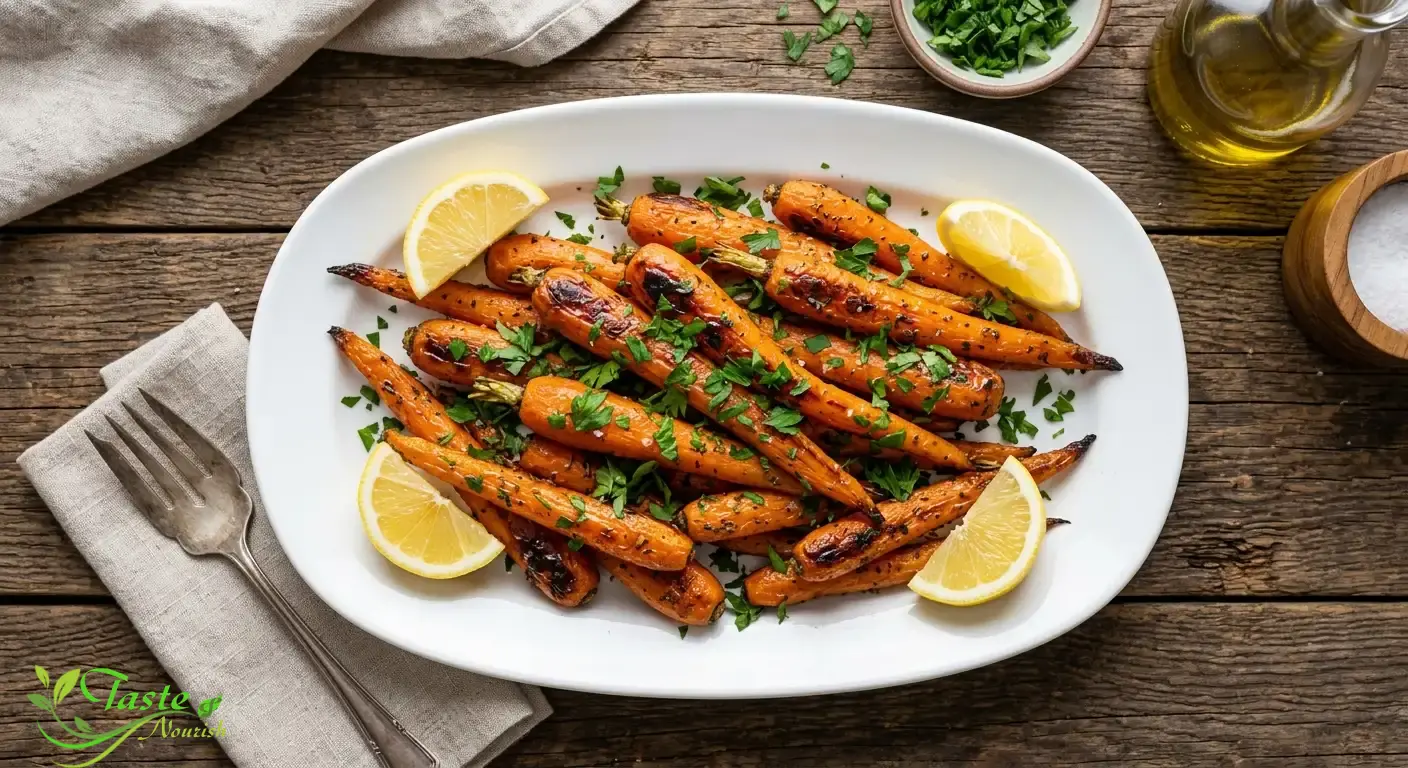
Few side dishes deliver as much flavor for as little effort as a good roasted carrots recipe. Toss whole carrots with olive oil, a little garlic, and a pinch of salt, then let a hot oven do the rest — the natural sugars in the carrots caramelize at the edges while the centers turn tender and sweet.
This classic roasted carrot side dish recipe comes together with pantry staples and about 40 minutes, making it a reliable addition to any weeknight dinner or holiday table.
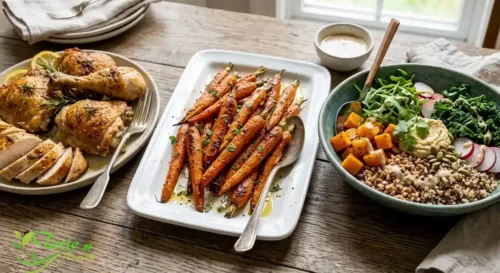
This roasted carrots recipe calls for tossing whole or halved carrots with olive oil, garlic, salt, and pepper, then roasting at 425°F for 20 to 25 minutes until caramelized and fork-tender. Flipping halfway through ensures even browning. A drizzle of honey and fresh herbs at the end rounds out the flavor for a simple, dependable side dish.
Roasted Carrots Recipe at a Glance
Detail
Time / Yield
Prep Time
10 minutes
Cook Time
20–25 minutes
Total Time
About 35 minutes
Yield
4–6 servings
Difficulty
Easy
Key Takeaways
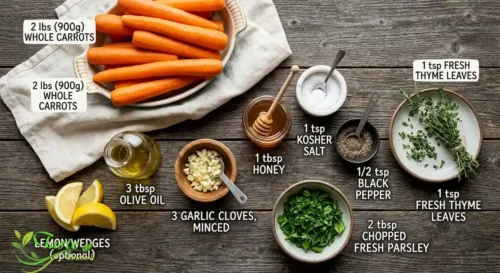
This roasted carrots recipe uses just seven ingredients and one sheet pan, making cleanup as easy as the cooking.
A hot oven (425°F) and a single, uncrowded layer are what actually produce caramelized edges rather than steamed carrots.
Cutting carrots into evenly sized pieces is the single biggest factor in consistent doneness.
Honey or maple syrup added near the end of roasting adds shine and flavor without burning.
Leftovers keep well in the fridge for several days and reheat best in the oven, not the microwave.
Why You’ll Love This Roasted Carrots Recipe
Roasting concentrates the natural sweetness already present in carrots, so you need very little added sugar to get a dish that tastes indulgent. The method is forgiving — there’s no delicate technique to master, just even cutting and a hot oven.
There’s also a nutritional case for roasting over eating carrots raw. Carrots get their orange color from beta-carotene, a plant compound the body converts into vitamin A, which supports normal vision, immune function, and skin health, according to the National Institutes of Health’s Office of Dietary Supplements. Because beta-carotene is fat-soluble, cooking carrots in oil can help the body absorb more of it than eating them raw.
A 2024 crossover study published in Nutrition Research and Practice found that cooking methods meaningfully improved beta-carotene absorption compared with raw carrots, an effect researchers linked to the presence of dietary fat during cooking, as reported in the study on PubMed Central. Roasting with olive oil, as this recipe does, takes advantage of that same fat-soluble absorption.
Choose carrots that are firm and roughly similar in thickness so they cook at the same rate; thin, tapered ends will finish faster than thick tops unless you halve or quarter the larger pieces lengthwise. Baby carrots work in a pinch, but their higher water content means they brown less and can taste slightly less sweet than whole carrots cut by hand — a reasonable trade-off for convenience, not a true equivalent.
Maple syrup swaps in for honey with no real difference in result, and makes the dish vegan. Avocado oil or melted butter can replace olive oil for a different flavor profile, though butter browns faster and needs closer watching near the end of cooking. Fresh rosemary or dill can stand in for thyme.
How to Make Roasted Carrots: Step-by-Step Instructions
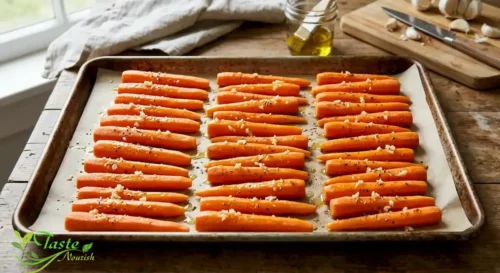
Preheat the oven to 425°F (220°C) and line a rimmed sheet pan with parchment paper.
Cut the carrots into even 2 to 3-inch batons, halving or quartering any thick pieces lengthwise so all the pieces are a similar size.
Spread the carrots on the sheet pan in a single layer, leaving space between pieces. Overcrowding traps steam and prevents browning.
Drizzle with olive oil, then add the minced garlic, salt, and pepper. Toss directly on the pan until evenly coated.
Roast for 15 minutes, then remove the pan and flip the carrots with a spatula.
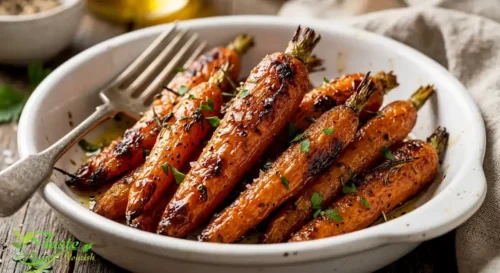
Return to the oven and roast for another 8 to 10 minutes, until the carrots are fork-tender and browned at the edges, with some caramelized dark spots.
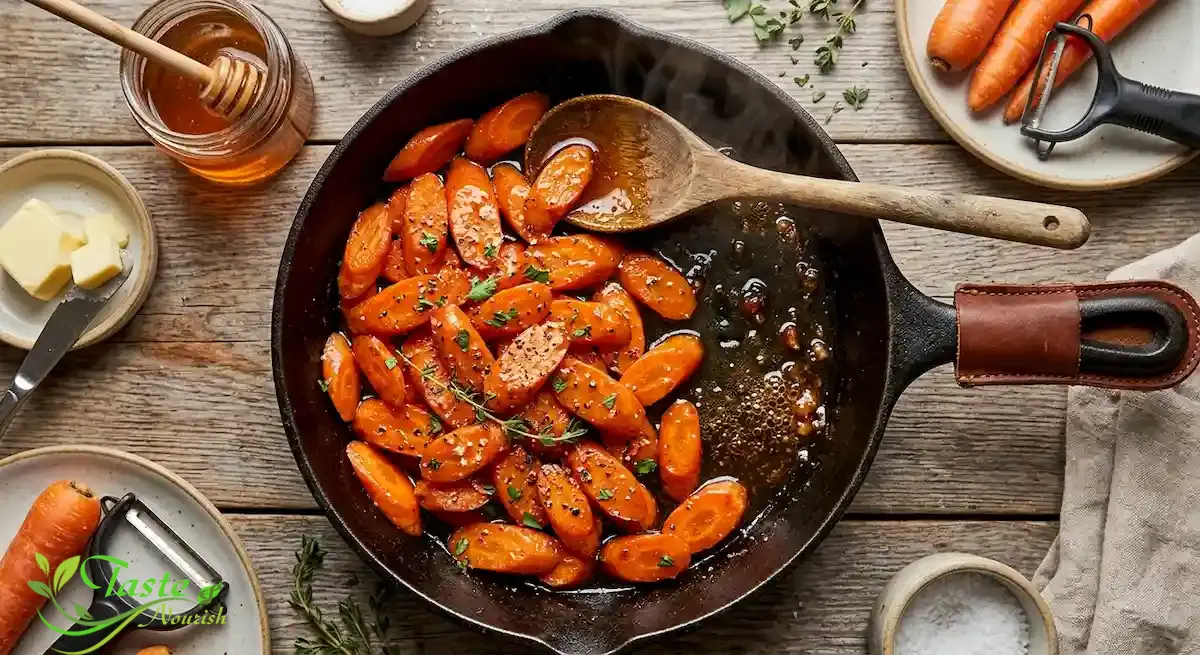
Drizzle the honey or maple syrup over the hot carrots and toss gently to coat — the residual heat will make it glossy without scorching it.
Sprinkle with fresh thyme and parsley, and serve warm with lemon wedges on the side, if using.
Expert Tips for Perfectly Roasted Carrots
Pat carrots dry after washing. Excess surface moisture creates steam in the oven, which softens the carrots instead of browning them.
Cut with the fibers, not against them, using long diagonal slices or batons rather than thin coins, which overcook quickly.
Use a heavy, rimmed sheet pan. Thin pans conduct heat unevenly and are more prone to hot spots that burn one side of the pan before the other finishes.
Resist stirring too often. Letting the carrots sit undisturbed for the first 15 minutes is what allows a caramelized crust to form on the pan-facing side.
Common Mistakes to Avoid
Overcrowding the pan. Piling carrots on top of each other traps moisture and steams rather than roasts them. Use two pans if needed rather than one packed one.
Cutting pieces unevenly. Thin ends finish minutes before thick centers, leading to some pieces that are mushy and others still firm. Take the extra minute to even out sizes before roasting.
Adding honey too early. Sugar burns well before the carrots are done if added at the start. Toss it in only during the last few minutes, or after roasting entirely.
Skipping the flip. Carrots left untouched for the full cook time brown unevenly, with one side dark and the other pale.
Recipe Variations
Balsamic Glazed Roasted Carrots: Swap the honey for a tablespoon of balsamic vinegar reduced with a touch of brown sugar, drizzled on after roasting.
Moroccan Spiced Carrots: Add 1 teaspoon each of ground cumin and coriander with a pinch of cinnamon to the oil mixture before roasting.
Garlic-Parmesan Roasted Carrots: Toss with grated Parmesan in the last 5 minutes of roasting, letting it melt and crisp slightly on the pan.
Maple-Dijon Carrots: Whisk 1 tablespoon Dijon mustard into the maple syrup before drizzling over the roasted carrots.
Serving Suggestions
Roasted carrots pair naturally with roasted chicken, baked salmon, or a holiday roast, where their sweetness balances richer, savory mains. For a lighter meal, spoon them over a grain bowl with farro or couscous, or serve alongside hummus and warm pita as part of a mezze spread.
A drizzle of tahini or a sprinkle of crumbled feta turns the same tray into a more substantial vegetarian plate.
Nutrition Information (Approximate)
Values below are estimated for one serving (about 1 cup) of this roasted carrots recipe and will vary based on exact carrot size, oil absorption, and specific brands used.
Calories: approximately 90
Total Fat: approximately 5g
Carbohydrates: approximately 12g
Dietary Fiber: approximately 3g
Vitamin A: well above 100% of the Daily Value
Raw carrots alone provide about 41 calories and roughly 835 mcg RAE of vitamin A per 100 grams, according to USDA. Like most vegetables, carrots are naturally low in saturated fat and contain no cholesterol, per the U.S. Food and Drug Administration, though the olive oil in this recipe adds fat that raw carrots don’t contain. This information is provided for general reference and isn’t intended as individualized dietary advice.
Storage and Reheating Instructions
Store leftover roasted carrots in an airtight container in the refrigerator for up to 4 days. For longer storage, freeze them in a single layer on a tray until solid, then transfer to a freezer bag for up to 2 months — note that thawed carrots will be noticeably softer than freshly roasted ones.
To reheat, spread the carrots on a sheet pan and warm in a 375°F oven for 8 to 10 minutes to help restore some of the caramelized texture. A skillet over medium heat works as a quicker alternative. Microwaving is fastest but will leave the carrots soft rather than crisp at the edges.
Make-Ahead Tips
Carrots can be peeled and cut up to 2 days in advance; store them in an airtight container in the refrigerator so they don’t dry out before roasting. Toss with oil and seasonings only right before they go in the oven, as pre-seasoned raw carrots can release liquid and steam rather than roast.
Preheat the oven to 425°F (220°C) and line a rimmed sheet pan with parchment paper.
Cut the carrots into even 2 to 3-inch batons, halving or quartering any thick pieces lengthwise.
Spread the carrots on the sheet pan in a single layer, leaving space between pieces.
Drizzle with olive oil, add minced garlic, salt, and pepper, and toss directly on the pan.
Roast for 15 minutes, then remove and flip the carrots with a spatula.
Return to the oven and roast 8 to 10 more minutes until fork-tender and caramelized at the edges.
Drizzle the honey or maple syrup over the hot carrots and toss gently to coat.
Sprinkle with fresh thyme and parsley, and serve warm with lemon wedges on the side.
Roasted Carrots Recipe FAQs
Do I need to peel carrots before roasting?
Peeling is optional. Well-scrubbed carrots roast just fine unpeeled, though the skin can turn slightly more leathery than the flesh underneath.
Can I use baby carrots instead of whole carrots?
Yes, though they roast a bit faster — start checking for doneness around the 15-minute mark — and tend to caramelize less than carrots cut by hand.
Why aren’t my carrots browning?
This is almost always overcrowding on the pan or too much surface moisture. Give the carrots space and pat them dry before tossing with oil.
Can I roast frozen carrots?
You can, but expect a softer texture and less caramelization, since frozen carrots release more water as they thaw in the oven. Add a few extra minutes of cook time.
What’s the best oven temperature for roasting carrots?
425°F offers a good balance — hot enough to caramelize the exterior before the inside overcooks. Lower temperatures work but take longer and brown less.
Can I make this recipe vegan?
Yes — use maple syrup instead of honey and the recipe is fully plant-based as written.
Conclusion
What separates a good roasted carrots recipe from an average one usually comes down to two things: even cuts and enough space on the pan for real caramelization to happen. Master those, and this simple side dish earns a permanent spot in your regular dinner rotation.
Hanan Abo Samra is the founder of Taste & Nourish, sharing trustworthy nutrition guidance and recipes drawn from 20+ years of hands-on cooking experience. When she's not developing new recipes, Hanan is researching the science behind everyday ingredients to bring readers practical, evidence-based guidance for a healthier lifestyle.