If you’ve stood in the produce aisle wondering whether to grab a sweet potato or a russet, you’re not alone. The sweet potatoes vs regular potatoes debate shows up in nutrition articles, weight-loss plans, and diabetes-friendly meal guides constantly, usually with sweet potatoes cast as the “healthy” choice and white potatoes cast as the villain.
The truth is more nuanced than that. Both are affordable, filling vegetables with a real place in a balanced diet, but they differ in some ways worth understanding before you decide what lands on your plate.
In the sweet potatoes vs regular potatoes matchup, sweet potatoes generally come out slightly ahead thanks to their exceptionally high beta-carotene (vitamin A) content, a bit more fiber, and a more moderate effect on blood sugar when they’re boiled rather than baked. Regular potatoes are not unhealthy, though. They’re actually higher in potassium per serving, just as filling, and a good source of vitamin C and B6. For most people, the healthier choice comes down less to which potato you pick and more to how you cook it and what you put on top of it.
Key Takeaways
In the sweet potatoes vs regular potatoes comparison, calories and carbohydrate counts are nearly identical for a similar-sized baked serving.
Sweet potatoes are a standout source of beta-carotene, which the body converts to vitamin A; regular potatoes contain none.
Regular potatoes usually contain more potassium per 100 grams than sweet potatoes.
Cooking method affects blood sugar response more than the type of potato does; boiling tends to produce a lower glycemic response than baking or roasting for both.
Neither potato is inherently “bad” for you; toppings, portion size, and preparation are what usually turn a nutritious vegetable into a less healthy dish.
What Is a Sweet Potato vs a Regular Potato?
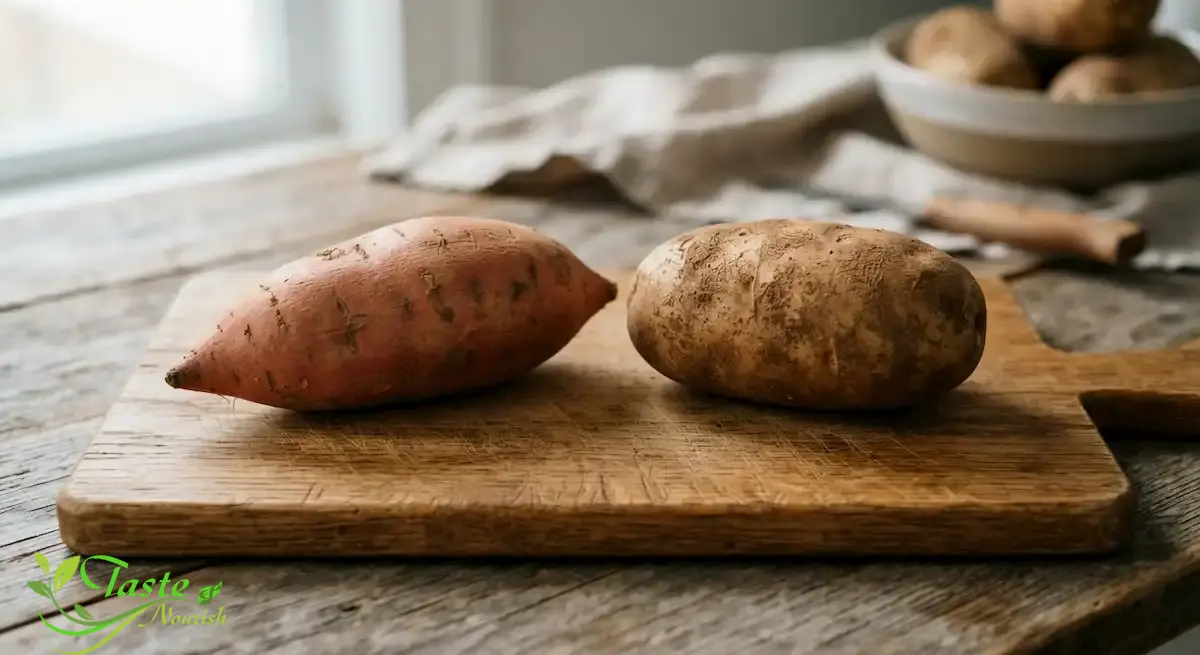
Despite the shared name, sweet potatoes and white potatoes aren’t close relatives. Sweet potatoes (Ipomoea batatas) belong to the morning glory family and are botanically a root vegetable. Regular potatoes (Solanum tuberosum) are tubers from the nightshade family, related to tomatoes, peppers, and eggplant.
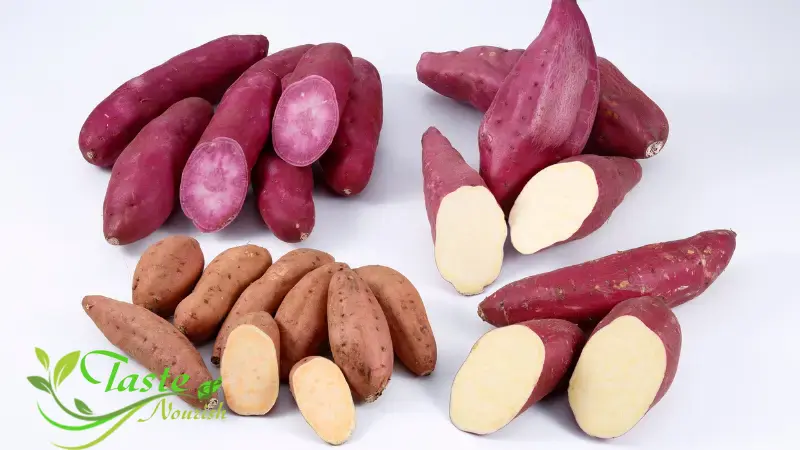
That botanical difference shows up in the kitchen too. Sweet potatoes have a naturally sweeter, denser flesh that ranges from pale yellow to deep orange or purple. Regular potatoes have a starchier, more neutral flavor and come in varieties like russet, red, Yukon gold, and fingerling, each suited to different cooking methods.
Sweet Potato vs Potato Nutrition: The Numbers
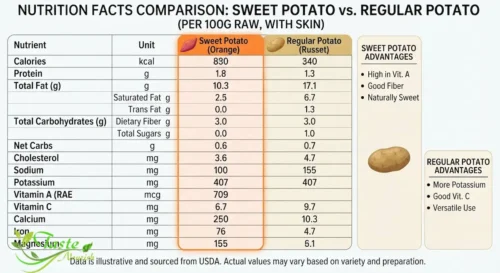
To compare fairly, it helps to look at the same preparation and portion size for both. The figures below reflect a 100-gram serving of each potato, baked in the skin without added salt or fat, based on nutrient data from the USDA FoodData . Exact values can vary somewhat by variety, growing conditions, and cooking time, so treat these as typical rather than exact.
Nutrient (per 100g, baked)
Sweet Potato
Regular Potato
Calories
~90 kcal
~93 kcal
Protein
~2.0 g
~2.5 g
Fat
~0.1 g
~0.1 g
Carbohydrates
~20.7 g
~21 g
Fiber
~3.3 g
~2.2 g
Sugars
~6.5 g
~1.2 g
Vitamin A
~960 mcg RAE (over 100% DV)
Negligible
Vitamin C
~20 mg
~10 mg
Potassium
~475 mg
~535 mg
Calcium
~38 mg
~13 mg
The most useful takeaway from this sweet potato vs potato nutrition comparison is that the two vegetables are far more alike than different. Calories, protein, and carbohydrate content are nearly a wash. The real differences show up in the micronutrients: sweet potatoes dominate on vitamin A and edge out potatoes on fiber and vitamin C, while regular potatoes hold a modest lead on potassium.
Health Benefits
Health Benefits of Sweet Potatoes
Sweet potatoes’ deep orange color comes from beta-carotene, a plant pigment the body converts into vitamin A. According to the National Institutes of Health Office of Dietary Supplements, vitamin A supports normal vision, immune function, and skin health, and a single serving of baked sweet potato can provide the full daily recommended amount for most adults.
Sweet potatoes also contribute meaningful fiber, which may help support digestive regularity and steadier post-meal blood sugar when the potato is prepared in a lower-glycemic way, such as boiling.
Health Benefits of Regular Potatoes
Regular potatoes are an underrated source of potassium, an essential mineral involved in blood pressure regulation, muscle function, and fluid balance. The NIH Office of Dietary Supplements potassium fact sheet notes that potatoes, especially with the skin on, are among the richer plant sources of potassium in the American diet.
White potatoes also provide a fair amount of vitamin C and vitamin B6, along with resistant starch when cooked and cooled, a type of starch that may support gut bacteria and could contribute to a lower blood sugar response.
Sweet Potatoes vs Regular Potatoes for Weight Loss
Neither potato has a meaningful calorie advantage over the other; both sit around 90 calories per 100 grams when baked plain. The slightly higher fiber in sweet potatoes may support fullness a bit more per bite, but in practice, portion size and toppings (butter, sour cream, cheese, frying oil) affect a meal’s calorie count far more than which potato you start with.
Scientific Evidence
Much of the “sweet potatoes are healthier” narrative centers on glycemic index (GI), a measure of how quickly a food raises blood sugar. But research shows this isn’t as simple as one type of potato beating the other.
Sweet Potatoes vs Regular Potatoes and Blood Sugar
A study published in the Journal of Nutrition and Metabolism tested ten sweet potato varieties commonly eaten in Jamaica, cooked by boiling, baking, roasting, and frying, in a group of healthy adults. The peer-reviewed glycemic index study found that boiled sweet potatoes produced a notably lower glycemic response (GI around 41 to 50) than the same potatoes baked or roasted (GI around 79 to 94). The researchers concluded that cooking method affected blood sugar response more than which variety of sweet potato was used.
Separate research on white potatoes has found a similar pattern: baked and roasted potatoes, particularly russets, tend to rank at the high end of the glycemic index, sometimes higher than table sugar, while boiled potatoes, especially when cooled before eating, tend to score meaningfully lower. Cooling appears to encourage the formation of resistant starch, which digests more slowly.
Taken together, this research suggests that a boiled sweet potato and a boiled regular potato may have a more similar effect on blood sugar than a baked version of either one. Cooking method, not just potato type, appears to be the bigger factor for people managing blood sugar.
Potential Risks & Side Effects
Oxalates: Sweet potatoes contain oxalates, compounds that in high amounts may contribute to kidney stone formation in people who are prone to them.
Solanine and glycoalkaloids: Regular potatoes are nightshades and can produce solanine when the skin turns green or the potato sprouts. Eating green or heavily sprouted potatoes may cause nausea or stomach upset, so these should be discarded rather than eaten.
Blood sugar spikes: Both potatoes, especially baked, roasted, or fried preparations, can raise blood sugar more than boiled or steamed versions. This matters most for people actively managing blood glucose.
Added toppings: Butter, sour cream, cheese, bacon, and deep frying add saturated fat, sodium, and calories that can outweigh the potato’s own nutritional profile.
Who Should Avoid It?
Most people can enjoy either potato as part of a varied diet. A few groups may want to be more selective:
People with kidney stones or a history of oxalate sensitivity may want to talk with a doctor or dietitian about moderating sweet potato intake.
People with chronic kidney disease are often advised to watch potassium intake, which can make both potatoes, particularly regular potatoes, worth portioning carefully under medical guidance.
People managing type 2 diabetes or insulin resistance may want to favor boiled or steamed preparations of either potato over baked, roasted, or fried versions, and pair them with protein or fat to help moderate the blood sugar response.
Anyone who notices green skin or sprouting on a regular potato should avoid eating that portion, as it may contain elevated solanine.
How Much Should You Eat?
There’s no single official serving guideline specific to potatoes, but a typical portion is one medium potato (about 150 grams) as part of a meal that also includes protein, vegetables, and healthy fat. For most healthy adults, a serving a few times a week fits comfortably within a balanced eating pattern. People tracking carbohydrate intake for blood sugar management may want to work with a registered dietitian to determine a portion that fits their individual needs.
How to Choose the Best
Choosing Sweet Potatoes
Look for firm potatoes without soft spots, wrinkling, or a sprouted appearance.
Skin should be smooth and free of deep cuts or mold.
Size doesn’t indicate quality; smaller sweet potatoes are often sweeter and cook more evenly.
Choosing Regular Potatoes
Choose potatoes that feel firm and heavy for their size.
Avoid any with green patches, sprouts, or a soft, wrinkled texture.
Match the variety to the dish: starchy russets for baking and fries, waxy reds or Yukon golds for boiling and roasting.
Storage Tips
Store both sweet potatoes and regular potatoes in a cool, dark, well-ventilated spot rather than the refrigerator, since cold storage can affect texture and, in regular potatoes, encourage sugar buildup that leads to darkening when cooked. A pantry cabinet or a paper bag in a cool room works well. Keep potatoes away from onions, which can speed up spoilage when stored together. Used within a few weeks, both types of potatoes hold up well; check periodically for sprouting or soft spots.
Best Ways to Cook Sweet Potatoes and Regular Potatoes
Since cooking method has such a strong effect on both nutrition retention and blood sugar response, it’s worth choosing intentionally:
Boiling or steaming tends to produce the most moderate glycemic response for both potato types and preserves water-soluble nutrients like vitamin C reasonably well.
Baking concentrates flavor and is convenient, but research suggests it raises glycemic index more than boiling for both potatoes.
Roasting with a small amount of olive oil adds healthy fat, which may help moderate the blood sugar response compared to plain baking.
Frying adds significant calories and, at high heat, can generate acrylamide, a compound of ongoing food-safety research; frying is best kept occasional rather than routine.
Common Mistakes
Assuming sweet potatoes are automatically low glycemic. A baked sweet potato can have a higher glycemic index than a boiled regular potato.
Loading up on high-fat, high-sodium toppings and then treating the dish as a health food because it started with a potato.
Eating green or sprouted potato skin instead of trimming or discarding it.
Overcooking to the point of mushiness, which can further raise the glycemic response for both potato types.
Peeling away all the skin, which removes a meaningful share of the fiber and some minerals in both vegetables.
Myths vs Facts
Myth
Fact
Sweet potatoes always have a lower glycemic index than regular potatoes.
Cooking method matters more than potato type; a baked sweet potato can rank higher on the glycemic index than a boiled regular potato.
Regular potatoes have little nutritional value.
Regular potatoes are a solid source of potassium, vitamin C, and vitamin B6, especially when eaten with the skin.
Sweet potatoes are significantly lower in calories.
Calorie counts for baked sweet potatoes and baked regular potatoes are nearly identical per 100 grams.
Potatoes are a “carb” with no fiber.
Both potatoes, especially with the skin on, contribute meaningful dietary fiber.
Sweet Potatoes vs Regular Potatoes: Side-by-Side Comparison Table
Category
Sweet Potato
Regular Potato
Botanical family
Morning glory (Convolvulaceae)
Nightshade (Solanaceae)
Calories (100g, baked)
~90 kcal
~93 kcal
Fiber
Slightly higher
Slightly lower
Vitamin A
Very high
Negligible
Potassium
Good source
Slightly higher
Best low-glycemic prep
Boiled
Boiled, then cooled
Notable risk
Oxalates
Solanine if green or sprouted
Sweet Potatoes vs Regular Potatoes FAQs
Is sweet potato healthier than white potato?
It depends on what you’re optimizing for. Sweet potatoes are healthier when it comes to vitamin A content, and they have a modest edge in fiber and vitamin C. Regular potatoes come out ahead on potassium. For most people eating a varied diet, both can fit as healthy choices; the bigger factor is cooking method and toppings.
Which is better for diabetes, sweet potato or regular potato?
Neither potato is off-limits for people managing diabetes, but preparation matters. Boiled versions of either potato tend to produce a more moderate blood sugar response than baked, roasted, or fried versions. Pairing potatoes with protein, fiber, or healthy fat can also help moderate the response. People with diabetes should work with their healthcare provider or a registered dietitian on individualized portions.
Do sweet potatoes have less sugar than regular potatoes?
Sweet potatoes actually contain more natural sugar per 100 grams than regular potatoes, largely because baking activates enzymes that convert some starch into sugar. This is naturally occurring sugar, not added sugar, and isn’t the same as the food’s overall glycemic impact.
Can I substitute sweet potatoes for regular potatoes in recipes?
In most recipes, yes. Sweet potatoes generally cook a bit faster and bring a sweeter flavor, so dishes like fries, mash, and roasted wedges typically translate well with minor timing adjustments.
Are the skins safe to eat on both?
Yes, for the most part. Both potato skins are edible and contribute fiber and nutrients. The one exception is regular potato skin that has turned green or sprouted, which should be trimmed away or the potato discarded.
Conclusion
The sweet potatoes vs regular potatoes question doesn’t have a single winner. Sweet potatoes bring an impressive amount of vitamin A and a bit more fiber to the table, while regular potatoes hold their own with potassium, vitamin C, and versatility in the kitchen. Both are inexpensive, satisfying vegetables that can support a healthy diet. The most useful thing you can do for your health isn’t necessarily choosing one potato over the other. It’s paying attention to how you cook it, how much you eat, and what you put on top.
References
U.S. Department of Agriculture, Agricultural Research Service. “FoodData Central.” https://fdc.nal.usda.gov/
Bahado-Singh, P.S., Riley, C.K., Wheatley, A.O., Lowe, H.I.C. “Relationship between Processing Method and the Glycemic Indices of Ten Sweet Potato (Ipomoea batatas) Cultivars Commonly Consumed in Jamaica.” Journal of Nutrition and Metabolism, 2011. https://pmc.ncbi.nlm.nih.gov/articles/PMC3205609/
Hanan Abo Samra is the founder of Taste & Nourish, sharing trustworthy nutrition guidance and recipes drawn from 20+ years of hands-on cooking experience. When she's not developing new recipes, Hanan is researching the science behind everyday ingredients to bring readers practical, evidence-based guidance for a healthier lifestyle.