If you’ve ever tossed a handful of baby carrots into your lunch bag or roasted a pan of them for dinner, you’ve probably wondered just how many calories in carrots you’re actually eating. The short answer is: not many. Carrots are one of the lowest-calorie vegetables you can reach for, whether you eat them raw, steamed, roasted, or boiled.
This guide breaks down the exact numbers, how cooking changes them, and what carrots actually offer nutritionally beyond their calorie count.
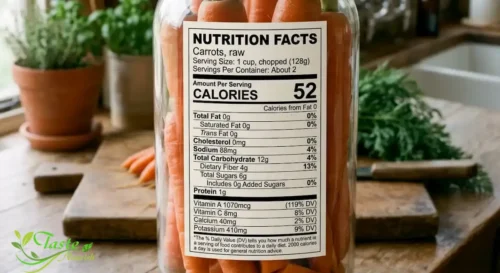
The calories in carrots depend on how much you eat and how you prepare them, but the numbers stay low across the board. One medium raw carrot (about 61 grams) has roughly 25 calories, and one cup of chopped raw carrots has about 52 calories. Cooked carrots land in a similar range: a cup of boiled, drained carrots has around 55 calories. Carrots are naturally low in calories and fat, moderate in carbohydrates, and rich in fiber and beta-carotene.
Key Takeaways: Calories in Carrots
The calories in carrots range from about 4 calories per baby carrot to roughly 52–55 calories per cup, whether raw or cooked.
Cooking carrots barely changes their calorie count, but it does change how much beta-carotene your body can absorb.
Carrots are a good source of fiber, potassium, vitamin K, and beta-carotene, which the body converts into vitamin A.
Added fats like butter or oil during cooking are the main reason carrot dishes sometimes end up higher in calories than expected.
Most healthy adults can enjoy carrots daily as part of a balanced diet, though people on certain medications or with specific health conditions should check portion size with a doctor.
What Is a Carrot?
A carrot is a root vegetable in the same plant family as parsley, celery, and fennel. The part we eat is the taproot, which stores energy for the plant in the form of natural sugars and starches. While orange is the most familiar color today, carrots also come in purple, yellow, red, and white varieties, each with a slightly different mix of plant pigments.
Carrots can be eaten raw, steamed, boiled, roasted, grilled, pickled, juiced, or pureed into soups. That versatility is part of why they show up in so many different cuisines and diet plans, from low-calorie snacking to hearty stews.
Carrot Nutrition Facts
Carrots are made up of roughly 88% water, which is a big reason they’re so low in calories relative to their volume. Most of the remaining weight comes from carbohydrates, mainly natural sugars and fiber, with only trace amounts of fat and protein.
Calories in Carrots at a Glance
Serving
Calories (approx.)
1 baby carrot
4
1 small raw carrot (50g)
20
1 medium raw carrot (61g)
25
1 large raw carrot (72g)
30
1 cup raw, chopped (128g)
52
1 cup raw, shredded (110g)
45
1 cup boiled, drained, no salt (156g)
55
1 cup canned, drained (155g)
36
These figures are based on standard nutrient data from the USDA FoodData Central database for raw carrots. Actual calories can vary slightly depending on the size and freshness of the carrot.
Carrot Calories Per Cup: Raw, Chopped, Shredded, and Baby Carrots
Carrot calories per cup shift a bit depending on how the carrot is cut, because chopping, shredding, and slicing all pack a different amount of carrot into the same cup measurement. A cup of densely packed chopped carrot weighs more, and therefore has more calories, than a cup of loosely shredded carrot.
1 cup chopped raw carrots: about 52 calories
1 cup shredded raw carrots: about 45 calories
1 cup sliced, boiled carrots: about 55 calories
1 cup baby carrots (roughly 12 pieces): about 35 calories
Raw vs. Cooked Carrot Calories: What Actually Changes
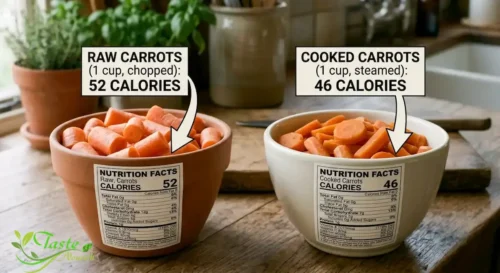
When people compare raw vs cooked carrot calories, they’re often surprised how close the numbers are. Cooking doesn’t add or remove significant calories on its own, since carrots don’t absorb much water or lose much mass during boiling or steaming unless fat is added. A cup of raw chopped carrots and a cup of plain boiled carrots both land in the low 50s for calories.
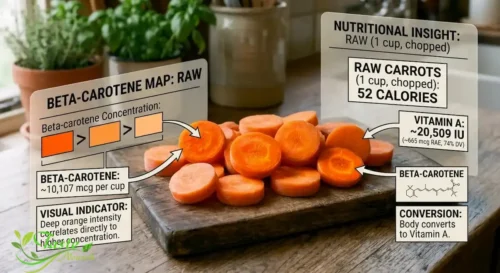
What does change with cooking is nutrient bioavailability, not calorie count. Heat softens the plant cell walls that hold beta-carotene, which makes that nutrient easier for your body to absorb. In other words, cooked carrots aren’t higher in calories than raw ones, but your body may pull more usable vitamin A out of a cooked carrot than a raw one.
The real calorie difference shows up when carrots are prepared with added fat. Roasting a cup of carrots in a tablespoon of olive oil or butter can push the total from around 50 calories to 80 calories or more, depending on how much fat is used and how much of it stays on the vegetable.
Health Benefits of Carrots
Eye health support: Carrots are rich in beta-carotene, which the body converts into vitamin A, a nutrient involved in normal vision and eye function.
Digestive support: The fiber in carrots may help support regular digestion and feed beneficial gut bacteria.
Heart health: Diets rich in fiber and plant antioxidants, including those found in carrots, may support healthy cholesterol and blood pressure levels.
Weight-friendly snacking: Because carrots are low in calories and high in water and fiber, they can help you feel full without a large calorie cost.
Immune function: Vitamin A plays a role in maintaining the barrier tissues of the body, which are part of the immune system’s first line of defense.
These are general, well-established associations rather than guarantees, and research suggests carrots work best as part of an overall varied diet rather than as a stand-alone remedy.
Scientific Evidence
The link between carrots and vitamin A status is well documented. According to the Harvard T.H. Chan School , beta-carotene from carrots and other orange and yellow vegetables is a major dietary source of provitamin A, which the body converts to retinol as needed, and adequate intake supports normal eye function.
A frequently cited study published in the European Journal of Nutrition and indexed on PubMed compared beta-carotene absorption from raw chopped carrots versus cooked, pureed carrots in human volunteers. The research found that significantly more beta-carotene was absorbed from the cooked, pureed carrot meals than from the raw carrot meals, supporting the idea that cooking can improve how much of this nutrient the body actually uses, even though it doesn’t meaningfully change the calorie content.
The National Institutes of Health Office of Dietary Supplements confirms that provitamin A carotenoids from plant foods like carrots are converted to vitamin A in the body at a variable rate, which is one reason nutrition scientists express vitamin A needs in retinol activity equivalents rather than a simple weight of carotene.
Potential Risks and Side Effects
Carotenemia: Eating very large amounts of carrots or carrot juice over time can cause a temporary, harmless yellow-orange tint to the skin due to excess beta-carotene, which fades once intake is reduced.
Blood sugar impact: Carrots contain natural sugars and carbohydrates, so very large portions, especially of carrot juice, may affect blood sugar more than a modest serving of whole carrots.
Choking risk: Raw carrots, especially baby carrots and carrot sticks, are a known choking hazard for young children and should be cut into thin strips or cooked until soft for toddlers.
Digestive discomfort: Some people may experience bloating or gas from the fiber in carrots if they increase intake too quickly.
Who Should Avoid or Limit Carrots?
Most people can eat carrots safely as part of a normal diet. A few groups may want to pay closer attention to portion size:
People with a known carrot or celery-family (Apiaceae) allergy.
People managing blood sugar closely who may need to account for carrot juice or large cooked portions in their carbohydrate counts.
Parents feeding raw carrots to young children, due to choking risk with whole or hard-cut pieces.
Anyone taking high-dose vitamin A supplements, since combining supplements with very high carotenoid intake from food is generally unnecessary and should be discussed with a healthcare provider.
If you have a specific medical condition or take medication that affects vitamin A metabolism, it’s worth checking with a doctor or registered dietitian about how carrots fit into your diet.
How Many Carrots Should You Eat?
There’s no single official “carrot quota,” but carrots count toward the general vegetable recommendations in U.S. dietary guidance. The Centers for Disease Control and Prevention notes that swapping calorie-dense foods for vegetables like carrots, such as pairing carrot sticks with hummus instead of a higher-calorie snack, can help reduce overall calorie intake while supporting a healthy weight.
A reasonable everyday portion is about 1 cup of raw or cooked carrots, which fits easily within typical vegetable intake goals and adds only around 50–55 calories to a meal or snack.
How to Choose the Best Carrots
Look for carrots that feel firm and snap cleanly rather than bending.
Choose carrots with smooth, unblemished skin and vibrant color, whether orange, purple, or yellow.
If the leafy tops are still attached, they should look fresh and green, not wilted or slimy.
Avoid carrots that are soft, rubbery, cracked, or have visible white “blush” spots, which can indicate dehydration.
Smaller to medium carrots are often more tender than very large, woody ones.
Storage Tips
Remove the leafy green tops before storing, since they pull moisture from the root and cause quicker wilting.
Store unwashed carrots in a perforated plastic bag in the refrigerator’s crisper drawer.
Whole carrots typically keep for two to four weeks refrigerated, while cut or peeled carrots are best used within a week.
For longer storage, carrots can be blanched and frozen for several months.
Keep carrots away from apples and pears in storage, since these fruits release ethylene gas that can make carrots taste bitter.
Best Ways to Eat or Cook Carrots
Raw: Sliced into sticks for dipping, shredded into salads or slaws, or grated into baked goods.
Steamed: A gentle way to soften carrots while keeping calories low and preserving more heat-sensitive nutrients.
Roasted: Tossing carrots with a small amount of oil and roasting brings out natural sweetness, though the added oil does raise the calorie count.
Boiled: A classic method that keeps calories low, though some water-soluble nutrients can leach into the cooking water.
Pureed or juiced: Useful for soups, baby food, or drinks, though juicing removes fiber and concentrates natural sugars into a smaller volume.
Common Mistakes People Make With Carrots
Assuming cooked carrots are automatically higher in calories than raw ones. In reality, the calorie difference is minor unless fat is added.
Drowning roasted carrots in oil or butter, which can turn a 50-calorie side into a much higher-calorie dish.
Relying only on carrot juice for vitamin intake, which skips the fiber found in whole carrots.
Storing carrots next to fruit that releases ethylene gas, which shortens their shelf life.
Peeling away too much of the outer layer, where a meaningful share of the fiber and nutrients are concentrated.
Myths vs. Facts About Carrot Calories
Myth
Fact
Cooking carrots makes them much higher in calories.
Plain cooked carrots have roughly the same calories as raw carrots; added fat during cooking is what raises the count.
Carrots will help you see perfectly in the dark.
Carrots support normal eye function through vitamin A, but they can’t grant night vision beyond a normal, healthy level.
Carrot juice is basically the same as eating whole carrots.
Juicing removes most of the fiber and concentrates the natural sugars, so juice and whole carrots affect the body differently.
All carrots have identical calorie counts per cup.
Chopped, shredded, and sliced carrots pack differently into a cup measure, so calories per cup vary slightly by cut.
Calories in Carrots: Comparison Table (Raw, Boiled, Roasted, Canned, and Juiced)
Preparation
Serving size
Calories (approx.)
Raw, chopped
1 cup (128g)
52
Boiled, drained, no salt
1 cup (156g)
55
Roasted with 1 tsp oil
1 cup
70–90
Canned, drained
1 cup (155g)
36
Carrot juice
1 cup (236ml)
90–95
FAQs About Calories in Carrots
How many calories in carrots are there per cup?
One cup of raw chopped carrots has about 52 calories, while one cup of shredded raw carrot has closer to 45 calories, since shredded carrot packs less densely into a cup measurement.
Are cooked carrots higher in calories than raw carrots?
Not significantly. A cup of plain boiled carrots has about 55 calories, very close to raw carrots. The calorie count only rises noticeably when butter, oil, or sugar is added during cooking.
How many calories are in one carrot?
A single medium raw carrot, about 61 grams, has approximately 25 calories. A large carrot has closer to 30 calories, and a small carrot around 20 calories.
Are carrots good for weight loss?
Carrots are low in calories and high in fiber and water, which may help you feel satisfied on fewer calories. They can be a useful addition to a weight-conscious eating pattern, though no single food causes weight loss on its own.
Do baby carrots have fewer calories than regular carrots?
Baby carrots are simply cut and shaped from larger carrots, so their calories per gram are essentially the same as regular carrots. A single baby carrot has around 4 calories because it’s smaller, not because it’s a different food.
Conclusion
Carrots are one of the easiest vegetables to fit into almost any eating pattern, largely because the calories in carrots stay low whether you eat them raw, steamed, roasted, or boiled. A cup of carrots typically costs you around 50 to 55 calories while delivering fiber, potassium, and a substantial amount of beta-carotene. The biggest calorie swings come from what you add to them, not from the cooking method itself, so a squeeze of lemon or a sprinkle of herbs will keep carrots exactly as light as nature intended.
Livny, O., et al. “Beta-carotene bioavailability from differently processed carrot meals in human ileostomy volunteers.” European Journal of Nutrition, National Library of Medicine (PubMed). https://pubmed.ncbi.nlm.nih.gov/14673607/
Hanan Abo Samra is the founder of Taste & Nourish, sharing trustworthy nutrition guidance and recipes drawn from 20+ years of hands-on cooking experience. When she's not developing new recipes, Hanan is researching the science behind everyday ingredients to bring readers practical, evidence-based guidance for a healthier lifestyle.