Cinnamon has been used as a spice and folk remedy for thousands of years, and it’s still one of the most talked-about ingredients in the kitchen. If you’ve searched for the health benefits of cinnamon, you’ve probably seen big claims about blood sugar, weight loss, and heart health. Some of that is backed by real science. Some of it isn’t.
This guide breaks down what cinnamon actually contains, what research currently supports, where the evidence is weak, and how to add it to your diet safely.
The health benefits of cinnamon are mostly tied to its antioxidant and anti-inflammatory plant compounds, particularly cinnamaldehyde. Research suggests cinnamon may modestly help support blood sugar control and cholesterol levels in some people, but evidence is mixed and it should not replace medical treatment. A small daily amount, roughly half a teaspoon to one teaspoon, is generally considered a reasonable amount for most healthy adults.
Key Takeaways
The health benefits of cinnamon are driven largely by antioxidant compounds called polyphenols, along with the essential oil cinnamaldehyde.
Some studies suggest cinnamon may help lower fasting blood sugar and support insulin sensitivity, though results across trials are inconsistent.
Cassia cinnamon, the most common type sold in the U.S., contains more coumarin than Ceylon cinnamon, which matters for people who eat it daily in larger amounts.
Cinnamon is not a treatment for diabetes, high cholesterol, or any other medical condition and should be viewed as a complement to, not a substitute for, medical care.
A moderate amount, roughly a quarter to one teaspoon of ground cinnamon per day, is a reasonable target for most healthy adults.
What Is Cinnamon?
Cinnamon is a spice made from the dried inner bark of trees in the Cinnamomum genus. Once harvested, the bark curls into the familiar sticks, called quills, or gets ground into powder.
It’s been used in cooking and traditional medicine across China, India, Sri Lanka, and the Middle East for centuries, historically for digestive complaints, inflammation, and coughs, according to the National Center for Complementary and Integrative Health.
Ceylon vs. Cassia Cinnamon
Not all cinnamon is the same. There are two main types you’ll encounter at the grocery store:
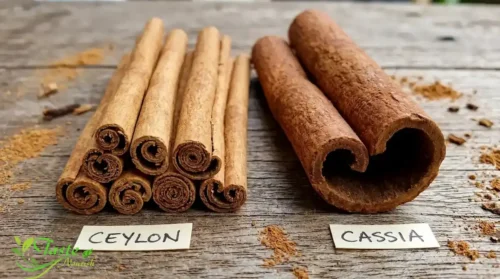
Ceylon cinnamon (Cinnamomum verum), sometimes called “true cinnamon,” has a lighter color, a milder and slightly sweet flavor, and low levels of coumarin.
Cassia cinnamon (Cinnamomum cassia or aromaticum) is darker, stronger-tasting, cheaper, and far more common in U.S. grocery stores and cinnamon rolls, but it contains meaningfully more coumarin.
Cinnamon Nutrition Facts
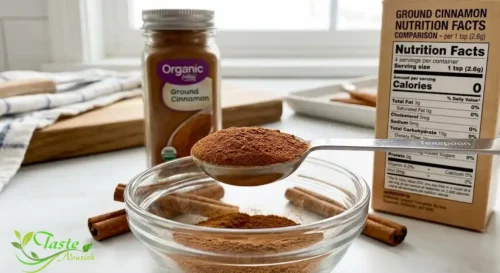
Cinnamon is used in small amounts, so it isn’t a major source of calories or macronutrients. Its real nutritional value comes from trace minerals and concentrated plant compounds. Here’s what a typical teaspoon provides, based on data from USDA FoodData Central.
Nutrient (per 1 tsp / 2.6 g ground cinnamon)
Approximate Amount
Calories
6 kcal
Carbohydrates
2.1 g
Dietary fiber
1.4 g
Protein
0.1 g
Calcium
26 mg (about 2% DV)
Manganese
0.5 mg (about 20% DV)
Iron
0.2 mg (about 1% DV)
Potassium
11 mg
Values are rounded and can vary slightly by cinnamon type and brand. The standout here is manganese, a trace mineral involved in bone formation and metabolism, along with a small but notable amount of fiber for such a small serving.
Health Benefits of Cinnamon
Most of the interest in cinnamon comes from its concentration of plant compounds, especially cinnamaldehyde and various polyphenols. Below are the areas where research has looked most closely at the health benefits of cinnamon.
May Help Support Healthy Blood Sugar Levels
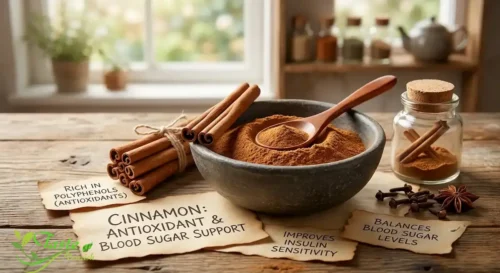
This is the most studied area of cinnamon research. Some clinical trials suggest cinnamon may modestly lower fasting blood glucose and improve insulin sensitivity, possibly by slowing carbohydrate digestion or mimicking some effects of insulin. That said, results vary a lot between studies depending on the type and dose of cinnamon used, and it’s not considered a substitute for diabetes medication.
Rich in Antioxidants
Cinnamon contains polyphenol antioxidants that may help neutralize free radicals in the body. In lab studies, cinnamon extracts rank among the higher antioxidant-content spices, though it’s worth remembering that lab findings don’t always translate directly to real-world health outcomes at typical dietary doses.
May Support Heart Health
Some research suggests cinnamon may modestly help improve triglycerides and LDL cholesterol in certain populations, particularly people with type 2 diabetes. The effect size tends to be small, and findings are not consistent across every trial.
May Help Calm Inflammation
Cinnamon is one of several kitchen spices, including ginger and turmeric, that researchers have studied for anti-inflammatory activity. Harvard Health Publishing notes that cinnamon is considered one of the better-studied spices for this kind of effect, which may play a role in supporting overall metabolic health.
May Support Brain Function
Early and mostly animal-based research has looked at whether cinnamon compounds could support cognitive function or protect brain cells from oxidative stress. Human evidence here is still limited, so this benefit should be considered preliminary rather than established.
Natural Antimicrobial Properties
Cinnamaldehyde, the compound responsible for cinnamon’s smell and flavor, has shown antibacterial and antifungal activity in laboratory settings. This is one reason cinnamon has historically been used to help preserve food, though it isn’t a substitute for proper food safety practices.
Scientific Evidence Behind the Health Benefits of Cinnamon
The strongest and most consistent research on cinnamon centers on blood sugar and lipid management. A 2023 umbrella review published in Diabetology & Metabolic Syndrome, which pooled results from multiple meta-analyses of randomized controlled trials, found that cinnamon supplementation was associated with reductions in fasting blood glucose, insulin levels, and HbA1c in people with type 2 diabetes or polycystic ovary syndrome.
However, the same body of research consistently flags a problem: study quality varies widely, sample sizes tend to be small, and trials often use different cinnamon species, doses, and durations. The National Center for Complementary and Integrative Health states plainly that there isn’t currently enough high-quality evidence to recommend cinnamon as a treatment for diabetes or any other condition.
In short, cinnamon health benefits appear to be real in a modest, supportive sense, not in a way that replaces medication, diet, or exercise.
Potential Risks and Side Effects
Cinnamon is safe for most people in food amounts, but it isn’t risk-free, especially in concentrated supplement form or with daily high-dose use.
Coumarin Content
Cassia cinnamon contains coumarin, a naturally occurring compound that may harm the liver in some people when consumed in large amounts over time. Ceylon cinnamon contains only trace amounts of coumarin by comparison, which is why it’s often recommended for people who use cinnamon daily and in larger quantities.
Lead and Contamination Concerns
Ground cinnamon has occasionally been affected by contamination issues. The FDA has issued public health alerts after testing found elevated lead levels in specific ground cinnamon products, some linked to cinnamon-containing foods marketed to children. This is a good reason to buy from established brands and pay attention to recall notices.
Other Possible Side Effects
Mouth or lip irritation, particularly with cinnamon-flavored gum or candy in sensitive individuals
Possible interaction with blood sugar–lowering or blood-thinning medications
Digestive upset when consumed in large amounts
Allergic reactions, though uncommon
Who Should Avoid It?
Most people can enjoy cinnamon in normal culinary amounts without issue. Extra caution is worth considering for:
People with liver disease or a history of liver problems, due to coumarin content in cassia cinnamon
People taking blood thinners such as warfarin, since coumarin may affect clotting
People taking diabetes medication, since combining cinnamon with glucose-lowering drugs could theoretically increase the risk of low blood sugar
Pregnant or breastfeeding individuals considering cinnamon supplements, who should check with a healthcare provider first
Anyone with a known allergy or sensitivity to cinnamon
If you fall into any of these groups, talk to a doctor or pharmacist before adding cinnamon supplements or high daily doses to your routine.
How Much Cinnamon Should You Eat?
There’s no official recommended daily allowance for cinnamon, since it’s a spice rather than an essential nutrient. That said, based on coumarin safety data, most guidance suggests:
Roughly one teaspoon (about 2 to 4 grams) or less of cassia cinnamon per day for most adults, to stay within a reasonable coumarin range
Ceylon cinnamon can generally be used more liberally, since its coumarin content is much lower
Cinnamon supplements should follow label dosing, and it’s worth discussing use with a healthcare provider, especially for concentrated extracts
Sprinkling cinnamon into oatmeal, coffee, or baked goods a few times a week comfortably falls within this range for the average person.
How to Choose the Best Cinnamon
A few things to check for when buying:
Check the species if the label specifies it. “Ceylon” or Cinnamomum verum indicates the lower-coumarin variety.
Buy from reputable brands with visible sourcing and quality testing, given past contamination concerns with some imported ground cinnamon.
Smell and color Ceylon cinnamon tends to be lighter tan with a milder, slightly citrusy aroma; cassia is darker reddish-brown with a stronger, spicier smell.
Whole sticks over powder if you want the freshest flavor and slower flavor degradation, though powder is more convenient for everyday cooking.
Storage Tips
Store cinnamon in an airtight container away from heat, light, and moisture.
A cool, dark pantry cabinet works better than a spot near the stove.
Ground cinnamon typically keeps its best flavor for about six months to a year; whole sticks last longer, often two to three years.
Cinnamon doesn’t necessarily “go bad” in a way that’s unsafe to eat, but it does lose potency and flavor over time.
Add to coffee grounds before brewing, or sprinkle on top of a latte
Mix into homemade granola or trail mix
Whisk into pancake, waffle, or muffin batter
Add to roasted sweet potatoes, squash, or carrots for a savory-sweet edge
Simmer a cinnamon stick in tea, mulled cider, or rice while cooking
Blend into smoothies for warmth without added sugar
Common Mistakes When Trying to Get the Health Benefits of Cinnamon
Relying on cinnamon instead of medical treatment. Cinnamon may offer modest support, but it should never replace prescribed medication for diabetes, cholesterol, or other conditions.
Assuming more is always better. Very high doses, especially of cassia cinnamon or concentrated supplements, increase coumarin exposure without proven added benefit.
Not distinguishing between Ceylon and cassia. Most people don’t realize the two types differ meaningfully in coumarin content and flavor.
Buying unlabeled bulk cinnamon without checking sourcing, especially given past contamination alerts.
Expecting fast or dramatic results. Any measurable effects on blood sugar or cholesterol shown in research took consistent use over weeks, not a single sprinkle.
Myths vs. Facts About Cinnamon
Myth
Fact
Cinnamon can cure or reverse diabetes.
Research suggests cinnamon may modestly support blood sugar levels, but it is not a treatment or cure for diabetes.
All cinnamon is the same.
Ceylon and cassia cinnamon differ in coumarin content, flavor, and price.
Eating a lot of cinnamon speeds up weight loss.
Evidence for meaningful weight loss from cinnamon alone is weak; any effect appears small at best.
Cinnamon supplements are automatically safer than food-based cinnamon.
Supplements can contain concentrated doses that increase coumarin exposure, so they require more caution, not less.
Ceylon vs. Cassia Cinnamon: Comparison Table
Feature
Ceylon Cinnamon
Cassia Cinnamon
Botanical name
Cinnamomum verum
Cinnamomum cassia / aromaticum
Flavor
Mild, slightly sweet
Bold, spicy, more intense
Color
Light tan
Darker reddish-brown
Coumarin content
Low
Higher
Common availability in the U.S.
Less common, often specialty stores
Most common, standard grocery store cinnamon
Price
Generally higher
Generally lower
Health Benefits of Cinnamon FAQs
What are the health benefits of cinnamon?
The health benefits of cinnamon are mainly linked to its antioxidant and anti-inflammatory compounds. Research suggests it may modestly support blood sugar control, cholesterol levels, and general antioxidant status, though evidence quality varies across studies.
Is it safe to eat cinnamon every day?
For most healthy adults, a small daily amount, roughly a quarter to one teaspoon, is generally considered reasonable, especially if using Ceylon cinnamon. Daily use of cassia cinnamon in large amounts is where coumarin exposure becomes more of a concern.
Does cinnamon actually lower blood sugar?
Some clinical research shows cinnamon may modestly lower fasting blood sugar in certain people, particularly those with type 2 diabetes, but results are inconsistent and it should not replace prescribed treatment.
What is the difference between Ceylon and cassia cinnamon?
Ceylon cinnamon is milder in flavor and much lower in coumarin, while cassia cinnamon is stronger-tasting, cheaper, and more common, but contains more coumarin.
Can cinnamon help with weight loss?
Evidence connecting cinnamon directly to meaningful weight loss is limited. It may support blood sugar stability, which some people find helps manage appetite, but it isn’t a proven weight-loss tool on its own.
Who should be cautious about eating cinnamon?
People with liver conditions, those on blood thinners or diabetes medication, and pregnant or breastfeeding individuals considering supplements should talk to a healthcare provider before increasing cinnamon intake.
Cinnamon earns its reputation as one of the more interesting spices in the kitchen, not because it’s a miracle cure, but because it’s genuinely well-studied compared to most seasonings. The health benefits of cinnamon are real in a modest, supportive way, particularly around blood sugar and antioxidant activity, but they come with reasonable limits on dose and type. Used thoughtfully, as part of an overall balanced diet rather than a stand-in for medical care, cinnamon is a simple, low-risk addition worth keeping in the pantry.
**Hanan Abo Samra** shares practical cooking insights, delicious recipes, and evidence-based nutrition information. Drawing on more than 20 years of hands-on cooking experience, she creates helpful food content that combines everyday cooking knowledge with information from reliable scientific sources. Her goal is to help readers better understand the foods they eat, explore their nutritional benefits, and prepare delicious meals with confidence.