Broccoli shows up in almost every “eat more vegetables” conversation, and for good reason. The health benefits of broccoli come from an unusually dense mix of vitamins, minerals, fiber, and plant compounds packed into very few calories. This guide breaks down what current research actually supports, what’s still uncertain, and how to get more broccoli into your week without overthinking it.
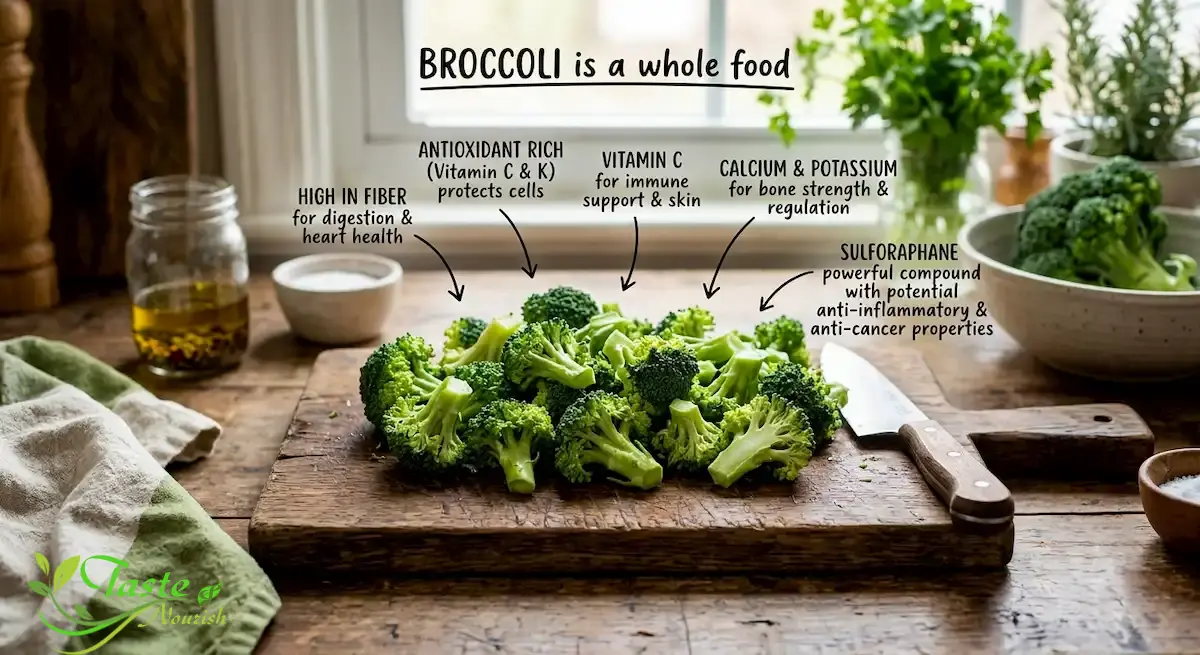
The health benefits of broccoli mainly come from its vitamin C, vitamin K, fiber, and a plant compound called sulforaphane. Research suggests regular intake may support heart health, digestion, and immune function, and cruciferous vegetables like broccoli have been linked to lower cancer risk in population studies, though large human clinical trials are still limited. A single cup of cooked broccoli provides more vitamin C than an orange, along with a solid dose of fiber, for under 60 calories.
Key Takeaways
One cup of cooked broccoli delivers close to a full day’s worth of vitamin C and a meaningful amount of fiber for around 55 calories.
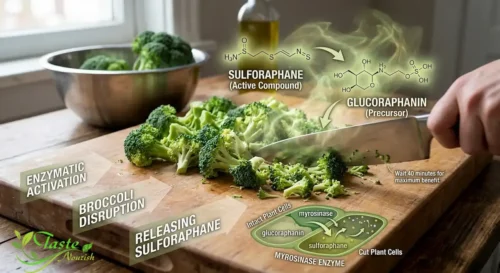
The health benefits of broccoli are closely tied to sulforaphane, a compound that forms when broccoli is chopped, chewed, or crushed.
Cruciferous vegetable intake has been associated with better heart and blood vessel markers in observational studies, though it’s one part of an overall eating pattern rather than a standalone fix.
Steaming or lightly cooking broccoli tends to preserve more nutrients than boiling it for a long time.
People taking blood thinners such as warfarin don’t need to avoid broccoli, but they should keep their vitamin K intake fairly consistent day to day.
What Is Broccoli?
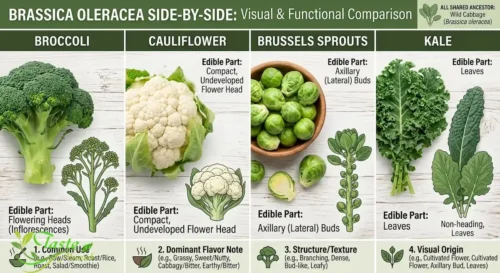
Broccoli (Brassica oleracea var. italica) is a cruciferous vegetable in the same plant family as cauliflower, cabbage, kale, and Brussels sprouts. The edible part is actually an immature flower head, harvested before the small yellow buds open, attached to a thick, equally edible stalk. It’s believed to have been developed from wild cabbage in the Mediterranean region, later refined by Italian growers, before becoming a mainstream vegetable in the United States in the 20th century.
Today broccoli is grown and sold year-round in fresh, frozen, and pre-cut forms, which makes it one of the more accessible vegetables for regular meal planning. Its mild, slightly bitter flavor also makes it flexible enough to work in everything from stir-fries to soups to simple roasted side dishes.
Broccoli Nutrition Facts
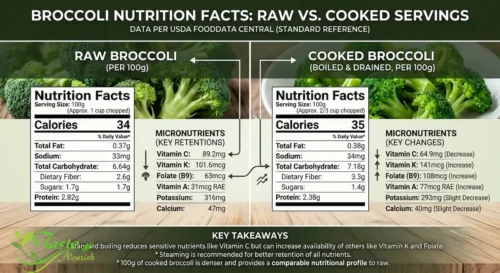
Nutrient values shift depending on whether broccoli is raw or cooked, since cooking reduces its volume. The figures below, based on USDA FoodData Central, reflect a standard one-cup serving in each form.
Nutrient
Raw, 1 cup chopped (91g)
Cooked, 1 cup chopped (156g)
Calories
31
55
Protein
2.6g
3.7g
Carbohydrates
6g
11g
Dietary fiber
2.4g
5g
Vitamin C
About 81mg, roughly 90% of the Daily Value
Still an excellent source, though some vitamin C is lost in the cooking water
Vitamin K
A substantial share of the Daily Value
Even more concentrated per cup due to reduced volume
Broccoli also contributes smaller but useful amounts of folate, potassium, manganese, and provitamin A carotenoids. Because it’s low in calories relative to its nutrient content, it’s often described as nutrient-dense, meaning you get a lot of nutritional value for relatively little energy intake.
The Health Benefits of Broccoli
Most of the health benefits of broccoli trace back to three things: its vitamin and mineral content, its fiber, and a group of sulfur-containing plant compounds called glucosinolates. Here’s how those translate into specific areas of health.
Broccoli Health Benefits for Heart Health
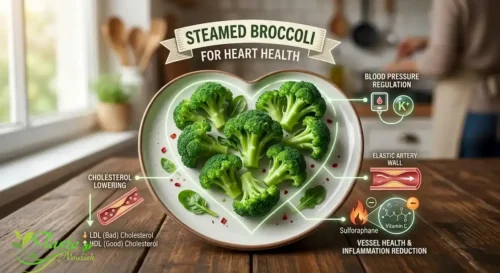
Some of the more interesting broccoli health benefits research has focused on the cardiovascular system. A study covered by Harvard Health Publishing found that women who ate at least 45 grams of cruciferous vegetables daily, roughly a half-cup serving, had noticeably lower odds of extensive calcium buildup in their abdominal aorta compared with women eating much less. Since arterial calcification is linked to a higher risk of heart attack and stroke, this kind of association is worth paying attention to, even though it doesn’t prove cause and effect on its own.
Fiber likely plays a role here too. Soluble fiber, found in broccoli in modest amounts, may help modestly lower LDL cholesterol by binding to cholesterol-containing compounds in the digestive tract before they’re absorbed. Combined with broccoli’s very low sodium and saturated fat content, it fits naturally into heart-healthy eating patterns like the DASH or Mediterranean diets.
Cancer-Fighting Compounds: Sulforaphane and Glucosinolates
Broccoli contains glucosinolates, which are converted into an active compound called sulforaphane when the plant’s cell walls are broken by chopping, chewing, or blending. According to a peer-reviewed review published in PMC, sulforaphane has shown anticancer activity across numerous laboratory and animal studies, and higher intake of cruciferous vegetables has repeatedly been linked to lower rates of several cancers in observational human research, including breast, colorectal, and prostate cancer.
“Sulforaphane is a powerful phytochemical,” explains Erma Levy, a senior research dietitian at MD Anderson Cancer Center, describing it as a naturally occurring compound that researchers are studying for its potential to help protect the body against cancer. It’s important to be clear-eyed about the evidence here: most of the strongest data on sulforaphane specifically comes from cell and animal studies, while human trials are smaller and often focus on biological markers rather than cancer outcomes directly. Research suggests eating the whole vegetable regularly is a reasonable, low-risk habit, even as scientists continue working out exactly how much benefit isolated sulforaphane provides.
The Benefits of Eating Broccoli for Digestion
One of the more practical benefits of eating broccoli is simply its fiber content. A single cup of cooked broccoli provides about 5 grams of fiber, which supports regular bowel movements and feeds beneficial bacteria in the gut. That fiber also contributes to feelings of fullness, which can make broccoli a useful addition to meals for people watching their overall calorie intake.
Some of broccoli’s fiber comes in the form of fermentable carbohydrates, which gut bacteria break down into short-chain fatty acids linked to gut lining health. This is generally a good thing, though it also explains why eating a large amount of raw broccoli at once can cause temporary gas or bloating in some people, something worth knowing before loading up a salad with it.
Immune Support, Bone Health, and Eye Health
Vitamin C plays a well-established role in immune cell function, and broccoli’s high vitamin C content makes it one of the more efficient ways to reach daily targets through food. Vitamin K, also abundant in broccoli, is involved in proteins that regulate bone mineralization, which is one reason cruciferous and leafy green vegetables are frequently mentioned in bone health guidance.
Broccoli additionally contains lutein and zeaxanthin, carotenoid antioxidants that accumulate in the retina and are associated with eye health, along with beta-carotene, a precursor to vitamin A. None of these nutrients work in isolation, but together they help explain why broccoli keeps appearing near the top of “best vegetables” lists.
What Does the Scientific Evidence Say?
It helps to separate the different types of evidence behind broccoli’s reputation. Laboratory studies on cells and animal models have repeatedly shown that sulforaphane and related compounds can influence processes involved in cancer development, inflammation, and oxidative stress. This mechanistic research is genuinely promising, but it doesn’t automatically translate into proven outcomes in people.
Large population studies, including the heart-health research noted above and multiple cancer epidemiology studies, consistently associate higher cruciferous vegetable intake with better health outcomes. These studies are useful because they reflect real dietary patterns over years, but they can’t fully separate broccoli’s specific effect from the fact that people who eat more vegetables often have healthier habits overall.
Smaller human clinical trials, such as those testing broccoli sprout extracts or glucoraphanin supplements in specific patient groups, have shown some encouraging biological changes, but researchers are still working to confirm how meaningful these effects are at the population level and what intake amounts matter most.
Potential Risks and Side Effects
Broccoli is considered safe for the vast majority of people, but a few practical issues are worth knowing about.
Gas and bloating: Broccoli contains raffinose, a type of carbohydrate that isn’t fully digested until gut bacteria ferment it, which can cause gas, especially when eaten raw or in large amounts.
Vitamin K and blood thinners: Because broccoli is a meaningful source of vitamin K, sudden increases or decreases in intake can affect how well warfarin and similar medications control blood clotting.
Thyroid considerations at extreme intakes: Cruciferous vegetables contain compounds that can interfere with iodine uptake at very high raw intakes, though this has mainly been documented in extreme case reports involving several pounds of raw cruciferous vegetables daily, not normal servings of broccoli.
Digestive sensitivity: People with irritable bowel syndrome who follow a low-FODMAP diet may need to limit portion sizes, since broccoli contains fermentable carbohydrates that can trigger symptoms in sensitive individuals.
Who Should Avoid or Limit It?
Very few people need to avoid broccoli entirely. According to the National Institutes of Health’s Office of Dietary Supplements, people taking warfarin don’t need to cut out vitamin K–rich foods like broccoli, but they do need to keep their day-to-day intake fairly steady so their medication dose stays properly calibrated. Sudden swings, in either direction, are what cause problems.
People with existing thyroid conditions, particularly untreated hypothyroidism, may want to favor cooked broccoli over very large amounts of raw broccoli and make sure their iodine intake is adequate, since cooking deactivates much of the enzyme responsible for forming goitrogenic compounds. Anyone with a known allergy to cruciferous vegetables, or a diagnosed sensitivity to fermentable carbohydrates, should also moderate intake or check with a registered dietitian.
How Much Should You Eat?
Federal dietary guidance generally recommends adults aim for about 2 to 3 cups of vegetables a day, with variety across vegetable types encouraged rather than relying on any single one. Broccoli doesn’t need to make up all of that, but including it several times a week, in servings of around a half-cup to one cup cooked, fits comfortably within that broader pattern. There’s no established upper limit for healthy adults eating broccoli as part of a normal, varied diet.
How to Choose the Best Broccoli
Good broccoli should look compact and firm, not wilted or spread apart. A few things to check at the store:
Florets should be tightly closed and deep green, sometimes with a slightly purple or bluish tint, rather than yellowing.
The stalk should feel firm and moist when cut, not dry, woody, or hollow.
Avoid heads with soft, slimy spots or a strong, unpleasant odor, both signs of spoilage.
Smaller, tighter heads are often more tender than very large, loosely packed ones.
Storage Tips
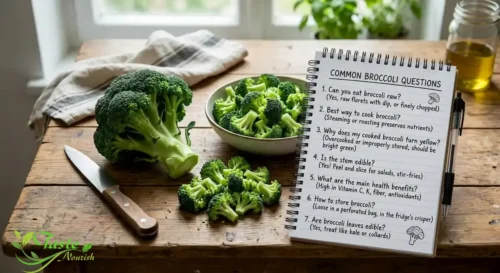
Broccoli keeps best unwashed, stored loosely in a perforated plastic bag in the refrigerator’s crisper drawer, where it typically stays fresh for three to five days. Washing it before storage introduces moisture that speeds up decay, so it’s better to rinse it right before cooking.
For longer storage, broccoli freezes well after blanching, a quick dip in boiling water followed by an ice bath, which helps preserve color, texture, and nutrients for up to about a year. Skipping the blanching step before freezing tends to result in mushier, less flavorful broccoli once thawed.
Best Ways to Eat or Cook Broccoli
How you cook broccoli affects both its nutrient content and how well your body can use its plant compounds.
Steaming for about five minutes is generally considered one of the better methods, since it softens the vegetable without leaching too many water-soluble vitamins into the cooking liquid the way boiling does.
Roasting at high heat brings out a deeper, slightly nutty flavor and is a popular option, though very high temperatures for long periods can reduce vitamin C content somewhat.
Eating broccoli raw, or only lightly blanched, preserves the enzyme needed to form sulforaphane most efficiently.
If you do cook broccoli longer, some research suggests pairing it with a small amount of a raw source of the same enzyme, such as mustard seed powder or a bit of raw radish, may help restore some sulforaphane-forming potential that heat destroys.
Beyond the science, broccoli works well roasted with olive oil and garlic, added to stir-fries, blended into soups, or tossed raw into salads with a light vinaigrette.
Common Mistakes
A handful of habits quietly reduce how much you get out of broccoli. Boiling it for too long is probably the biggest one, since extended boiling pulls water-soluble vitamins straight into the cooking water, leaving behind a duller, mushier vegetable with fewer nutrients intact. Storing it wet, rather than dry, also speeds up spoilage and shortens its usable window in the fridge.
Throwing away the stalk is another common misstep, since the stem is perfectly edible once peeled and sliced, and it’s rich in the same fiber and nutrients as the florets. Finally, drowning broccoli in heavy cheese sauce or deep-frying it as tempura isn’t necessarily “bad,” but it does offset some of the nutritional advantages that make broccoli worth eating in the first place.
Myths vs. Facts
Myth
Fact
Cooking destroys all of broccoli’s nutritional value.
Cooking reduces some vitamin C, but light methods like steaming preserve most nutrients, and cooking can even make certain antioxidants easier to absorb.
Raw broccoli is always healthier than cooked broccoli.
Raw broccoli retains more vitamin C and enzyme activity, but some nutrients, including certain carotenoids, become more available after light cooking.
Broccoli alone can prevent cancer.
Research suggests regular cruciferous vegetable intake may support lower cancer risk as part of an overall healthy diet, but no single food prevents disease on its own.
Anyone with a thyroid condition must avoid broccoli completely.
Normal cooked servings are generally fine for most people with thyroid conditions who have adequate iodine intake; the real concern involves very large raw amounts.
Frozen broccoli is nutritionally inferior to fresh.
Frozen broccoli is typically picked and flash-frozen at peak ripeness, so it can retain comparable, and sometimes higher, nutrient levels than fresh broccoli that’s traveled and sat for days.
Broccoli vs. Other Cruciferous Vegetables
Broccoli often gets compared with its close relatives, and while they share a lot of the same beneficial compounds, their nutrient profiles differ a bit.
Vegetable (1 cup, cooked)
Calories
Fiber
Vitamin C
Notable trait
Broccoli
~55
~5g
High
Strong vitamin C and vitamin K combination
Cauliflower
~28-34
~3g
Moderate to high
Milder flavor, lower calorie density
Brussels sprouts
~55-60
~4g
Moderate to high
Higher protein relative to other crucifers
Kale
~35-40
~2.5g
Moderate
Very high vitamin K content
FAQs About the Health Benefits of Broccoli
Is broccoli good for weight loss?
Broccoli is low in calories and high in fiber and water, which can help you feel full on fewer calories overall. It’s not a magic weight-loss food on its own, but it fits well into a calorie-conscious eating pattern.
Can you eat broccoli every day?
For most healthy adults, eating broccoli daily in normal serving sizes is considered safe and can help you meet vegetable intake recommendations. People on blood thinners should simply keep their intake consistent rather than eliminating or drastically increasing it from day to day.
Is frozen broccoli as healthy as fresh?
Yes, in most cases. Frozen broccoli is usually processed and frozen shortly after harvest, which helps lock in nutrients that can otherwise decline during shipping and storage of fresh produce.
Does cooking destroy broccoli’s nutrients?
Cooking reduces some heat-sensitive nutrients like vitamin C, but gentler methods such as steaming preserve most of broccoli’s nutritional value. Overcooking or boiling for a long time causes the biggest nutrient losses.
Can broccoli help lower cholesterol?
Its fiber content may modestly help lower LDL cholesterol as part of a broader healthy diet, and some early research has looked at specific broccoli compounds and cholesterol metabolism. It works best alongside other heart-healthy habits rather than as a standalone treatment.
Conclusion
Broccoli earns its reputation honestly. It delivers an impressive amount of vitamin C, vitamin K, fiber, and beneficial plant compounds for very few calories, and a solid body of research links regular intake to better heart health outcomes and possibly lower cancer risk, even as scientists continue refining exactly how strong those effects are in humans. It isn’t a cure-all, and a small number of people, particularly those on blood thinners or managing certain thyroid conditions, should pay attention to how much they eat and how it’s prepared. For most people, though, working a cup or so of broccoli into meals several times a week is a simple, low-risk way to support overall health.
References
U.S. Department of Agriculture, Agricultural Research Service. “FoodData Central.” https://fdc.nal.usda.gov/
National Library of Medicine, National Center for Biotechnology Information (PMC). “Sulforaphane: A Broccoli Bioactive Phytocompound with Cancer Preventive Potential.” https://www.ncbi.nlm.nih.gov/pmc/articles/PMC8508555/
Hanan Abo Samra is the founder of Taste & Nourish, sharing trustworthy nutrition guidance and recipes drawn from 20+ years of hands-on cooking experience. When she's not developing new recipes, Hanan is researching the science behind everyday ingredients to bring readers practical, evidence-based guidance for a healthier lifestyle.