Turmeric has a reputation for doing a little bit of everything, and weight loss is often near the top of that list. Scroll through social media and you’ll find golden lattes, morning “shots,” and supplement bottles all promising a slimmer waistline.
The real story is more measured. Curcumin, the active compound in turmeric, has been studied in dozens of clinical trials, and the results are genuinely interesting — just not the dramatic transformation the marketing suggests.
This guide walks through what turmeric actually is, what the research shows about its effect on body weight, how to use it sensibly, and where the evidence runs out.
Key Takeaways
Curcumin, turmeric’s main active compound, is associated with modest reductions in body weight, BMI, and waist circumference in clinical trials — typically less than a kilogram on average.
Benefits appear most consistently in people who are already overweight, obese, or managing a metabolic condition, not in people with a normal BMI.
Turmeric works best as a complement to diet and exercise, not a substitute for them.
Curcumin is poorly absorbed on its own; pairing it with black pepper (piperine) or choosing a bioavailability-enhanced formula improves absorption.
High-dose or “enhanced absorption” supplements have been linked to rare but serious liver injury, so it’s worth talking to a healthcare provider before starting one.
What Is Turmeric?
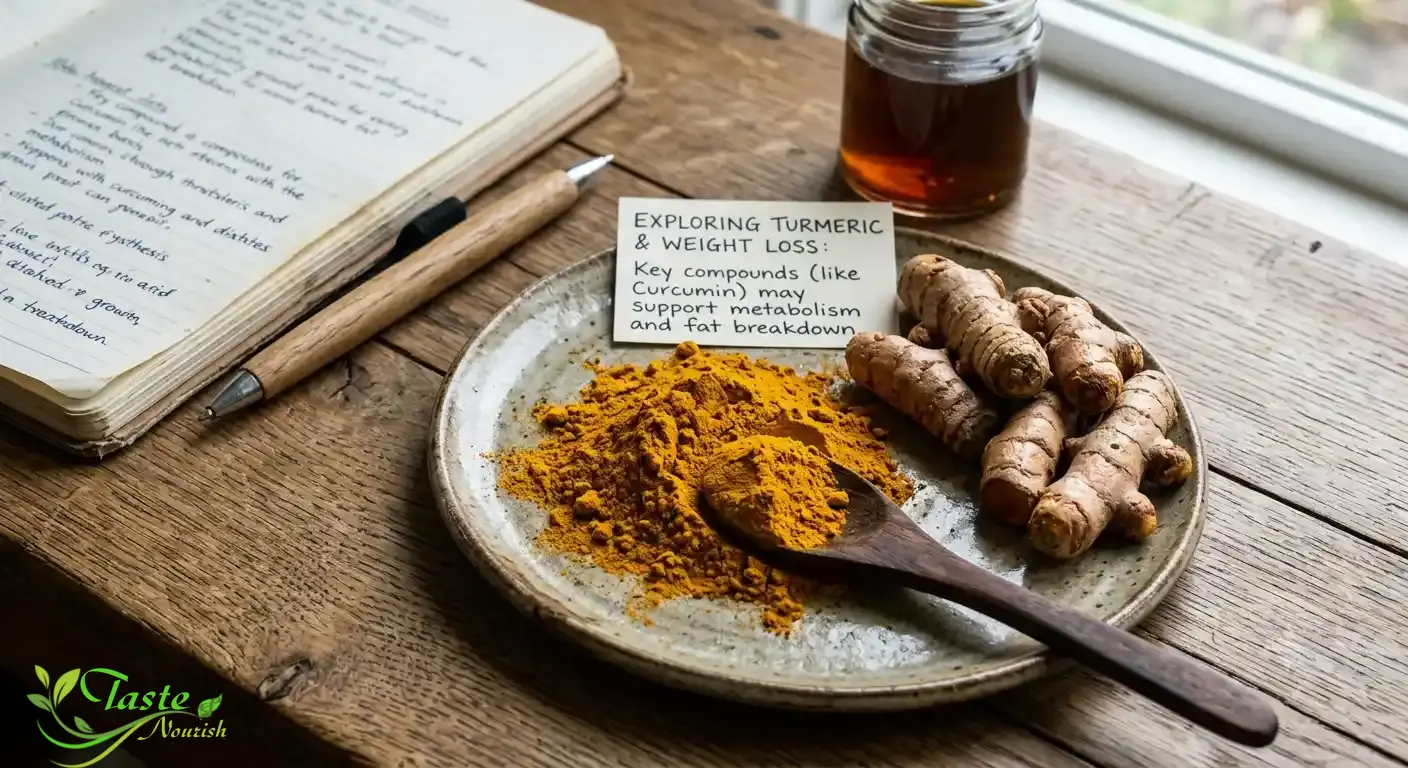
Turmeric (Curcuma longa) is a flowering plant in the ginger family. Its underground stem, called a rhizome, is dried and ground into the bright yellow-orange spice found in most kitchens.
The plant is grown commercially across Southeast Asia and India, where it has been part of cooking and traditional medicine for thousands of years. It shows up in Ayurvedic, Chinese, Thai, and Islamic medicine systems, historically used for digestion, skin conditions, and joint pain.
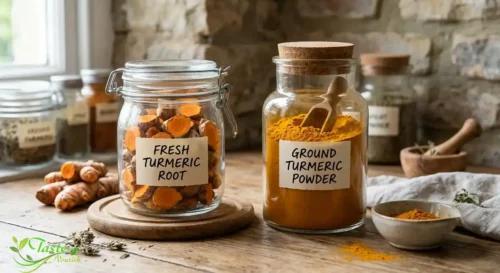
Fresh turmeric root looks similar to ginger but stains everything it touches a deep yellow. The dried, ground spice has an earthy, slightly bitter, peppery flavor with a warm, mustard-like undertone — it’s rarely eaten alone and instead builds a base note in curries, rice dishes, and spice blends.
Turmeric vs. Curcumin: What’s the Difference?
Turmeric is the whole spice. Curcumin is one compound found inside it, part of a group called curcuminoids, and it’s what gives turmeric its color and most of its studied health effects.
Ground turmeric powder is only about 2–5% curcumin by weight. That’s why most research uses concentrated curcumin extracts rather than the spice jar in your pantry — the doses used in studies would be difficult to reach through food alone.
Turmeric Nutrition Facts
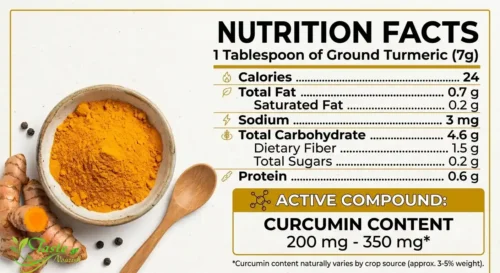
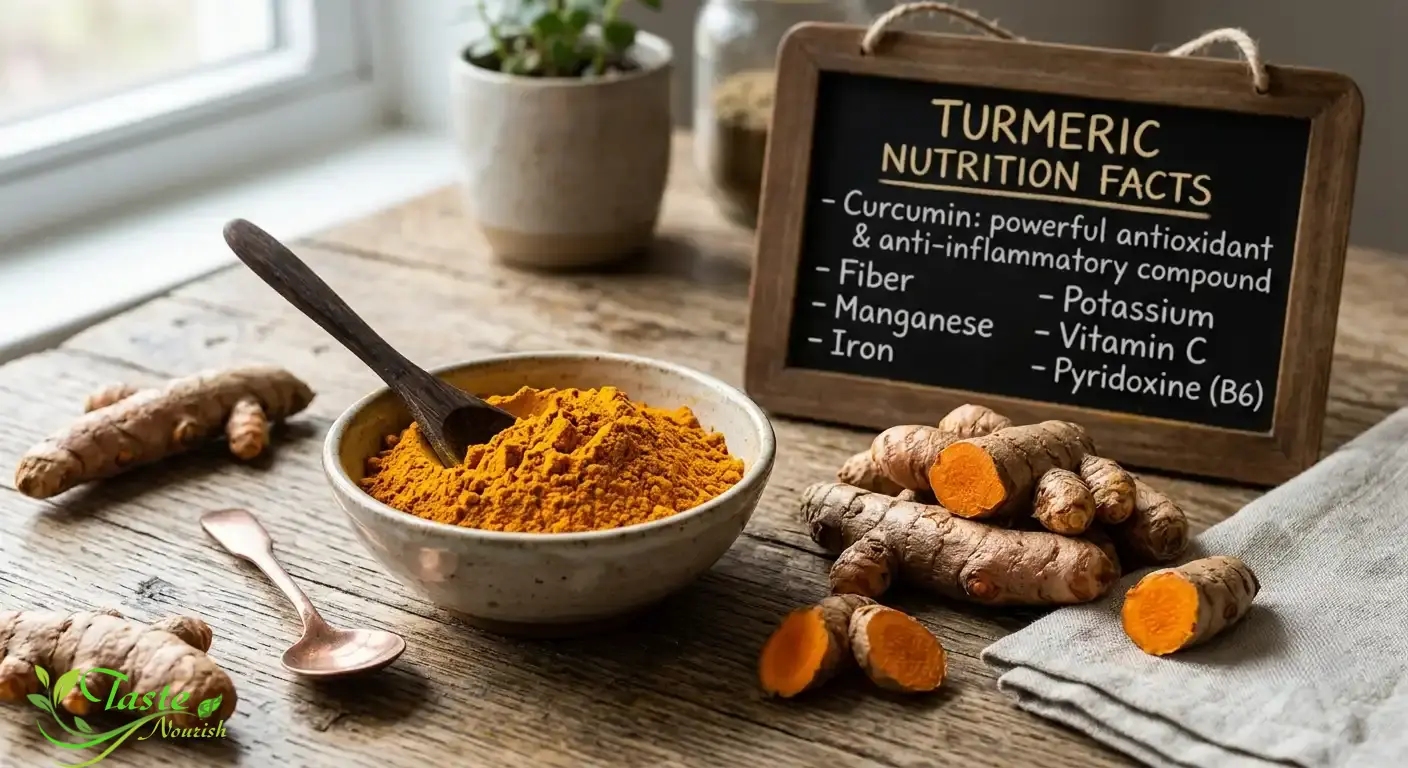
Turmeric is used in small amounts, so it isn’t a major source of calories or macronutrients. Here’s what one tablespoon (about 6.8 grams) of ground turmeric typically provides.
Nutrient
Amount per tablespoon
Calories
~24
Carbohydrates
~4.4 g
Fiber
~1.4 g
Protein
~0.5 g
Fat
~0.7 g
Iron
~1.7 mg (about 10% of daily needs)
Manganese
~0.4 mg
Curcumin content
~150–250 mg (varies by source)
The numbers make the point clearly: you’d need to eat an unreasonable amount of turmeric powder to reach the curcumin doses used in clinical research, which is why concentrated extracts are the more practical option for anyone testing this specifically for weight support.
Does Turmeric Help With Weight Loss? What the Research Shows
This is the part most articles gloss over, so let’s look directly at the data.
How Curcumin May Support Weight Management
Researchers believe curcumin’s effects are tied to its antioxidant and anti-inflammatory activity rather than any direct fat-burning action. Chronic low-grade inflammation is closely linked to obesity, and curcumin appears to influence some of the same pathways.
Proposed mechanisms include:
Reducing inflammatory markers associated with excess body fat and metabolic dysfunction.
Influencing fat-cell signaling, including leptin (a hormone linked to appetite regulation) and adiponectin (linked to fat metabolism).
Modulating enzymes involved in fat storage and breakdown, which may slightly shift the balance toward fat metabolism.
None of this amounts to a metabolism “switch.” The effects observed in research are incremental, and they show up primarily alongside — not instead of — diet and activity changes.
What the Clinical Trials Found
A 2023 umbrella review and meta-analysis in the American Journal of Clinical Nutrition pooled data from 50 randomized controlled trials and nearly 2,900 participants with conditions including obesity, type 2 diabetes, fatty liver disease, PCOS, and metabolic syndrome.
Curcumin supplementation was associated with small but statistically significant reductions in body weight, BMI, and waist circumference. The effect was strongest in people with obesity or type 2 diabetes, and it didn’t show up in participants with a normal BMI to begin with.
A separate systematic review focused specifically on people with metabolic syndrome found similar reductions in BMI, weight, and waist circumference, along with lower leptin levels and higher adiponectin levels — both markers tied to healthier fat metabolism.
Measure
Typical change vs. placebo
Who benefited most
Body weight
Roughly 0.5–0.8 kg (about 1–1.8 lb) lower
Adults with obesity or type 2 diabetes
BMI
Roughly 0.24–0.37 kg/m² lower
Adults with a higher starting BMI
Waist circumference
Roughly 1.3–2.1 cm smaller
Adults with metabolic syndrome or NAFLD
Put plainly: the effect is real in the aggregate data, but it’s modest — closer to a small nudge than a meaningful weight-loss strategy on its own.
Pro Tip
Look at study design before getting excited about a supplement claim. Many curcumin trials paired supplementation with a calorie-controlled diet or exercise program for both the treatment and placebo groups. The extra loss from curcumin was on top of changes people were already making — not a replacement for them.
How Much Turmeric or Curcumin Should You Take?
There’s no officially established dose specifically for weight management. Clinical trials have used a range of formulations and amounts, which makes direct comparisons tricky.
Form
Typical study dose
Notes
Whole turmeric powder/rhizome
2,000–3,000 mg/day
Lower curcumin concentration; used in whole-food-style studies
Curcumin extract
500–1,950 mg/day
More concentrated than whole turmeric
Bioavailability-enhanced formula (e.g., with piperine or phospholipid complexes)
Varies by product
Associated with the largest measured effects in trials
Because dietary supplements aren’t reviewed by the FDA for effectiveness before they reach store shelves, it’s reasonable to talk with a healthcare provider or registered dietitian about an appropriate dose for your situation, especially if you take other medications.
Best Ways to Add Turmeric to Your Diet for Weight Management
Cooking Uses
Even without hitting research-level doses, working turmeric into meals regularly is a reasonable, low-risk habit. A few practical ways to use it:
Stir it into scrambled eggs, roasted vegetables, or rice for color and flavor.
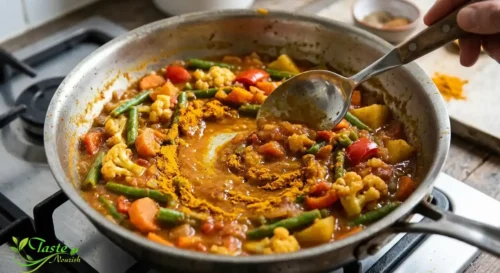
Add it to soups, stews, lentils, and curries, where its bitterness mellows out.
Whisk it into a warm milk or oat-milk “golden milk” with a pinch of black pepper.
Blend it into smoothies with ginger and citrus to balance the earthy taste.
Combine it with black pepper whenever possible — piperine, the compound responsible for pepper’s heat, can meaningfully improve curcumin absorption.
Turmeric Supplements vs. Whole Spice
Whole Turmeric Spice
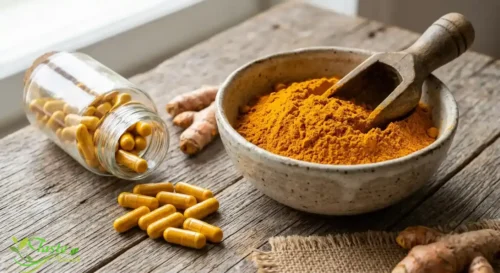
Curcumin Supplement
Curcumin content
Low (2–5% by weight)
High and standardized
Ease of reaching study doses
Difficult through food alone
More realistic
Cost
Low
Moderate to high
Regulatory oversight
Regulated as a food/spice
Regulated as a supplement, with less pre-market scrutiny
Risk profile
Very low at culinary amounts
Low overall, but rare liver injury reported with high-dose or enhanced-absorption products
Best for
General health habits, flavor, everyday cooking
People targeting research-level doses under medical guidance
Common Mistakes People Make With Turmeric for Weight Loss
Expecting fast, dramatic results. The research shows small average differences over weeks to months, not rapid fat loss.
Skipping black pepper or fat. Curcumin is fat-soluble and poorly absorbed alone; pairing it with a source of fat and piperine improves uptake.
Choosing the highest-dose supplement without guidance. More isn’t automatically better, and very high doses raise the risk of side effects.
Using turmeric as a stand-in for diet and exercise. Every study showing a benefit paired curcumin with lifestyle changes, not as a substitute for them.
Ignoring medication interactions. Turmeric can interact with blood thinners, diabetes medications, and certain other drugs.
Potential Side Effects and Risks
Turmeric used in cooking amounts is generally considered safe for most people. Supplement-level doses carry a different risk profile.
Reported side effects of oral turmeric or curcumin include nausea, stomach upset, acid reflux, diarrhea, and constipation. Topical use has occasionally caused hives or itching.
A more serious concern involves highly bioavailable, “enhanced absorption” curcumin formulations. Case data compiled through the Drug-Induced Liver Injury Network describe turmeric-associated liver injury as a growing, though still uncommon, problem — largely tied to these newer, more concentrated products rather than traditional culinary turmeric.
Watch for symptoms such as unusual fatigue, nausea, poor appetite, dark urine, or yellowing of the skin or eyes, and stop the supplement and contact a healthcare provider if any of these appear.
Who Should Avoid Turmeric or Use Caution
Pregnant individuals — supplement-level doses may be unsafe during pregnancy; culinary use in food is a different matter.
People on blood thinners (such as warfarin) — turmeric may increase bleeding risk.
People with gallbladder disease — turmeric can stimulate bile production and may worsen symptoms.
People with a history of kidney stones — turmeric is high in oxalates, which can contribute to certain stone types.
Anyone with existing liver conditions — extra caution is warranted given reports of liver injury linked to concentrated formulations.
People scheduled for surgery — turmeric’s effect on blood clotting means it’s often recommended to stop it in the weeks beforehand; ask your surgical team for specific timing.
Buying and Storing Turmeric
Fresh turmeric root should feel firm, not shriveled. Store it in the refrigerator, wrapped loosely, for up to three weeks, or freeze it for longer storage.
Ground turmeric powder keeps its potency best in an airtight container, away from light and heat, and is typically good for around two to three years, though flavor fades gradually over time.
Curcumin supplements vary widely in actual curcuminoid content between brands. A multi-laboratory quality assurance study found meaningful differences in curcuminoid levels across commercial turmeric products, which is a good reason to choose brands that publish third-party testing results.
Look for supplements listing curcumin content per serving explicitly, rather than a proprietary “turmeric extract blend” with no breakdown.
Common Myths About Turmeric and Weight Loss
Myth
Reality
“Turmeric burns belly fat directly.”
No study shows spot fat reduction; changes in waist circumference are modest and reflect overall metabolic changes, not targeted fat burning.
“More turmeric means faster results.”
Higher doses raise the risk of side effects, including rare liver injury, without proportionally better outcomes.
“A turmeric shot each morning is enough on its own.”
Most positive trial results involved concentrated curcumin extract combined with dietary changes, not a small daily shot of raw spice.
“Turmeric supplements are all the same.”
Curcuminoid content and absorption vary substantially by formulation and brand.
“It works for everyone.”
Benefits were most consistent in people who were already overweight, obese, or managing a metabolic condition — not in people with a normal BMI.
Turmeric for Weight Loss FAQs
Can turmeric alone help you lose weight?
Not on its own. Research shows small reductions in weight, BMI, and waist size when curcumin is combined with diet and lifestyle changes — it hasn’t been shown to produce meaningful weight loss by itself.
How long does it take to see results from turmeric for weight loss?
Most clinical trials measuring these effects ran for 8 to 12 weeks or longer. Shorter-term use is unlikely to produce a noticeable, measurable change.
Is it better to take turmeric powder or a curcumin supplement?
Curcumin supplements make it far easier to reach the doses used in research, since whole turmeric powder contains relatively little curcumin by weight. Whole turmeric still fits well as a general dietary habit, just not as a direct substitute for the doses studied.
Does turmeric tea help with weight loss?
Turmeric tea contains a modest amount of curcumin and may fit into an overall healthy routine, but it hasn’t been studied at the concentration levels used in clinical weight-management trials.
What’s the best time to take turmeric for weight loss?
There’s no research showing a specific time of day changes outcomes. Taking it with a meal that contains some fat, along with black pepper, may help with absorption more than timing does.
Can turmeric supplements interact with medications?
Yes. Turmeric may interact with blood thinners, diabetes medications, and certain other drugs. Check with a pharmacist or healthcare provider before adding a supplement, especially at higher doses.
A note on this article: This content is for general educational purposes and isn’t a substitute for personalized medical advice. Talk with a healthcare provider before starting any new supplement, especially if you’re pregnant, nursing, managing a chronic condition, or taking medication.
Hanan Abo Samra is the founder of Taste & Nourish, sharing trustworthy nutrition guidance and recipes drawn from 20+ years of hands-on cooking experience. When she's not developing new recipes, Hanan is researching the science behind everyday ingredients to bring readers practical, evidence-based guidance for a healthier lifestyle.