Squeeze a lemon into your water, and social media promises the pounds will melt away. It’s a nice idea. It’s also more complicated than a single fruit can deliver.
Lemons are genuinely good for you. They’re low in calories, rich in vitamin C, and easy to work into almost any meal or drink. But “good for you” and “burns fat” are two very different claims, and the gap between them is where most of the confusion about lemon and weight loss lives.
This guide walks through what lemons actually contain, what the research does and doesn’t support, and how to use this humble citrus fruit in a way that’s realistic — not hyped.
Key takeaway: Lemon itself has no special fat-burning power. Its value for weight management comes from what it replaces (sugary drinks) and what it encourages (more water intake, better-tasting meals, smaller portions of added sugar).
What Is Lemon, and Why Is It Linked to Weight Loss?
Lemon (Citrus limon) is a small, oval citrus fruit known for its sharp, sour juice and fragrant peel. It shows up in everything from salad dressings to seafood dishes to plain glasses of water, and that culinary flexibility is part of why it has such a devoted following among people trying to eat better.
The weight-loss reputation didn’t come from a single clinical trial. It grew out of a mix of traditional food wisdom, wellness culture, and a few small studies that got stretched further than the data really supports. That doesn’t mean lemon is useless for weight management — it just means the story needs some nuance.
Origin and Varieties
Lemons are believed to have originated in Northeast India, Myanmar, or China, and spread through the Middle East and Mediterranean centuries ago before reaching the Americas with European colonization. Today, the varieties you’ll most likely see at the grocery store are Eureka and Lisbon lemons, both prized for their bright acidity and thick, oil-rich peel.
Meyer lemons, a cross between a true lemon and a mandarin or orange, are sweeter and less acidic, which makes them a popular choice for baking rather than for a sharp glass of lemon water.
Climate matters a lot here. Lemons thrive in warm, subtropical regions, which is why California, Arizona, and Florida dominate U.S. production. That growing environment also affects flavor intensity — a lemon grown in ideal conditions tends to have more juice and a more pronounced aromatic oil in its skin, which is part of what makes fresh lemon taste so different from bottled juice concentrate.
Nutritional Profile at a Glance
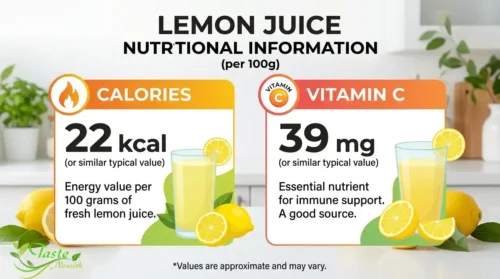
A little goes a long way with lemons, calorie-wise. The juice from one lemon is only around 10–12 calories, and even a full cup of raw lemon juice comes in at roughly 60 calories, according to nutrient data compiled by the USDA’s . What lemons lack in calories, they make up for in vitamin C — a single lemon can cover a meaningful chunk of your daily needs.
Nutrient (per 100g raw lemon juice)
Approximate Amount
Calories
~22 kcal
Water content
~92%
Carbohydrates
~7g
Fiber
~0.3–2g
Vitamin C
~35–39mg
Fat
~0.2g
Protein
~0.4g
The whole fruit (with pulp, without peel) is even higher in fiber and vitamin C per 100 grams than the juice alone, since you’re getting the pith and membranes too. That fiber matters more than people realize — it’s part of why eating the whole fruit tends to feel more filling than just drinking the juice.
How Lemon May Support Weight Loss
There are a few real, evidence-backed mechanisms behind lemon’s weight-loss reputation. None of them involve “burning fat” in the way ads imply, but together they can support a healthier eating pattern.
Hydration and Appetite Control
Plain water is already linked to better weight management, largely because it’s calorie-free and can help you feel full before a meal. The CDC notes that replacing sugary drinks with water can meaningfully reduce daily caloric intake, simply because you’re not adding those extra calories in the first place. Lemon’s main contribution here is flavor: for people who find plain water boring, a splash of lemon juice can make hydration a habit that actually sticks.
Some smaller studies have also looked at how lemon juice affects digestion speed, with early research suggesting it may help food move through the stomach a bit faster than plain water does. Faster gastric emptying isn’t a weight-loss mechanism on its own, but comfortable digestion can make it easier to stay active and consistent with healthy habits, which indirectly supports weight goals.
Vitamin C and Metabolic Function
Vitamin C plays a genuine role in normal metabolic processes, including the synthesis of carnitine, a compound your cells use to convert fat into usable energy. The NIH Office of Dietary Supplements confirms vitamin C’s role as an antioxidant and its importance for collagen production and immune function, but it stops well short of calling it a weight-loss agent.
Being deficient in vitamin C may make fat oxidation less efficient during exercise, but for most people who already eat some fruits and vegetables, adding more lemon juice on top of an adequate diet isn’t going to unlock extra fat burning.
Plant Compounds (Polyphenols) and Fat Storage
Lemons contain polyphenols — plant compounds with antioxidant properties, concentrated mostly in the peel rather than the juice. Several animal studies have found that lemon polyphenols reduced weight gain and fat accumulation in mice fed high-fat diets, which is genuinely interesting research. The catch is that these studies typically used lemon peel extract in concentrated amounts, alongside a controlled diet, not a casual squeeze of juice in a glass of water. It’s a promising area for future human research, but it’s not proof that lemon water alone changes fat storage in people.
A Smart Swap for Sugary Drinks
This might be the most practical benefit of all. A can of regular soda has around 140–150 calories and roughly 39 grams of added sugar. Swap that for lemon water, and you’ve cut a substantial number of calories without feeling like you’re “on a diet.” Do that consistently across weeks and months, and the calorie savings add up in a way that genuinely supports weight loss — not because of anything unique in the lemon, but because of what it’s replacing.
Pro tip: If you’re trying to drink less soda or juice, keep a pitcher of lemon-infused water in the fridge at eye level. Small environmental cues like this make the swap far easier to maintain than willpower alone.
What Does the Scientific Evidence Actually Show?
It’s worth being direct here: there is no large, well-controlled human trial showing that lemon water alone causes clinically meaningful weight loss. What exists is a mix of animal studies, small human trials, and a lot of extrapolation.
Animal Research
Multiple rodent studies have tested lemon polyphenol extracts on mice fed high-fat diets, generally finding reduced weight gain and improved markers of fat metabolism in the treated groups compared to controls.
♦ These are useful early signals for researchers, and they support further study — but rodent metabolism doesn’t map perfectly onto human physiology, and the doses used are far more concentrated than what’s realistic in a daily glass of lemon water.
Human Research
Human studies on lemon specifically (rather than citrus fruit more broadly) tend to be small, short in duration, and often lack a proper control group. A handful of trials involving warm lemon water before meals reported modest reductions in body weight over a few weeks, but these studies often paired the lemon water with calorie restriction, making it difficult to separate the lemon’s effect from the diet’s effect.
♦ Larger studies on citrus consumption in general — oranges, grapefruit, lemon — tend to show associations with healthier body weight, but association is not the same as causation; people who eat more citrus fruit may simply eat a healthier diet overall.
Type of Evidence
What It Shows
How Strong Is It?
Animal (mouse) studies
Lemon polyphenols reduced weight gain in high-fat-diet mice
Preliminary, not directly applicable to humans
Small human trials
Modest weight or waist changes with lemon water, often combined with calorie restriction
Weak — small samples, short duration
Population/observational data
Higher citrus fruit intake associated with healthier weight
Moderate — but correlation, not causation
Water-substitution studies
Swapping sugary drinks for water (with or without lemon) supports weight loss
Solid — this is the most reliable mechanism
Lemon Water vs. Plain Water: Is There a Real Difference?
If your main goal is weight management, the honest answer is: not much, metabolically speaking. Lemon water and plain water both hydrate you, both have essentially zero calories (a splash of juice adds maybe 2–5 calories per glass), and both can help you feel fuller before a meal. The real difference is palatability and micronutrients.
Taste and adherence: Some people simply drink more water when it has flavor, and consistency is what actually drives results over time.
Micronutrients: Lemon water contributes a small amount of vitamin C and citric acid that plain water doesn’t.
Digestive comfort: A few people find lemon water easier on digestion before meals, though this varies quite a bit person to person.
Acidity: Lemon water is more acidic, which matters for tooth enamel and for anyone with acid reflux (more on that below).
Choose whichever one gets you to actually drink enough water throughout the day. That’s the variable that matters most for weight management.
Common Myths About Lemon and Weight Loss
A few claims about lemon keep circulating despite not holding up well under scrutiny. Warm lemon water is often described as “detoxifying,” but your liver and kidneys already handle detoxification continuously — no beverage speeds that process up or removes toxins your organs weren’t already clearing.
Similarly, claims that lemon water “flushes fat” or targets belly fat specifically aren’t supported; the body doesn’t lose fat from one localized area based on what you drink.
Another common myth is that drinking lemon water first thing in the morning has a unique metabolic effect compared to drinking it at any other time of day. There’s no solid evidence supporting a special “morning window” for lemon water — the timing matters less than the consistency of the habit.
Finally, some sellers market lemon-based cleanses or “detox diets” that replace meals with lemon water for days at a time. These extremely low-calorie protocols may produce short-term water-weight loss, but they aren’t sustainable, aren’t nutritionally adequate, and often lead to the weight returning once normal eating resumes.
Potential Risks and Who Should Be Cautious
Lemon is safe for most people in normal culinary amounts, but “natural” doesn’t automatically mean risk-free, especially with concentrated or frequent use.
Tooth Enamel and Digestive Concerns
Lemon juice is quite acidic, and frequent, prolonged contact with teeth can gradually wear down enamel over time. Drinking lemon water through a straw and rinsing your mouth with plain water afterward can reduce this risk considerably.
People with acid reflux, GERD, or a history of stomach ulcers may also find that lemon juice worsens symptoms like heartburn, since the added acidity can aggravate an already sensitive esophagus or stomach lining.
A few other groups should be more cautious with regular, concentrated lemon intake:
People with mouth sores or sensitive gums, since citric acid can sting or irritate already-inflamed tissue.
People taking certain medications, since citrus fruits can occasionally interact with drug metabolism — it’s worth checking with a pharmacist or doctor if you take prescription medication regularly and plan to significantly increase citrus intake.
People prone to migraines, as citrus is a reported trigger for some individuals, though this varies widely from person to person.
None of this means lemon is dangerous. It simply means “more is better” doesn’t apply here, and moderation is the safer default.
How to Buy, Store, and Use Lemons
Picking a good lemon is mostly about weight and skin texture. A lemon that feels heavy for its size usually has more juice inside, and skin that’s smooth and slightly glossy (rather than thick, bumpy, or dull) tends to indicate a juicier fruit. Color matters less than people assume — a lemon with a few green patches near the stem is often just as ripe as a fully yellow one.
At home, whole lemons keep well at room temperature for about a week, but refrigeration extends that to three to four weeks, especially in the crisper drawer. If you’ve already juiced a lemon, that juice keeps in the fridge for about two to three days in a sealed container, or you can freeze juice in ice cube trays for up to three months — a convenient way to always have a portion ready without wasting a fresh lemon.
Easy Ways to Add Lemon to Your Day
You don’t need an elaborate routine to work lemon into a healthier eating pattern. A few simple, low-effort habits tend to stick better than a rigid “lemon detox” plan ever will.
Squeeze fresh lemon into a water bottle you carry throughout the day, rather than reaching for juice or soda.
Use lemon juice and zest in salad dressings instead of bottled dressings that often contain added sugar.
Finish grilled fish, chicken, or roasted vegetables with a squeeze of lemon instead of extra salt or butter.
Add lemon slices to sparkling water for a low-calorie alternative to soda when you want something with a bit of fizz.
Whisk lemon juice into plain yogurt or oatmeal for brightness without reaching for sugary flavored versions.
Key takeaway: The real weight-management value of lemon comes from the meals and drinks it replaces, not from anything unique in the fruit’s chemistry. Use it as a flavor tool that makes healthier choices easier to stick with.
Conclusion
Lemon isn’t a magic weight-loss ingredient, and no serious nutrition researcher claims otherwise. What it is, is a low-calorie, vitamin C-rich fruit that can make water more appealing, meals more flavorful, and sugary drinks easier to skip. Those are modest but genuinely useful contributions to a weight-management plan built on a balanced diet and regular movement.
If you enjoy lemon water, keep drinking it — there’s no downside for most healthy people, and it may support hydration habits that do matter for weight management. Just go in with realistic expectations: the fruit is a helpful supporting player, not the star of the show. Sustainable weight loss still comes down to the fundamentals — a modest calorie deficit, enough protein and fiber, regular activity, and consistency over time. Lemon can make that process a little more pleasant. It’s not going to replace it.
Lemon for Weight Loss FAQs
Does drinking lemon water before bed help you lose weight overnight?
No. There’s no evidence that lemon water works differently at night than at any other time. Any benefit comes from hydration and appetite support generally, not a special overnight metabolic effect.
How much lemon water should I drink per day for weight loss?
There’s no official recommended amount specifically for weight loss. Most people use the juice of half to one whole lemon per 8–16 ounces of water, once or twice a day, as part of an overall healthy eating pattern.
Is hot lemon water better than cold lemon water for weight loss?
Not meaningfully. Temperature affects personal preference and comfort more than it affects metabolism. Choose whichever temperature makes the habit easiest to maintain consistently.
Can lemon water replace exercise or dieting for weight loss?
No. Lemon water can support hydration and reduce added sugar intake, but it doesn’t create a calorie deficit on its own. Meaningful weight loss still requires attention to overall diet quality and physical activity.
Is lemon juice from a bottle as effective as fresh lemon juice?
For general hydration and flavor purposes, yes, bottled 100% lemon juice works similarly to fresh. Fresh lemons do tend to retain slightly more vitamin C and aromatic oils, but the difference is unlikely to change any weight-related outcome.
Barghouthy, Y., & Somani, B. K. (2021). Role of Citrus Fruit Juices in Prevention of Kidney Stone Disease (KSD): A Narrative Review. Nutrients, 13(11), 4117. National Center for Biotechnology Information. https://www.ncbi.nlm.nih.gov/pmc/articles/PMC8625077/
Hanan Abo Samra is the founder of Taste & Nourish, sharing trustworthy nutrition guidance and recipes drawn from 20+ years of hands-on cooking experience. When she's not developing new recipes, Hanan is researching the science behind everyday ingredients to bring readers practical, evidence-based guidance for a healthier lifestyle.