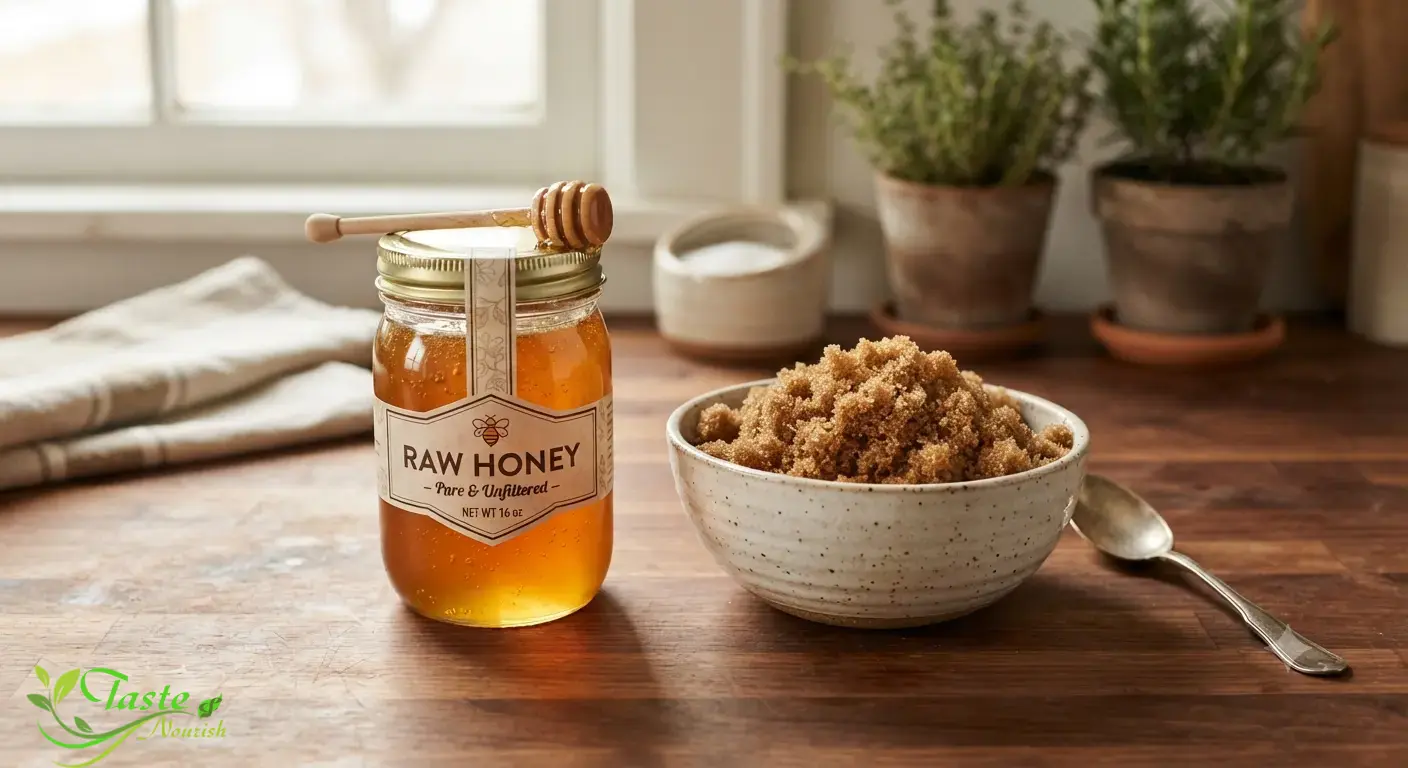
Standing in the baking aisle, jar of honey in one hand and a bag of brown sugar in the other, you’ve probably wondered which one actually deserves a spot in your pantry. Both add warmth and sweetness to everything from oatmeal to barbecue sauce, but they behave very differently once they hit your bloodstream — and your batter.
This guide breaks down the real differences in taste, nutrition, health effects, and kitchen performance so you can decide which sweetener fits your goals.
Quick Comparison: Honey vs. Brown Sugar at a Glance
Before digging into the details, here’s a snapshot of how these two sweeteners stack up side by side.
Feature
Honey
Brown Sugar
Form
Liquid
Granulated solid
Calories (1 tbsp)
~64 kcal
~52 kcal
Sugar content (1 tbsp)
~17 g
~13 g
Glycemic index
Varies widely, roughly 32–85 depending on variety
Roughly 65, similar to white sugar
Antioxidants
Contains measurable phenolic compounds
Trace amounts from molasses
Processing
Minimally processed (raw) to lightly filtered/pasteurized
Refined sugar blended with molasses
Best for
Drizzling, tea, dressings, glazes
Baking, caramelizing, moist baked goods
Vegan-friendly
No (animal-derived)
Yes (with some refining caveats)
Infant safety
Unsafe under 12 months
Not linked to botulism risk
Key takeaway:Honey and brown sugar are close in calories and both count as added sugar, but honey brings trace antioxidants and enzymes that refined sugar simply doesn’t have.
What Is Honey? Origin and Production
Honey starts as flower nectar that bees collect, partially digest, and store in the hive, where enzymes and evaporation transform it into the thick, sweet liquid we know. Beekeepers extract it from the honeycomb, and depending on the brand, it may be sold raw and unfiltered or lightly heated and filtered for a smoother, shelf-stable product. The flavor and color depend heavily on which flowers the bees visited, which is why clover honey tastes mild while buckwheat honey tastes almost molasses-like.
Because honey is a natural product rather than a manufactured one, its nutrient profile shifts slightly from batch to batch. A dark, robust honey from buckwheat or wildflower sources tends to carry more minerals and antioxidant compounds than a pale, delicate acacia honey. That variability is part of honey’s charm, but it also means the nutrition numbers on any label are closer to an average than an exact science.
What Is Brown Sugar? Origin and Production
Brown sugar is refined white sugar (sucrose derived from sugar cane or sugar beets) with molasses added back in, either during processing or blended in afterward. That molasses is what gives brown sugar its characteristic caramel color, soft texture, and slightly deeper flavor compared to plain white sugar. Some artisanal or “raw” brown sugars, like turbinado or muscovado, are less refined and retain more of their natural molasses content from the start.
Light Brown Sugar vs. Dark Brown Sugar
Light brown sugar contains a smaller percentage of molasses, giving it a milder flavor that works well in everyday baking like cookies and pancakes. Dark brown sugar has a higher molasses content, which translates to a stronger, almost smoky-sweet flavor that shines in gingerbread, barbecue sauces, and rich glazes. Nutritionally, the two are nearly identical, with dark brown sugar carrying only marginally more minerals like iron and calcium thanks to its extra molasses.
Taste and Texture Differences
Honey delivers a floral, sometimes tangy sweetness with a viscosity that coats whatever it touches, making it a natural fit for drizzling over yogurt or stirring into hot tea. Brown sugar, by contrast, offers a warm, caramel-like sweetness with a slightly grainy texture that dissolves as it heats, which is exactly why it’s prized in baked goods that need moisture and chew. Because honey is sweeter by volume than granulated sugar, you typically need less of it to achieve the same perceived sweetness in a recipe. That sweetness intensity, combined with its liquid form, is the main reason the two aren’t simply interchangeable cup for cup in cooking.
Nutritional Comparison
Calories and Macronutrients
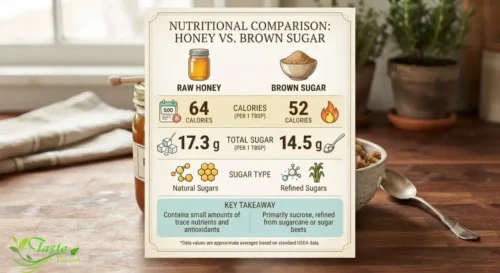
Per tablespoon (21 g),honey contains 64 calories, with 0.1 grams of protein, 17.3 grams of carbohydrates, and 17.2 grams of sugar, and it has no fiber or fat. Brown sugar comes in a bit lower, at roughly 52 calories and about 13 grams of sugar per tablespoon, with the same absence of protein, fat, or fiber.
On a per-100-gram basis, brown sugar delivers about 380 calories, with roughly 95 grams of sucrose and a glycemic index around 71, according to USDA FoodData Central.
♦ Both sweeteners are calorically dense and offer essentially no protein or fat, so from a pure macronutrient standpoint, neither is a “diet food.”
Vitamins, Minerals, and Antioxidants
Honey contains small amounts of B vitamins, vitamin C, calcium, iron, magnesium, and potassium, though the quantities are too low to meaningfully contribute to your daily nutrient needs. What sets honey apart is its phenolic and flavonoid content — compounds like chrysin, quercetin, and caffeic acid that give raw, darker honeys measurable antioxidant activity.
Brown sugar’s mineral content comes almost entirely from its molasses portion, offering trace iron, calcium, and potassium, but in amounts even smaller than honey’s. Neither sweetener should be relied on as a meaningful vitamin or mineral source; think of any nutritional extras as a modest bonus, not a reason to eat more.
Glycemic Index and Blood Sugar Impact
Brown sugar behaves much like table sugar in the body, with a glycemic index (GI) in the mid-60s that causes a fairly rapid rise in blood glucose. Honey’s GI is more unpredictable, ranging from the low 30s for acacia honey to the 80s for buckwheat varieties, largely because of differing ratios of fructose to glucose. This means some types of honey may cause a gentler blood sugar rise than brown sugar, while others may not offer much advantage at all.
If you’re managing blood sugar, the type of honey matters just as much as the fact that it’s honey rather than sugar.
Health Benefits — What the Science Says
Potential Benefits of Honey
A 2022 clinical research review examining 48 clinical trials involving more than 3,600 participants found more beneficial effects than negative or neutral effects of honey intake on cardiovascular and metabolic risk factors, glucose tolerance, cough in children, and wound healing.
Separately, laboratory and mechanistic research indicates that honey exhibits antioxidant, antibacterial, anti-inflammatory, antifungal, and antidiabetic effects, largely attributed to its phenolic acid and flavonoid content. These findings are encouraging, but researchers are careful to note that most benefits appear when honey replaces other sweeteners rather than being added on top of an already sugar-heavy diet.
Honey’s antimicrobial properties also make medical-grade honey (particularly Manuka varieties) a recognized option for topical wound care, though that’s a different use case than spooning honey into your coffee.
Potential Benefits (and Limits) of Brown Sugar
Brown sugar doesn’t carry the same body of clinical research behind it, mostly because it’s chemically almost identical to white sugar with a dash of molasses mixed in. The molasses does contribute trace minerals and a small amount of antioxidant compounds, but the amounts are far too small to produce a measurable health effect. In practical terms, brown sugar’s main “benefit” is culinary rather than nutritional — it adds moisture, chew, and a deeper flavor to baked goods that honey or white sugar can’t quite replicate.
♦ If you’re choosing brown sugar for health reasons rather than taste or texture, it’s worth knowing there’s little scientific basis for calling it “healthier” than white sugar.
Risks and Who Should Avoid Each
⇒ Both honey and brown sugar are classified as added sugars, and the Dietary Guidelines for Americans, 2020-2025 recommend limiting added sugar intake to less than 10 percent of daily calories for that reason. There’s one critical safety distinction, though: honey should never be given to infants. The CDC is explicit that honey given to children younger than 12 months may cause a severe form of food poisoning called botulism, and parents should not add honey to a baby’s food, water, formula, or pacifier.
Brown sugar doesn’t carry this particular risk, though it offers no nutritional advantage that would make it a better choice for young children either.
⇒ People managing diabetes or insulin resistance should treat both sweeteners with caution and talk to a healthcare provider about how each fits into their carbohydrate budget, since even “natural” honey is still a concentrated source of sugar. Anyone monitoring calorie intake for weight management should also be mindful of portion size, since it’s easy to use more than a single serving when drizzling honey or scooping brown sugar into a recipe.
People with pollen allergies should introduce honey cautiously and speak with an allergist first, as raw honey can occasionally trigger reactions in sensitive individuals.
Cooking and Baking — How to Substitute One for the Other
Swapping honey for brown sugar (or vice versa) is possible, but it requires a few adjustments to keep your recipe’s texture and moisture balance intact.
If a recipe calls for…
Use instead
Adjustment needed
1 cup brown sugar
¾ cup honey
Reduce other liquids by ¼ cup; add ½ tsp baking soda to balance acidity
1 cup honey
1 ¼ cups brown sugar
Add 3–4 tbsp extra liquid to compensate for lost moisture
Baking temperature
—
Lower oven temperature by about 25°F when using honey, since it browns faster
Honey’s acidity can also affect how baked goods rise, which is why recipes that swap in honey often call for a small amount of baking soda to neutralize it. Because brown sugar is a solid, it creates a different crumb structure than liquid honey, so cookies made with brown sugar tend to spread more, while honey-based versions often turn out denser and chewier. If you’re experimenting, start with a small test batch before converting a family recipe entirely, since the results can vary by dish.
Buying and Storage Tips
Honey never technically expires if stored properly, though it may crystallize over time; that’s a normal process, not spoilage, and you can restore its liquid texture with gentle warming. Store honey in an airtight container at room temperature, away from direct sunlight, since heat and light gradually degrade its enzymes and antioxidant compounds.
Brown sugar, on the other hand, tends to harden into a solid block when exposed to air because it loses moisture from evaporation. Keeping it in a tightly sealed container, or adding a slice of bread or a specialized terracotta disk to the bag, helps it stay soft for months.
When shopping for honey, look for labels indicating “raw” or “unfiltered” if you want to preserve more of the natural pollen and antioxidant content, since heavily processed honey loses some of these compounds during pasteurization. For brown sugar, light and dark varieties are largely interchangeable based on preference, though organic brands may use different refining methods worth checking if you’re avoiding bone char processing for dietary reasons.
Common Myths About Honey and Brown Sugar
A lot of confusion exists around these two sweeteners, so it’s worth clearing up a few persistent myths.
“Honey is basically a health food.” Honey does contain beneficial compounds, but it’s still primarily sugar, and the FDA classifies it as an added sugar on nutrition labels.
“Brown sugar is less processed and therefore healthier than white sugar.” Brown sugar is refined white sugar with molasses added back in; the nutritional difference between the two is minimal.
“You can substitute honey and brown sugar in equal amounts.” As covered above, honey is sweeter and adds liquid, so a 1:1 swap usually throws off both sweetness and texture.
“All honey has the same health effects.” Antioxidant content and glycemic index vary significantly by floral source, so a light clover honey and a dark buckwheat honey aren’t nutritionally equivalent.
Pro tip:If you want the flavor benefits of honey without overloading on sugar, try using it to replace a portion — not all — of the sugar in a recipe. This keeps sweetness balanced while still adding honey’s distinct flavor notes.
Honey vs. Brown Sugar: Pros and Cons
Pros
Cons
Honey
Contains antioxidants and trace nutrients; sweeter so less is needed; may soothe occasional cough in children over age 1
Higher calories per tablespoon; unsafe for infants under 12 months; less predictable in baking
Brown sugar
Consistent texture for baking; adds moisture and caramel flavor; widely available and shelf-stable
Essentially empty calories; no meaningful nutritional edge over white sugar; still a concentrated added sugar
Which Sweetener Should You Choose?
If you’re deciding based on baking performance, brown sugar is usually the more reliable choice for cookies, cakes, and anything that depends on a specific texture or spread. If you’re drawn to the idea of a natural sweetener with some trace antioxidant activity, honey is the stronger pick for uses like tea, yogurt, salad dressings, or a spoonful stirred into oatmeal.
Neither one is a “healthy” sweetener in the sense of being something to consume freely, so the better question may not be which one wins, but which one fits the specific dish or health goal in front of you. For most people, keeping both on hand and using each where it performs best is a perfectly reasonable approach.
Conclusion
Honey and brown sugar each bring something different to the table: one offers a complex, natural sweetness with a handful of trace nutrients and antioxidants, and the other offers a dependable, moisture-rich sweetness that’s hard to beat in baking. Neither is dramatically “healthier” than the other in the way marketing sometimes suggests, and both should be enjoyed in moderation as part of a balanced diet. Understanding how each one behaves — in your body and in your mixing bowl — makes it much easier to choose the right one for the right recipe.
FAQs About Honey vs Brown Sugar
Q1. Is honey healthier than brown sugar?
Honey contains trace antioxidants, vitamins, and minerals that brown sugar lacks, and some research associates honey intake with modest benefits for cholesterol and blood glucose when it replaces other sweeteners. That said, both are considered added sugars and should be consumed in moderation regardless of which one you choose.
Q2. Can I substitute honey for brown sugar in baking?
Yes, but you’ll need to adjust the recipe: use about ¾ cup honey for every 1 cup of brown sugar, reduce other liquids slightly, and consider lowering the oven temperature since honey browns faster than sugar.
Q3. Does honey have fewer calories than brown sugar?
No, honey is slightly higher in calories per tablespoon (about 64 calories) compared to brown sugar (about 52 calories), largely because honey is denser. However, honey’s stronger sweetness often means you use a smaller amount.
Q4. Is it safe to give honey to babies?
No. The CDC and American Academy of Pediatrics recommend avoiding honey in any form for children younger than 12 months due to the risk of infant botulism from Clostridium botulinum spores.
Q5. Which one has a lower glycemic index?
It depends on the honey variety. Some types, like acacia honey, have a notably lower glycemic index than brown sugar, while others, like buckwheat honey, can be higher, so the “lower GI” answer isn’t universal.
References
U.S. Department of Agriculture, Agricultural Research Service, Beltsville Human Nutrition Research Center. “FoodData Central.” National Agricultural Library. https://fdc.nal.usda.gov/food-search/
**Hanan Abo Samra** shares practical cooking insights, delicious recipes, and evidence-based nutrition information. Drawing on more than 20 years of hands-on cooking experience, she creates helpful food content that combines everyday cooking knowledge with information from reliable scientific sources. Her goal is to help readers better understand the foods they eat, explore their nutritional benefits, and prepare delicious meals with confidence.