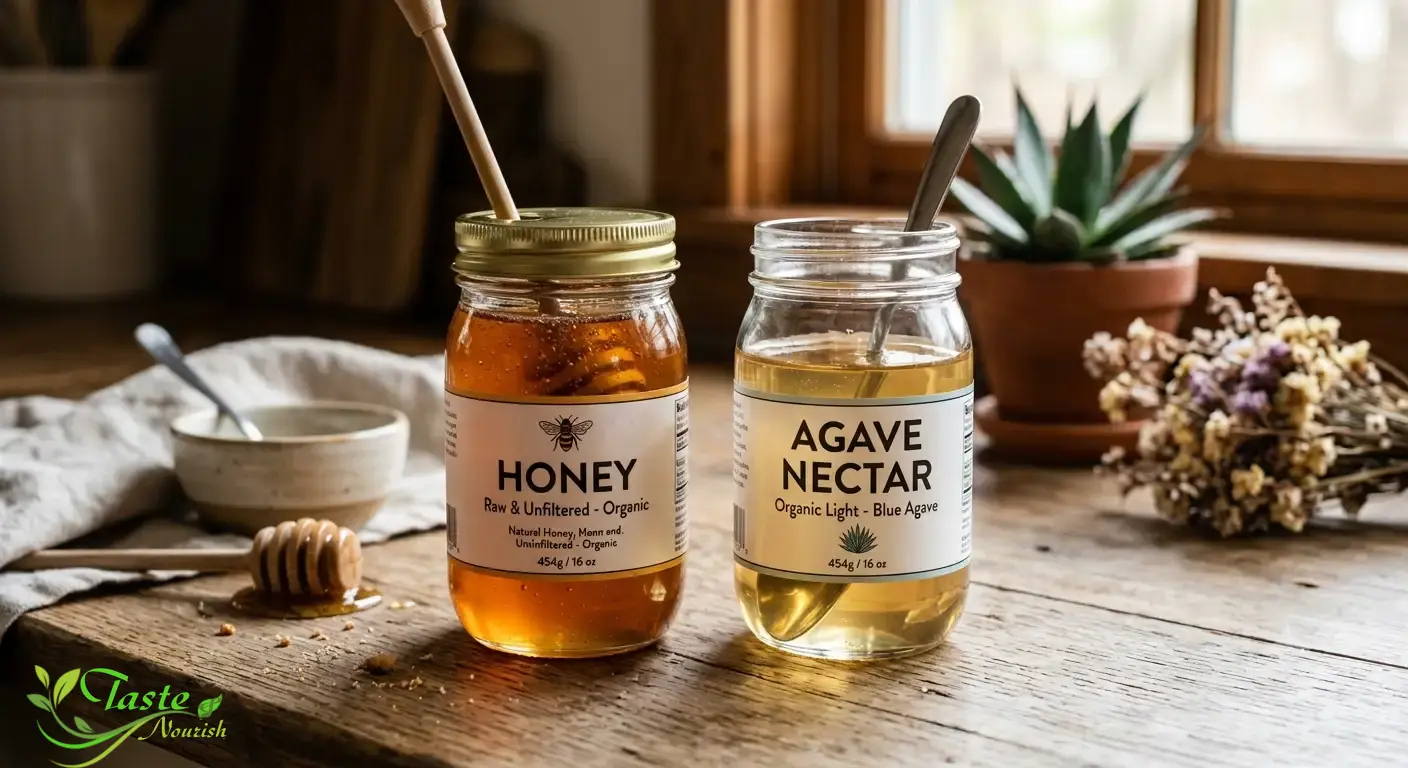
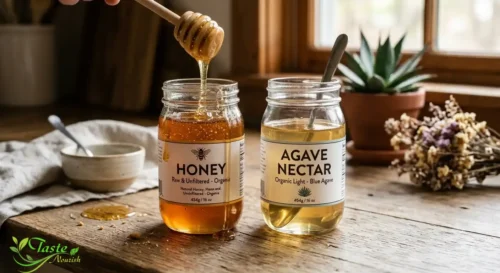
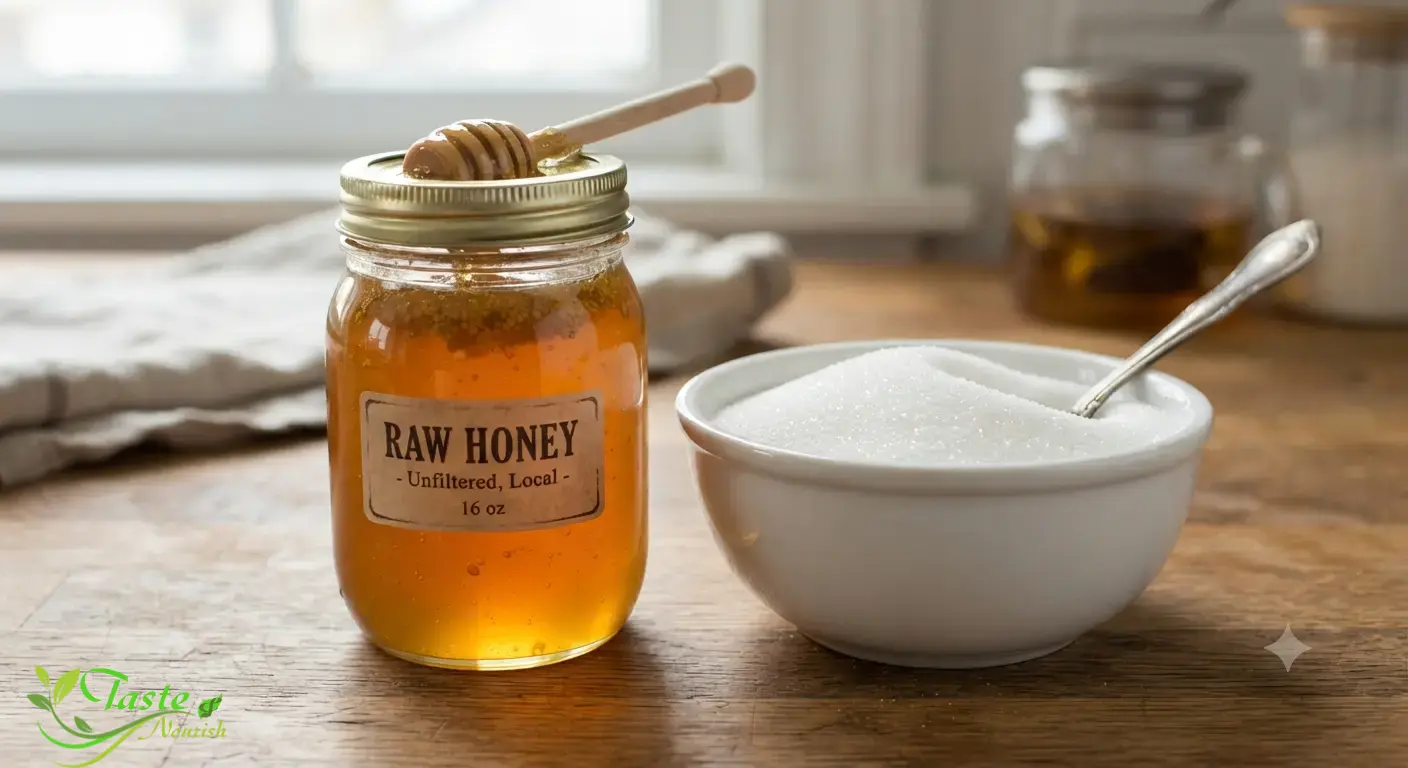
Honey vs Agave Nectar — Stand in front of the sweetener shelf at any grocery store and you’ll see honey and agave nectar sitting side by side, both wearing the same “natural” halo. But are they actually similar? Not really. One comes from bees working a flower field. The other comes from a spiky desert plant that’s also famous for tequila.
Their sugar chemistry, their effect on blood sugar, and their best uses in your kitchen are all quite different, even though marketers often lump them together as interchangeable “healthy sugar alternatives.”
This guide breaks down exactly how honey and agave nectar compare — nutrition, taste, cooking uses, health considerations, and the myths that follow both of them around. By the end, you’ll know which one fits your goals, whether that’s blood sugar management, a vegan pantry, or just a better cup of tea.
Key Takeaways
Honey is made by bees from flower nectar; agave nectar is a processed syrup extracted from the agave plant.
Agave nectar has a lower glycemic index than honey, but it’s higher in fructose overall.
Honey carries trace antioxidants and enzymes, and research supports its use in wound care — but it’s not safe for babies under 12 months.
Both are classified as added sugars by the FDA and should be used in moderation as part of an overall healthy eating pattern.
What Is Honey?
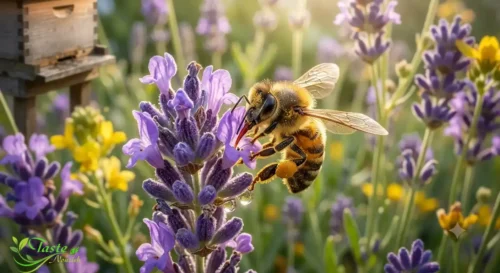
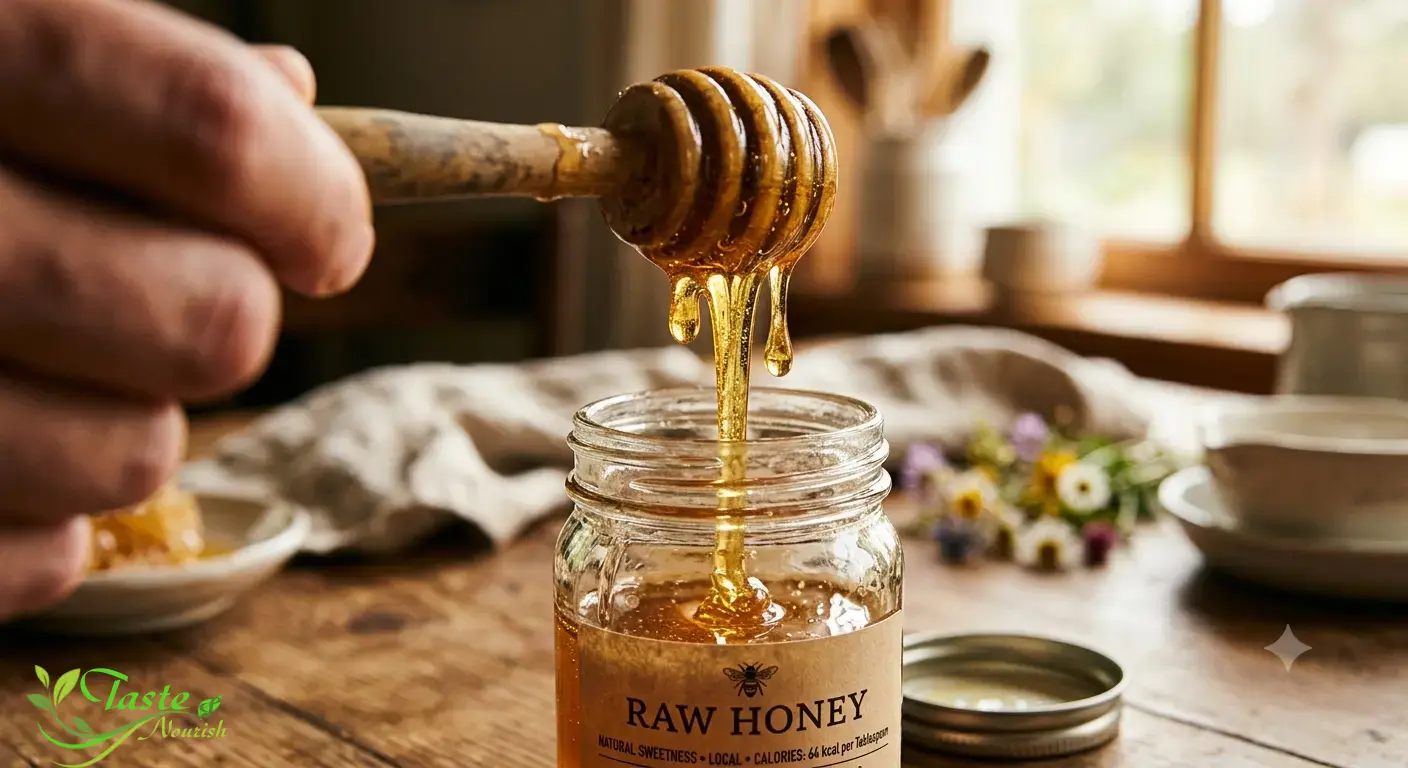
Honey is the thick, golden liquid honeybees produce from the nectar they collect off flowers. Bees carry that nectar back to the hive, break it down with enzymes, and store it in wax comb, where extra moisture evaporates until it thickens into the honey you’d recognize in a jar.
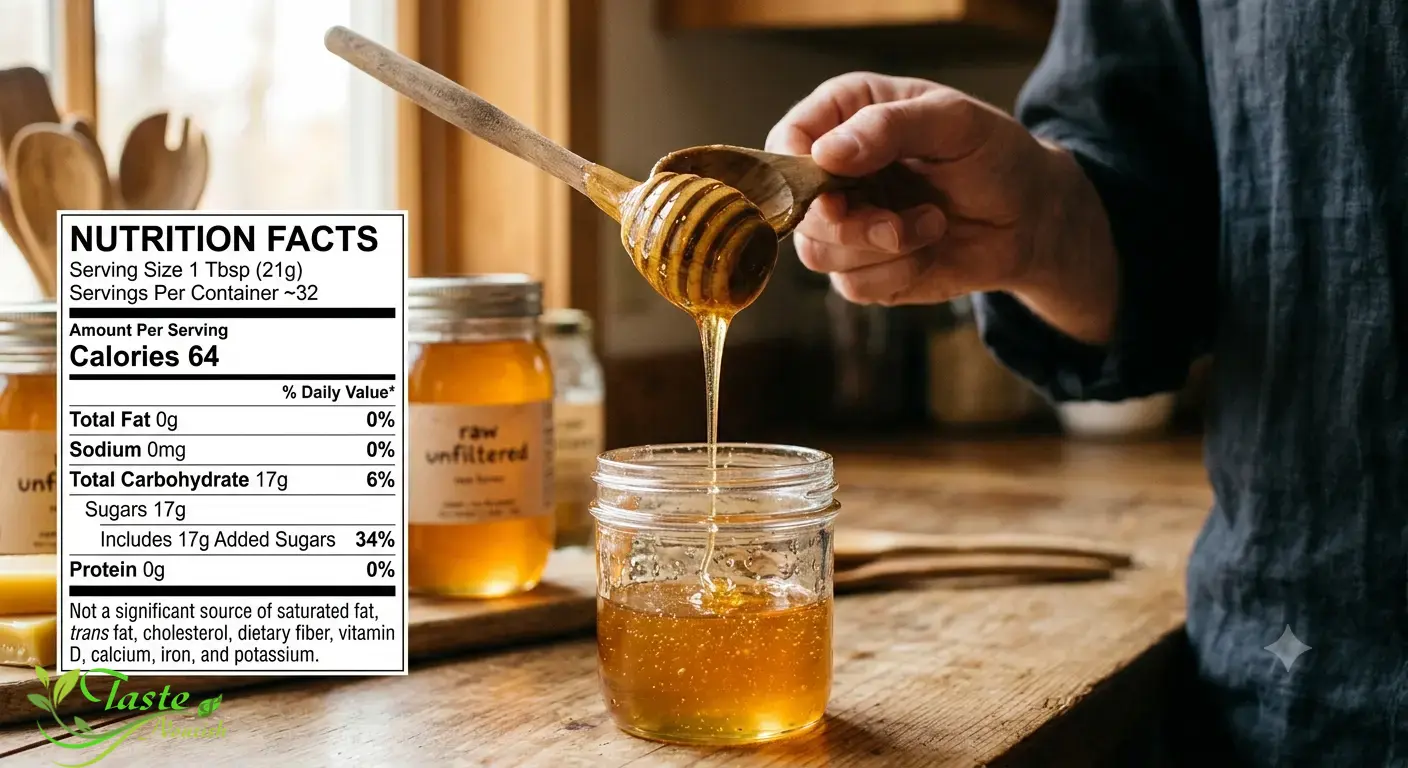
According to the U.S. Department of Agriculture’s FoodData Central, a 100-gram serving of honey provides about 304 calories and roughly 82 grams of carbohydrates, made up mostly of fructose and glucose with only trace amounts of protein, fat, and micronutrients . Humans have been harvesting it for thousands of years, and it remains one of the few sweeteners that requires essentially no industrial processing to reach your table.
How Honey Is Made
The process starts when a bee sips nectar from a flower and stores it in a special stomach called a crop. Enzymes in the bee’s body begin converting the nectar’s sucrose into simpler sugars — fructose and glucose — before it’s ever regurgitated into the honeycomb.
Back at the hive, other worker bees fan the comb with their wings to drive off excess water, concentrating the mixture until it reaches the syrupy consistency we call honey. Beekeepers then extract the comb, spin it in a centrifuge, and filter out wax and debris.
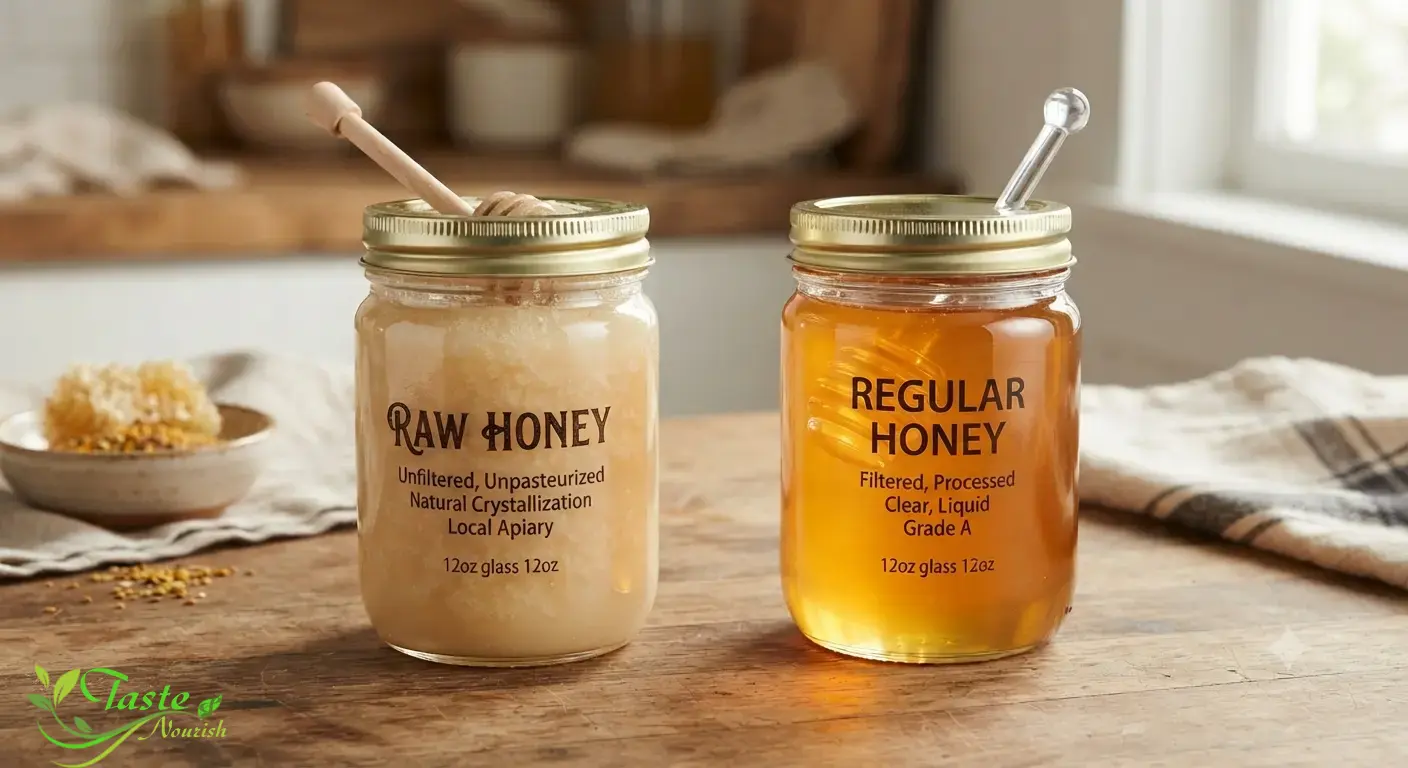
Raw honey skips extra heating and fine filtering, which helps preserve more of its natural enzymes and pollen, while commercially pasteurized honey is heated briefly to slow crystallization and extend shelf stability.
Types of Honey
Not all honey tastes the same, and the floral source makes a real difference. Clover honey is mild and widely available, wildflower honey shifts with the season and region, and specialty types like manuka, buckwheat, and acacia each bring a distinct color, aroma, and antioxidant profile. As a general rule, darker honeys such as buckwheat tend to carry more antioxidant compounds than lighter varieties like acacia or clover, though all types still deliver the same basic calorie and sugar load.
♦ If you’re choosing honey for flavor experimentation, a side-by-side tasting of two or three regional varieties is a genuinely fun way to notice how much floral source shapes the final jar.
What Is Agave Nectar?
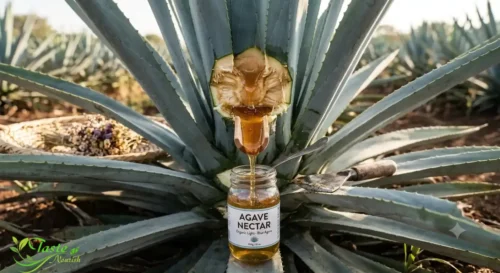
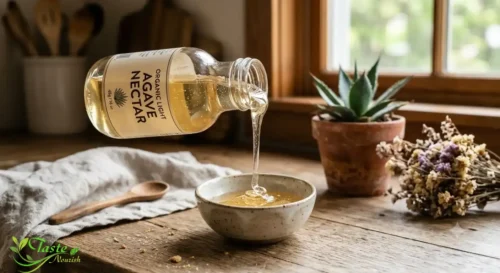
Agave nectar, sometimes labeled agave syrup, is a sweetener made from the sap of the agave plant — the same succulent family used to produce tequila and mezcal. It gained popularity in the 2000s as a “natural,” plant-based, low-glycemic alternative to table sugar, and it’s still marketed heavily toward vegan and diabetic-friendly cooking.
Unlike honey, which requires almost no processing beyond extraction and filtering, agave nectar is a manufactured syrup: the plant’s naturally occurring fructose polymers, called agavins, have to be broken down chemically or enzymatically before the product resembles the pourable syrup you buy.
A peer-reviewed review in the National Institutes of Health’s PubMed Central database describes agave syrup as predominantly fructose, generally accounting for 60 percent or more of its total soluble solids, with smaller amounts of glucose and only trace sucrose.
How Agave Nectar Is Made
Producers harvest the agave plant’s core, called the piña, once the plant reaches roughly six to eight years of maturity and its carbohydrate content peaks. Workers extract the sugary sap and then hydrolyze it — using heat, acids, or enzymes — to break the long fructan chains down into shorter, sweeter fructose molecules.
The resulting liquid is filtered and concentrated into the syrup sold on shelves. Because this hydrolysis step is essential to creating a sweet, pourable product, agave nectar is best understood as a processed plant syrup rather than a “raw” nectar straight from nature, despite how it’s often marketed.
Light vs. Dark Agave Nectar
Light agave nectar goes through more extensive filtering, which strips out most of the plant’s natural color and flavor compounds, leaving a neutral sweetener that blends easily into drinks and baked goods without changing their color. Dark agave nectar skips some of that filtering, so it retains more of the plant’s natural minerals and a deeper, almost caramel-like flavor closer to mild molasses.
♦ If you want agave to disappear into a recipe, reach for the light version; if you want it to contribute flavor the way brown sugar or maple syrup would, the dark version is the better pick.
Honey vs Agave Nectar: Nutrition Facts Compared
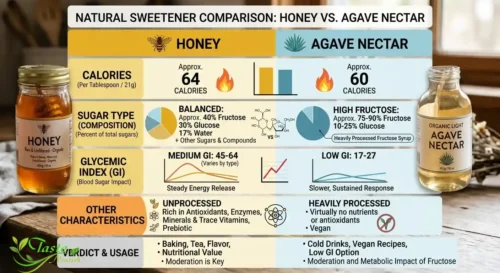
On paper, honey and agave nectar look fairly close in calories and carbohydrates per serving, but the type of sugar each one delivers is where the real differences show up. Here’s how they stack up per tablespoon:
Nutrient (per 1 tbsp)
Honey
Agave Nectar
Calories
~64 kcal
~60–70 kcal
Total carbohydrates
~17 g
~16–18 g
Approx. fructose share
~38%
~70–85%
Approx. glucose share
~31%
~10–20%
Glycemic index (approx. range)
30–78, averaging around 55–58
Roughly 10–30
Relative sweetness vs. table sugar
Comparable, slightly sweeter
Noticeably sweeter — you’ll use less
Pro Tip: Because agave nectar is sweeter by volume, most recipes only need about two-thirds to three-quarters as much agave as the honey or sugar it’s replacing. Start smaller and taste as you go.
Calorie and Carbohydrate Comparison
Gram for gram, honey and agave nectar sit in a similar calorie range, both landing somewhere between 60 and 70 calories per tablespoon. That similarity can be misleading, though, since agave’s greater sweetness means people often use less of it to hit the same flavor target — which can translate into a modest calorie savings in practice, even if the two aren’t dramatically different nutritionally. Neither one brings meaningful protein or fat to the table, and both are essentially concentrated carbohydrate sources with only trace vitamins and minerals.
♦ If your main concern is total calorie intake, portion control matters more than which bottle you’re pouring from.
Glycemic Index Comparison
The glycemic index (GI) measures how quickly a food raises blood glucose after eating, and this is where honey and agave nectar genuinely diverge. Honey’s GI swings widely, from around 30 up to nearly 80 depending on floral source, since its glucose-to-fructose ratio isn’t fixed. Agave nectar sits much lower and more consistently, generally cited in the range of roughly 10 to 30, a result of its unusually high fructose concentration, since fructose doesn’t spike blood glucose the way glucose does.
That said, a low GI number isn’t the same thing as a metabolically “safe” sweetener. Fructose bypasses the blood-glucose response but is processed almost entirely by the liver, and the same NIH-hosted review that documents agave’s high fructose content also flags concerns that excess fructose intake may be associated with insulin resistance and fatty liver changes over time. In other words, a sweetener can look great on a glycemic index chart and still deserve moderation.
Taste, Texture, and Culinary Uses
Honey brings a floral, sometimes earthy complexity that varies jar to jar, along with a thick, viscous texture that slowly crystallizes over time if stored at cool room temperature. Agave nectar, by contrast, tastes cleaner and more neutral — closer to simple syrup with a faint plant-like note — and it stays runny and pourable almost indefinitely, dissolving readily even in cold liquids where honey tends to clump. That single textural difference is often the deciding factor for which one belongs in a given recipe.
Best Uses for Honey
Honey shines in situations where its distinct flavor and stickiness are assets rather than obstacles. Consider reaching for honey when you’re:
Sweetening hot tea, oatmeal, or yogurt, where its floral notes come through
Baking breads and cakes, since honey helps retain moisture and encourages browning
Making glazes and marinades for roasted vegetables, salmon, or chicken
Whisking into salad dressings alongside mustard and vinegar for natural body
Drizzling over cheese boards, where its sweetness contrasts nicely with sharp or salty cheeses
Best Uses for Agave Nectar
Agave nectar’s neutral flavor and cold-liquid solubility make it the more practical choice for a different set of jobs. It tends to work best when you’re:
Sweetening iced coffee, cocktails, or cold-brew tea, since it dissolves instantly without heat
Making margaritas or other citrus-forward drinks, a classic agave pairing
Baking vegan goods that need a plant-based substitute for honey
Blending into smoothies where you don’t want a strong competing flavor
Sweetening sauces or marinades where a lighter, more neutral profile is preferred
Health Benefits and Potential Risks
Neither honey nor agave nectar should be treated as a health food, but each one carries a distinct profile worth understanding before you decide which belongs in your pantry.
Potential Benefits of Honey
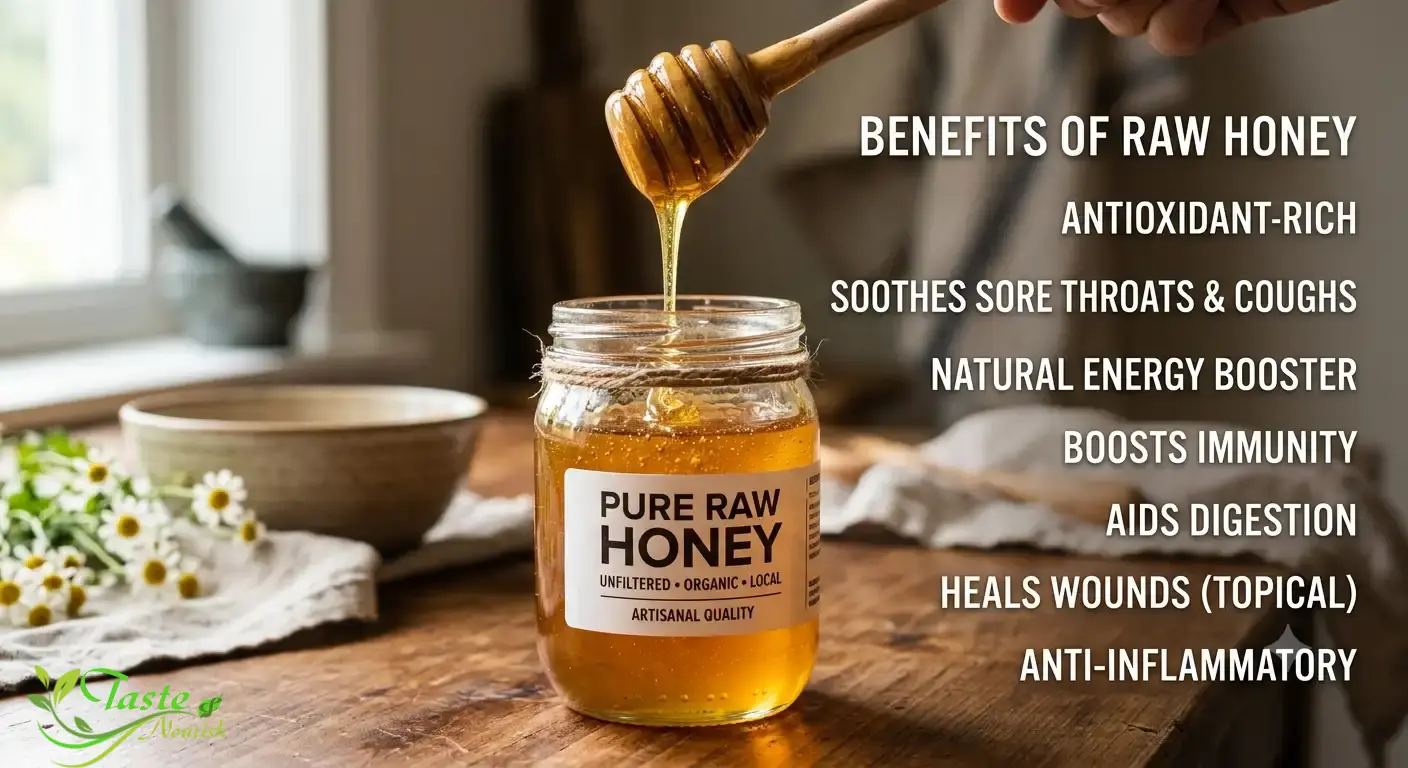
Beyond its role as a sweetener, honey has a genuinely interesting research history in wound care. A 2024 systematic review and meta-analysis published through the National Institutes of Health’s PubMed Central database, covering eight studies and more than 900 patients, found that honey dressings were associated with meaningfully faster healing time and a higher percentage of wound closure compared with alternative treatments .
That’s a clinical, topical use rather than a dietary one, so it doesn’t mean eating more honey will heal cuts faster — but it does help explain why medical-grade honey shows up in modern burn units. Darker honey varieties also tend to carry more antioxidant compounds than lighter ones, though the amounts you’d realistically consume in a serving are modest and shouldn’t be counted on as a primary nutrient source.
Potential Benefits of Agave Nectar
Raw agave sap naturally contains fructans, a type of prebiotic fiber that may support gut bacteria, and the plant itself has a long history of traditional use.
Unfortunately, much of that fiber content is reduced during the hydrolysis process that turns raw sap into the shelf-stable syrup you buy, so commercial agave nectar shouldn’t be relied on as a meaningful fiber source. Its main practical advantages are being plant-based, appealing to vegan diets that avoid honey, and producing a smaller immediate blood-sugar spike than many other sweeteners, which some people find useful for taste preferences around lower-GI cooking.
The same academic review cited above is careful to frame these upsides against agave’s concentrated fructose load, describing the sweetener’s overall health profile as something that “needs” more research before strong claims can be made either way.
Risks and Who Should Avoid Each
Some groups have clearer, evidence-backed reasons to be cautious with one or both of these sweeteners:
Infants under 12 months should never be given honey in any form. The Centers for Disease Control and Prevention warns that honey can contain the bacteria that cause infant botulism, and recommends withholding it entirely until after a child’s first birthday.
People with fructose malabsorption or IBS may find both sweeteners troublesome, since honey and especially agave nectar are considered high-FODMAP foods that can worsen digestive symptoms in sensitive individuals.
People managing insulin resistance or fatty liver concerns may want to limit agave nectar specifically, given its unusually concentrated fructose content and the associations researchers have raised with metabolic strain.
Strict vegans typically avoid honey as an animal-derived product, making agave nectar (or maple syrup) the more consistent choice.
Anyone tracking total added sugar intake should remember that both honey and agave nectar count fully toward the FDA’s added sugars category on nutrition labels, and the Dietary Guidelines for Americans recommends keeping added sugars under 10 percent of daily calories.
Buying and Storage Tips
If you’re shopping for honey and want the trace antioxidants and enzyme content intact, look for labels marked “raw” and, when possible, choose local or regional sources, since some evidence suggests darker, minimally processed honeys carry more beneficial compounds.
For agave nectar, check the ingredient list for a single item — agave syrup or agave nectar — since some lower-quality products are blended or adulterated with cheaper corn syrups, which changes both the flavor and the nutrition profile you’re expecting.
Both sweeteners are shelf-stable at room temperature and don’t require refrigeration once opened, though honey may slowly crystallize over months; if that happens, a warm water bath (never a microwave on high, which can degrade its flavor compounds) will restore its texture. Keep both containers tightly sealed between uses, since exposure to air and moisture can eventually invite fermentation, particularly in agave nectar that’s been diluted or left open for extended periods.
Common Myths About Honey and Agave Nectar
A few persistent claims about these sweeteners deserve a second look:
Myth: Honey never spoils, so it must be calorie-free or “not really sugar.” Honey’s long shelf life comes from its low moisture and acidity, not from having fewer calories — it still delivers about 64 calories per tablespoon and counts as added sugar.
Myth: Agave nectar’s low glycemic index makes it harmless in any amount. A low GI reflects blood glucose response only; agave’s concentrated fructose still adds calories and, per the research above, may carry its own metabolic considerations with heavy use.
Myth: Raw honey cures seasonal allergies. This is a popular claim, but current evidence for local honey meaningfully relieving allergy symptoms remains limited and inconclusive, so it’s best treated as anecdotal rather than proven.
Myth: Agave nectar is basically the same as eating the agave plant. The fiber-rich fructans naturally present in raw agave sap are largely broken down during processing, so the bottled syrup bears little resemblance to the plant’s original nutritional profile.
Conclusion: Which Sweetener Wins?
There’s no universal winner here — the better choice depends on what you’re actually optimizing for. If you want a sweetener with more flavor complexity, a long culinary history, and topical wound-care research behind it, honey has the edge, as long as it’s kept far away from any child under one year old. If you need something plant-based, easily dissolved in cold drinks, and lower on the glycemic index chart, agave nectar fits that job better, provided you stay mindful of its concentrated fructose load.
Used thoughtfully and in moderation, either one can have a place in a balanced diet — the mistake is treating either as a “free” health food rather than what it really is: a form of added sugar that happens to come from an interesting natural source.
Honey vs Agave Nectar FAQs
Is agave nectar healthier than honey?
Neither is definitively “healthier” — they simply carry different trade-offs. Agave has a lower glycemic index but a much higher fructose concentration, while honey has more variable GI and some antioxidant content, particularly in darker varieties. Both are classified as added sugars and should be used in moderation regardless of which one you choose.
Can people with diabetes use honey or agave nectar?
Both sweeteners still raise blood glucose and contribute to overall carbohydrate intake, so people managing diabetes should treat them the same as any other added sugar and count them within their carbohydrate budget. Speaking with a healthcare provider or registered dietitian about individual portion sizes is a reasonable next step before making either a regular part of your diet.
Is agave nectar vegan while honey is not?
Yes — agave nectar is derived entirely from a plant, making it suitable for vegan diets, while honey is produced by bees and is generally excluded from a strict vegan eating pattern. This is one of the most common reasons people choose agave nectar as a honey substitute in recipes.
How much honey or agave nectar can I safely eat per day?
There’s no sweetener-specific daily limit, but both fall under the broader added sugars category, which the Dietary Guidelines for Americans recommends keeping below 10 percent of total daily calories — about 50 grams on a 2,000-calorie diet. Since a single tablespoon of either sweetener contributes roughly 16 to 18 grams of carbohydrate, it adds up quickly if used generously across multiple foods and drinks in a day.
Can I substitute honey and agave nectar for each other in recipes?
You can, but expect to adjust quantities and possibly other ingredients. Because agave nectar is sweeter and thinner than honey, most cooks use slightly less agave than the honey called for and may need to reduce other liquids slightly, while swapping honey in for agave may require a touch more liquid and a longer bake time due to honey’s tendency to promote browning.
National Institutes of Health, National Library of Medicine. “Agave Syrup: Chemical Analysis and Nutritional Profile, Applications in the Food Industry and Health Impacts.” PubMed Central (PMC). https://pmc.ncbi.nlm.nih.gov/articles/PMC9222424/
National Institutes of Health, National Library of Medicine. “Efficacy and Safety of Honey Dressings in the Management of Chronic Wounds: An Updated Systematic Review and Meta-Analysis.” PubMed Central (PMC). https://pmc.ncbi.nlm.nih.gov/articles/PMC11314015/
**Hanan Abo Samra** shares practical cooking insights, delicious recipes, and evidence-based nutrition information. Drawing on more than 20 years of hands-on cooking experience, she creates helpful food content that combines everyday cooking knowledge with information from reliable scientific sources. Her goal is to help readers better understand the foods they eat, explore their nutritional benefits, and prepare delicious meals with confidence.