
Side Effects of Eating Oats Daily: 8 Things Doctors Want You to Know
Side Effects of Eating Oats Daily | Benefits, Risks & Safe Tips
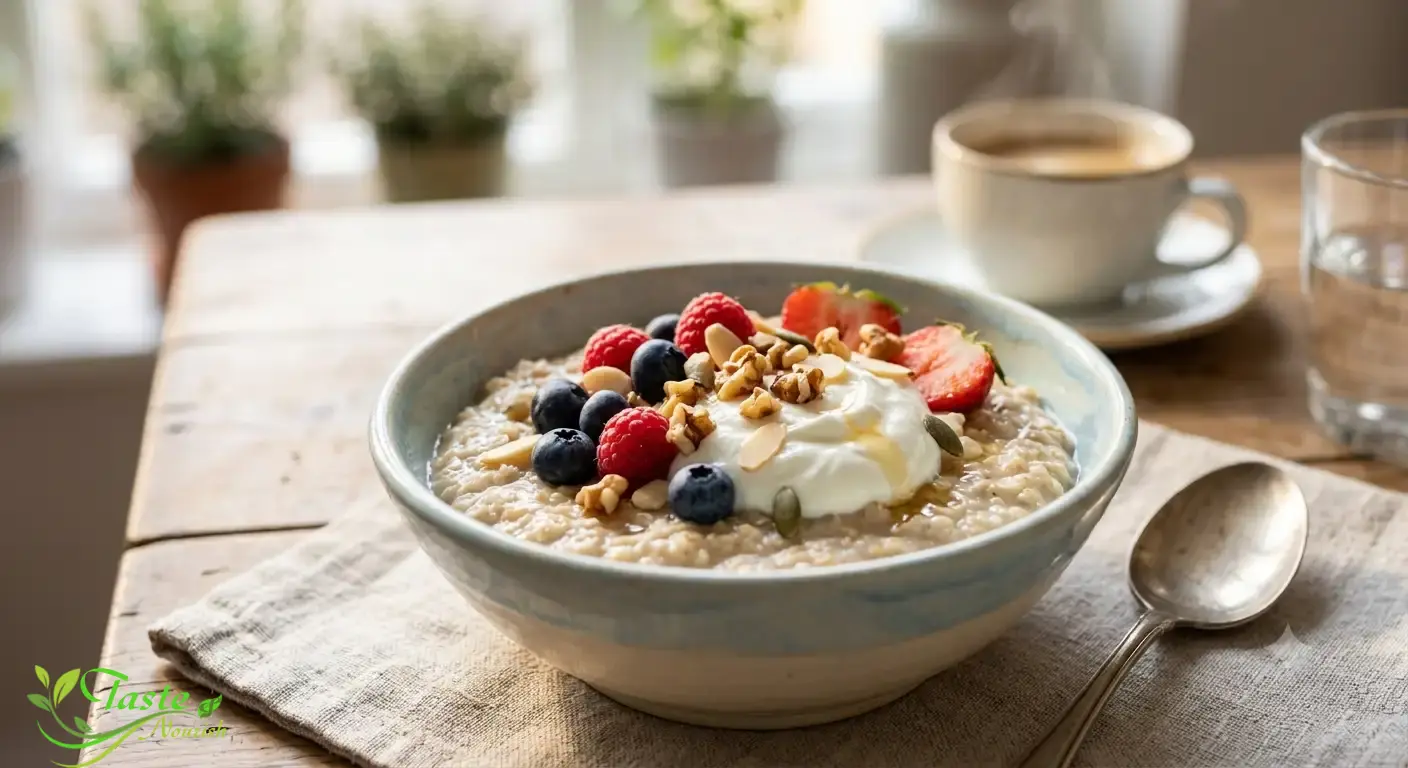
Oats sit on millions of kitchen counters as the default “healthy” breakfast, and for good reason. But what happens when that bowl becomes a daily, non-negotiable habit? Most articles online stop at “oats are good for you” and call it a day. We’re going further. This guide breaks down the lesser-discussed side effects of eating oats daily, who needs to be cautious, and exactly how to enjoy oats without the digestive drama. If you’ve ever felt bloated after your morning oatmeal and wondered why, you’re about to get real answers.
Why Oats Have Become a Daily Breakfast Staple
Walk into any grocery store and you’ll find an entire aisle dedicated to oats — rolled, steel-cut, instant, overnight, flavored, and plain. This isn’t a passing trend. Oats have earned their reputation through decades of nutrition research tying them to heart health, blood sugar regulation, and weight management.
The soluble fiber called beta-glucan is the star compound here, and it’s the reason the FDA allows foods containing it to carry an official heart-health claim.
Key takeaway: Oats aren’t inherently risky. The side effects most people experience come from how much, how fast, and how they’re prepared — not from oats themselves.
That said, popularity doesn’t mean immunity from drawbacks. Just like spinach, almonds, or even water can cause problems in excess, oats have a profile of effects that deserve honest coverage. Before diving into the side effects, it helps to understand exactly what’s in a bowl of oats, because most of the side effects trace directly back to specific nutrients and compounds.
Oats Nutrition Facts: What’s Actually in a Bowl
Macronutrient Breakdown Per 100g
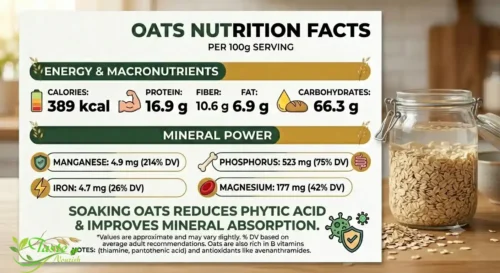
Here’s a standard nutrition profile for dry rolled oats, which forms the baseline for almost every health claim — and every side effect — discussed in this article.
| Nutrient | Amount per 100g (dry) | % Daily Value (approx.) |
|---|---|---|
| Calories | 389 kcal | 19% |
| Protein | 16.9 g | 34% |
| Carbohydrates | 66 g | 24% |
| Dietary Fiber | 10.6 g | 38% |
| Beta-glucan | 3–4 g | — |
| Fat | 6.9 g | 9% |
| Iron | 4.7 mg | 26% |
| Magnesium | 177 mg | 42% |
| Phosphorus | 523 mg | 42% |
| Manganese | 4.9 mg | 213% |
A standard 100g serving of oats delivers 389 calories and 16.9 grams of protein, which is actually higher than most other grains, including quinoa. This protein density is one reason oats keep you full longer than typical refined-grain cereals.
Key Vitamins, Minerals, and Antioxidants
Beyond the macros, oats bring a noteworthy spread of micronutrients to the table. A single cup of dry oats provides roughly 24% of the recommended daily copper intake, along with 20% of iron and zinc, 34% of magnesium, plus a meaningful supply of vitamins E and C. They also contain ferulic acid, a polyphenol antioxidant that’s been studied for its role in reducing oxidative stress.
Reader note: The mineral content sounds impressive on paper, but it doesn’t always translate to full absorption — and that’s exactly where one of the most overlooked side effects comes into play. Keep reading.
The Real Side Effects of Eating Oats Every Day
This is the section most “oats are healthy” articles gloss over. Below is a comprehensive, evidence-based rundown of what daily oats consumption can actually do to your body, especially if you’re eating them in excess or without proper preparation.
1- Gas, Bloating, and Digestive Discomfort
This is, by a wide margin, the most commonly reported issue. Bloating caused by a sudden increase in fiber intake is the single most common side effect people notice when they start eating oats regularly. Your gut bacteria ferment the soluble fiber in oats, and that fermentation process produces gas as a natural byproduct. If your digestive system isn’t used to a high-fiber diet, you’ll feel it first.
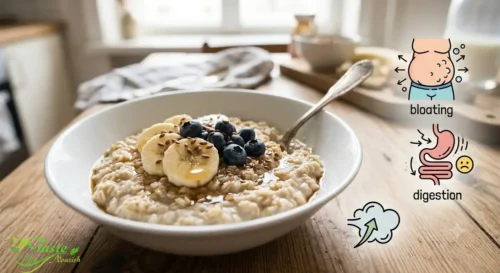
The fix isn’t complicated, but it does require patience. Starting with around a quarter cup of raw oats daily and gradually building up over roughly two weeks, while drinking at least six to eight glasses of water daily, significantly reduces this bloating effect.
Think of your gut microbiome like a new gym member — you don’t walk in and deadlift your max on day one. You build up the fiber load the same way you’d build up training volume.
2- Risk of Intestinal Blockage With Low Fluid Intake
This one sounds alarming, and while it’s rare, it’s worth knowing. Eating large quantities of oats without sufficient fluid intake carries a risk of intestinal blockage, since oats expand significantly when they absorb water. Picture dry oats as tiny sponges. In your stomach, without enough liquid, that swelling can happen at the wrong time and place. This is uncommon in healthy adults eating normal portions, but it’s a real mechanism, not internet folklore.
3- Phytic Acid and Mineral Absorption Concerns
Phytic acid is one of the most misunderstood compounds in the oats conversation. It functions as the primary anti-nutrient in oats, present at roughly 270 to 293 milligrams per 100 grams of dry matter, and it binds to essential minerals including iron, zinc, calcium, and magnesium, reducing how much your body actually absorbs.
Compared to other grains, though, oats aren’t the worst offender. Wheat contains over 7 grams of phytates per 100 grams, while oats sit much lower, at roughly 0.4 to 2.2 grams per 100 grams.
For most people eating a varied diet, this isn’t a deal breaker. For the average person, the amount of phytic acid in a typical daily bowl of oatmeal isn’t enough to cause measurable health issues, though those relying heavily on grains without dietary variety may want to consider traditional preparation methods that lower phytic acid content.
The practical takeaway: don’t make oats your only grain, and don’t skip the soaking step if mineral absorption is a concern for you.
4- Gluten Cross-Contamination and Celiac Risk
Pure oats don’t naturally contain gluten. The problem is processing, not the grain itself. Oats are frequently processed in facilities that also handle wheat, which means cross-contamination is a genuine risk, and people with celiac disease should only consume oats that are certified gluten-free.
Beyond gluten itself, oats contain a related protein called avenin. Most people with gluten intolerance can digest avenin without any problem, which is why oats are generally considered safe for people with celiac disease, provided cross-contamination is ruled out through proper labeling.
If you have a diagnosed sensitivity, this distinction matters enormously. Buying generic, non-certified oats could expose you to trace wheat, rye, or barley — the actual gluten sources — even though the oats themselves never contained gluten to begin with.

5- Skin Reactions and Allergic Responses
Oat allergies are uncommon but not unheard of. Some individuals develop skin reactions such as rashes or general irritation, or experience digestive difficulty specifically tied to oats, and anyone noticing a rash should consult a healthcare provider. This applies both to eating oats and to topical oat products like lotions and oatmeal baths.
Oat bran and whole oats are generally considered safe to eat for most people, though products applied to the skin containing oat extract can cause a rash in some individuals.
6- Blood Sugar Spikes From Instant Oats
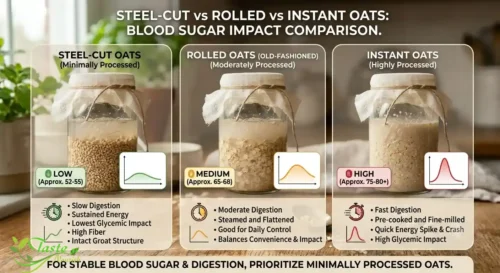
Not all oats behave the same way once they hit your bloodstream, and this is a genuine content gap most articles skip entirely. Instant oats are pre-cooked and very finely milled, which means their starch is essentially pre-digested before you even eat it, causing it to hit your bloodstream much faster than steel-cut or rolled varieties.
If you’re managing blood sugar — whether due to prediabetes, insulin resistance, or just wanting steadier energy — the type of oats you choose matters as much as whether you eat oats at all.
Quick comparison for blood sugar impact:
- Steel-cut oats — slowest digestion, lowest glycemic impact
- Rolled (old-fashioned) oats — moderate digestion speed
- Quick oats — faster breakdown, moderate-to-high impact
- Instant oats (flavored packets) — fastest spike, often combined with added sugar
- Oat flour / baked oats — variable, depends on what it’s mixed with
7- Weight Gain From Overeating or Added Toppings
Oats get marketed almost exclusively as a weight-loss food, but that’s only half the story. Because oats are a dense source of carbohydrates, eating more than necessary due to their savory, satisfying nature can actually contribute to weight gain rather than supporting weight loss or maintenance goals.
The other culprit is what gets added on top — brown sugar, honey, dried fruit, chocolate chips, and full-fat cream can quietly turn a 150-calorie bowl into a 500-calorie one.
8- Medication Interactions to Watch For
This is rarely discussed but genuinely important for certain populations. Oats can interact negatively with certain medications, with most of these interactions involving the digestive tract. If you’re on medications that affect gut motility, blood sugar control, or mineral supplementation (like iron tablets), talk to your pharmacist about timing your oats consumption away from your dosing schedule, since the fiber and phytic acid content can interfere with absorption.
Who Should Be Extra Cautious With Daily Oats
Certain groups should pay closer attention to portion size, oat type, and preparation method before making oats a daily habit:
- People newly diagnosed with celiac disease or non-celiac gluten sensitivity
- Anyone with a history of bowel obstruction, strictures, or slow gut motility
- Individuals managing iron-deficiency anemia who rely on grains as a primary food group
- People with diagnosed oat or avenin allergies
- Those on medications with known fiber or mineral interactions
- Anyone recovering from gastrointestinal surgery where high-fiber foods are restricted
If you fall into any of these categories, this doesn’t mean oats are off-limits forever — it means a conversation with your doctor or dietitian should come before daily consumption, not after symptoms appear.
How to Minimize Oats Side Effects
Portion Control and Gradual Introduction
The dose really does make the poison here. Gastric swelling from oats, while uncommon among healthy adults, is typically triggered by a sudden dietary shift — going from a low-fiber diet straight into heavy oats consumption without a smooth transition period. A gradual ramp-up gives your gut bacteria time to adjust their fermentation capacity, which directly reduces gas production over time.
Practical steps to introduce oats safely:
- Start with a quarter to half cup of dry oats per serving
- Increase the portion by small amounts every few days
- Always pair oats with adequate water or another liquid
- Choose steel-cut or rolled over instant when possible
- Add protein (Greek yogurt, eggs, nuts) to slow digestion
- Track how your body responds for the first two weeks
Soaking and Preparation Tips
Soaking isn’t just an overnight-oats trend — it’s a functional technique with measurable benefits. Combining malting and soaking has been shown to increase zinc absorption from 11.8% to 18.3% and improve iron absorption by 47% in human studies, demonstrating a real, measurable benefit beyond just convenience. If you’ve been hesitant about overnight oats out of food-safety concern, the science says otherwise.

Soaking oats overnight is safe and beneficial, breaking down phytic acid for improved mineral absorption while pre-digesting starches for easier digestion, all without losing nutrients — cooking is optional, not required.
“Pick steel-cut or rolled oats, stick to 30–50g per serving, pair with protein, skip the added sugar, and hydrate. Done that way, oats lower cholesterol, steady blood sugar, support gut health, and aid weight control.”
Oats Side Effects vs. Benefits — A Balanced Comparison
| Aspect | Potential Side Effect | Documented Benefit |
|---|---|---|
| Digestion | Gas, bloating, rare blockage risk | Improved regularity, gut bacteria support |
| Heart Health | None significant at normal intake | Lowers LDL cholesterol via beta-glucan |
| Mineral Absorption | Phytic acid can reduce uptake | Rich source of iron, zinc, magnesium |
| Blood Sugar | Spikes with instant/flavored varieties | Steady glucose control with whole oats |
| Weight | Gain if overeaten or topped heavily | Supports satiety and weight management |
| Skin/Allergy | Rare rash or allergic reaction | Soothing when used topically (oat baths) |
This side-by-side view makes one thing clear: nearly every downside has a direct, manageable fix, while the benefits require minimal effort to access.
Expert-Backed Tips for Eating Oats Safely
Nutrition researchers consistently point back to the same core principles, regardless of which side effect is being discussed. For most people without a specific diagnosed condition, the broader population-level data on oats remains favorable rather than concerning, and soaking, fermenting, and cooking all measurably reduce phytic acid content.
Beyond preparation, variety matters more than people assume. Maintaining a balanced diet with a range of different foods is essential to ensure your body gets all the nutrients it needs, which is part of why it’s wise not to rely on oats for breakfast every single day without variation.
Rotating oats with eggs, smoothies, or whole-grain alternatives a few days a week prevents over-reliance on any single food’s nutrient profile — and its limitations.
The research on heart benefits remains some of the strongest in all of nutrition science. A randomized controlled trial involving 210 participants with mildly elevated cholesterol found that consuming 80 grams of oats daily for 45 days produced a significantly greater reduction in total cholesterol and non-HDL cholesterol compared to an equivalent amount of rice. That’s a meaningful data point — it confirms oats aren’t just marginally better than alternatives, they’re measurably superior for lipid management in a controlled setting.
Conclusion
Eating oats daily is safe and beneficial for the overwhelming majority of people, but “safe” doesn’t mean “side-effect-free.” The honest picture includes gas and bloating during the adjustment period, a small but real risk of digestive blockage without enough fluids, phytic acid’s effect on mineral absorption, gluten cross-contamination risk for celiac patients, occasional allergic reactions, blood sugar spikes from heavily processed instant varieties, potential weight gain from overeating or loaded toppings, and select medication interactions.
None of these are reasons to avoid oats entirely. They’re reasons to eat oats intentionally — the right type, the right portion, properly soaked or cooked, paired with water and protein, and rotated with other whole foods rather than treated as the only breakfast you’ll ever need.
Side Effects of Eating Oats Daily FAQs
Is it bad to eat oatmeal every single day?
No, eating oatmeal daily is generally safe and even beneficial for most people, particularly for heart health and blood sugar control, as long as portions stay reasonable and you’re drinking enough water alongside it.
Can oats cause stomach problems if eaten too often?
Yes, the most common issue is gas and bloating from the sudden increase in fermentable fiber, especially if your usual diet is low in fiber. This typically resolves within a couple of weeks as your gut adjusts.
Do oats really block iron absorption?
Oats contain phytic acid, which can bind to iron and reduce absorption somewhat, but soaking or cooking oats significantly lowers this effect, and the impact is minor for people eating a varied diet overall.
Are oats safe for people with celiac disease?
Pure, certified gluten-free oats are generally considered safe for celiac patients who have been symptom-free for at least six months, but standard non-certified oats carry a real risk of wheat cross-contamination during processing.
Why do instant oats spike blood sugar more than regular oats?
Instant oats are pre-cooked and finely milled, which breaks the starch down ahead of time so it digests and enters your bloodstream much faster than steel-cut or old-fashioned rolled oats.