Reach for a cucumber and find the crisper drawer empty, and you need a cucumber substitute that won’t throw off your salad, sandwich, or chilled soup. The good news: several everyday vegetables and a couple of fruits mimic cucumber’s crunch, mild flavor, or high water content well enough that most home cooks won’t notice the swap.
Which one to reach for depends on what job the cucumber was doing in the dish — crunch, moisture, color, or a neutral base for other flavors. This guide breaks down the best options for every use, from salads to pickling to smoothies, along with when each one is a true match and when it’s a trade-off.
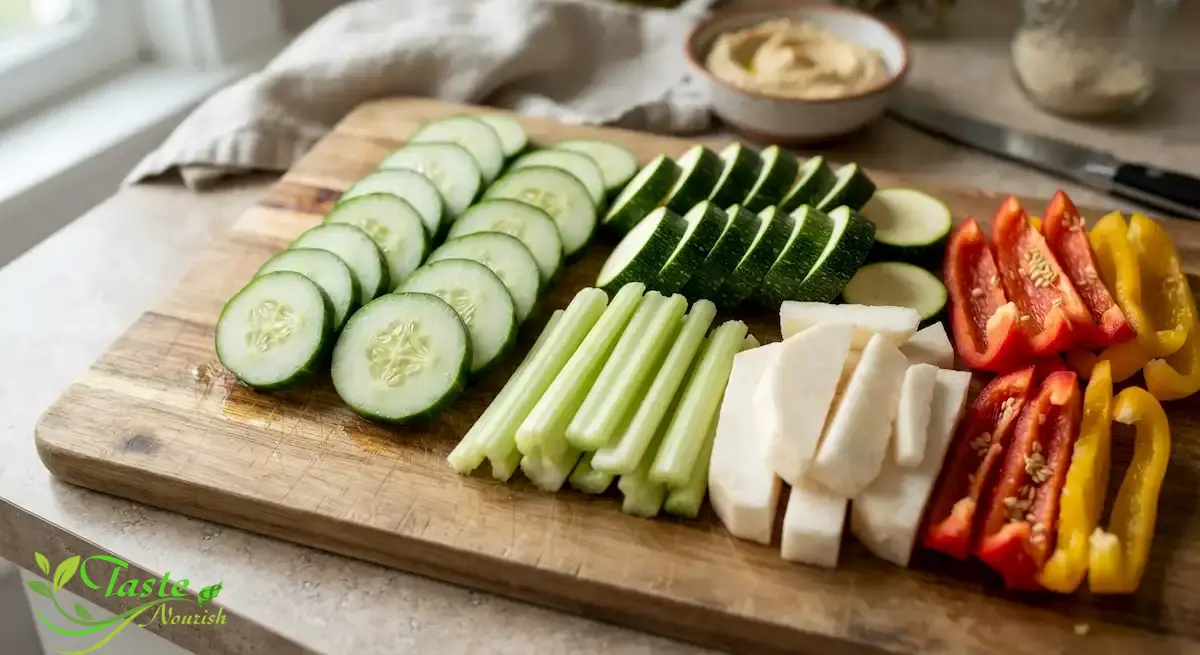
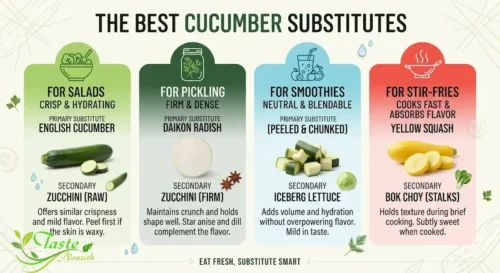
The best cucumber substitute is zucchini, peeled and seeded, which matches cucumber’s mild flavor, crisp texture, and high water content closely enough for salads, sandwiches, and cold dishes. For crunch without moisture, celery, jicama, or bell pepper work well; for pickling or Asian-style dishes, daikon radish is the closest match.
Cucumber Substitutes at a Glance
Substitute
Best For
Swap Ratio
Flavor Match
Zucchini
All-purpose, salads, sandwiches, cold dishes
1:1, peeled and seeded
Very close
Celery
Crunch, snacking, salads
1:1
Different — savory, herbal
Jicama
Salads, slaws, pickling
1:1
Different — sweet, starchy
Daikon radish
Pickling, Asian-style dishes
1:1
Different — peppery
Bell pepper
Salsas, stir-fries, crudités
1:1
Different — sweet-bitter
Key Takeaways
Zucchini, peeled and seeded, is the closest all-purpose cucumber substitute for salads, sandwiches, and cold dishes.
Celery, jicama, and bell pepper offer crunch without cucumber’s high water content, useful when a recipe needs texture but not moisture.
Daikon radish is the standard swap for pickling and Asian-style salads, though its natural peppery bite needs a quick salt-and-rinse to mellow.
Honeydew melon and extra zucchini work well in cold soups and smoothies, where cucumber’s water content matters most.
Most substitutes are not flavor-neutral, so start with less than the recipe calls for and adjust to taste.
Why You Might Need a Cucumber Substitute
Cucumber falls out of season, sells out at the store, or simply isn’t in the fridge when a recipe calls for it. Some cooks are looking for a lower-water option because the dish is already loose, others want a change in color or crunch, and some just don’t enjoy raw cucumber’s flavor or find it doesn’t agree with them. Whatever the reason, the right replacement depends less on finding a perfect flavor twin and more on identifying the specific job cucumber was doing in the recipe.
What Cucumber Brings to a Dish
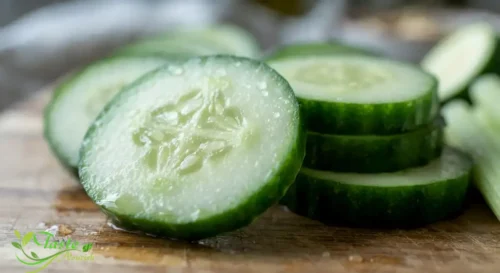
Raw cucumber is about 96 percent water, according to the USDA’s SNAP-Ed seasonal produce guide, which is the main reason it reads as refreshing rather than filling — a medium cucumber comes in at only around 45 calories. Its flavor is mild and faintly grassy, its skin thin, and its crunch comes from water pressure inside the cells rather than fiber. A good substitute needs to replicate whichever of these traits the recipe is actually leaning on: crunch, moisture, color, or a flavor that stays out of the way.
The Best Cucumber Substitutes for Every Use
Each of the following swaps in for cucumber at roughly a 1:1 ratio by volume, with a few adjustments noted where the substitute isn’t a perfect match.
Zucchini — the closest all-purpose cucumber substitute
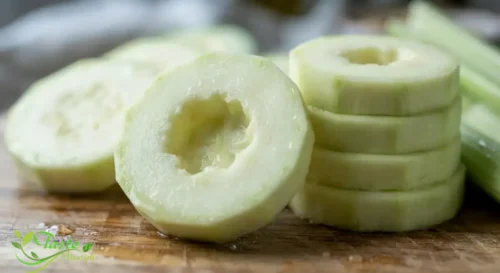
Peel and seed a small zucchini and it looks and tastes remarkably close to cucumber: mild, slightly sweet, and full of water. Swap it 1:1 in salads, sandwiches, tzatziki, or salsa. The main difference is texture — zucchini’s flesh is a touch softer and its skin more bitter, so peel it for raw use and salt sliced pieces for about 10 minutes to draw out extra moisture before adding it to anything that shouldn’t turn watery, like a grain salad.
Celery
Celery brings the crunch cucumber is prized for, but it isn’t neutral — its flavor is savory, slightly bitter, and unmistakably celery. Use it 1:1 in tuna or chicken salad, on a crudité platter, or anywhere texture matters more than a neutral base. It carries far less water than cucumber, so it falls short in recipes like gazpacho, where the liquid itself is the point.
Jicama
Jicama’s crisp, juicy bite lands closer to an apple than a cucumber, but its mild sweetness disappears well into savory dressings. Peel and slice it 1:1 for slaws, salads, or a quick pickle. Because it’s starchier and slightly sweeter than cucumber, cut the added sugar in a pickling brine by about half to keep the balance in check.
Daikon radish
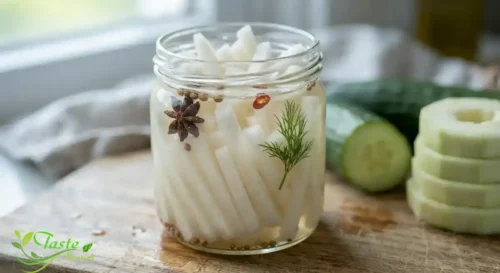
Daikon has cucumber’s crunch and much of its water content, plus a natural peppery bite cucumber doesn’t have. It’s the standard swap in Asian-style pickles, banh mi, and salads. Salt matchstick-cut daikon for 15 to 20 minutes and rinse it before using it raw — this pulls out bitterness and mellows the heat considerably.
Bell pepper
Green bell pepper has a similar crunch to cucumber and a comparable water content, but a distinctly vegetal, slightly bitter flavor that won’t fade into a dish the way cucumber does. It works 1:1 in salsas, stir-fries, and chopped salads, but it’s a poor match anywhere cucumber’s mildness is the whole point, like a delicate cold soup.
Green apple
A tart apple like Granny Smith swaps in for cucumber’s crunch and moisture in salads that can handle a little sweetness and acidity, such as a Nordic-style slaw or a fruit-forward summer salad. This is a flavor trade-off rather than a neutral substitute, so save it for dishes where a touch of tartness would already work.
Honeydew melon
Honeydew is nearly as water-rich as cucumber and blends into cold soups and smoothies with a similar silky texture. Use it 1:1 in a chilled soup or green smoothie, but expect a sweeter result — cut back any added sugar or fruit elsewhere in the recipe to compensate.
Water chestnuts
Water chestnuts replace cucumber’s crunch in cooked dishes like stir-fries and spring rolls, where cucumber rarely appears raw anyway. They hold their bite even after cooking, but carry almost none of cucumber’s water content, so treat them as a texture substitute only, not a moisture one.
Fennel bulb
Thinly sliced fennel bulb has a crisp, juicy bite close to cucumber’s, with a mild anise flavor that works well in bright, herby salads. Use it 1:1 raw, but taste as you go — fennel’s licorice note is more assertive in some bulbs than others.
Best Cucumber Substitute by Use Case
Use Case
Best Substitutes
Salads and slaws
Zucchini, jicama, bell pepper
Sandwiches and wraps
Celery, bell pepper, jicama
Pickling
Daikon radish, jicama, zucchini
Cold soups and gazpacho
Honeydew melon, zucchini
Smoothies and juices
Honeydew melon, zucchini
Stir-fries and cooked dishes
Water chestnuts, daikon radish, zucchini
Dips and crudités
Celery, jicama, bell pepper
Garnish and sushi
Daikon radish, fennel
Expert Tips for Swapping Cucumber Successfully
Salt and drain watery substitutes like zucchini and daikon for 10 to 20 minutes before adding them to anything that shouldn’t turn soggy, such as a grain salad or sandwich.
Taste raw substitutes before committing the full amount. Bell pepper, fennel, and daikon all bring more flavor than cucumber does, and a little goes further than the recipe’s cucumber quantity suggests.
Peel substitutes with tougher or more bitter skins, such as zucchini, when a recipe calls for raw, thin-skinned pieces.
Match water content to the job: reach for honeydew melon or zucchini when a recipe depends on liquid volume, like gazpacho, and reach for celery or water chestnuts when only the crunch matters.
Chill substitutes for cold dishes the way you’d chill cucumber. A room-temperature swap stands out in a cold soup or smoothie.
Common Mistakes to Avoid When Substituting Cucumber
Treating every substitute as flavor-neutral. Cucumber’s flavor is famously mild, but few of its substitutes are. Bell pepper, celery, fennel, and daikon all bring a distinct taste of their own, so start with less than the recipe calls for and taste before adding more.
Skipping the salting step for watery vegetables. Zucchini and daikon hold a lot of water, and added straight into a salad or sandwich, they can turn everything soggy within the hour. Salt sliced pieces, let them sit for 10 to 20 minutes, then blot or drain before using.
Using a low-water substitute in a liquid-based recipe. Celery, bell pepper, and water chestnuts don’t come close to cucumber’s water content, so they fall flat in a gazpacho or cucumber cooler where the liquid itself is the point. Save these for dishes where crunch, not moisture, is the job.
Ignoring how sweetness changes the balance. Jicama, green apple, and honeydew melon are all sweeter than cucumber. In a savory dressing or brine built around cucumber’s neutrality, that sweetness can throw off the balance unless the sugar or acid elsewhere in the recipe is adjusted down.
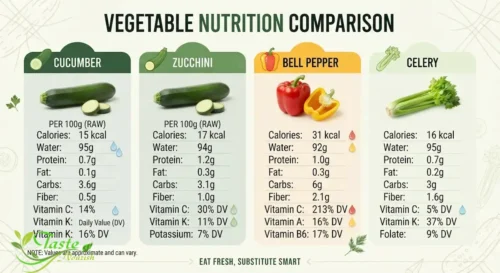
Cucumber Substitute Nutrition Comparison
The figures below are approximate and based on the standard serving sizes used by the USDA for each food, so they’re meant as a general comparison rather than an exact match for any specific recipe.
Cucumber’s roughly 96 percent water content is a large part of why it reads as so refreshing. Research analyzing national nutrition surveys has found that water-dense foods like this can be a meaningful source of daily fluid intake, with food moisture contributing well over a quarter of total water intake in some populations studied, according to an analysis published in the journal Nutrients. When a substitute’s job is hydration as much as crunch, prioritizing a high-water option like honeydew melon or zucchini keeps that role intact.
Storing Your Substitute
Most cucumber substitutes don’t share cucumber’s relatively short fridge life. Zucchini and summer squash keep about as long as cucumber, roughly a week in the crisper drawer. Celery, jicama, daikon radish, and bell pepper all last two to three weeks refrigerated when left whole, which makes them a practical stock-up option if cucumber tends to go soft before it gets used. Cut pieces of any of these substitutes are best used within two to three days.
Cucumber Substitute FAQs
What is the best cucumber substitute overall?
Zucchini, peeled and seeded, is the closest match for flavor, texture, and water content, and it works in nearly any recipe that calls for raw cucumber.
What can replace cucumber in a salad?
Zucchini, jicama, and bell pepper all hold up well in salads. Jicama and bell pepper are better choices if the salad sits for a while before serving, since they release less water than zucchini.
What can I use instead of cucumber for pickling?
Daikon radish and jicama both pickle well and hold their crunch. Daikon is the closer flavor match for Asian-style quick pickles, while jicama works better in a sweeter brine.
Is there a good cucumber substitute for tzatziki?
Grated zucchini, salted and squeezed dry, is the standard swap for tzatziki and other cucumber-yogurt sauces. Skipping the salting step will leave the sauce watery.
What can replace cucumber in a smoothie or cold soup?
Honeydew melon and zucchini both bring cucumber’s high water content and mild sweetness, making them the best substitutes for smoothies, juices, and chilled soups like gazpacho.
Are cucumber substitutes lower in carbs or calories?
Most are similar to cucumber, which is already low in both. Celery is lower still, while jicama and green apple run slightly higher due to their natural sugars.
Conclusion
There’s no single perfect cucumber substitute — the right one depends on whether a recipe needs cucumber’s crunch, its water content, or its neutral flavor. Start with zucchini for most raw applications, and reach for celery, jicama, daikon, or bell pepper when the dish calls for crunch without added moisture. Whichever swap is used, salting and draining watery substitutes first is the single change most likely to save a recipe from turning soggy.
Guelinckx I, Tavoularis G, König J, Morin C, Gharbi H, Gandy J. “Contribution of Water from Food and Fluids to Total Water Intake: Analysis of a French and UK Population Surveys.” Nutrients, 2016. National Center for Biotechnology Information, PubMed Central. https://www.ncbi.nlm.nih.gov/pmc/articles/PMC5084017/
Hanan Abo Samra is the founder of Taste & Nourish, sharing trustworthy nutrition guidance and recipes drawn from 20+ years of hands-on cooking experience. When she's not developing new recipes, Hanan is researching the science behind everyday ingredients to bring readers practical, evidence-based guidance for a healthier lifestyle.