
Health Benefits of Cucumbers: Nutrition Facts & Science
Health Benefits of Cucumbers: What Science Actually Says About This Hydrating Vegetable

Cucumbers show up in salads, sandwiches, and infused water pitchers everywhere, but most people never look past “it’s mostly water.” That’s true, and it’s actually a big part of the story. The health benefits of cucumbers go beyond hydration, touching everything from heart health to digestion to blood sugar management. In this guide, we’ll break down what cucumbers actually contain, what the research supports, and how to get the most out of them without buying into exaggerated claims.
Quick Answer
Cucumbers are about 95% water, very low in calories, and contain fiber, vitamin K, potassium, and plant compounds called cucurbitacins and flavonoids. The health benefits of cucumbers include better hydration, support for heart and digestive function, and an easy way to add volume and nutrients to meals without many calories. They aren’t a miracle food or a cure for any condition, but they’re a solid, evidence-backed addition to a balanced diet.
Key Takeaways
- The health benefits of cucumbers come mainly from their water content, fiber, vitamin K, potassium, and antioxidant compounds.
- One cup of sliced cucumber has around 16 calories, making it one of the lightest vegetables you can eat.
- Cucumbers may support hydration, heart health, and digestive regularity, according to available research.
- People taking blood-thinning medication should keep their vitamin K intake consistent, including from cucumbers.
- Eating the peel adds fiber and nutrients, so wash it well rather than tossing it out.
What Is a Cucumber?
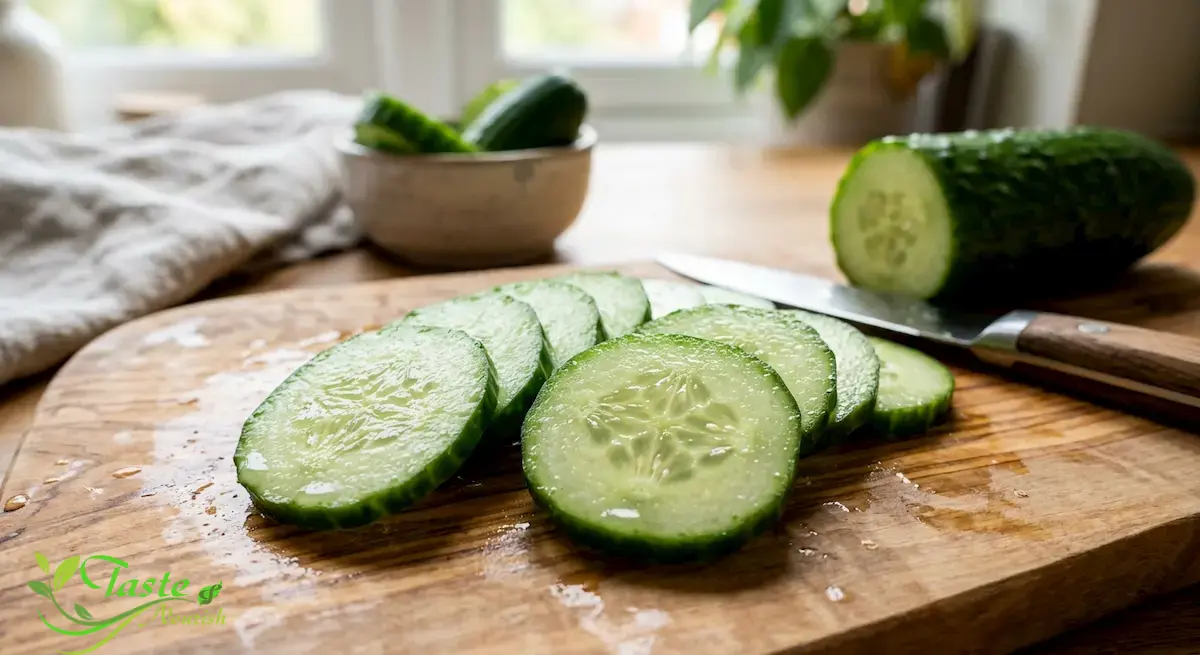
A cucumber (Cucumis sativus) is a member of the gourd family, making it a close relative of melons, squash, and zucchini. Botanically, it’s a fruit, but it’s used and cooked like a vegetable in nearly every cuisine.
You’ll typically find a few main types at the grocery store or farmers market:
- Slicing cucumbers — the common variety used in salads and sandwiches
- English or seedless cucumbers — longer, thinner skin, fewer seeds, often shrink-wrapped
- Persian cucumbers — smaller, crisp, and mild, good for snacking
- Pickling cucumbers — shorter and bumpier, bred for brining
Cucumber Nutrition Facts
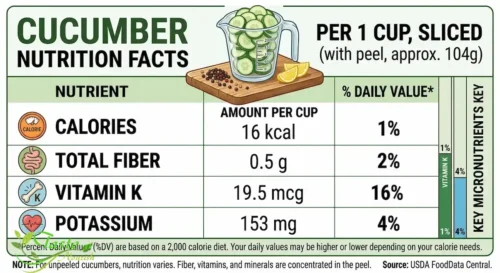
Cucumbers are low in calories and carbohydrates but still contribute meaningful amounts of a few key nutrients. Here’s what one cup of sliced, unpeeled cucumber (about 104 grams) provides, based on data from the USDA FoodData.
| Nutrient | Amount per 1 cup, sliced (104g) | % Daily Value (approximate) |
|---|---|---|
| Calories | 16 | — |
| Water | ~99 g | — |
| Carbohydrates | 3.8 g | 1% |
| Fiber | 0.5 g | 2% |
| Protein | 0.7 g | 1% |
| Vitamin K | ~17 mcg | 14–19% |
| Potassium | ~152 mg | 3% |
| Vitamin C | ~2.9 mg | 3% |
| Magnesium | ~14 mg | 3% |
Nothing here is dramatic, and that’s the point. Cucumbers aren’t a superfood loaded with any single nutrient. They’re a low-calorie, high-water vegetable that adds up when eaten regularly alongside other produce.
Health Benefits of Cucumbers
Most of the cucumber health benefits you’ll read about online trace back to two things: how much water they contain and the small but real amounts of fiber, vitamin K, and plant compounds packed into that water. Here’s what the evidence actually supports.
May Support Hydration
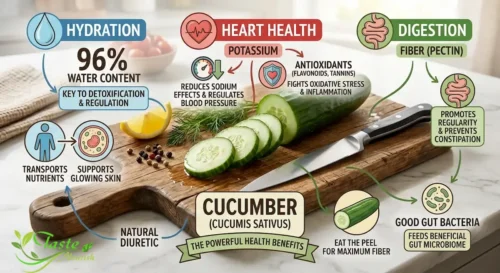
Since cucumbers are roughly 95% water, eating them can contribute to your daily fluid intake, especially when paired with meals. Staying adequately hydrated supports normal body temperature regulation, digestion, and even long-term health outcomes. Research summarized by NIH News in Health found that people who stayed well hydrated over time had a lower likelihood of developing certain chronic conditions as they aged. Cucumbers aren’t a replacement for drinking water, but they’re a reasonable supplement to it.
Cucumbers and Heart Health
Cucumbers contain potassium, a mineral that plays a role in regulating blood pressure by helping the body manage sodium levels and easing tension in blood vessel walls. According to the American Heart Association, increasing potassium intake through food is one of the dietary changes that may help manage blood pressure in otherwise healthy adults. A single cucumber won’t move the needle much on its own, but it can contribute to an overall potassium-rich eating pattern.
May Support Digestive Health
The fiber in cucumber skin and flesh, though modest in amount, adds bulk that can help support regular bowel movements. Research on dietary fiber broadly, including work highlighted by NIH News in Health, links higher fiber intake to better digestive regularity and, over time, potential benefits for cardiovascular and blood sugar health. Cucumbers alone won’t meet your daily fiber needs, but they add to your total when eaten with the peel.
A Source of Vitamin K
Cucumbers, especially with the skin on, provide a meaningful amount of vitamin K relative to their calorie count. Vitamin K supports normal blood clotting and plays a role in bone metabolism, according to the NIH Office of Dietary Supplements. This is also why people on blood-thinning medications are advised to keep their vitamin K intake consistent rather than eliminating or spiking it suddenly.
May Help With Blood Sugar Management
Cucumbers are low in carbohydrates and have a minimal effect on blood sugar, largely because of their high water and low sugar content. Some smaller studies on cucumber extract and its plant compounds have suggested a possible role in blood sugar regulation, though this research is preliminary and mostly conducted in lab or animal models rather than large human trials. Eating whole cucumbers as part of a balanced diet is reasonable, but they shouldn’t be viewed as a treatment for diabetes or blood sugar issues.
May Support Weight Management
Because cucumbers are low in calories but add volume and crunch to meals, they can help people feel satisfied without contributing many calories. This makes them a practical swap for higher-calorie snacks or a way to bulk up a salad or sandwich. The effect is more about calorie density and meal satisfaction than any special fat-burning property.
Antioxidant Content
Cucumbers contain plant compounds, including flavonoids, tannins, and cucurbitacins, that have antioxidant properties in laboratory studies. Antioxidants help neutralize unstable molecules called free radicals, which are linked to cellular aging and chronic disease risk over time. Most of this research has been done in cell or animal studies, so it’s reasonable to see this as a supportive benefit rather than a proven human outcome.
The Science Behind the Health Benefits of Cucumbers
It’s worth being upfront here: cucumber-specific human clinical trials are limited. Much of what we know about the health benefits of cucumbers comes from their nutrient content, which is well documented by the USDA FoodData , combined with broader research on hydration, fiber, potassium, and vitamin K conducted on foods in general.
In other words, we know cucumbers contain nutrients that are linked to real health outcomes, and we know those outcomes are supported by research on those nutrients broadly. What’s thinner is large-scale, long-term human research on cucumbers specifically, as opposed to leafy greens or berries, which have more dedicated studies. That doesn’t make cucumbers less valuable; it just means claims about them should stay grounded in what the nutrient data actually supports.
Potential Risks and Side Effects
Cucumbers are safe for most people, but a few things are worth knowing.
- Digestive discomfort — Some people experience bloating or gas after eating raw cucumber, particularly in large amounts or with the skin and seeds intact.
- Oral allergy syndrome — People with ragweed pollen allergies sometimes experience mild itching or tingling in the mouth after eating cucumber due to cross-reactive proteins.
- Pesticide residue — Conventionally grown cucumbers can carry pesticide residue on the skin, so washing thoroughly (or peeling, if preferred) is a reasonable precaution.
- Vitamin K and blood thinners — Because cucumbers contain vitamin K, people on medications like warfarin should keep their intake steady rather than eating widely varying amounts week to week.
Who Should Avoid It?
Most people don’t need to avoid cucumbers, but a few groups should be more mindful:
- People on vitamin K-sensitive blood thinners should discuss consistent vegetable intake, including cucumbers, with their healthcare provider.
- Anyone with a known ragweed-related oral allergy may want to test small amounts first or speak with an allergist.
- People with certain digestive conditions who are sensitive to raw, high-water vegetables may prefer peeled or seeded cucumber, or a cooked preparation.
How Much Should You Eat?
There’s no official recommended daily amount specifically for cucumbers. general dietary guidance suggests most adults aim for 2 to 3 cups of vegetables per day, and cucumbers can count toward that total. A cup or two of sliced cucumber a few times a week, worked into salads, snacks, or side dishes, is a reasonable and safe amount for most people.
How to Choose the Best Cucumbers
- Look for cucumbers that are firm from end to end, without soft or mushy spots.
- Choose ones with deep, even green color; yellowing usually signals overripeness.
- Smaller to medium cucumbers tend to have fewer, smaller seeds and a milder flavor than oversized ones.
- If the skin is waxed (common with conventional slicing cucumbers), plan to peel it or wash it thoroughly before eating.
Storage Tips

Cucumbers are sensitive to cold and can develop soft, water-soaked spots if stored below about 50°F, so the back of the fridge or a crisper drawer set to moderate cold works better than the coldest part of the refrigerator. Wrapping cucumbers loosely in a paper towel or produce bag helps manage moisture and extends freshness. Most whole, unwashed cucumbers keep well for about a week when stored properly; cut cucumber should be used within two to three days.
Best Ways to Eat or Cook Cucumbers
Cucumbers are almost always eaten raw, which preserves their water content and crunch, but there are plenty of ways to use them:
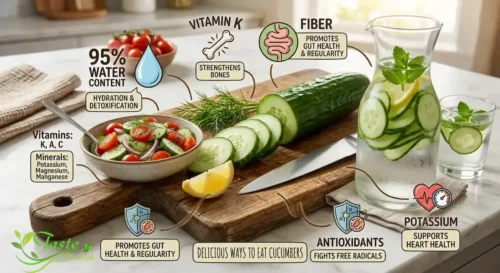
- Sliced into salads, sandwiches, or wraps
- Blended into cold soups like gazpacho
- Mixed with yogurt, garlic, and herbs for a tzatziki-style dip
- Pickled or quick-brined for a tangy side
- Sliced into infused water with mint or citrus
- Lightly stir-fried or sautéed in some Asian-inspired dishes, which softens the texture while keeping a mild crunch
Common Mistakes
- Peeling out of habit: Most of the fiber and a good share of the vitamin K sit in or near the skin, so peeling isn’t necessary unless the skin is waxed or tough.
- Salting salads too far ahead: Salt draws water out of cucumber through osmosis, leaving a soggy, diluted salad if it sits too long before serving.
- Storing them too cold: Placing cucumbers directly against the coldest part of the fridge can cause chilling damage and faster spoilage.
- Assuming cucumber water is a detox drink: It’s a pleasant way to stay hydrated, not a special cleansing method (more on this below).
Myths vs Facts
| Myth | Fact |
|---|---|
| Cucumbers have no real nutritional value. | They contain vitamin K, potassium, fiber, and antioxidant compounds, even if amounts per serving are modest. |
| Cucumber water “flushes toxins” from the body. | Your liver and kidneys handle detoxification. Cucumber water simply supports hydration in a low-calorie, flavorful way. |
| Placing cucumber slices on your eyes has proven anti-aging effects. | The cooling sensation may temporarily reduce puffiness, similar to any cold compress, but there’s no strong evidence of a lasting skin benefit. |
| Eating cucumbers can replace drinking water. | They contribute to hydration but shouldn’t be your only fluid source. |
Cucumber vs Other Hydrating Vegetables
Cucumbers are often grouped with other high-water, low-calorie vegetables. Here’s how they compare per 100 grams, raw.
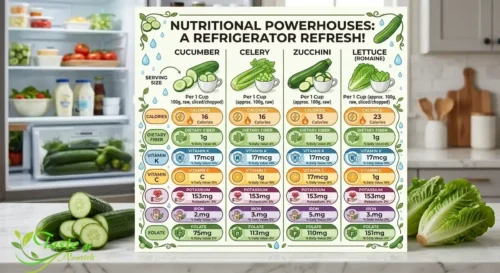
| Vegetable | Calories | Water Content | Fiber | Potassium |
|---|---|---|---|---|
| Cucumber | 15 | ~95% | 0.5 g | 147 mg |
| Celery | 16 | ~95% | 1.6 g | 260 mg |
| Zucchini | 17 | ~94% | 1.0 g | 261 mg |
| Iceberg lettuce | 14 | ~96% | 1.2 g | 141 mg |
Cucumbers hold their own among this group. They’re not the highest in fiber or potassium, but they’re consistently low in calories and high in water, which is exactly the role they tend to play in a meal.
FAQs About the Health Benefits of Cucumbers
Are cucumbers good for weight loss?
They can support weight management goals because they’re low in calories and add volume to meals, which may help with fullness. They aren’t a weight-loss food on their own and work best as part of an overall balanced diet.
Can you eat cucumber skin?
Yes, and it’s generally recommended, since the skin contains fiber and some of the plant’s nutrients. Just wash it well, and peel it if it’s waxed or if you prefer a milder texture.
What are the benefits of eating cucumbers every day?
Eating cucumbers daily, as part of a varied diet, may support hydration, contribute small but consistent amounts of vitamin K and potassium, and add fiber and low-calorie volume to meals. There’s no evidence that eating them every day is harmful for most healthy people.
Does cucumber water actually detox your body?
No. Your liver and kidneys are responsible for filtering waste from your body. Cucumber water supports hydration and can make water more appealing to drink, but it doesn’t have a special detoxifying effect.
Are cucumbers safe for people with diabetes?
Cucumbers are low in carbohydrates and have a minimal effect on blood sugar, which generally makes them a reasonable choice for people managing diabetes. As always, individual meal planning should be discussed with a healthcare provider or registered dietitian.
Do cucumber slices really reduce under-eye puffiness?
The cooling temperature of a cucumber slice can offer a similar effect to any cold compress, temporarily reducing puffiness. This isn’t unique to cucumbers and isn’t a lasting treatment for dark circles or skin aging.
Conclusion: The Real Health Benefits of Cucumbers
Cucumbers aren’t a flashy superfood, and they don’t need to be. The health benefits of cucumbers come from something simple: they’re mostly water, low in calories, and carry small but real amounts of fiber, vitamin K, potassium, and antioxidant compounds. Eaten regularly as part of a varied diet, they can support hydration, heart health, and digestion without adding much in the way of calories or sugar. Keep expectations realistic, wash the skin, and enjoy them as one solid piece of an overall healthy eating pattern.
References
- U.S. Department of Agriculture, Agricultural Research Service. “Cucumber, with peel, raw.” USDA FoodData Central.
- National Institutes of Health, Office of Dietary Supplements. “Vitamin K: Fact Sheet for Health Professionals.” NIH Office of Dietary Supplements.
- American Heart Association. “How Potassium Can Help Control High Blood Pressure.” American Heart Association.
- National Institutes of Health. “Rough Up Your Diet.” NIH News in Health.
- National Institutes of Health. “Hydrating for Health.” NIH News in Health.