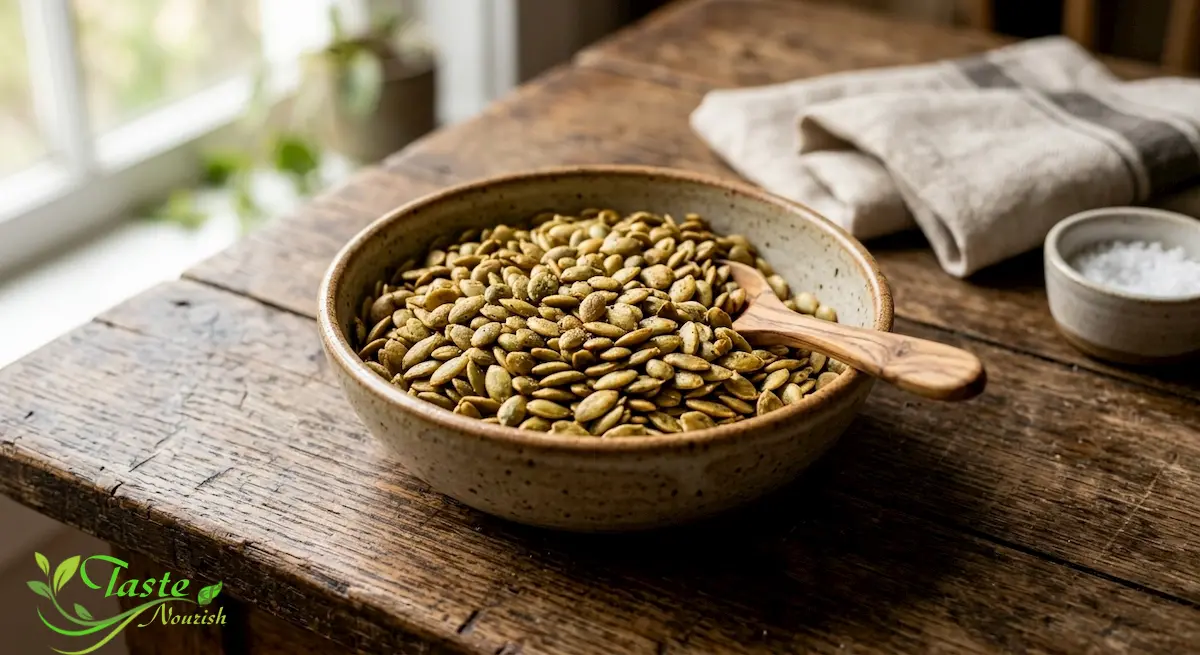
Pumpkin seeds nutrition facts show a small, calorie-dense seed packed with protein, unsaturated fat, and standout levels of magnesium, zinc, and phosphorus. Whether you eat them raw, roasted, salted, or straight from a fresh pumpkin, the numbers shift more than most people expect — and knowing exactly what’s in a serving makes it easier to fit pepitas into your diet with confidence. Below is a full USDA-sourced breakdown of calories, macros, and micronutrients per 100g and per typical serving.
One ounce (28 grams, about 2 tablespoons) of roasted, unsalted pumpkin seeds has 163 calories, 8.5 grams of protein, 13.9 grams of fat, and 4.2 grams of carbohydrate, according to USDA data. Scaled to 100 grams, that works out to roughly 574 calories and about 30 grams of protein. Pumpkin seeds also stand out for magnesium, zinc, phosphorus, and copper.
Key Takeaways: Pumpkin Seeds Nutrition Facts
A 1-ounce (28 g) serving of roasted, unsalted pumpkin seeds has about 163 calories, with most of that coming from fat.
Pumpkin seeds nutrition facts show close to 30 grams of protein per 100 grams — in the same range as peanuts and higher than most tree nuts by weight.
Fat is mostly unsaturated (monounsaturated and polyunsaturated), with under 3 grams of saturated fat per ounce.
One serving supplies well over a third of the Daily Value for magnesium and about a fifth of the Daily Value for zinc.
Carbohydrate is modest — about 4 grams per ounce — and roughly 40% of that is fiber.
Salted, roasted pepitas sold as snacks can carry far more sodium than plain roasted or raw kernels, so the label matters more than the food itself.
What Are Pumpkin Seeds?
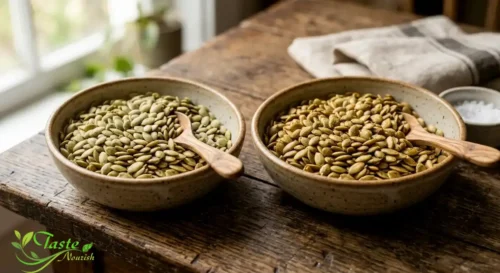
Pumpkin seeds, often sold as pepitas, are the edible seeds of Cucurbita species — including pumpkins and other winter squash. Two forms show up in stores: whole seeds with a thin, cream-colored outer hull, and hulled kernels (pepitas), which come from either mechanically de-hulled seeds or from hull-less pumpkin varieties bred to have a naturally thin, edible husk.
This distinction matters for nutrition facts, because most of the fat, protein, and mineral content sits in the kernel. Nutrition data for “whole seeds” and “hulled kernels” are not interchangeable, and this article draws primarily on USDA data for roasted, hulled pumpkin and squash seed kernels (pepitas), which is how most people buy and eat them.
Pumpkin Seeds Nutrition Facts (Per 100g and Per Serving)
The table below reflects roasted pumpkin and squash seed kernels with no salt added, based on USDA FoodData Central. Percent Daily Values (%DV) are based on the FDA’s 2,000-calorie reference diet.
Nutrient
Per 1 oz (28 g)
Per 100 g
Calories
163 kcal
574 kcal
Protein
8.5 g (17% DV)
29.8 g (60% DV)
Total Fat
13.9 g (18% DV)
49 g (63% DV)
Saturated Fat
2.4 g (12% DV)
8.5 g (43% DV)
Monounsaturated Fat
~4.5 g
~15.7 g
Polyunsaturated Fat
~5.6 g
~19.9 g
Carbohydrate
4.2 g (2% DV)
14.7 g (5% DV)
Dietary Fiber
1.8 g (7% DV)
6.5 g (23% DV)
Sugars
0.4 g
1.3 g
Sodium (unsalted)
5 mg (0% DV)
18 mg (1% DV)
Magnesium
156 mg (37% DV)
550 mg (131% DV)
Zinc
2.2 mg (20% DV)
7.6 mg (69% DV)
Iron
2.3 mg (13% DV)
8.1 mg (45% DV)
Phosphorus
333 mg (27% DV)
1,174 mg (94% DV)
Copper
0.36 mg (40% DV)
1.3 mg (144% DV)
Manganese
1.3 mg (55% DV)
4.5 mg (195% DV)
Potassium
224 mg (5% DV)
788 mg (17% DV)
Folate
16 mcg DFE (4% DV)
57 mcg DFE (14% DV)
Pumpkin Seeds Calories
At 574 calories per 100 grams, pumpkin seeds are calorie-dense, which is typical of seeds and nuts with a high fat content. In practical terms, a small handful (1 ounce, about 2 tablespoons) runs 163 calories — similar to a similar-sized handful of almonds or peanuts. Because they’re easy to eat by the handful straight from the bag, calorie totals can add up faster than the “healthy snack” label suggests.
Pumpkin Seeds Protein Per 100g
Pumpkin seed kernels contain about 29.8 grams of protein per 100 grams (8.5 grams per ounce), which places them among the higher-protein seeds and roughly on par with peanuts. As with most plant proteins, pumpkin seed protein is comparatively lower in the amino acid lysine, so pairing seeds with legumes, whole grains, or dairy over the course of a day helps round out amino acid intake — the same principle that applies to most single plant protein sources.
Pumpkin Seeds Carbs
Carbohydrate content is modest: about 14.7 grams per 100 grams, with roughly 6.5 grams of that as fiber and only about 1.3 grams as naturally occurring sugar. Because fat and protein dominate the calorie profile, pumpkin seeds have a low glycemic impact relative to their calorie count.
Pumpkin Seeds Fat Content
Fat makes up close to half the weight of roasted pepitas (49 g per 100 g), but the bulk of it is unsaturated: roughly 15.7 g monounsaturated and 19.9 g polyunsaturated, versus 8.5 g saturated. Within the polyunsaturated fat, linoleic acid (an omega-6 fat) dominates heavily, while omega-3 content is negligible — pumpkin seeds are not a meaningful source of omega-3 fats, unlike flaxseed or chia seed. That’s a useful distinction if you’re seeking omega-3s specifically rather than just “healthy fat” in general.
Pumpkin Seeds Fiber Content
At 6.5 grams per 100 grams (1.8 g per ounce), pumpkin seeds provide a moderate amount of fiber — less than chia or flaxseed, but a meaningful contribution alongside other fiber sources in a day’s meals.
Pumpkin Seeds Vitamins and Minerals
The standout nutrients are minerals rather than vitamins. A 100-gram portion provides more than 100% of the Daily Value for magnesium, manganese, and copper, along with 69% DV for zinc, 94% DV for phosphorus, and 45% DV for iron (note that iron from plant foods is non-heme iron, which the body absorbs less efficiently than the heme iron in meat, fish, and poultry).
Vitamin content is comparatively modest: folate reaches 14% DV per 100 grams, while vitamin K, vitamin E, and most B vitamins fall in the single digits to high-single digits of the Daily Value. Pumpkin seeds are not a meaningful source of vitamin C, vitamin A, vitamin D, or vitamin B12.
Raw vs. Roasted Pumpkin Seeds: How the Numbers Shift
Roasting doesn’t just change flavor and texture — it changes the nutrition numbers per 100 grams, mainly because it removes moisture. The table below compares raw, hulled pepitas with roasted, unsalted pepitas, both per 100 grams.
Nutrient (per 100 g)
Raw Pepitas
Roasted Pepitas (no salt)
Calories
555 kcal
574 kcal
Protein
29.9 g
29.8 g
Fat
40 g
49 g
Carbohydrate
18.7 g
14.7 g
Fiber
5.1 g
6.5 g
Water
~7 g
~2 g
Iron
8.4 mg
8.1 mg
Magnesium
500 mg
550 mg
Zinc
6.3 mg
7.6 mg
Notice that roasted seeds show somewhat higher fat, calories, and mineral density per 100 grams than raw seeds. This isn’t roasting “adding” nutrients — it’s mostly a concentration effect from moisture loss (roasted kernels are only about 2% water versus roughly 7% for raw kernels), meaning the same amount of fat and minerals is packed into a slightly lighter 100-gram portion. Protein and iron stay nearly identical either way.
♦ In short: neither raw nor roasted is objectively “healthier” from a nutrition-facts standpoint; the differences you see on a label mostly reflect water content, not nutrient gain or loss.
Whole Seeds vs. Hulled Pepitas
USDA data for whole, unhulled roasted seeds (hull included) lists a noticeably different profile — roughly 446 calories and about 18 to 19 grams of protein per 100 grams — lower than hulled pepitas because part of that weight is the fibrous, less digestible outer hull.
If you eat whole roasted seeds and spit out the hull, your actual nutrient intake will land somewhere between the whole-seed and hulled-kernel figures, depending on how much hull you consume versus discard. This is one reason pumpkin seed nutrition numbers vary so much between sources — they’re often citing different forms of the same food.
Potential Benefits Linked to Pumpkin Seeds’ Nutrients
These points describe what specific nutrients in pumpkin seeds are known to do generally, not proven disease outcomes from eating the seeds themselves. Evidence quality varies by nutrient and is noted below.
Magnesium for Muscle, Nerve, and Bone Function
Magnesium is required for hundreds of enzymatic reactions in the body, including muscle contraction, nerve signaling, and bone structure, according to the National Institutes of Dietary Supplements. A 100-gram serving of pumpkin seeds covers well over 100% of the Daily Value, making them one of several useful dietary sources — though most people meet magnesium needs through a mix of foods, not seeds alone.
Zinc for Immune Function
Zinc supports normal immune system function and wound healing, per the NIH Office of Dietary Supplements. Pumpkin seeds are a reasonably good plant source, though zinc from plant foods is less bioavailable than zinc from meat and shellfish because compounds called phytates in seeds can bind it in the gut.
Mostly Unsaturated Fat
Replacing saturated-fat-heavy snacks with foods higher in unsaturated fat, such as pumpkin seeds, fits general dietary pattern guidance associated with more favorable blood lipid profiles. This reflects broad nutrition science on fat quality across the diet as a whole — it isn’t evidence that pumpkin seeds specifically lower cholesterol or reduce heart disease risk on their own.
What About Pumpkin Seed Oil and Prostate Health?
Concentrated pumpkin seed oil (not the whole roasted seed eaten as a snack) has been tested in a handful of small clinical trials for men with benign prostatic hyperplasia (BPH) symptoms. In one randomized clinical trial, pumpkin seed oil eased BPH symptoms with no reported side effects, but was less effective than the prescription drug tamsulosin.
This research used a concentrated oil supplement at specific doses, not ordinary pepitas as food, and the evidence base remains small. It’s an interesting research direction, not a reason to substitute pumpkin seeds for medical care — anyone with BPH symptoms should talk to a urologist.
How Many Pumpkin Seeds Should You Eat?
There’s no official “ideal” daily amount of pumpkin seeds. A standard label serving is 1 ounce (about 28 grams, or 2 tablespoons of hulled kernels), which fits reasonably into most eating patterns as a snack or topping. Because they’re calorie-dense, treating that ounce as a full portion — rather than a starting point — is the simplest way to enjoy the nutrient density without the calories creeping up. People tracking sodium, weight, or specific mineral intake should check their own needs against the numbers above rather than following a generic rule.
Possible Drawbacks and Who Should Be Careful
Seed allergy: Pumpkin seed allergy is documented and can range from mild oral itching to more serious reactions. Anyone with a known seed or tree nut allergy should introduce pumpkin seeds cautiously and watch for symptoms.
Choking risk: Whole, hull-on seeds are a choking hazard for young children and should be given only in age-appropriate, well-chewed forms.
Calorie density: At 574 calories per 100 grams, it’s easy to eat more than intended when snacking straight from a bag — this matters most for anyone managing overall calorie intake.
Sodium in salted versions:Salted, roasted pepitas can run around 250+ mg of sodium per 100 grams versus under 20 mg for unsalted versions — a meaningful difference for anyone limiting sodium. Check the label rather than assuming.
Zinc and copper at very high intakes: At typical snack-sized servings, zinc and copper stay well below the Tolerable Upper Intake Levels set by the NIH. This becomes more relevant only for people eating unusually large amounts regularly or also taking zinc or copper supplements.
Vitamin K and anticoagulants: Pumpkin seeds contain only a small amount of vitamin K (about 4% DV per 100 grams), so ordinary servings are unlikely to meaningfully affect warfarin therapy. People on anticoagulants are generally advised to keep day-to-day vitamin K intake consistent rather than avoiding vitamin K–containing foods entirely; check with your care team if you have concerns.
Common Misconceptions About Pumpkin Seeds
Myth: Pumpkin seeds are high in oxalates and risky for kidney stone formers
Reality: Pumpkin seeds are generally considered a low-to-moderate oxalate food — much lower than high-oxalate foods like spinach, almonds, or beets. Pumpkin flesh and pumpkin seeds are not the same in this respect; the confusion often comes from lumping “pumpkin” foods together.
People with a history of calcium oxalate stones should still discuss overall diet with their healthcare provider, since portion size and total diet matter more than any single food.
Myth: Raw pumpkin seeds are always more nutritious than roasted
Reality: As the raw-vs-roasted table above shows, protein and mineral content stay nearly identical between the two forms; most of the visible difference in fat and calorie numbers per 100 grams comes from moisture loss during roasting, not nutrient degradation or nutrient gain. Some heat-sensitive vitamins can decline modestly with roasting, but the overall nutrition profile doesn’t clearly favor one form over the other.
Myth: Eating pumpkin seeds before bed will improve your sleep because of their tryptophan content
Reality: Pumpkin seeds do contain tryptophan, an amino acid involved in serotonin and melatonin production, but the amount in a typical serving is small, and there is no direct clinical research showing that eating pumpkin seeds improves sleep. This claim extrapolates from a nutrient’s known role in the body to an unproven outcome from a specific food — a common pattern worth watching for in nutrition content generally.
Practical Tips for Buying, Storing, and Using Pumpkin Seeds
Compare unsalted and salted versions at the store — the sodium difference is large enough to matter if you’re watching salt intake.
Store in an airtight container in a cool, dark place for short-term use; pumpkin seeds’ high unsaturated fat content makes them prone to rancidity if left warm or exposed to light and air.
Refrigerate or freeze for longer storage — cold temperatures slow the oxidation that causes seeds to taste stale or “off.”
Check for rancid smell before eating older seeds; a sharp, paint-like or bitter odor means it’s time to discard them rather than taste-test.
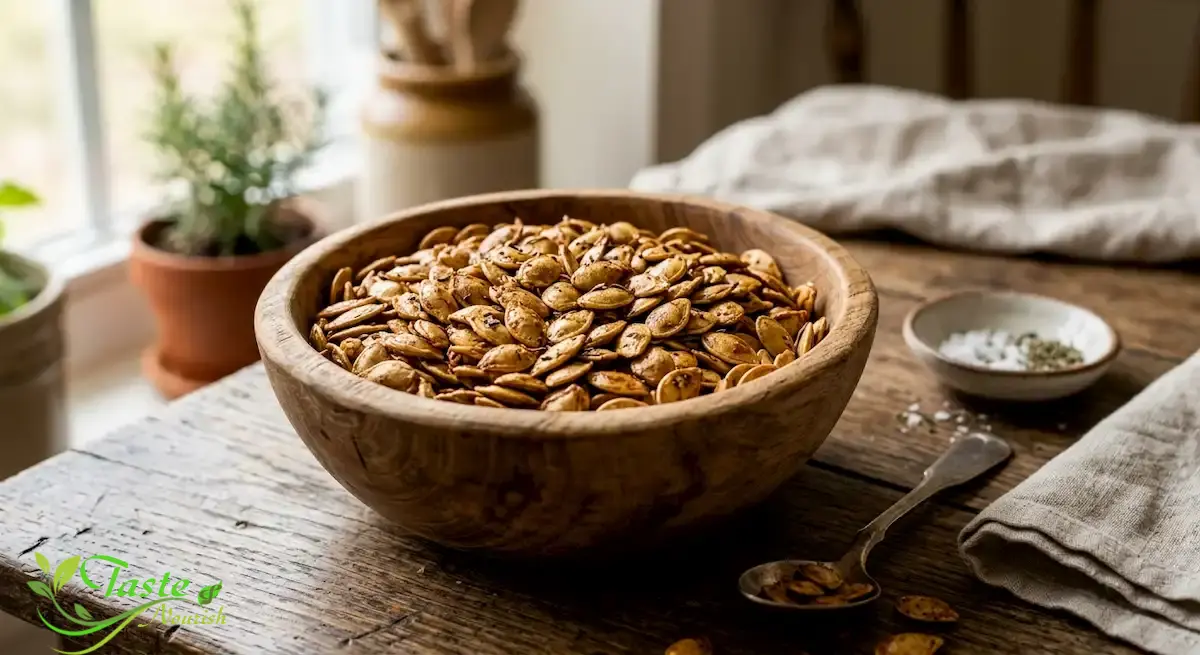
Make your own from a fresh pumpkin: separate seeds from the pulp, rinse off the fibers, and dry them thoroughly with a towel. Toss with a small amount of oil (and salt, if desired), spread in a single layer, and roast at around 300–325°F, stirring occasionally, until golden — usually 20–25 minutes depending on seed size and moisture.
Toast pre-hulled pepitas quickly in a dry skillet over medium heat for a few minutes to boost flavor before adding to salads or grain bowls.
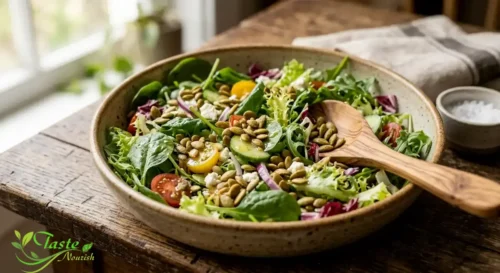
Use them beyond snacking: pepitas work well blended into Mexican-style pipián sauces, ground into pesto in place of pine nuts, sprinkled over soups for crunch, or mixed into granola and trail mix.
Pumpkin Seeds Nutrition Facts FAQs
How many calories are in a serving of pumpkin seeds?
A 1-ounce (28 g) serving of roasted, unsalted pumpkin seeds has about 163 calories. Per 100 grams, that’s roughly 574 calories.
Are pumpkin seeds high in protein?
Yes, relatively speaking. At about 30 grams of protein per 100 grams, pumpkin seeds are on par with peanuts and higher in protein by weight than most tree nuts.
Is it better to eat pumpkin seeds raw or roasted?
Nutritionally, the two forms are similar — protein and most minerals barely change, and the differences in fat and calorie numbers mostly reflect moisture loss from roasting rather than a real gain or loss of nutrients. Choose based on taste, digestibility, and whether you prefer added oil or salt.
Do pumpkin seeds need to be refrigerated?
Not immediately, but refrigeration or freezing helps preserve freshness longer, since their high unsaturated fat content makes them prone to going rancid at room temperature over time.
How many pumpkin seeds should you eat in a day?
There’s no official recommended amount. A standard serving of 1 ounce (about 2 tablespoons of hulled kernels) is a reasonable portion to build into snacks or meals without over-relying on a single calorie-dense food.
Are the white shells on pumpkin seeds safe to eat?
Yes, for most people the thin hull is edible and adds some extra fiber, though it’s less digestible and some people find it unpleasant in texture or difficult on the digestive system in large amounts. Many people prefer pre-hulled pepitas for this reason.
Conclusion
The core pumpkin seeds nutrition facts are straightforward: a calorie-dense, protein-rich seed that’s low in carbohydrate, high in unsaturated fat, and unusually concentrated in magnesium, zinc, phosphorus, copper, and manganese. Raw and roasted versions are nutritionally similar once you account for moisture loss, and the biggest practical variable for most people is sodium — which depends entirely on whether you buy salted or unsalted.
Used in reasonable portions, pumpkin seeds are a nutrient-dense addition to a varied diet, without needing to be treated as a cure-all or a food to avoid.
Zerafatjou N, Amirzargar M, Biglarkhani M, Shobeirian F, Zoghi G. Pumpkin seed oil (Cucurbita pepo) versus tamsulosin for benign prostatic hyperplasia symptom relief: a single-blind randomized clinical trial. BMC Urology, 2021. PubMed: https://pubmed.ncbi.nlm.nih.gov/34666728/
Hanan Abo Samra is the founder of Taste & Nourish, sharing trustworthy nutrition guidance and recipes drawn from 20+ years of hands-on cooking experience. When she's not developing new recipes, Hanan is researching the science behind everyday ingredients to bring readers practical, evidence-based guidance for a healthier lifestyle.