If you’ve typed “pistachios weight loss” into a search bar while standing in the snack aisle wondering whether that little green nut deserves a spot in your cart, you’re asking a fair question. Nuts have a reputation for being calorie-dense, so it seems counterintuitive that they’d show up on so many weight-loss-friendly food lists. But pistachios have actually been studied more closely than most snack foods when it comes to appetite, portion control, and body weight, and the findings are worth a closer look before you write them off.
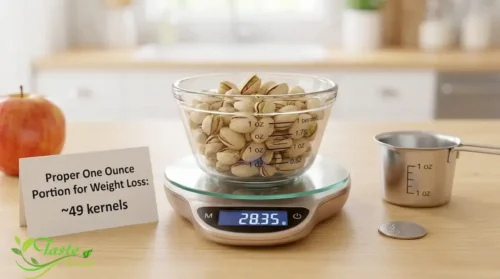
Pistachios weight loss research suggests that eating a modest, portion-controlled serving of pistachios (about 1 ounce, or roughly 49 kernels) as part of a reduced-calorie diet does not appear to cause weight gain, and in some studies has been linked to improved satiety, smaller waist measurements, and slightly better appetite control compared with other snacks. They are not a magic weight-loss food, but the protein, fiber, and healthy fat combination may help you feel full on fewer calories overall.
Key Takeaways
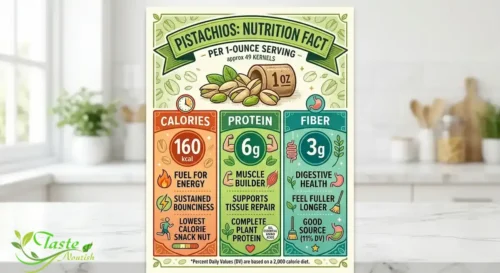
A 1-ounce serving of pistachios has about 159 calories, 5.7 grams of protein, and 2.9 grams of fiber, a combination that supports fullness.
Several clinical studies on pistachios weight loss show that people who swapped a refined-carb snack for pistachios lost comparable or slightly more weight without extra effort.
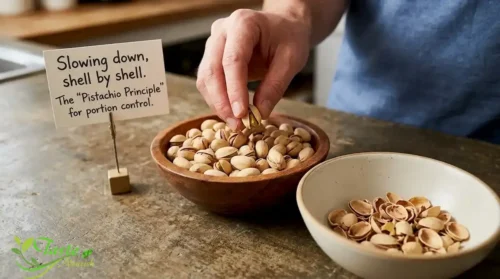
Shelling your own pistachios may naturally slow down eating and reduce how much you consume in one sitting.
Portion control still matters. Pistachios are calorie-dense, so eating them straight from a large bag can offset their benefits.
Most healthy adults can eat 1 to 1.5 ounces (about 30 grams) of pistachios most days as part of a balanced diet.
What Are Pistachios?
Pistachios are the edible seeds of the Pistacia vera tree, a species native to Central Asia and the Middle East that has been cultivated for thousands of years. They grow in clusters inside a hard, naturally splitting shell and have a pale green kernel with a subtly sweet, slightly savory flavor. Today, the United States (mainly California), Iran, and Turkey are among the world’s largest producers.
Unlike many snack nuts, pistachios are almost always sold in the shell, which turns out to be more relevant to weight management than you might expect.
Pistachios Nutrition Facts
Here’s what you get in a standard 1-ounce (28-gram) serving of raw, unsalted pistachios, based on data from the USDA FoodData Central.
Nutrient
Amount per 1 oz (28 g)
% Daily Value
Calories
159
—
Protein
5.7 g
—
Total Fat
12.9 g
17%
Saturated Fat
1.6 g
8%
Carbohydrates
7.7 g
3%
Dietary Fiber
2.9 g
10%
Sugars
2.2 g
—
Potassium
291 mg
6%
Vitamin B6
0.5 mg
24%
Copper
0.4 mg
44%
Phosphorus
137 mg
11%
Pistachios are also one of the richest nut sources of the antioxidants lutein and zeaxanthin, along with a meaningful amount of plant-based protein per ounce compared with other tree nuts.
Health Benefits of Pistachios for Weight Loss
No single food burns fat or melts pounds away, and pistachios are no exception. What they do offer is a nutrient profile that may support a weight-loss-friendly eating pattern in several practical ways.
They combine protein, fiber, and fat. This trio slows digestion and tends to keep you fuller for longer than a carbohydrate-only snack like crackers or pretzels.
The shell slows you down. Research suggests that visible shell accumulation serves as a consumption cue, and a Cornell University study found that participants ate 41% fewer calories when empty shells remained visible compared with when they were periodically removed. :antCitation[]{citations=”c4bf595c-cbba-4917-b98a-1c45c7a1bd16″ injected=”space”} Simply put, the work of shelling and the visual pile of shells can help you eat less without trying.
Not all the calories are absorbed. Some research indicates the body doesn’t fully absorb every calorie listed on a nut’s label, likely because some fat stays trapped in the nut’s cell walls and passes through undigested.
They may support healthier snack swaps. Choosing pistachios over refined-carbohydrate snacks has been associated with better blood lipid markers in clinical trials, alongside comparable weight outcomes.
Pistachios Weight Loss: What the Research Shows
This is where cautious language matters, because “pistachios cause weight loss” is not an accurate claim. What clinical research actually shows is more nuanced and, frankly, more useful.
In a 12-week randomized study of adults in a calorie-restricted weight-loss program, one group snacked on 53 grams of pistachios daily while another ate an equal-calorie portion of pretzels. Both groups lost weight over the study period, but there were significant differences in the change in body mass index between the two groups, with the pistachio group showing a greater reduction.
A separate four-month behavioral weight-loss trial involving 100 overweight and obese adults compared a standard weight-loss program with one that also prescribed 1.5 ounces of pistachios daily. Percent weight change was similar between the two groups, and both groups saw reductions in BMI and waist circumference, but the pistachio group also showed a significant reduction in systolic and diastolic blood pressure that the control group did not.
A broader scientific review of pistachio composition summarized the pattern this way: when consumed in moderation, pistachios may help control body weight because of their satiety and satiation effects and their reduced net metabolizable energy content. :antCitation[]{citations=”feddc9e0-86a7-40d3-a417-b57f53df1214″ injected=”space”} In plain terms, they can help you feel satisfied on fewer calories, and your body may not absorb quite as many calories from them as the label suggests.
Not every study finds a dramatic effect, and that’s worth mentioning too. A 12-week controlled trial in healthy, pre-menopausal women who added 44 grams of pistachios to their daily diet found that body weight and composition were unchanged, because participants naturally adjusted their intake of other foods, mainly carbohydrates and starch, in response to the added pistachio snack. That’s actually reassuring: it suggests the body has some built-in ability to compensate for a moderate nut habit rather than simply piling the calories on top of everything else.
The Bottom Line From the Evidence
Across these studies, the consistent theme isn’t that pistachios burn fat. It’s that a reasonable daily portion, eaten in place of a less satisfying snack, tends not to work against weight-loss efforts and may support them modestly through appetite regulation.
Potential Risks and Side Effects
Pistachios are generally well tolerated, but a few things are worth knowing.
Calorie density. At around 159 calories per ounce, mindless snacking straight from a large bag can add up quickly and work against a calorie deficit.
Sodium content in salted varieties. Roasted and salted pistachios can carry a meaningful amount of sodium per serving, which matters for people managing blood pressure.
Digestive discomfort. Because pistachios contain fermentable carbohydrates called FODMAPs, eating a large amount at once may cause bloating or gas in sensitive individuals.
Allergic reactions. Pistachios are a tree nut and can trigger reactions ranging from mild to severe in people with tree nut allergies.
Who Should Avoid Pistachios?
Most people can enjoy pistachios safely, but a few groups should be more cautious or check with a healthcare provider first.
People with a diagnosed tree nut allergy or a history of anaphylaxis to nuts.
Those with irritable bowel syndrome or FODMAP sensitivity who notice bloating after eating nuts in general.
People on a strict low-potassium renal diet, since pistachios are relatively high in potassium.
Anyone managing sodium intake closely, who should choose unsalted varieties.
Pistachios Weight Loss: How Much Should You Eat Per Day?
Portion size is really the deciding factor in whether pistachios help or hurt a weight-loss goal. Most of the clinical research on pistachios weight loss used daily amounts in the range of 1 to 1.5 ounces, roughly a small handful to a third of a cup, or about 42 to 49 kernels.
General snacking: 1 ounce (about 49 kernels, ~159 calories) is a reasonable daily portion for most healthy adults.
Within a weight-loss plan: Treat that ounce as a swap for another snack, not an addition on top of your usual intake.
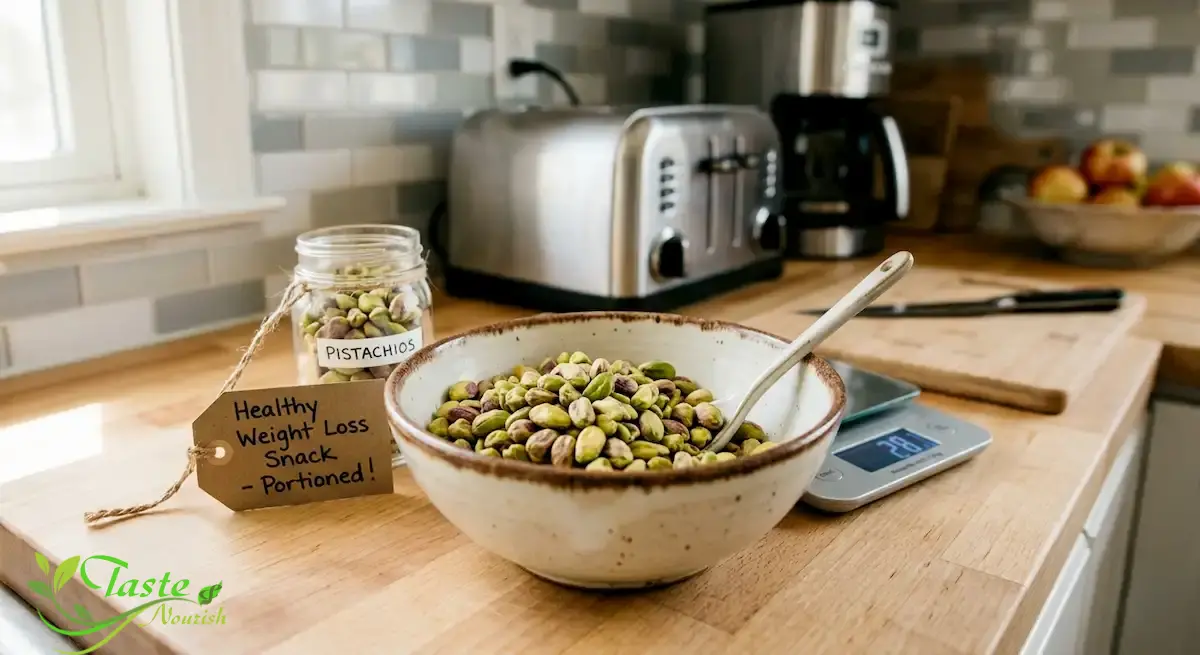
Pre-portioning helps: Weighing or measuring servings in advance prevents the “handful after handful” pattern that’s easy to fall into with any nut.
Expert Tip: Buy pistachios in the shell rather than pre-shelled. The extra step of cracking each one naturally paces your eating and gives you a visual cue, the growing pile of shells, of how much you’ve actually had.
How to Choose the Best Pistachios for Weight Loss
Not all pistachios on the shelf are created equal when your goal is weight management. A few things to check at the store:
Choose in-shell over pre-shelled. As noted above, the shelling process itself can reduce how much you eat in one sitting.
Go unsalted or lightly salted. Heavily salted varieties can encourage overeating and add unnecessary sodium.
Skip the flavored or candy-coated versions. Honey-roasted or chocolate-covered pistachios add sugar and calories that offset the nut’s natural benefits.
Check the roasting method. Dry-roasted pistachios have a similar nutrition profile to raw ones; oil-roasted versions add extra fat and calories.
Storage Tips
Pistachios contain a good amount of unsaturated fat, which means they can turn rancid if stored improperly.
Keep unshelled pistachios in a cool, dry pantry for up to 3 months.
For longer storage, refrigerate them in an airtight container for up to 6 months.
Freezing shelled pistachios in a sealed bag can extend freshness up to a year.
Discard any pistachios that smell sharp, sour, or “paint-like,” a sign the fats have gone rancid.
Best Ways to Eat Pistachios
Pistachios are versatile enough to go well beyond the snack bowl, which makes it easier to stick with a portion-controlled habit.
5 Pistachios Weight Loss Snack Ideas
A 1-ounce portion of in-shell pistachios paired with a piece of fruit for a balanced afternoon snack.
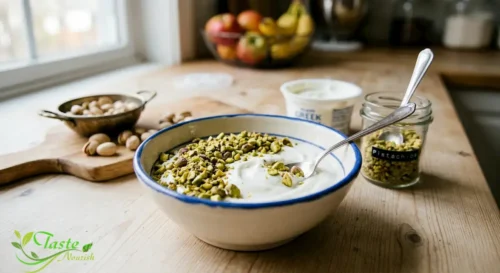
Crushed pistachios sprinkled over plain Greek yogurt instead of granola, which cuts added sugar while keeping the crunch.
A small handful added to a salad in place of croutons for fiber and healthy fat without refined carbs.
Pistachio “dust” blended and used as a light coating for baked chicken or fish instead of breadcrumbs.
A pre-portioned pistachio and dark chocolate chip mix (measured, not eyeballed) for a satisfying evening treat.
Common Mistakes
Eating straight from the bag. Without a measured portion, it’s easy to eat 3 or 4 times the intended serving.
Choosing candy-coated or heavily processed versions. These add sugar and fat that cancel out the nutritional advantages.
Treating pistachios as a “free food.” They’re nutrient-dense, but calories still count toward your daily total.
Skipping the shell. Pre-shelled pistachios remove the natural pacing mechanism that helps with portion control.
Pistachios and Weight Loss: Myths vs. Facts
Myth
Fact
Nutsare too high in fat to eat while losing weight.
Clinical trials show pistachios can be included in a calorie-restricted diet without causing extra weight gain, when portioned appropriately.
Pistachios burn belly fat.
No food burns fat directly. Pistachios may support satiety and healthier snack choices, which can indirectly support fat loss over time.
All pistachio products are equally healthy.
Honey-roasted, chocolate-covered, or heavily salted versions add sugar, fat, or sodium that plain pistachios don’t have.
You should avoid nuts entirely if you’re watching calories.
A measured 1-ounce serving fits into most calorie-controlled eating plans and adds protein, fiber, and micronutrients.
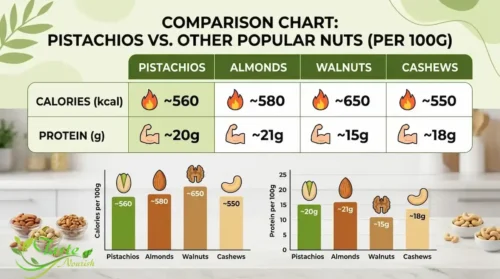
Pistachios vs. Other Nuts for Weight Loss
Wondering how pistachios stack up against the other nuts in your pantry? Here’s a side-by-side look at a 1-ounce (28 g) serving of each.
Nut
Calories
Protein
Fiber
Kernels per Ounce
Pistachios
159
5.7 g
2.9 g
~49
Almonds
164
6.0 g
3.5 g
~23
Cashews
157
5.2 g
0.9 g
~18
Walnuts
185
4.3 g
1.9 g
~14 halves
What stands out is the kernel count. An ounce of pistachios gives you roughly double the number of pieces to eat compared with almonds and nearly three times as many as walnuts, which can make the serving feel more substantial for a similar calorie cost.
Pistachios Weight Loss FAQs
Do pistachios help you lose weight?
Pistachios alone won’t cause weight loss, but research suggests that eating a portion-controlled serving as part of a reduced-calorie diet does not lead to weight gain and may support fullness and appetite control better than lower-protein, lower-fiber snacks.
How many pistachios should I eat a day to lose weight?
Most research uses a daily amount of about 1 to 1.5 ounces, roughly 42 to 49 kernels. Sticking to a single measured portion rather than free snacking is key.
Are pistachios better than almonds for weight loss?
Both are reasonable choices. Almonds have slightly more fiber per ounce, while pistachios offer more kernels per serving, which some people find more satisfying to eat slowly. Neither has been shown to be clearly superior for weight loss.
Can I eat pistachios every day while dieting?
Yes, for most healthy adults, a daily 1-ounce portion can fit comfortably into a calorie-controlled diet, as long as it replaces another snack rather than adding to your usual intake.
Do salted pistachios affect weight loss?
Salt itself doesn’t add calories, but salted pistachios can encourage overeating and contribute extra sodium, which is worth considering if you’re managing blood pressure alongside your weight goals.
The Bottom Line: Pistachios Weight Loss Takeaways
The evidence on pistachios weight loss doesn’t support the idea of a miracle fat-burning nut, and any article that claims otherwise is overselling the science. What the research does support is more modest and more realistic: a measured, in-shell portion of pistachios can be a satisfying, nutrient-dense snack that fits into a calorie-controlled diet without working against your goals, and may even make sticking to that diet a little easier. Pair that portion control with an overall balanced eating pattern, and pistachios can absolutely earn their spot in your pantry.
**Hanan Abo Samra** shares practical cooking insights, delicious recipes, and evidence-based nutrition information. Drawing on more than 20 years of hands-on cooking experience, she creates helpful food content that combines everyday cooking knowledge with information from reliable scientific sources. Her goal is to help readers better understand the foods they eat, explore their nutritional benefits, and prepare delicious meals with confidence.