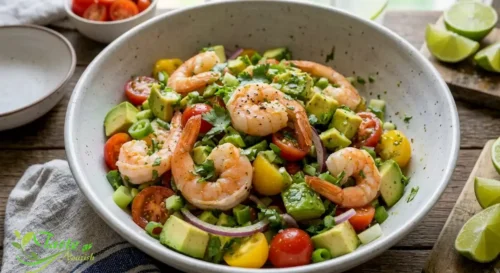
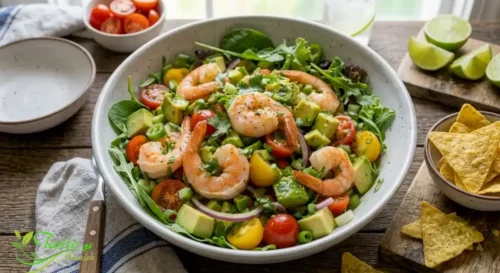
If you’re craving something light but still filling, this shrimp avocado salad recipe comes together in under 20 minutes with almost no cleanup. It pairs quickly cooked shrimp with creamy avocado, crisp cucumber, and a bright lime dressing. This easy shrimp and avocado salad works as a weeknight dinner, a make-ahead lunch, or a dish you scale up for a summer cookout. Below you’ll find the full recipe, a nutrition breakdown, and answers to the questions people ask most about eating shrimp and avocado together.
A shrimp avocado salad recipe combines cooked shrimp, diced avocado, and fresh vegetables tossed in a light citrus dressing. It typically takes about 20 minutes to prepare, delivers roughly 25 to 30 grams of protein per serving, and can be served warm, at room temperature, or chilled.
Key Takeaways
This shrimp avocado salad recipe takes about 20 minutes start to finish and needs no oven.
One serving provides roughly 25 to 30 grams of protein along with heart-healthy monounsaturated fat from the avocado.
The FDA lists shrimp as a low-mercury “Best Choice” seafood, which makes it a reasonable everyday protein for most people.
The finished salad keeps in the refrigerator for up to two days, though avocado holds up best when added closer to serving time.
Anyone with a shellfish allergy should avoid this recipe entirely, even in small amounts.
What Is a Shrimp Avocado Salad?
At its core, a shrimp avocado salad is a simple combination of cooked shrimp, ripe avocado, and crisp raw vegetables, brought together with an acidic dressing like lime or lemon juice and olive oil. Versions of this dish show up in coastal American, Mexican, and Caribbean cooking, where fresh seafood and avocado are both widely available.
It can be served as a stand-alone bowl, spooned over greens, or used as a filling for tacos, tostadas, or lettuce wraps.
Why This Shrimp Avocado Salad Recipe Works
The appeal comes down to contrast. Tender shrimp, creamy avocado, and crunchy cucumber all bring different textures to the bowl, while the lime dressing keeps everything from tasting heavy. It also comes together with a short ingredient list and no more than a few minutes of actual cooking, which makes it realistic for a weeknight.
On top of that, it’s naturally gluten-free and fits easily into a low-carb or Mediterranean-style eating pattern.
Shrimp Avocado Salad Recipe: Ingredients and Step-by-Step Directions
This recipe makes about 4 servings. Prep time is roughly 15 minutes, cook time is about 5 minutes, and total time including a short chill is around 20 to 30 minutes.
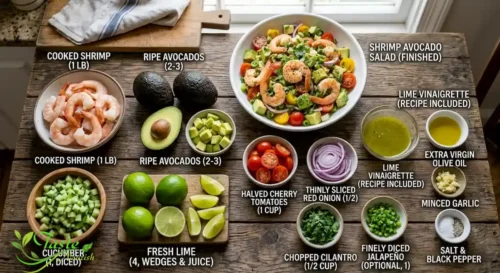
Ingredients
1 pound large shrimp, peeled and deveined
2 ripe avocados, diced
1 English cucumber, diced
1 cup cherry tomatoes, halved
1/4 cup red onion, thinly sliced
1/4 cup fresh cilantro, chopped
2 tablespoons fresh lime juice
2 tablespoons olive oil
1 clove garlic, minced
Salt and black pepper, to taste
Optional: a pinch of red chili flakes
Instructions
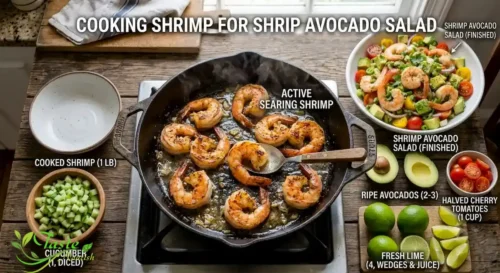
Bring a pot of salted water to a boil, or heat a skillet over medium-high heat. Cook the shrimp for 2 to 3 minutes, just until pink and opaque.
Drain the shrimp and transfer them immediately to a bowl of ice water. This stops the cooking and is what gives the salad its chilled texture.
While the shrimp cools, whisk together the lime juice, olive oil, minced garlic, salt, and pepper in a small bowl to make the dressing.
In a large bowl, combine the diced avocado, cucumber, tomatoes, red onion, and cilantro.
Pat the cooled shrimp dry, chop roughly if desired, and add to the bowl.
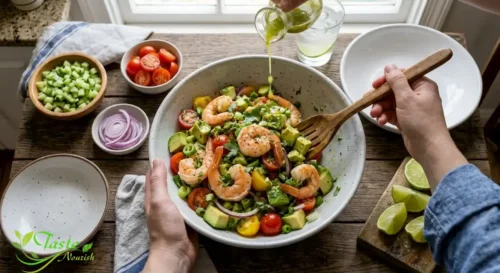
Pour the dressing over everything and toss gently, being careful not to mash the avocado.
Chill for 15 to 20 minutes before serving, or serve right away if you’re short on time.
Recipe Notes
Lemon juice works as a fine substitute for lime if that’s what you have on hand. If you’re making this ahead, hold off on adding the avocado until closer to serving time so it doesn’t brown or turn mushy.
Expert Tip: Toss the diced avocado in a bit of the lime juice as soon as you cut it, before adding the rest of the ingredients. The acid slows down browning and keeps the salad looking fresh for hours instead of minutes.
Nutrition Facts
These values are estimated per serving (about 1.5 cups), based on the ingredients above and nutrient data from the USDA FoodData . Actual numbers will vary with exact portion sizes and brands.
Nutrient
Approximate Amount per Serving
Calories
320
Protein
28 g
Total Fat
18 g (mostly unsaturated)
Carbohydrates
12 g
Fiber
6 g
Cholesterol
215 mg
Sodium
280 mg
Potassium
500 mg
Health Benefits
Shrimp is a lean, high-quality protein source, and pairing it with avocado adds fiber and a type of fat that research generally favors over saturated fat. Together, the two ingredients may support a few different aspects of health when eaten as part of a varied diet.
Shrimp delivers a large amount of protein for relatively few calories, along with nutrients like selenium and vitamin B12. Avocado contributes dietary fiber, potassium, folate, and monounsaturated fat, most of it in the form of oleic acid, the same fatty acid found in olive oil. This combination may help you feel full longer than a salad built around lettuce alone, since both protein and fat slow digestion.
Because shrimp is also classified as a low-mercury seafood by the FDA, it’s a practical way to work more seafood into a weekly routine without the mercury concerns tied to larger predatory fish like swordfish or king mackerel.
Scientific Evidence
Much of the research on this dish’s two main ingredients has looked at them separately rather than together, but the findings are still useful context. A long-term analysis from the Harvard T.H. Chan School of Public Health’s Nutrition Source, drawn from decades of data on more than 100,000 adults, found that people who ate about one avocado a week had a 16% lower risk of cardiovascular disease and a 21% lower risk of coronary heart disease compared with those who rarely ate avocado.
Several smaller clinical trials have also found that replacing saturated fat with avocado may help lower LDL cholesterol, though researchers note that some of this research has been funded by avocado industry groups, which is worth keeping in mind.
On the shrimp side, the evidence is more about safety than direct health outcomes. The FDA and EPA’s joint seafood advisory places shrimp in the “Best Choices” category for mercury content, alongside salmon, catfish, and canned light tuna, and recommends two to three servings of these lower-mercury options per week for most adults, including those who are pregnant or breastfeeding.
None of this means the salad itself has been studied as a single dish, so it’s more accurate to say the ingredients are individually well supported rather than the recipe having its own body of research behind it.
Potential Risks & Side Effects
Shrimp does carry a meaningful amount of dietary cholesterol, roughly 189 mg per 100 grams according to USDA data, which is higher than most other seafood. Current nutrition science suggests dietary cholesterol has less influence on blood cholesterol for most people than saturated fat does, but anyone managing high cholesterol may still want to track their overall intake.
The biggest safety concern is shellfish allergy. According to a clinical reference on shellfish allergy published through the NIH’s National Library of Medicine, reactions can range from mild itching and hives to severe anaphylaxis involving swelling of the airway and a sudden drop in blood pressure.
There’s also a general food safety point worth noting: shrimp and mayonnaise-free salads like this one should not sit out at room temperature for more than two hours, since seafood spoils faster than most other proteins.
Who Should Avoid It?
Anyone with a diagnosed shellfish allergy should skip this recipe completely, since cross-contact with even small amounts of shrimp can trigger a reaction. People managing gout may also want to moderate their shellfish intake and talk with their doctor, since shrimp contains purines that can raise uric acid levels in some individuals.
If you’re on a cholesterol-restricted diet under a doctor’s guidance, it’s worth checking in about how shrimp fits into your broader eating pattern rather than assuming it’s automatically off-limits.
How Much Should You Eat?
For most adults, the FDA’s Advice About Eating Fish recommends two to three servings a week of lower-mercury seafood, a category that includes shrimp, and a standard serving is about 4 ounces, or roughly the size of your palm. For avocado, the research tied to lower cardiovascular risk was based on around one avocado per week, though many people eat it more often than that as part of a generally healthy diet without any documented downside.
How to Choose the Best Shrimp and Avocado
When buying shrimp, look for flesh that’s firm and slightly translucent, without any strong ammonia smell, which is a sign it’s no longer fresh. Frozen shrimp is often the better choice, not the lesser one, since most “fresh” shrimp at the counter was previously frozen and thawed anyway, and buying it frozen yourself usually means better value and quality control.
For avocado, pick fruit that gives slightly to gentle pressure without feeling mushy or soft in spots. If you’re not using it the same day, choose a firmer avocado and let it ripen on the counter, since pre-ripened ones don’t hold well in the fridge for long.
Storage Tips
This salad keeps well in an airtight container in the refrigerator for up to two days, though the avocado will darken slightly over time even with the lime juice trick.
If you want to make it further ahead, store the shrimp, chopped vegetables, and dressing separately, and add fresh diced avocado right before serving. Avoid freezing the assembled salad, since avocado and cucumber both turn watery and lose their texture once thawed.
Best Ways to Serve a Chilled Shrimp Avocado Salad Recipe
Served cold straight from the fridge, this salad works well on its own, but there are a few easy ways to change it up. Spoon it over a bed of mixed greens for a heartier plate, or pile it into halved avocado shells for a dish that looks more elaborate than it actually is.
It also makes a good filling for lettuce wraps or corn tortillas, and it pairs nicely with tortilla chips as a lighter take on shrimp cocktail. For a more filling meal, serve it over a scoop of rice or quinoa, or stir in diced mango or grilled corn for a little natural sweetness.
Common Mistakes
Overcooking the shrimp is the most common issue, since even an extra minute in the pot can leave them rubbery instead of tender. Tossing the salad too aggressively is another one, since avocado mashes easily and can turn the whole bowl mushy if you’re not gentle. Skipping the ice bath after cooking the shrimp is a mistake too, since it’s what keeps them from continuing to cook from residual heat. Finally, adding the avocado too far in advance, or under-seasoning the dressing, are both easy fixes once you know to watch for them.
Myths vs Facts
Myth
Fact
Shrimp’s cholesterol content makes it bad for your heart.
Shrimp is very low in saturated fat, and current research suggests saturated fat has a bigger effect on blood cholesterol than dietary cholesterol does for most people.
Avocado is too high in fat to eat regularly.
Most of its fat is monounsaturated, the same type found in olive oil, and it’s associated with more favorable cholesterol levels in several studies.
Frozen shrimp is lower quality than “fresh” shrimp.
Most shrimp sold as fresh was previously frozen and thawed at the store, so buying it frozen and thawing it yourself is often the better value.
How This Compares to Other Salads
Salad
Approx. Calories
Protein
Primary Fat Source
Ready In
Shrimp Avocado Salad
320
28 g
Monounsaturated (avocado, olive oil)
20 min
Chicken Caesar Salad
470
30 g
Saturated (parmesan, creamy dressing)
25 min
Classic Tuna Salad (mayo-based)
350
25 g
Saturated/mixed (mayonnaise)
10 min
These figures are general approximations meant for comparison rather than exact values, since ingredient brands and portion sizes vary widely.
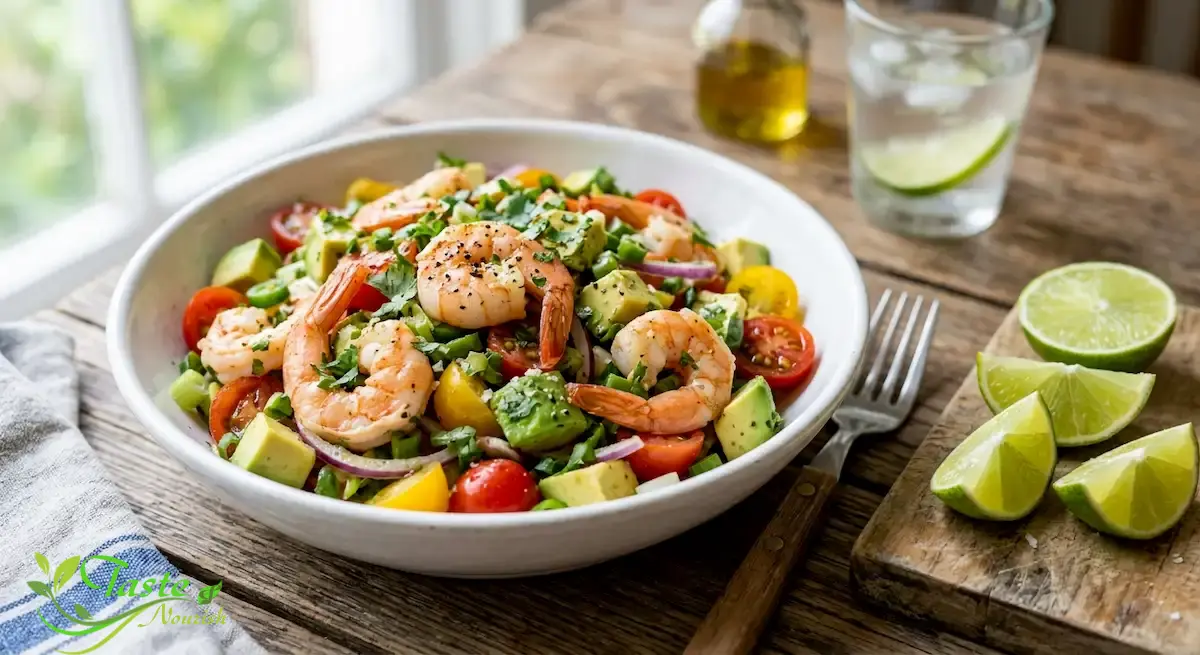
A shrimp avocado salad recipe combining cooked shrimp, diced avocado, cucumber, and cherry tomatoes tossed in a lime and olive oil dressing, ready in about 20 minutes.
Ingredients
1 pound large shrimp, peeled and deveined
2 ripe avocados, diced
1 English cucumber, diced
1 cup cherry tomatoes, halved
1/4 cup red onion, thinly sliced
1/4 cup fresh cilantro, chopped
2 tablespoons fresh lime juice
2 tablespoons olive oil
1 clove garlic, minced
Salt and black pepper, to taste
Optional: a pinch of red chili flakes
Directions
Bring a pot of salted water to a boil, or heat a skillet over medium-high heat. Cook the shrimp for 2 to 3 minutes, just until pink and opaque.
Drain the shrimp and transfer them immediately to a bowl of ice water to stop the cooking.
Whisk together the lime juice, olive oil, minced garlic, salt, and pepper in a small bowl to make the dressing.
In a large bowl, combine the diced avocado, cucumber, tomatoes, red onion, and cilantro.
Pat the cooled shrimp dry, chop roughly if desired, and add to the bowl.
Pour the dressing over everything and toss gently, being careful not to mash the avocado.
Chill for 15 to 20 minutes before serving, or serve right away.
Shrimp Avocado Salad Recipe FAQs
Can I make this shrimp avocado salad recipe ahead of time?
Yes, but it’s best to store the avocado separately and fold it in right before serving so it doesn’t brown or turn mushy. The shrimp, vegetables, and dressing can be combined and refrigerated up to a day in advance.
Is shrimp avocado salad good for weight loss?
It’s high in protein and fiber, both of which may help with feeling satisfied after a meal, and it’s naturally lower in calories than many creamy or cheese-heavy salads. That said, no single dish determines weight loss on its own, so overall calorie intake and eating pattern still matter more.
Can I use frozen shrimp for this recipe?
Absolutely, and it’s often the more practical choice. Just thaw the shrimp fully in the refrigerator or under cold running water and pat them dry before cooking so they sear or boil evenly.
What can I substitute for avocado if I don’t have one?
Diced mango or cubed cucumber can add a similar cool, refreshing element, though you’ll lose some of the creaminess and healthy fat avocado provides. A drizzle of extra olive oil can help make up some of that richness if you go this route.
Is this recipe gluten-free and low-carb?
Yes, as written, this shrimp avocado salad recipe contains no grains or gluten-containing ingredients and has a relatively low carbohydrate count per serving. Always double-check any packaged ingredients you use, since cross-contamination or added starches can sometimes sneak in.
Conclusion
This shrimp avocado salad recipe earns its place in a regular rotation because it’s fast, doesn’t require much technique, and leans on ingredients that are genuinely well supported by nutrition research rather than trendy but unproven ones. Whether you eat it fresh out of the bowl or let it chill for a bit first, it holds up as a light lunch, a side dish, or a base you can build into something heartier.
Keep the shellfish allergy warning in mind, cook the shrimp gently, and add the avocado with a light hand, and the rest of the recipe pretty much takes care of itself.
Hanan Abo Samra is the founder of Taste & Nourish, sharing trustworthy nutrition guidance and recipes drawn from 20+ years of hands-on cooking experience. When she's not developing new recipes, Hanan is researching the science behind everyday ingredients to bring readers practical, evidence-based guidance for a healthier lifestyle.