Yogurt shows up on nearly every “foods that help you lose weight” list, and it usually gets there for good reason. It’s high in protein, relatively low in calories compared to many snack foods, and it carries a reputation for supporting gut health.But does the science actually back up the hype, or is yogurt riding on clever marketing?This guide breaks down what yogurt can realistically do for your waistline, based on nutrition data and peer-reviewed research rather than trends.
Yogurt, especially plain and high-protein varieties like Greek yogurt, may help support weight loss when it’s part of an overall calorie-controlled diet. It isn’t a magic weight-loss food on its own, but its protein, calcium, and probiotic content may help you feel fuller and support healthier eating patterns.
Key Takeaways
Yogurt may support weight management mainly because of its protein content, not any single “fat-burning” ingredient.
Research on yogurt and weight loss is promising but still limited, with the strongest evidence coming from small trials.
Plain, low-sugar yogurt is generally a better choice than flavored varieties loaded with added sugar.
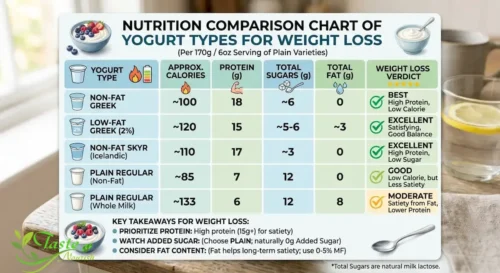
Greek yogurt and skyr typically offer roughly double the protein of regular yogurt per serving.
Yogurt tends to work best as part of a broader eating pattern, not as a standalone weight-loss strategy.
What Is Yogurt?
Yogurt is milk that has been fermented by live bacterial cultures, usually Lactobacillus bulgaricus and Streptococcus thermophilus. These bacteria convert lactose, the natural sugar in milk, into lactic acid, which thickens the milk and gives yogurt its tangy flavor.
According to the Harvard T.H. Chan School , yogurt is believed to have originated in Western Asia and the Middle East centuries ago, long before refrigeration made dairy storage easy. Straining regular yogurt removes much of the whey, which concentrates the protein and creates thicker styles like Greek yogurt and Icelandic skyr.
Plant-based yogurts made from soy, coconut, oats, or almonds have also become common. Not all of them are fermented with live cultures, so they don’t always offer the same probiotic content as dairy yogurt, and they can be lower in protein unless fortified.
Yogurt Nutrition Facts for Weight Loss
Nutrition varies quite a bit depending on the type of yogurt, its fat content, and whether sugar has been added. Here’s a general comparison of common plain yogurt varieties, based on typical values from the USDA FoodData for a standard one-cup serving.
Yogurt Type (1 cup, plain)
Calories
Protein
Carbs
Fat
Whole milk yogurt
~150
~8-9g
~11g
~8g
Low-fat yogurt
~155
~13g
~17g
~4g
Nonfat Greek yogurt
~130-150
~20-23g
~8-9g
~0g
Whole milk Greek yogurt
~190
~17-20g
~7g
~10g
Beyond protein, yogurt supplies calcium, phosphorus, and vitamin B12, and many brands are fortified with vitamin D. Flavored yogurts can add anywhere from 10 to 20 extra grams of sugar per serving, which is worth checking on the label since it changes the overall picture significantly.
Health Benefits of Yogurt
Protein and Satiety
Protein is generally the most filling macronutrient, and it may help regulate hunger hormones like ghrelin while supporting feelings of fullness after eating. Because Greek yogurt and skyr pack more protein per calorie than most snack foods, swapping them in for lower-protein options may help some people manage appetite between meals.
Gut Health and Probiotics
Yogurt with live and active cultures is one of the most common sources of probiotics in the American diet. The Mayo Clinic notes that probiotics may help support digestive health and a balanced gut microbiome, though the exact benefits can vary depending on the bacterial strain and the individual.
Bone Health
As a dairy food, yogurt is a solid source of calcium and phosphorus, both important for maintaining bone density over time. Regular yogurt tends to have slightly more calcium than heavily strained Greek yogurt, since some calcium is lost along with the whey during straining.
Blood Sugar and Metabolic Health
Some observational research suggests that regular yogurt consumption is associated with a lower risk of type 2 diabetes compared with other dairy products, though this doesn’t mean yogurt directly controls blood sugar for everyone. Its combination of protein, fat, and modest carbohydrate content may contribute to a more gradual blood sugar response than sugary snacks.
What Does the Research Say About Yogurt and Weight Loss?
This is where marketing and research start to diverge. A widely cited review published in the American Journal of Clinical Nutrition and indexed on PubMed, led by researchers at Tufts University, examined both observational studies and randomized controlled trials on yogurt and weight management.
The review found that solid randomized controlled trial evidence is limited to just two small, short-term, calorie-restricted studies. Both showed somewhat greater weight loss in the yogurt groups, but the difference compared with the control diet was statistically significant in only one of them. One of those studies also found that higher yogurt consumption was linked to smaller increases in waist circumference over time.
Larger observational studies have generally found that people who eat more yogurt tend to gain less weight over the years than people who eat little or none, but observational data can’t prove cause and effect. People who eat yogurt regularly may also have other healthy habits that explain part of the association.
Harvard Health has pointed out that despite industry marketing around dairy as a weight-loss tool, research hasn’t consistently supported that claim except when dairy is part of an overall reduced-calorie diet. Yogurt seems to work best as a smart substitution within a calorie-conscious eating pattern, not as a standalone fix.
Potential Risks and Side Effects
Yogurt is generally well tolerated, but it isn’t risk-free for everyone. Some people experience bloating, gas, or digestive discomfort, particularly if they’re sensitive to dairy or eat large portions at once.
Flavored and dessert-style yogurts can contain surprising amounts of added sugar, sometimes rivaling a candy bar per serving. Regularly eating these versions may work against weight-management goals rather than support them, even when the packaging emphasizes protein or probiotics.
Some higher-sodium yogurt products, particularly flavored or savory varieties, may also contribute more sodium to the diet than people expect.
Who Should Be Cautious When Eating Yogurt for Weight Loss?
People with lactose intolerance may still tolerate yogurt reasonably well, since fermentation breaks down some of the lactose, though symptoms vary from person to person. Anyone with a diagnosed milk protein allergy should avoid dairy yogurt entirely and look into fortified plant-based alternatives instead.
People managing blood sugar closely, such as those with diabetes, may want to stick to plain or lightly sweetened yogurt and watch portion size and added sugar. Those following a low-FODMAP diet for irritable bowel syndrome may also need to be selective about yogurt type and portion, since dairy can be a trigger for some individuals.
How Much Yogurt Should You Eat for Weight Loss?
The Dietary Guidelines for Americans, 2020-2025 recommend about 3 cup-equivalents of dairy or fortified soy alternatives per day for most adults, with yogurt counting toward that total alongside milk and cheese.
For weight management specifically, a single serving of around 3/4 to 1 cup (roughly 170 to 245 grams) of plain or lightly sweetened yogurt as a snack or part of a meal is a reasonable starting point. Eating far more than that regularly can add up in calories, even with a nutritious food, so portion awareness still matters.
Best Yogurt for Weight Loss
Reading the label is the single most useful habit here. A few things worth checking each time:
Choose plain or unsweetened varieties over flavored ones whenever possible.
Look for “live and active cultures” on the label to confirm probiotic content.
Compare grams of protein per serving; Greek yogurt and skyr are usually the highest.
Check added sugar, not just total sugar, since some sugar occurs naturally from lactose.
Decide on full-fat versus low-fat based on personal preference, since research hasn’t shown low-fat dairy is clearly superior for weight control.
Storage Tips
Keep yogurt refrigerated at or below 40°F (4°C) and check the sell-by date before eating it. Once opened, most yogurt stays good for about one to two weeks if kept properly sealed and chilled.
Yogurt can also be frozen, though the texture often becomes grainier once thawed, so frozen yogurt works better in smoothies than eaten plain. Avoid dipping a used spoon back into a shared container, since that can introduce bacteria that shorten its shelf life.
Best Ways to Eat It
Plain yogurt is versatile enough to work in sweet and savory dishes alike, which makes it easier to stick with long term. Some simple, practical ideas include:
Topping plain yogurt with berries, a small handful of nuts, and a light drizzle of honey for a balanced snack.
Blending it into smoothies for extra protein and creaminess.
Using it as a base for overnight oats instead of just milk.
Swapping it in for mayonnaise or sour cream in dips, dressings, and sauces like tzatziki.
Marinating chicken or lamb in yogurt to tenderize the meat before cooking.
Common Mistakes
One of the biggest mistakes is assuming any yogurt labeled “low-fat” or “high-protein” is automatically a good choice, without checking the sugar content on the back of the label. Flavored varieties marketed toward kids or dessert-style yogurts often undercut the benefits people are hoping for.
Another common issue is piling on high-calorie toppings like granola, chocolate chips, or extra honey until a simple snack turns into a 400-calorie bowl. Portion creep can happen fast, especially with larger tubs meant for multiple servings.
Finally, some people expect yogurt alone to produce weight loss without changing anything else about their diet. As the research shows, yogurt tends to help most when it’s swapped in for less nutritious options within an overall calorie-conscious eating pattern.
Myths vs Facts
Myth
Fact
Yogurt burns belly fat directly.
No single food burns fat; yogurt may support weight management as part of a balanced, calorie-controlled diet.
All yogurt is a health food.
Many flavored and dessert-style yogurts are high in added sugar and closer to a treat than a health food.
Fat-free yogurt is always the better choice.
Research hasn’t clearly shown low-fat dairy beats full-fat dairy for weight control; personal preference and total calories matter more.
People with lactose intolerance can’t eat yogurt.
Many people with lactose intolerance tolerate yogurt reasonably well because fermentation reduces some lactose.
Yogurt Types Compared
Type
Protein (per cup)
Texture
Best For
Regular yogurt
~8-9g
Thin, pourable
Smoothies, cooking, baking
Greek yogurt
~17-23g
Thick, creamy
High-protein snacks, dips
Skyr (Icelandic)
~20-25g
Very thick
Protein-focused eating, parfaits
Plant-based yogurt
~1-8g (varies)
Varies by base
Dairy-free or vegan diets
Yogurt and Weight Loss FAQs
Q1. Does yogurt help you lose weight on its own?
Not by itself. Yogurt may support weight loss when it replaces less nutritious, higher-calorie snacks within an overall calorie-controlled diet, but no single food guarantees weight loss.
Q2. Is Greek yogurt better than regular yogurt for weight loss?
Greek yogurt generally has more protein per serving, which may help with fullness, but regular yogurt still offers similar probiotic and calcium benefits, often at a lower cost.
Q3. What’s the best time to eat yogurt for weight loss?
There’s no strong evidence pointing to one best time. Many people find a morning or afternoon snack convenient, but total daily intake matters more than timing.
Q4. Can eating too much yogurt cause weight gain?
Yes, like any food, eating large portions regularly can add extra calories that may contribute to weight gain over time, especially with full-fat or sweetened varieties.
Q5. Is flavored yogurt bad for weight loss?
Flavored yogurt isn’t automatically bad, but many varieties contain a lot of added sugar, which can offset the benefits people are hoping for. Checking the label for added sugar is a smart habit.
Conclusion
Yogurt earns its reputation as a smart addition to a weight-conscious diet mainly because of its protein content, calcium, and probiotic potential, not because it contains any special fat-burning compound. The research so far is encouraging but still fairly limited, and most benefits show up when yogurt replaces less healthy snacks within a broader calorie-controlled eating pattern.
Choosing plain or lightly sweetened varieties, watching portion size, and pairing yogurt with fiber-rich toppings can help it fit naturally into a sustainable way of eating. It’s one useful tool among many, not a stand-alone solution.
Mozaffarian, D., Wu, H. “Yogurt and Weight Management.” American Journal of Clinical Nutrition, National Library of Medicine. https://pubmed.ncbi.nlm.nih.gov/24695887/
U.S. Department of Agriculture, Agricultural Research Service. “FoodData Central.” https://fdc.nal.usda.gov/
U.S. Department of Agriculture and U.S. Department of Health and Human Services. “Dietary Guidelines for Americans, 2020-2025.” https://www.dietaryguidelines.gov/sites/default/files/2021-03/Dietary_Guidelines_for_Americans_2020-2025.pdf
Hanan Abo Samra is the founder of Taste & Nourish, sharing trustworthy nutrition guidance and recipes drawn from 20+ years of hands-on cooking experience. When she's not developing new recipes, Hanan is researching the science behind everyday ingredients to bring readers practical, evidence-based guidance for a healthier lifestyle.