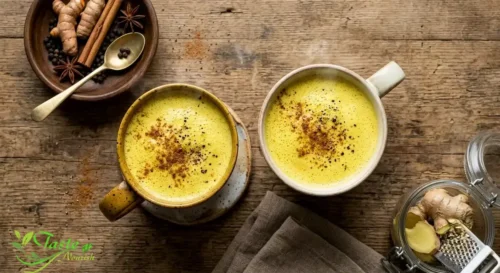
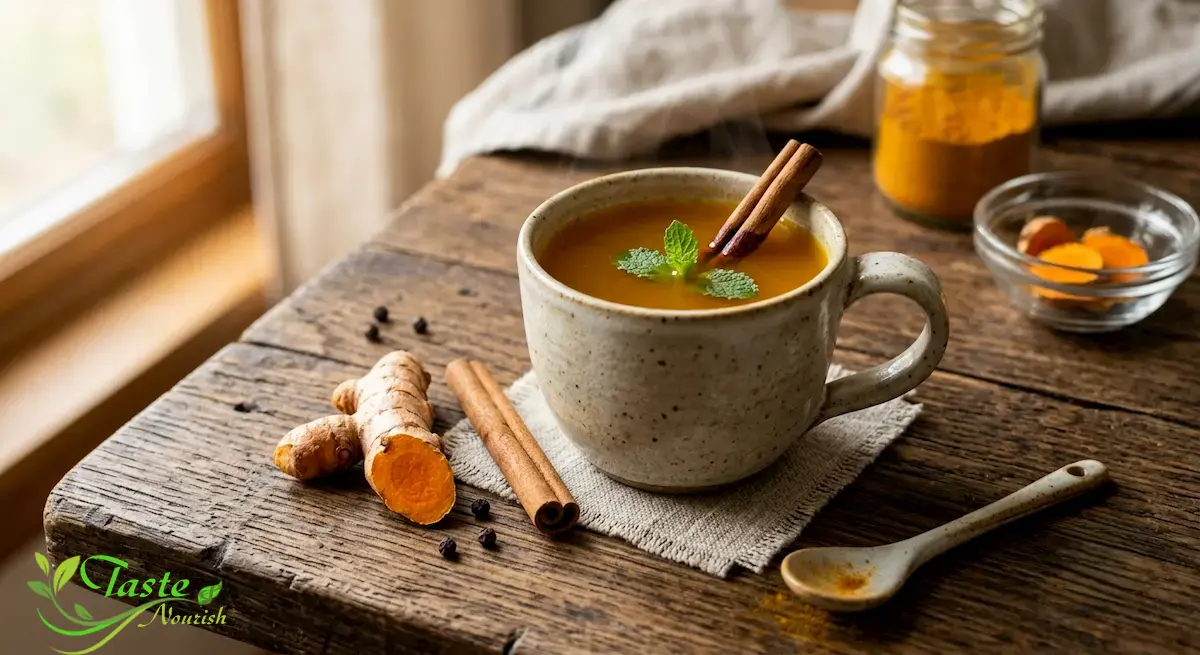
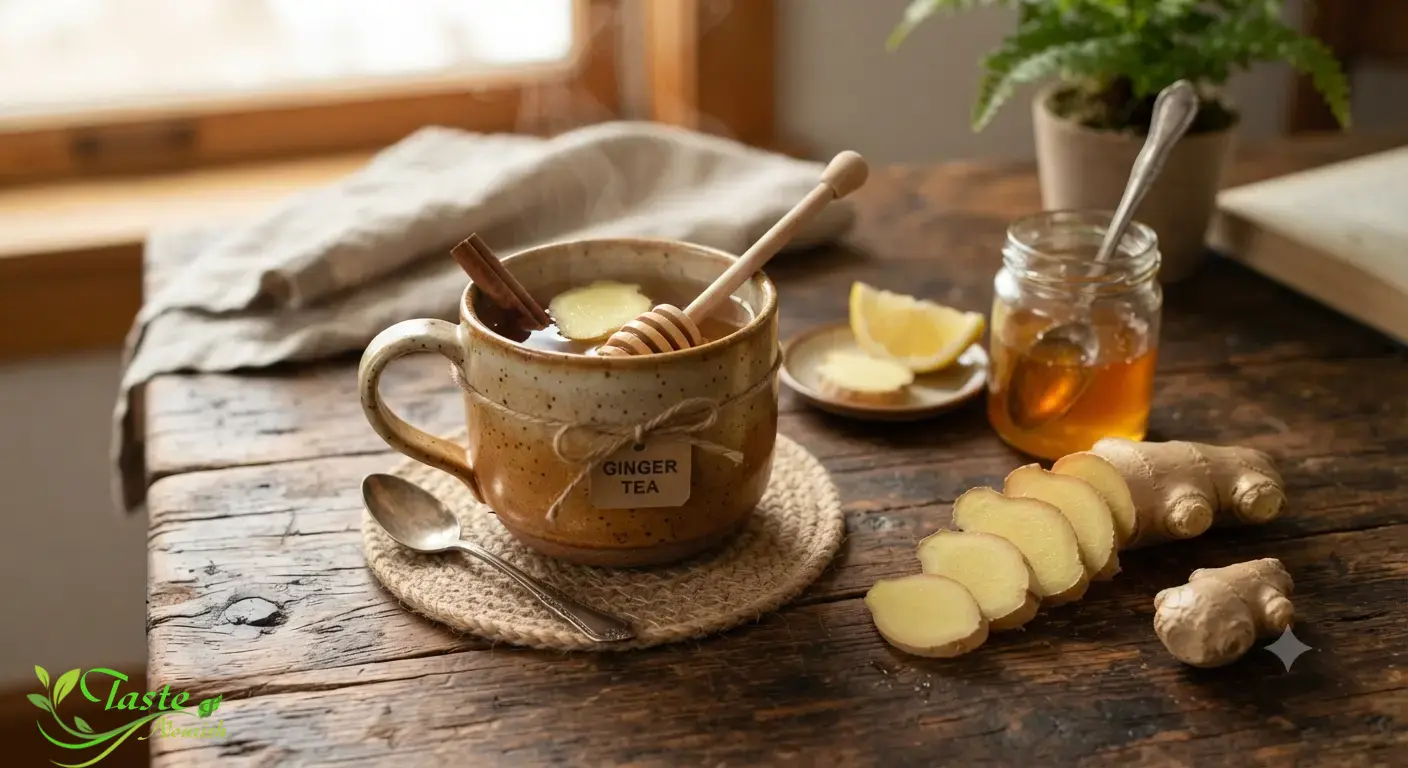
There’s something almost ceremonial about a mug of golden milk. The color alone stops you — that warm, sunset yellow swirling through steamed milk, flecked with black pepper and a whisper of cinnamon. This turmeric golden milk recipe is the classic version: no shortcuts, no strange add-ins, just the traditional blend that’s been simmered in Indian kitchens for generations and has recently found a second life as the golden milk turmeric latte on café menus across the U.S.
What makes this version “classic” is restraint. You won’t find matcha, collagen powder, or CBD oil here — just turmeric, warming spices, a touch of fat, and a good milk base, prepared the way it’s been done for centuries. If you’ve been curious about how to make classic golden milk from scratch without guesswork, this guide walks through every step, plus the science behind why black pepper actually matters in the pot.
Key Takeaways
Classic golden milk takes about 13 minutes start to finish and needs just 8 core ingredients.
Black pepper isn’t just flavor — research suggests it may meaningfully change how much curcumin (turmeric’s active compound) your body can actually absorb.
A small amount of fat, like ghee or coconut oil, helps because curcumin is fat-soluble.
Turmeric is generally well tolerated in food amounts, but concentrated supplements carry different risks — details are below.
What Is Golden Milk?
Golden milk is a warm, spiced beverage made by simmering milk with turmeric and complementary spices like cinnamon, ginger, and black pepper. In India, it’s known as haldi doodh — haldi meaning turmeric, doodh meaning milk — and it’s rooted in Ayurveda, the traditional Indian system of medicine that’s thousands of years old.
Historically, families made this drink at bedtime or whenever someone came down with a cold, a sore throat, or general aches. It wasn’t treated as a trendy wellness beverage; it was simply what you reached for, the way some households reach for chicken soup.
The Western “golden milk latte” trend of the past decade borrowed the same base recipe and dressed it up for coffee shop menus, but the bones of the drink haven’t changed.
What has changed is our understanding of why it might work. Turmeric’s color and much of its studied activity come from curcumin, a plant compound that’s been the subject of a growing body of research into inflammation and antioxidant activity. We’ll get into what the evidence actually supports later in this article — for now, let’s get the pot on the stove.
Recipe at a Glance
Detail
Info
Prep time
5 minutes
Cook time
8 minutes
Total time
13 minutes
Servings
2 (about 1 cup each)
Cuisine
Indian-inspired, Ayurvedic
Course
Beverage
Diet
Vegetarian (easily made vegan)
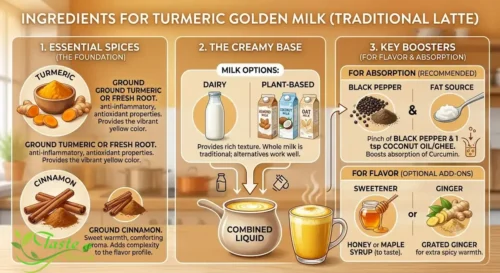
Ingredients for Classic Golden Milk
Here’s what goes into the traditional version. Measurements are for two servings, but the recipe scales easily.
2 cups (480 ml) whole milk (or milk of choice — see substitutions below)
1 teaspoon ground turmeric, or 1-inch piece fresh turmeric root, peeled and grated
½ teaspoon ground cinnamon
¼ teaspoon ground ginger, or ½-inch fresh ginger, grated
⅛ teaspoon freshly ground black pepper
1 teaspoon coconut oil or ghee
1–2 teaspoons honey or maple syrup, to taste
Pinch of ground cardamom (optional, but traditional)
Choosing Your Milk
The milk you choose changes both the texture and the nutritional profile of your golden milk. Whole dairy milk gives the richest, creamiest result and helps carry the fat-soluble compounds in turmeric. Plant-based milks work well too, though some froth and thicken differently.
Milk Type
Texture
Flavor Notes
Best For
Whole dairy milk
Rich, creamy
Neutral, lets spices shine
Classic, traditional flavor
Oat milk
Creamy, slightly thick
Mildly sweet, oaty
Vegan option with body
Coconut milk (canned, full-fat)
Very rich
Tropical, sweet
Extra indulgent, dessert-like
Almond milk
Light, thinner
Nutty, subtle
Lower-calorie option
Soy milk
Creamy, protein-rich
Neutral to slightly beany
Protein boost
Fresh Turmeric vs. Ground Turmeric
Fresh turmeric root gives a brighter, slightly peppery, more vegetal flavor, closer to what you’d find in a traditional Indian kitchen. Ground turmeric is more convenient, has a longer shelf life, and produces a milder, more mellow cup. As a rule of thumb, 1 teaspoon of ground turmeric is roughly equivalent to a 1-inch piece of fresh turmeric root, grated.
♦ If you’re new to golden milk, starting with ground turmeric is the easier entry point since it’s less bitter in larger amounts.
Equipment You’ll Need
You don’t need anything specialized for this recipe:
Small saucepan (nonstick or stainless steel)
Whisk
Fine-mesh strainer (optional, for a silky texture)
Measuring spoons and cups
Two mugs
How to Make Classic Golden Milk (Step by Step)
Combine milk and spices. Pour the milk into your saucepan and add the turmeric, cinnamon, ginger, and black pepper. Whisk to combine before turning on the heat — this helps prevent clumping.
Warm gently. Place the saucepan over medium-low heat. Whisk occasionally as it warms to keep the spices from settling at the bottom.
Simmer, don’t boil. Once you see gentle steam and small bubbles at the edges, reduce the heat further and let it simmer for 5–7 minutes. A hard boil can scorch the milk or cause it to curdle, so keep the heat low and patient.
Stir in the fat. Add the coconut oil or ghee and whisk until fully incorporated. This step matters more than it looks — curcumin is fat-soluble, so this small addition helps it dissolve into the drink rather than just floating on top.
Remove from heat and sweeten. Take the pan off the burner, then stir in honey or maple syrup to taste. Adding sweetener after cooking preserves more of its flavor.
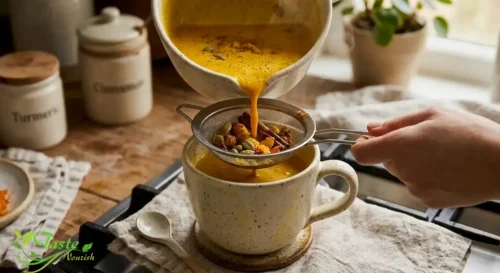
Strain and serve. If you used fresh turmeric or ginger, pour the milk through a fine-mesh strainer into your mugs for a smoother texture. Sprinkle a pinch of cinnamon or cardamom on top if you like.
Pro Tip: Freshly cracked black pepper works noticeably better than pre-ground pepper that’s been sitting in your pantry for months — the essential oils that carry piperine (the compound linked to turmeric absorption) fade over time.
Common Mistakes to Avoid
A few small missteps are responsible for most golden milk disappointments:
Boiling too hard. This scorches the milk on the bottom of the pan and can cause it to curdle, especially with plant-based milks.
Skipping the black pepper. It seems like a minor ingredient, but research on curcumin absorption (more on that below) suggests it plays a real functional role, not just a flavor one.
Using too much turmeric. More isn’t better here — over 1½ teaspoons per 2 cups of milk tends to turn bitter and chalky rather than warm and spiced.
Leaving out the fat. Without a source of fat, much of the curcumin in the drink stays undissolved rather than being incorporated into the liquid.
Adding honey while the milk is still boiling hot. Very high heat can degrade some of honey’s delicate flavor compounds — stir it in once the pan is off the heat.
Substitutions and Variations
Once you’ve made the classic version a few times, it’s easy to riff on it.
Dairy-Free and Vegan Golden Milk
Swap the dairy milk for any plant-based milk from the table above, and use maple syrup, agave, or date syrup instead of honey. Coconut oil replaces ghee cleanly, both in flavor and in function, since it still supplies the fat needed to help dissolve the turmeric.
Iced Golden Milk Latte
Make the classic recipe as directed, then let it cool to room temperature before refrigerating for at least an hour. Pour over ice and give it a quick stir, since the spices tend to settle. Some people find the iced version milder and easier to drink daily in warmer months.
Spiced Variations
A few regional and personal twists are worth trying once you know the base recipe:
Chai-style: Steep a black tea bag in the milk for the last 2 minutes of simmering.
Trinidadian-style: Add a whole clove and a small pinch of nutmeg along with the cinnamon.
Saffron golden milk: Add 3–4 saffron threads for a more floral, luxurious version, common in some North Indian households.
Pumpkin spice golden milk: Stir in a tablespoon of pumpkin purée and a dash of pumpkin pie spice for a fall-leaning cup.
Storage and Reheating
Golden milk keeps well, which makes it worth batch-cooking. Store leftovers in an airtight container in the refrigerator for up to 4 days. The turmeric will settle at the bottom over time, so give it a good whisk before reheating.
To reheat, warm it gently on the stovetop over low heat, or microwave in 30-second bursts, stirring between each. Avoid reheating at high heat, since it can cause the same scorching or curdling issues as the initial cook. If you like to keep a concentrate on hand, you can also freeze a stronger turmeric-spice paste (without the milk) in an ice cube tray for up to 2 months, then simply melt a cube into warm milk whenever you want a cup.
Nutrition Facts
Below is an approximate nutritional breakdown for one serving (1 cup) of the classic recipe made with whole dairy milk. Values will shift depending on the milk and sweetener you choose.
Turmeric itself is notably rich in manganese and provides small amounts of iron and dietary fiber, according to USDA FoodData Central, though the amount used in a single mug is small enough that its contribution to your overall daily nutrient intake is modest — the bigger nutritional story here comes from the milk base itself.
Turmeric’s Potential Health Benefits — What the Science Says
It’s worth separating tradition from evidence here, because they’re two different (if related) things. According to the National Center for Complementary and Integrative Health (NCCIH), part of the National Institutes of Health, turmeric has been studied most for conditions like osteoarthritis, nonalcoholic fatty liver disease, and high cholesterol, and while early findings are promising for some of these areas, the agency notes there isn’t yet enough evidence to definitively confirm turmeric’s benefits for any specific health purpose. That’s an important nuance — “may help” is accurate; “cures” or “prevents” is not.
One of the more interesting angles in turmeric research is absorption. Curcumin, turmeric’s primary active compound, isn’t easily absorbed by the body on its own. A frequently cited 1998 clinical study published in Planta Medica found that when curcumin was given alongside piperine — the compound responsible for black pepper’s pungency — participants’ curcumin blood concentrations increased substantially compared with curcumin taken alone.
This is the scientific basis for the age-old habit of pairing turmeric with black pepper, and it’s part of why this classic recipe includes it rather than treating it as optional.
Fat also plays a supporting role. Because curcumin is fat-soluble, consuming it alongside a source of dietary fat, such as the ghee or coconut oil in this recipe, may help improve how much of it your body can actually take up, rather than passing through largely unused. None of this means golden milk is a medical treatment. It means the traditional recipe — turmeric, black pepper, and a little fat, together — has more logic behind it than a random spice blend would.
Beyond curcumin absorption specifically, turmeric has a long history of use in traditional medicine systems, including Ayurvedic, Chinese, and Thai practices, for digestive complaints, skin conditions, and general inflammation, per NCCIH’s background on the herb. Modern researchers continue to study its antioxidant and anti-inflammatory properties, but as with most botanicals, the strength of the human clinical evidence varies significantly by condition.
Who Should Be Cautious With Turmeric
Turmeric used in food amounts, like the roughly 1 teaspoon called for in this recipe, is considered safe for most people. But there are some real caveats worth knowing, especially if you’re drawn to turmeric supplements rather than the culinary spice.
People taking concentrated, high-bioavailability curcumin supplements. NCCIH notes that some highly bioavailable curcumin formulations have been associated with reports of liver injury, and a peer-reviewed case series published in the American Journal of Medicine documented ten instances of turmeric-associated liver injury reported to the U.S. Drug-Induced Liver Injury Network. This appears to be more of a supplement-related concern than a food-spice one, but it’s worth knowing if you’re considering turmeric capsules on top of drinking golden milk.
People who are pregnant. NCCIH advises that turmeric supplements may be unsafe during pregnancy, and there isn’t enough information to confirm safety in amounts beyond typical food use while breastfeeding. If you’re pregnant, it’s worth checking with your healthcare provider before adding turmeric supplements, and keeping culinary amounts, like this recipe’s teaspoon of spice, in mind as the more conservative choice.
People on blood thinners or other prescription medications. Herbal ingredients, including turmeric, can interact with medications in ways that aren’t always predictable, so it’s worth discussing with a pharmacist or doctor if you take daily prescriptions.
People with a history of gallstones or bile duct obstruction. Turmeric can stimulate bile production, so some clinicians advise caution in this group.
Parents making this for toddlers. If you’re adapting this recipe for a young child, skip the honey entirely if they’re under 12 months old. The Centers for Disease Control and Prevention (CDC) warns that honey given to children under 12 months can cause infant botulism, a serious form of food poisoning. Maple syrup, or simply less sweetener overall, is the safer swap for little ones.
If you notice symptoms like unusual fatigue, poor appetite, dark urine, or yellowing skin after regularly consuming turmeric or curcumin products, NCCIH recommends stopping use and speaking with a healthcare provider promptly.
Conclusion
Classic golden milk earns its staying power honestly. It’s quick enough for a weeknight, forgiving enough for beginners, and rooted in a tradition that predates the “wellness drink” label by centuries. The version in this guide sticks close to that tradition: turmeric, warming spices, a little fat, and the black pepper that the science actually backs up.
Whether you’re making it because you love the flavor, because you’re curious about turmeric’s studied effects, or simply because your grandmother swore by it, this is the recipe to keep coming back to. Give it a try tonight, adjust the spice level to your taste, and let the pot do the rest.
A classic turmeric golden milk recipe made the traditional Ayurvedic way, with cinnamon, ginger, black pepper, and a touch of fat to help the body use turmeric's curcumin.
Ingredients
2 cups (480 ml) whole milk
1 teaspoon ground turmeric
1/2 teaspoon ground cinnamon
1/4 teaspoon ground ginger
1/8 teaspoon freshly ground black pepper
1 teaspoon coconut oil or ghee
1-2 teaspoons honey or maple syrup, to taste
Pinch of ground cardamom (optional)
Directions
Pour the milk into a saucepan and add the turmeric, cinnamon, ginger, and black pepper. Whisk to combine before turning on the heat.
Place the saucepan over medium-low heat, whisking occasionally as it warms.
Reduce heat once steaming and simmer gently for 5-7 minutes without letting it come to a hard boil.
Add coconut oil or ghee and whisk until fully incorporated.
Take the pan off the burner and stir in honey or maple syrup to taste.
Pour through a fine-mesh strainer into mugs and garnish with a pinch of cinnamon or cardamom.
Turmeric Golden Milk FAQs
Q1. What does turmeric golden milk taste like?
It’s warm, earthy, and lightly peppery, with cinnamon and ginger rounding out the edges. The sweetener balances turmeric’s natural bitterness, so the overall effect is closer to a spiced chai than a “medicinal” drink.
Q2. Can I drink golden milk every day?
For most healthy adults, a daily cup made with culinary amounts of turmeric is generally considered safe. If you have a health condition, take regular medication, or are pregnant, it’s worth checking with a healthcare provider first.
Q3. Is turmeric golden milk safe during pregnancy?
Culinary amounts, like the teaspoon used in this recipe, are typically fine as part of a normal diet, but NCCIH specifically advises caution with turmeric supplements during pregnancy. When in doubt, ask your OB-GYN or midwife.
Q4. What’s the best time to drink golden milk?
Traditionally, it’s sipped in the evening or before bed as a warming, calming ritual, though there’s no rule against enjoying it any time of day, hot or iced.
Q5. Can I make golden milk without dairy?
Yes. Any plant-based milk works well; oat and full-fat coconut milk tend to give the creamiest results, while almond milk makes for a lighter cup. Just pair it with a plant-based fat like coconut oil to help with the turmeric.
Shoba G, Joy D, Joseph T, Majeed M, Rajendran R, Srinivas PS. “Influence of Piperine on the Pharmacokinetics of Curcumin in Animals and Human Volunteers.” Planta Medica, 1998. https://pubmed.ncbi.nlm.nih.gov/9619120/
Halegoua-DeMarzio D, Navarro V, Ahmad J, et al. “Liver Injury Associated with Turmeric—A Growing Problem: Ten Cases from the Drug-Induced Liver Injury Network (DILIN).” The American Journal of Medicine, 2023. https://pubmed.ncbi.nlm.nih.gov/36252717/
Hanan Abo Samra is the founder of Taste & Nourish, sharing trustworthy nutrition guidance and recipes drawn from 20+ years of hands-on cooking experience. When she's not developing new recipes, Hanan is researching the science behind everyday ingredients to bring readers practical, evidence-based guidance for a healthier lifestyle.