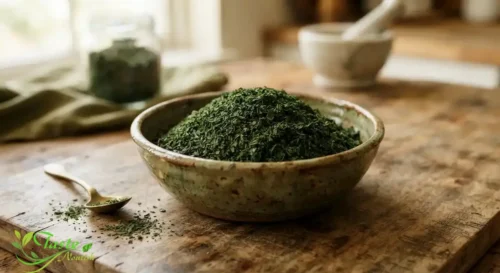
Dried molokhia is made from the leaves of the jute mallow plant (Corchorus olitorius) and is commonly used in Egyptian and other Middle Eastern dishes. Drying removes much of the leaves’ water, making them easier to store and use throughout the year.
This guide explains how dried molokhia differs from fresh leaves, how to prepare and store it, and what is known about its nutritional value. It also covers potential dietary considerations while distinguishing established nutrition information from health claims that need more research.
What is Dried Molokhia?
Dried molokhia comes from the leaves of the Corchorus olitorius plant, a species that’s been cultivated since the time of the ancient Egyptians. Think of it as nature’s multivitamin wrapped in vibrant green leaves. When fresh molokhia is harvested and carefully dried, it retains most of its nutritional value while becoming incredibly shelf-stable and easy to store.
Origins and Historical Significance
The story of molokhia reads like a culinary fairy tale. Ancient Egyptians called it and legend has it that Egyptian royalty consumed it for its health-giving properties. The name “molokhia” itself derives from the Arabic word “mulukiyyah,” which literally means “of the kings.” From Egypt, this remarkable plant spread throughout the Levant, North Africa, and eventually to other parts of the world where Middle Eastern communities settled.
The Drying Process and Preservation
The transformation from fresh to dried molokhia is an art form passed down through generations. Fresh leaves are carefully picked, washed, and then spread out under the sun or in specialized drying chambers. This process concentrates the flavors and nutrients while removing moisture that would otherwise lead to spoilage. The result? A product that can last for months or even years when stored properly in airtight containers away from direct sunlight.
Nutritional Profile of Dried Molokhia
Let’s talk numbers, because dried molokhia is genuinely impressive when you break down what’s inside those crumbled leaves.
Macronutrients Breakdown
Dried molokhia is remarkably low in calories yet packed with nutrients. Here’s what makes it nutritionally exceptional:
Nutrient
Per 100g (Dried)
Per 1 tbsp (5g)
Calories
340 kcal
17 kcal
Protein
22g
1.1g
Carbohydrates
48g
2.4g
Dietary Fiber
28g
1.4g
Total Fat
4g
0.2g
Water
8g
0.4g
Calorie Information and Serving Sizes
Here’s where things get practical. While 100g of dried molokhia contains 340 calories, you’ll never use that much in one sitting. A typical serving for preparing molokhia soup for one person is about 2-3 tablespoons (10-15g), which translates to only 34-51 calories. That’s less than a small apple!
Serving Size
Weight
Calories
Typical Use
1 teaspoon
2g
7 kcal
Garnish/seasoning
1 tablespoon
5g
17 kcal
Light soup
1/4 cup
25g
85 kcal
Standard soup serving
1/2 cup
50g
170 kcal
Family-style preparation
Health Benefits of Dried Molokhia
Now we’re getting to the good stuff. Why should you consider adding dried molokhia to your diet? Let me count the ways.
Digestive Health and Fiber Content
Dried molokhia contains dietary fiber, although the exact amount depends on the product and should be confirmed using a reliable nutrition source. Fiber can support normal bowel function as part of a balanced diet. The mucilaginous texture that develops during cooking is a characteristic feature of the leaves, but claims that it soothes the digestive tract or improves nutrient absorption require stronger evidence. People who are sensitive to high-fiber foods may experience gas or bloating when they increase their intake.
Immune System Support
Vitamins A, C, and E play roles in normal immune function. However, the amounts present in dried molokhia can vary with processing and storage, and eating it should not be described as preventing infections or treating illness. Claims about antimicrobial effects from molokhia extracts do not establish that ordinary servings provide the same effects in humans. Vitamin A supports mucosal immunity (your first line of defense against pathogens), vitamin C enhances white blood cell function, and vitamin E acts as a powerful antioxidant protecting cells from oxidative stress. Research published in the Journal of Ethnopharmacology has highlighted the antimicrobial properties of molokhia extracts, suggesting potential benefits beyond basic nutrition.
Heart Health and Cholesterol Management
Dried molokhia can contribute fiber and minerals to the diet, depending on its nutritional composition and serving size. Fiber-rich foods can form part of a heart-healthy eating pattern, while potassium and magnesium are important for normal body functions. However, there is insufficient evidence to conclude that eating dried molokhia by itself lowers cholesterol or treats high blood pressure.
Anti-inflammatory Properties
Molokhia contains plant compounds that have been investigated for antioxidant and anti-inflammatory activity. However, findings from laboratory studies of extracts do not establish that eating dried molokhia produces the same effects in humans. More clinical research is needed before specific disease-prevention or treatment claims can be made.
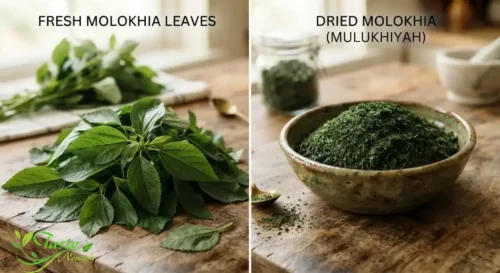
Dried Molokhia vs. Fresh Molokhia
You might be wondering: does drying molokhia diminish its nutritional value? The answer is nuanced.
Nutritional Differences
Fresh molokhia is about 90% water, which means that gram for gram, dried molokhia contains roughly 10 times more concentrated nutrients. However, some heat-sensitive vitamins, particularly vitamin C, decrease during the drying process. Here’s a quick comparison:
Nutrient
Fresh (per 100g)
Dried (per 100g)
Notes
Vitamin C
52mg
35mg
Some loss during drying
Vitamin A
6,000 IU
8,000 IU
Concentrated when dried
Fiber
2g
28g
Significantly concentrated
Iron
2.5mg
25mg
10x more concentrated
The bottom line? Both forms are nutritious, but dried molokhia offers convenience and longer storage without dramatic nutrient loss.
Shelf Life and Storage
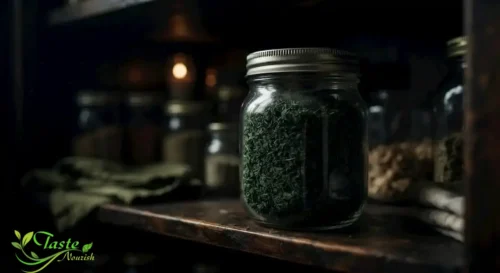
Fresh molokhia is perishable and should be refrigerated promptly. Dried molokhia generally keeps longer when stored in a tightly sealed container in a cool, dry place away from direct sunlight and moisture. Follow the package instructions and check for signs of moisture, mold, unusual odors, or deterioration before use. Shelf life varies by product and packaging, so avoid assuming that every dried product remains suitable for one or two years.
How to Prepare Dried Molokhia
Let’s get practical. You’ve got this bag of dried green powder—now what?
Rehydration Techniques
The key to working with dried molokhia is proper rehydration. Here’s the process:
Measure your portion: Typically 2-3 tablespoons per person for soup.
Initial rinse: Place the dried leaves in a fine-mesh strainer and rinse briefly under cold water to remove any dust.
Soaking (optional): Some cooks soak dried molokhia in warm water for 10-15 minutes before cooking to soften it.
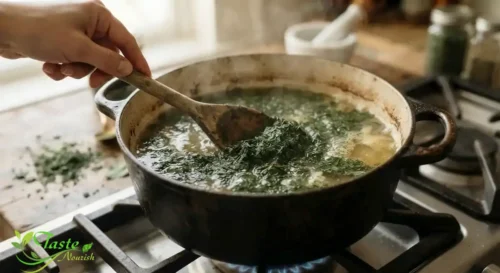
Direct cooking method: Most traditionally, dried molokhia is added directly to hot broth, where it rehydrates and thickens the liquid.
Traditional Cooking Methods
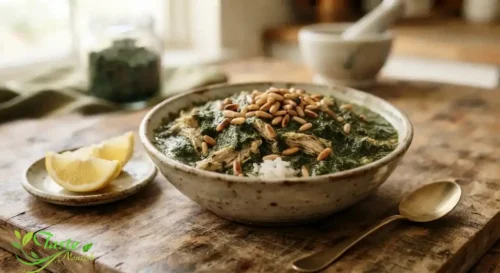
The classic preparation involves creating a flavorful broth (chicken, meat, or vegetable), then stirring in the dried molokhia and letting it simmer. As it cooks, the molokhia releases its characteristic mucilage, creating that distinctive velvety texture. The final touch? A “taklia” or garlic-coriander sauté that’s poured over the soup, releasing an aroma that’ll make your neighbors jealous.
Popular Recipes Using Dried Molokhia
Ready to cook? Let’s explore two regional variations that showcase this ingredient’s versatility.
Egyptian-Style Molokhia Soup
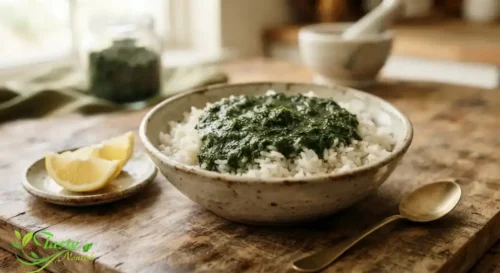
Egyptian molokhia is all about simplicity and bold flavors. The soup is typically made with chicken or rabbit broth, heavy on the garlic, and served over rice with a squeeze of lemon. The dried molokhia is added to boiling broth and cooked until it reaches that perfect, slightly thick consistency. What makes it distinctly Egyptian? The liberal use of garlic and coriander in the taklia, and the preference for a smoother, more homogeneous texture.
Lebanese Molokhia with Chicken
Lebanese molokhia takes a slightly different approach. The leaves are often left chunkier, the broth is lighter, and it’s traditionally served with onions sautéed in olive oil and vinegar on the side. Some Lebanese cooks add a touch of tomato paste for depth. It’s usually eaten with pita bread rather than rice, and many families top it with toasted pine nuts for extra richness.
Potential Side Effects and Precautions
Let’s address the elephant in the room. Is dried molokhia safe for everyone?
Dried molokhia can be included in a varied diet by many people, but individual dietary needs and tolerance differ. A few considerations may be relevant:
– Warfarin: People taking warfarin should keep their intake of vitamin K-containing foods consistent and discuss major dietary changes with their healthcare professional. They do not necessarily need to avoid molokhia.
– Digestive sensitivity: Some people may experience gas, bloating, or other digestive discomfort, particularly when eating more fiber than they are used to. Adjust portion sizes according to personal tolerance.
– Kidney-related dietary restrictions: People with chronic kidney disease or a prescribed kidney diet may need individualized guidance about potassium and other nutrients. The suitability of dried molokhia depends on the person’s medical needs and the product’s actual nutrient content.
– Allergies: Anyone who experiences symptoms suggesting a food allergy should stop eating the suspected food and seek appropriate medical advice.
Where to Buy Quality Dried Molokhia
Finding dried molokhia is easier than you might think. Middle Eastern grocery stores almost always stock it, usually in the spice or dried vegetable section. You’ll find it in various forms: whole dried leaves, crushed, or finely ground. Online retailers like Amazon, specialty food websites, and even some mainstream supermarkets now carry it due to growing interest in Middle Eastern cuisine.
When buying dried molokhia, check that the package is sealed, the product is intended for food use, and the label provides storage instructions and relevant product information. Avoid products with visible mold, signs of moisture, unusual odors, or obvious contamination. Color can vary with drying and storage, so it should not be the only indicator of quality.
Conclusion
Dried molokhia is a convenient ingredient used in many traditional dishes, especially soups and stews. Drying makes it easier to store, while its nutritional composition depends on the product and processing method. It can contribute to a varied diet, but specific health benefits should not be overstated when clinical evidence is limited.
To enjoy dried molokhia, store it properly, follow the package instructions, and prepare it according to your recipe. People taking warfarin should maintain a consistent intake of vitamin K-containing foods, while those with medical dietary restrictions should seek individualized advice when needed. Choosing reliable nutrition information and using sensible food-handling practices can help you make informed decisions about this traditional ingredient.
Dried Molokhia FAQs
1. Can I use dried molokhia in place of fresh molokhia in recipes?
Yes, dried molokhia can be used in many recipes that call for fresh molokhia, but the amount needed depends on the recipe, the product, and the texture you want. Dried leaves contain much less water than fresh leaves, so the two forms are not interchangeable by weight in every recipe. Start with the amount recommended by your recipe or product instructions and adjust as needed.
2. How long does dried molokhia last, and how should I store it?
Store dried molokhia in a tightly sealed container in a cool, dry place away from moisture and direct sunlight. Its shelf life depends on the product, packaging, and storage conditions, so follow the package date and instructions. Discard it if you notice mold, moisture, unusual odors, or signs of deterioration.
3. Is dried molokhia suitable for vegetarians and vegans?
Yes! Dried molokhia is 100% plant-based and perfect for vegetarian and vegan diets. When preparing molokhia soup, simply use vegetable broth instead of meat or chicken broth. The nutritional benefits remain the same, and you’ll still get that distinctive flavor and texture molokhia is famous for.
4. Why does molokhia become slimy when cooked?
Molokhia develops its characteristic thick, slippery texture because the leaves contain mucilage, a substance that interacts with liquid during cooking. This texture is a normal feature of the dish and is not, by itself, a sign of spoilage. However, unusual odors, visible mold, or improper storage are reasons to discard the food.
5. Can children and pregnant women safely eat dried molokhia?
Dried molokhia can be included in meals for many children and pregnant people when it is properly stored and prepared. However, individual dietary needs vary, and its exact nutrient content depends on the product. During pregnancy, it is important to follow food-safety guidance and seek professional advice about individual dietary concerns. Children should be offered age-appropriate portions and textures.
Scientific Sources:
African Journal of Traditional, Complementary and Alternative Medicines – “Anti-inflammatory properties of Corchorus olitorius” https://www.ajol.info/index.php/ajtcam
**Hanan Abo Samra** shares practical cooking insights, delicious recipes, and evidence-based nutrition information. Drawing on more than 20 years of hands-on cooking experience, she creates helpful food content that combines everyday cooking knowledge with information from reliable scientific sources. Her goal is to help readers better understand the foods they eat, explore their nutritional benefits, and prepare delicious meals with confidence.