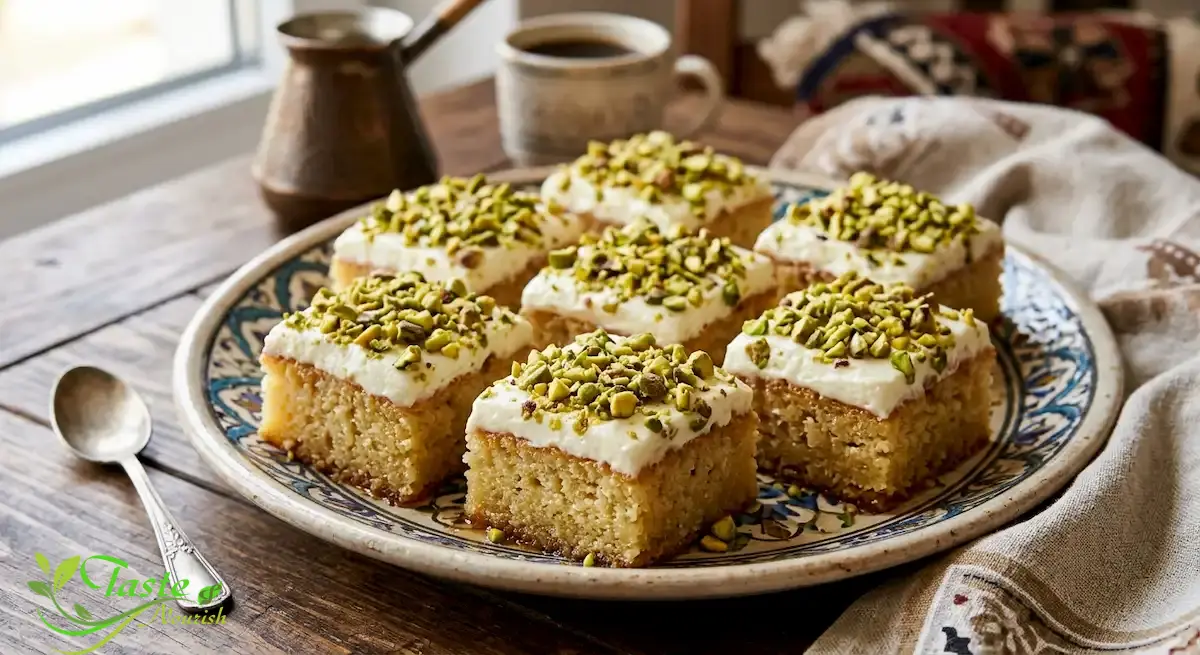
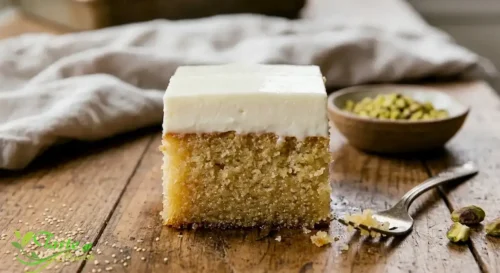
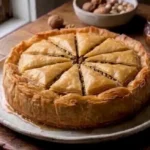
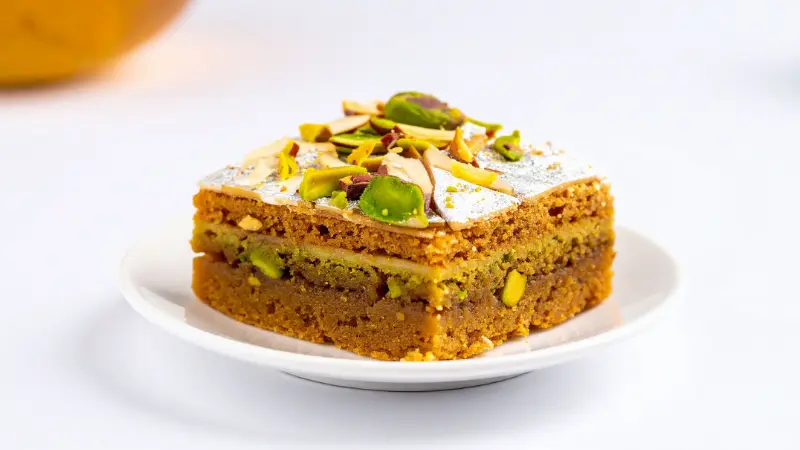
Basbousa with cream takes the classic syrup-soaked semolina cake and adds a cool, silky layer of cooked milk and cream on top. The result is a tender, slightly sandy crumb under a creamy layer that you can slice cleanly. You don’t need clotted cream, only a saucepan and a little patience. This recipe covers the syrup ratio, the cooling steps, and a troubleshooting table for dry, soggy, or runny results.
Quick Answer: How Do You Make Basbousa with Cream?
Basbousa with cream is a semolina-yogurt cake baked until deep golden, soaked with a light room-temperature syrup while the cake is still hot, then topped with a cooked milk-and-cream layer. Cool the cake completely before adding the cream, then refrigerate at least 3 hours so the cream sets and the syrup distributes evenly.
Key Takeaways: Basbousa with Cream
Coarse semolina gives the sandy, tender crumb. Resting the batter 20 to 30 minutes lets the grains hydrate.
Pour room-temperature syrup over the hot cake, in two passes, and stop when it just begins to gather at the edges.
The cooked cream must boil for about a minute to activate the cornstarch, or it will stay runny.
Spread the cream only over a fully cool cake, or it will slide and soak in.
Basbousa with cream is a refrigerated dessert. It needs at least 3 hours to set, and leftovers keep 3 to 4 days.
Ingredients
For the Basbousa
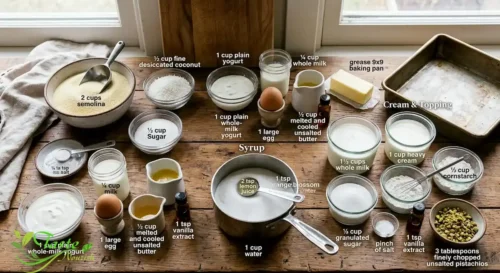
2 cups (340 g) coarse semolina
½ cup (45 g) unsweetened fine desiccated coconut
½ cup (100 g) granulated sugar
1 teaspoon baking powder
¼ teaspoon fine salt
1 cup (245 g) plain whole-milk yogurt
¼ cup (60 ml) whole milk
1 large egg
½ cup (113 g) unsalted butter, melted and cooled until warm, not hot
1 teaspoon vanilla extract
Butter for the pan
For the Syrup
1 cup (200 g) granulated sugar
1 cup (240 ml) water
2 teaspoons lemon juice
1 teaspoon orange blossom water (or ½ teaspoon rose water)
Semolina. Look for coarse semolina, which Middle Eastern grocers may label smeed. It is milled from durum wheat and gives basbousa its slightly sandy, tender crumb. Very fine semolina, including the finely milled type sold for pasta, and farina such as Cream of Wheat tend to bake into a denser, pastier cake.
Yogurt and baking powder. The yogurt adds moisture and mild acidity that works with the baking powder for a modest rise. Use plain whole-milk yogurt, not a sweetened or flavored one.
Cornstarch. In the cream, cornstarch is the only thickener. It thickens once the mixture reaches a bubble and sets further as it chills.
Butter: Ghee works in the same amount and adds a nuttier flavor. A neutral oil (½ cup, 120 ml) also works, but the cake will taste less rich.
Yogurt: Low-fat yogurt gives a slightly leaner crumb. If you use Greek yogurt, thin 1 cup with 3 tablespoons milk first, or the batter will be too stiff.
Coconut: Leave it out and add 3 tablespoons more semolina. Do not use sweetened flaked coconut, which adds moisture and sugar.
Heavy cream: Replace it with an equal amount of whole milk for a lighter cream. It will set about the same but taste less rich.
Equipment
You need a 9 x 13-inch (23 x 33 cm) baking pan, two mixing bowls, a whisk, a spatula, a small saucepan for the syrup, a medium saucepan for the cream, a wooden skewer, and a thin sharp knife. Parchment paper is optional.
How to Make Basbousa with Cream
1. Prepare the pan. Place a rack in the middle of the oven and preheat to 350°F (175°C). Butter the pan thoroughly, including the corners.
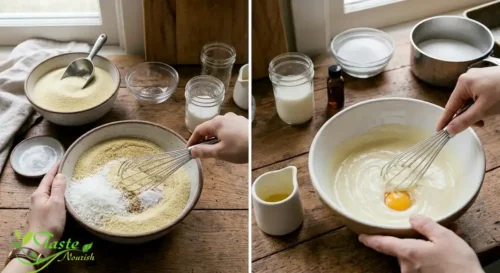
2. Mix the dry ingredients. In a large bowl, whisk the semolina, coconut, ½ cup sugar, baking powder, and ¼ teaspoon salt.
3. Mix the wet ingredients. In another bowl, whisk the yogurt, milk, egg, and vanilla until smooth. Whisk in the melted butter, which should feel warm to the touch but not hot, so it doesn’t cook the egg.
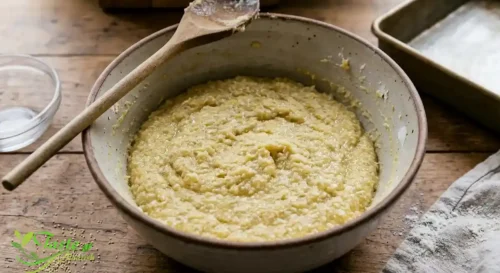
4. Combine and rest. Pour the wet mixture over the dry and stir with a spatula for about 30 seconds, just until no dry streaks remain. The batter should be thick enough to mound slightly on the spatula. Cover and let it rest for 20 to 30 minutes while the oven heats.
5. Make the syrup. Combine 1 cup sugar and the water in the small saucepan. Bring to a boil over medium heat, stirring only until the sugar dissolves. Add the lemon juice and simmer gently for about 8 minutes, until the syrup lightly coats the back of a spoon. Stir in the orange blossom water and set aside to cool to room temperature. You will have about 1¼ cups.
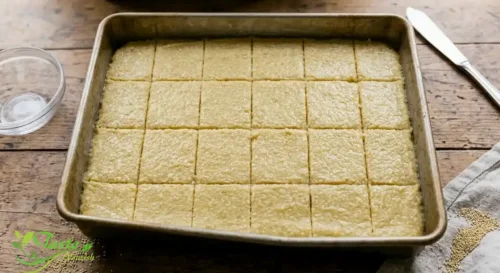
6. Spread and cut. Stir the rested batter once. If it is stiff enough to hold a spoon upright, stir in 1 to 2 tablespoons milk. Scoop it into the pan and smooth the top with a damp spatula. Cut all the way through the batter into a 4 x 6 grid of 24 pieces.
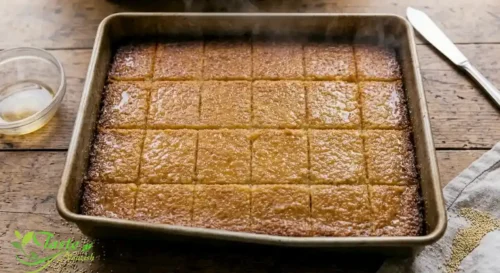
7. Bake. Bake for 30 to 35 minutes. The cake is ready when the top is evenly deep golden, the edges are a shade darker and just starting to pull from the pan, and a skewer in the center comes out clean. Ovens vary, so start checking at 30 minutes.
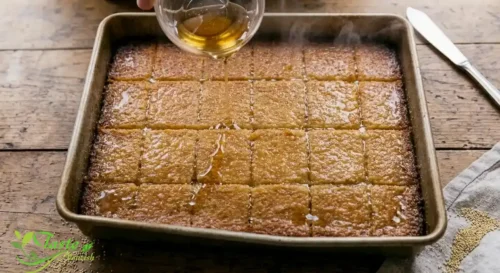
8. Soak with syrup. While the cake is still hot, pour about three-quarters of the cooled syrup slowly over the surface, concentrating on the cut lines. Wait 5 minutes, then add more until the surface looks glossy and syrup just begins to gather at the edges. Most cakes take about 1 cup. Keep the rest for serving.
9. Cool completely. Leave the cake uncovered at room temperature for 60 to 90 minutes, until the bottom of the pan no longer feels warm.
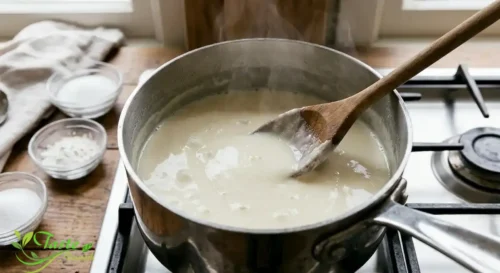
10. Cook the cream. In the medium saucepan, whisk the cornstarch, ⅓ cup sugar, and pinch of salt with ½ cup of the milk until smooth. Whisk in the remaining milk and the heavy cream. Cook over medium heat, whisking constantly and scraping the corners, for 5 to 7 minutes, until thick and bubbling. Keep it gently bubbling for 1 more minute, then remove from the heat and whisk in the vanilla.
11. Cool the cream. Transfer it to a shallow bowl and press plastic wrap directly onto the surface to prevent a skin. Let it cool 20 to 30 minutes, until lukewarm.
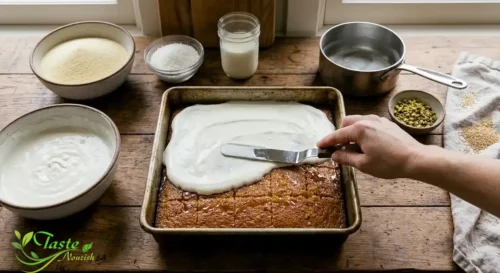
12. Top and chill. Whisk the cream smooth and spread it over the fully cool cake in an even layer about ¼ inch thick. Refrigerate uncovered for 30 minutes, then cover and chill at least 3 hours in total. Overnight is fine.
13. Cut and serve. Dip a thin knife in hot water, wipe it dry, and re-cut along the original lines. Sprinkle with pistachios just before serving so they stay crisp.
Why the Syrup Ratio and Temperature Matter
The syrup is equal parts sugar and water by volume. A thicker syrup would sit on the surface of a cake that already has a sweet cream layer, while a thinner one would soak in too fast and weaken the crumb. Pairing hot cake with cool syrup lets the syrup move in steadily without turning the crumb gummy. The pause between pours gives the grains time to absorb before you judge how much more the cake needs.
From My Kitchen
I recommend lining the pan with a strip of buttered parchment that hangs over the long sides. It makes lifting out the first piece much cleaner, and the first piece is always the hardest. I also recommend pouring the syrup along the cut lines rather than over the center of each piece, since that is where it sinks in fastest. When slicing the chilled cream layer, wipe the knife with a damp cloth between cuts.
Troubleshooting Basbousa with Cream
Problem
Likely cause
Fix or prevention
Dry or crumbly cake
Overbaking, too little syrup, or a batter that was too stiff
Check at 30 minutes and pour syrup in two passes. Loosen a stiff batter with 1 to 2 tablespoons milk. If the baked cake is already dry, poke holes with a skewer and spoon over the reserved syrup.
Soggy cake or pooled syrup
Too much syrup, syrup that was too hot, or underbaking
Hold back some syrup, use it at room temperature, and bake until deep golden. Tilt the pan and spoon off excess syrup, then let the cake cool uncovered for longer.
Gritty or heavy crumb
Semolina too fine or too coarse, or no resting time
Use coarse semolina and rest the batter the full 20 to 30 minutes.
Crystallized syrup
Stirring after it boils, sugar crystals on the pan sides, or no acid
Stir only until the sugar dissolves and keep the lemon juice. Add a splash of water and reheat gently to rescue a grainy syrup.
Runny cream
Not cooked long enough to activate the cornstarch
Cook until thick and bubbling, then 1 minute more. If it is still thin, whisk 1 tablespoon cornstarch into 2 tablespoons cold milk, stir it in, and cook again.
Lumpy cream
Starch not dissolved before heating, or too little whisking
Dissolve the cornstarch in cold milk first and whisk constantly. Strain through a fine mesh sieve if lumps form.
Cream slides or weeps into the cake
Cake still warm, or cream spread while hot
Cool the cake completely and spread the cream only when lukewarm.
Serving Basbousa with Cream
Serve the pieces cold, straight from the refrigerator, on small plates. They are sweet and rich enough that a 2-inch square satisfies. Strong black tea or unsweetened coffee balances the sweetness well. Serve any leftover syrup in a small jug for people who want a little extra over the cake rather than the cream.
Variations
Pistachio cream: Whisk 2 tablespoons finely ground unsalted pistachios into the hot cream before cooling.
Rose and cardamom: Use ½ teaspoon rose water in the syrup instead of orange blossom water, and add ¼ teaspoon ground cardamom to the dry ingredients. Rose water is potent, so measure carefully.
Orange: Add 1 teaspoon finely grated orange zest to the wet ingredients.
Nut-free topping: Replace the pistachios with toasted unsweetened coconut flakes.
Storing Basbousa with Cream Safely
Because of the dairy-based cream, keep this dessert refrigerated at or below 40°F. The USDA Food Safety and Inspection Service advises that perishable food should not be left out of refrigeration for more than 2 hours, or 1 hour when the temperature is above 90°F. Cover leftovers and refrigerate them promptly. FSIS notes that most leftovers keep 3 to 4 days in the refrigerator.
Freezing the finished dessert is not recommended, because cream layers tend to turn watery or grainy after thawing. If you want to freeze it, freeze the cake plain (soaked but without the cream). Wrap the pieces airtight and thaw them in the refrigerator. FSIS notes that freezer burn dries food out but does not make it unsafe. Expect a slightly softer crumb, and make the cream fresh after thawing. For best quality, use frozen leftovers within 3 to 4 months, as FSIS advises.
Nutrition Information
Per piece (1 of 24)
Estimate
Calories
about 215
Total fat
about 10 g
Carbohydrates
about 28 g
Total sugars
about 15 g
Fiber
about 1 g
Protein
about 4 g
These are approximate values calculated from ingredient data in USDA FoodData Central, not laboratory analysis. They assume about 1 cup of syrup is absorbed and include the pistachio topping. Your values will vary with the brands you use and how much syrup the cake takes up.
Basbousa with Cream FAQs
Can I make it ahead?
Yes. Bake and soak the cake the day before, cover it once it has cooled, and refrigerate it. Add the cream the day you plan to serve, allowing at least 3 hours for it to set. Alternatively, finish the whole dessert the night before.
Can I use whipped cream or store-bought qishta instead?
Both work, with different results. Sweetened whipped cream is softer, does not hold a clean slice as well, and is best served within a day. Store-bought qishta or ashta from a Middle Eastern market is closer to the traditional topping. Use about 2½ cups, check the label for storage instructions, and taste it first, since sweetness varies.
My basbousa is cooked through but pale on top. Can I brown it?
Yes. Move the pan to an upper rack and broil for 1 to 2 minutes, watching closely. Semolina and coconut go from golden to scorched very quickly. Do this before soaking the cake, not after.
Can I split the cake and put the cream in the middle?
It is possible, but less reliable. Syrup-soaked semolina cake is tender and crumbles easily. If you want to try, chill the cut squares first and split them gently with a thin serrated knife. Expect some breakage, and use the top-layer method for the cleanest slices.
Can I leave out the egg?
Many basbousa recipes are egg-free. The egg helps bind the crumb, so without it the cake will be more tender and crumble more at the cut edges. Replacing it with 3 tablespoons of milk is a reasonable starting point, but I haven’t confirmed that adjustment, so treat it as an experiment.
Place a rack in the middle of the oven and preheat to 350°F (175°C). Butter a 9 x 13-inch (23 x 33 cm) pan thoroughly, including the corners.
In a large bowl, whisk the semolina, coconut, ½ cup sugar, baking powder, and ¼ teaspoon salt.
In another bowl, whisk the yogurt, milk, egg, and vanilla until smooth. Whisk in the melted butter, which should feel warm to the touch but not hot, so it does not cook the egg.
Pour the wet mixture over the dry and stir with a spatula for about 30 seconds, just until no dry streaks remain. The batter should be thick enough to mound slightly on the spatula. Cover and rest for 20 to 30 minutes while the oven heats.
Combine 1 cup sugar and the water in a small saucepan. Bring to a boil over medium heat, stirring only until the sugar dissolves. Add the lemon juice and simmer gently for about 8 minutes, until the syrup lightly coats the back of a spoon. Stir in the orange blossom water and cool to room temperature.
Stir the rested batter once. If it is stiff enough to hold a spoon upright, stir in 1 to 2 tablespoons milk. Scoop it into the pan and smooth the top with a damp spatula. Cut all the way through the batter into a 4 x 6 grid of 24 pieces.
Bake for 30 to 35 minutes, until the top is evenly deep golden, the edges are a shade darker and just starting to pull from the pan, and a skewer in the center comes out clean.
While the cake is still hot, pour about three-quarters of the cooled syrup slowly over the surface, concentrating on the cut lines. Wait 5 minutes, then add more until the surface looks glossy and syrup just begins to gather at the edges. Most cakes take about 1 cup. Keep the rest for serving.
Leave the cake uncovered at room temperature for 60 to 90 minutes, until the bottom of the pan no longer feels warm.
In a medium saucepan, whisk the cornstarch, ⅓ cup sugar, and a pinch of salt with ½ cup of the milk until smooth. Whisk in the remaining milk and the heavy cream. Cook over medium heat, whisking constantly and scraping the corners, for 5 to 7 minutes, until thick and bubbling. Keep it gently bubbling for 1 more minute, then remove from the heat and whisk in the vanilla.
Transfer the cream to a shallow bowl and press plastic wrap directly onto the surface. Let it cool 20 to 30 minutes, until lukewarm.
Whisk the cream smooth and spread it over the fully cool cake in an even layer about ¼ inch thick. Refrigerate uncovered for 30 minutes, then cover and chill at least 3 hours in total.
Dip a thin knife in hot water, wipe it dry, and re-cut along the original lines. Sprinkle with pistachios just before serving.
Final Thoughts on Basbousa with Cream
Basbousa with cream rewards patience more than skill. The batter takes minutes to mix, but the dessert depends on rested semolina, a syrup that is cool when it meets the hot cake, and a cream layer that goes on only after the cake has fully cooled. Get those three things right and the cake stays tender under a smooth, sliceable layer of cream. Before spreading the cream, rest your palm against the bottom of the pan. If you feel any warmth, wait another 15 minutes.
**Hanan Abo Samra** shares practical cooking insights, delicious recipes, and evidence-based nutrition information. Drawing on more than 20 years of hands-on cooking experience, she creates helpful food content that combines everyday cooking knowledge with information from reliable scientific sources. Her goal is to help readers better understand the foods they eat, explore their nutritional benefits, and prepare delicious meals with confidence.