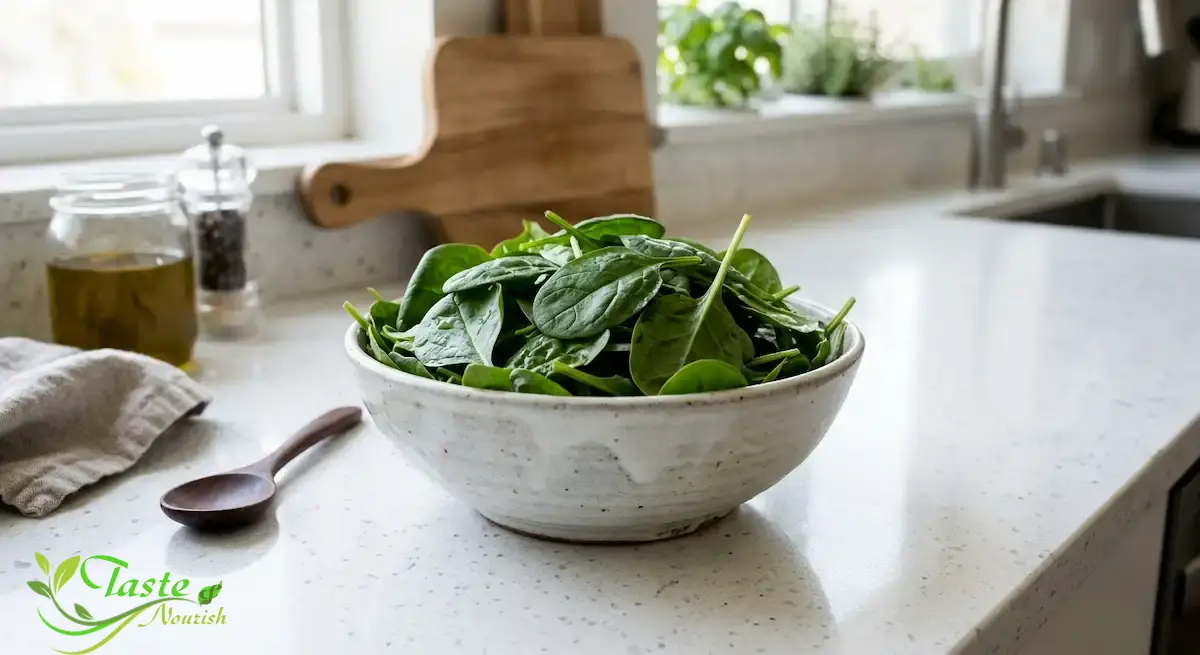
Spinach is one of the easiest vegetables to pile onto a plate without piling on calories, which is why it comes up in nearly every conversation about spinach weight loss. The harder question is whether it changes the number on the scale or simply makes a lower-calorie meal more filling. I want to be clear about which is which.
Spinach weight loss comes down to calories per bite. Raw spinach is mostly water, so a large portion adds very few calories and can make meals more filling when it replaces higher-calorie foods. It is not a fat burner, and the stronger appetite findings come from concentrated spinach extract, not whole leaves.
Key Takeaways: Spinach Weight Loss
Spinach weight loss support is mainly about energy density: lots of volume for very few calories, most useful when it replaces richer foods instead of being added on top.
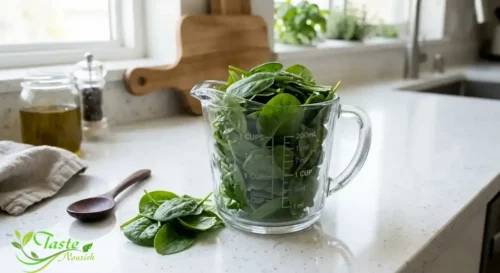
Cooked spinach packs far more leaf per cup than raw, so measure raw and cooked amounts separately.
Large observational studies link higher vegetable intake to less weight gain, but they do not single out spinach.
A cup of raw spinach is low in both protein and fiber, so pair it with a protein source to make meals last.
Spinach is high in oxalate and vitamin K, which matters for people with calcium oxalate kidney stones or those taking warfarin.
A spinach-only diet is not supported by the research discussed here; spinach works as a substitution inside balanced meals.
What Is Spinach?
Spinach (Spinacia oleracea) is a leafy green eaten raw in salads and smoothies or cooked into eggs, soups, curries, and fillings. Baby spinach has small, tender leaves and a mild flavor. Mature flat-leaf and savoy types are sturdier and hold up better to heat. Nutritionally, all of them are mostly water.
Spinach Nutrition: Why It Suits a Calorie-Conscious Diet
The values below come from the USDA FoodData Central entry for raw spinach. They shift a little with variety, season, and growing conditions.
Raw spinach, per 100 g and per 1 cup (30 g)
Nutrient
Per 100 g
Per 1 cup (30 g)
Calories
23
7
Protein
2.9 g
0.9 g
Carbohydrate
3.6 g
1.1 g
Fiber
2.2 g
0.7 g
Fat
0.4 g
0.1 g
Water
91.4 g
27.4 g
Two details matter for weight loss. First, water makes up about nine-tenths of the leaf’s weight, which works out to roughly a quarter of a calorie per gram. Second, spinach is not the high-fiber or high-protein vegetable many articles imply: a cup of raw leaves contributes under a gram of each. Its filling power comes mostly from volume.
Spinach also supplies vitamin K, folate, vitamin A, vitamin C, potassium, and magnesium. That is useful when a calorie-reduced diet leaves less room for nutrient-poor foods, though it is a statement about what spinach contains, not proof that it changes weight.
What the Research Says About Spinach Weight Loss
The evidence falls into three layers, and they should not be blended together.
Low energy density: the well-established part
Energy density means calories per gram of food. Mayo Clinic’s explanation of energy density describes how water and fiber add weight without adding calories, which is why vegetables such as salad greens sit at the low end. A plate with a big handful of spinach in place of some rice, pasta, or cheese can look and feel just as large while containing fewer calories.
The catch is substitution. Spinach adds almost nothing by itself, but the olive oil, cheese, creamy dressing, or croutons it often travels with can easily outweigh it. This principle applies to low-energy-dense foods as a group. The research is not specific to spinach.
Vegetable intake and weight change in large cohorts
In a PLOS Medicine analysis of three US cohorts covering 133,468 adults followed for up to 24 years, each extra daily serving of vegetables was associated with about 0.25 lb less weight gain over four years. Starchy vegetables such as corn, peas, and potatoes were associated with weight gain instead.
That is a small effect, and it is observational. The participants were health professionals who reported their own weight, so the results may not apply to everyone. They also describe vegetables as a group, so they do not show that spinach on its own changes weight.
Spinach extract: appetite and weight in small trials
The most-quoted spinach weight-loss claims come from studies of thylakoids, the membranes inside leaf cells, given as a concentrated extract. In a 12-week randomized trial in overweight women, participants were told to eat three meals a day without snacking and to be more active. Those taking 5 g of the extract daily lost an average of 5.0 kg, compared with 3.5 kg on placebo, and reported a reduced urge for palatable food.
Several cautions apply. The trials were small and short, the weight difference was modest, and the 2015 trial was funded by the extract’s manufacturer. More importantly, a concentrated extract is not a salad. These studies did not test whole leaves, so a normal serving of spinach should not be assumed to do the same thing.
How strong is the evidence for each spinach claim?
Claim
Evidence level
Reasonable conclusion
Very low in calories for its volume
Strong
Reliable
Replacing richer foods with vegetables supports weight control
Moderate, mostly observational
Reasonable, small effect
Spinach extract reduces appetite and aids weight loss
Preliminary, small trials
Not shown for whole spinach
Spinach burns fat or detoxes the body
None
Marketing
Is a Low Calorie Spinach Diet a Good Idea?
Spinach works as a substitution, not as a diet. Plans built almost entirely around spinach soup, spinach smoothies, or other very low calorie spinach diets have no clinical support. They supply little protein or fat, so they are unlikely to keep you full for long, and they are monotonous enough that most people abandon them.
A more workable pattern uses spinach as a high-volume base inside meals that also contain protein, some fat, and slower-digesting carbohydrates.
How Much Spinach Is Reasonable for Weight Loss?
There is no official spinach-specific amount, and no amount has been shown to cause weight loss. It helps to separate three ideas:
Standard serving: under MyPlate’s vegetable group guidance, 2 cups of raw spinach or 1 cup cooked counts as 1 cup from the vegetable group.
Typical culinary portion: a couple of handfuls in a salad or under a hot dish, or a large handful wilted into a pan.
Personal needs: these depend on your overall calories, protein targets, and any medical conditions, none of which a general article can set for you.
Raw and cooked amounts are not interchangeable. Cooking collapses the leaves, so a cup of cooked spinach holds the leaves of several cups raw, along with proportionally more calories.
Build it into meals you already eat, and keep other vegetables in rotation rather than making spinach the only green.
Ways to Use Spinach When You’re Cutting Calories
Spinach is mild enough to disappear into foods you already make, which is the simplest way to add volume.
Egg —: add a large handful to the pan just before the eggs set. It shrinks to almost nothing, so use more than seems sensible.
Soups and stews — stir it in for the last minute or two so the leaves stay green.
Lentil and chickpea dishes — fold it into dal or a chickpea curry, the way palak is used in many South Asian dishes, to bulk up the pot without extra oil.
Pasta and grain bowls — put raw leaves in the bowl and ladle the hot food over them. The heat wilts them, and you need less pasta or rice to fill the bowl.
Sandwiches and wraps — use a thick layer of leaves in place of extra cheese or spread.
Baked dishes — layer it into lasagna or stuffed shells, squeezing thawed frozen spinach dry first so the dish doesn’t turn watery.
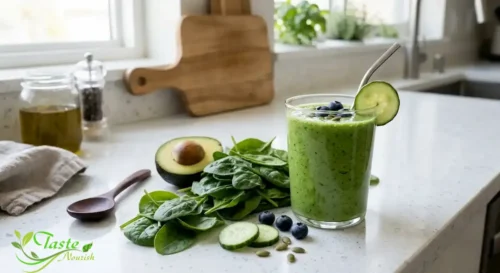
Smoothies — baby spinach blends invisibly into fruit-and-yogurt smoothies.
Practical Tips for Buying, Cooking, and Storing Spinach
Match the type to the job. Baby spinach suits raw eating. Mature spinach is better cooked, and its thick stems are worth stripping out.
Dry the leaves thoroughly. Wet leaves steam instead of sautéing and turn slimy. A salad spinner or a clean towel fixes this.
Cook it fast and hot. A minute or two in a large pan is enough. Overcooked spinach goes dull, mushy, and watery.
Measure the oil. Spinach soaks up fat quickly, so a small measured amount is plenty for the pan. A little fat also helps with absorption of the fat-soluble vitamins spinach contains.
Add acid at the end. A squeeze of lemon or a splash of vinegar brightens cooked spinach and lets you use less salt and fat for flavor.
Keep frozen spinach on hand. It is typically blanched before freezing and works well in smoothies, soups, and bakes. Choose plain over creamed styles.
Store it dry. Keep fresh leaves in the fridge in a container lined with paper towel to absorb moisture. If they turn slimy, dark, or smell off, discard them. Don’t taste to check.
Possible Drawbacks and Who Should Be Careful
For most people, spinach in ordinary amounts is a useful, safe food. Two situations call for more thought.
Oxalate and kidney stones
Spinach For people who form calcium oxalate stones, NIDDK’s eating and nutrition guidance includes reducing oxalate, and it names drinking enough fluid, mainly water, as the most important step.
If you have had kidney stones, ask your healthcare professional or a renal dietitian how much spinach fits your situation. Daily spinach smoothies deserve a mention in that conversation, since many cups of leaves fit into one glass.
Vitamin K and warfarin
Raw spinach is very high in vitamin K. Warfarin works by opposing vitamin K, and the NIH vitamin K fact sheet for health professionals says people taking it need to keep their intake consistent. That does not mean avoiding spinach. It means not suddenly starting or stopping a spinach-heavy routine without telling the prescriber. Never adjust a prescribed medication on your own.
Common Spinach Weight Loss Myths
Myth: Spinach burns fat or melts belly fat. No food has been shown to do this. The research discussed above concerns appetite and energy density, and none of it demonstrated targeted loss of belly fat.
Myth: Spinach juice or “green detox” drinks flush out fat. Juicing removes the chewing and bulk that make whole leaves filling. The body’s liver and kidneys handle waste without a spinach drink, and no evidence shows such drinks cause weight loss beyond replacing other calories.
Myth: The more spinach, the faster the weight loss. No study has shown this. Beyond a normal amount, extra spinach adds no known weight benefit.
Myth: A big spinach salad is a complete, filling meal. Spinach is low in protein and fat, so a plain salad often leaves people hungry an hour later. Adding eggs, beans, fish, chicken, tofu, or yogurt-based dressing makes the same bowl last.
Spinach for Weight Loss: FAQs
Are spinach smoothies good for weight loss?
They can be, if the smoothie replaces something higher in calories rather than being added to your day. The spinach contributes very little. The fruit, juice, nut butter, honey, or sweetened yogurt around it sets the total. Blend whole leaves rather than juicing them, and add a protein source so it holds you longer.
Is frozen spinach as good as fresh for weight loss?
Yes, for this purpose. Plain frozen spinach is just as low in calories for its weight, and any small nutrient differences matter far less than what you cook it with. Thaw it and squeeze it dry, and remember that a cup of thawed spinach holds far more leaf than a cup of fresh.
How does spinach compare with kale, lettuce, or arugula for weight loss?
Not meaningfully. All leafy greens are mostly water and low in calories, and none has been shown to outperform the others for weight loss. The practical differences lie elsewhere: spinach is generally higher in oxalate than kale or romaine, while sturdier greens like kale hold up better to meal prep and dressing.
Bottom Line
I see spinach as a volume tool rather than a weight-loss food: it makes eggs, soups, and pasta dishes bigger and more filling for few calories, as long as protein sits alongside it and the oil and cheese stay in check. For the nutrients and benefits that have nothing to do with weight, see our guide to the health benefits of spinach.
Conclusion
Spinach weight loss is best understood as a calorie-density story. Used to replace richer ingredients rather than sit on top of them, spinach is a sensible, inexpensive way to eat with calories in mind.
Used to bulk up meals in place of richer ingredients, with protein alongside and attention to oxalate and vitamin K where they apply, it is a sensible, inexpensive ingredient for anyone eating with calories in mind.
This article provides general nutrition information and is not medical advice. If you have kidney disease or a history of kidney stones, a food allergy, or take any medication, especially a blood thinner, talk with a doctor or registered dietitian before changing how much spinach you eat.
**Hanan Abo Samra** shares practical cooking insights, delicious recipes, and evidence-based nutrition information. Drawing on more than 20 years of hands-on cooking experience, she creates helpful food content that combines everyday cooking knowledge with information from reliable scientific sources. Her goal is to help readers better understand the foods they eat, explore their nutritional benefits, and prepare delicious meals with confidence.