If you have ever seen the word “acidity” on an olive oil bottle or in a tasting note and wondered what it actually refers to, you are not alone. The olive oil acidity level meaning has nothing to do with how tart or sour the oil tastes on your tongue. It is a chemical measurement that determines which grade of olive oil you are holding, and it is one of the biggest factors separating a true extra virgin bottle from something far less special.
This guide breaks down what the number means, how it is measured, why lower is generally better, and how to use that knowledge the next time you are standing in the oil aisle.
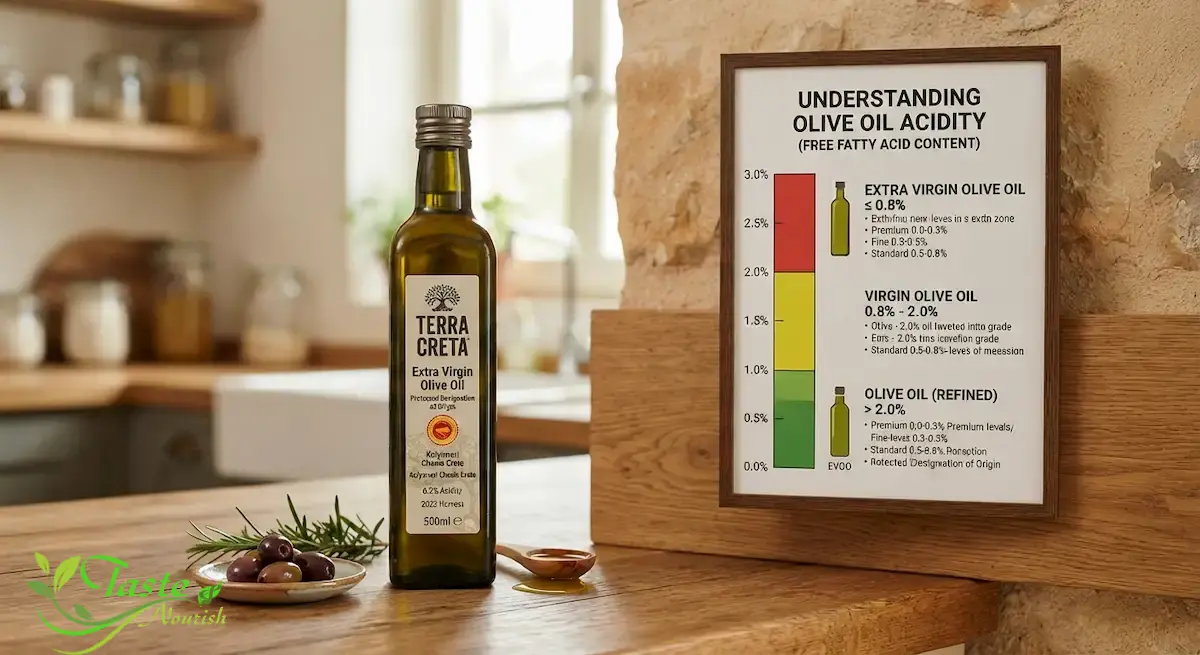
The olive oil acidity level meaning refers to the percentage of free fatty acids in the oil, expressed as oleic acid per 100 grams of oil. This number is a chemical quality marker, not a flavor descriptor. Under U.S. Department of Agriculture standards, extra virgin olive oil must have free acidity of 0.8% or lower, virgin olive oil can go up to 2.0%, and anything higher must be refined before it can be sold for direct human consumption.
Key Takeaways
Acidity in olive oil is a measure of free fatty acid content, not tartness or pH you can taste.
Extra virgin olive oil must have free acidity of 0.8% or less, according to U.S. grading standards.
A lower acidity percentage generally signals olives that were healthy, fresh, and processed quickly after harvest.
Low acidity alone does not guarantee good flavor; oil must also pass a separate sensory evaluation.
The acidity number itself is rarely printed on U.S. retail labels; the grade name on the bottle already reflects it.
What Is Olive Oil Acidity, Really?
Despite the name, olive oil acidity is not related to the acidity you taste in a salad dressing or a squeeze of lemon. It refers specifically to free fatty acids, which form when the natural fat structure in olives starts to break down through a process called hydrolysis.
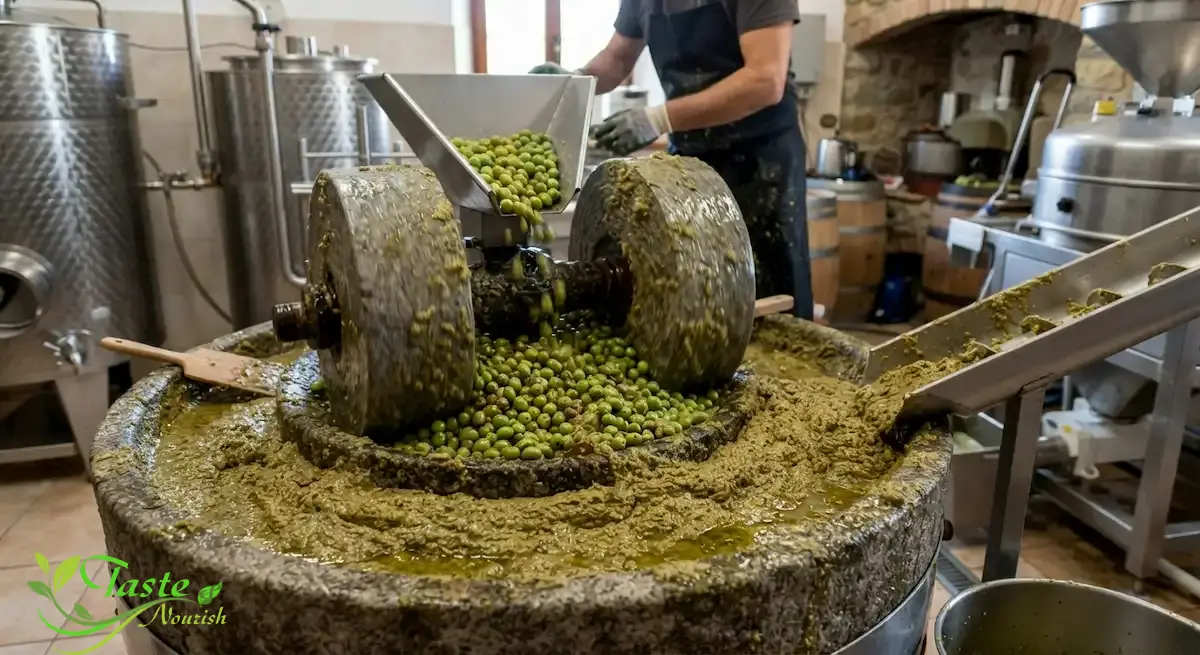
Fresh, undamaged olives contain fat mostly bound up in triglycerides. When olives are bruised, over-ripened, left sitting too long before pressing, or exposed to heat and enzymes during storage, some of those fat molecules split apart and release free oleic acid. The more free fatty acid present, the higher the oil’s acidity percentage.
In practical terms, acidity is a scorecard for how the olives were grown, handled, and pressed. It says very little about how the oil actually tastes, which is why official grading always pairs the acidity number with a separate sensory test.
Olive Oil Acidity Percentage Explained: How Grades Are Determined
In the United States, the Agricultural Marketing Service, a branch of the USDA, sets the official grading standards for olive oil. Two things determine an oil’s grade: its measured free fatty acid content and the results of a trained sensory panel that checks for flavor defects and fruitiness.
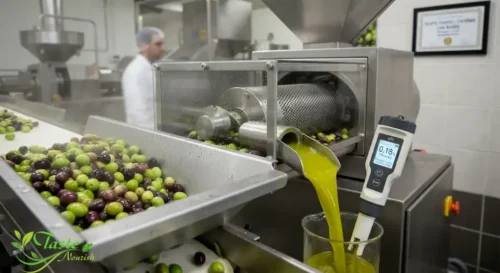
The oil is lab-tested for free fatty acid content. A chemical titration test measures free oleic acid and expresses it as grams per 100 grams of oil, which is the acidity percentage.
A trained taste panel evaluates flavor and odor. To qualify as extra virgin, an oil must show no median flavor defects and a detectable degree of fruitiness.
The stricter of the two results sets the grade. An oil can only be labeled extra virgin if it passes both the acidity limit and the sensory test; failing either one drops it to a lower grade.
The grade name is printed on the label instead of the raw acidity number, so shoppers see “Extra Virgin Olive Oil” or “Virgin Olive Oil” rather than a percentage.
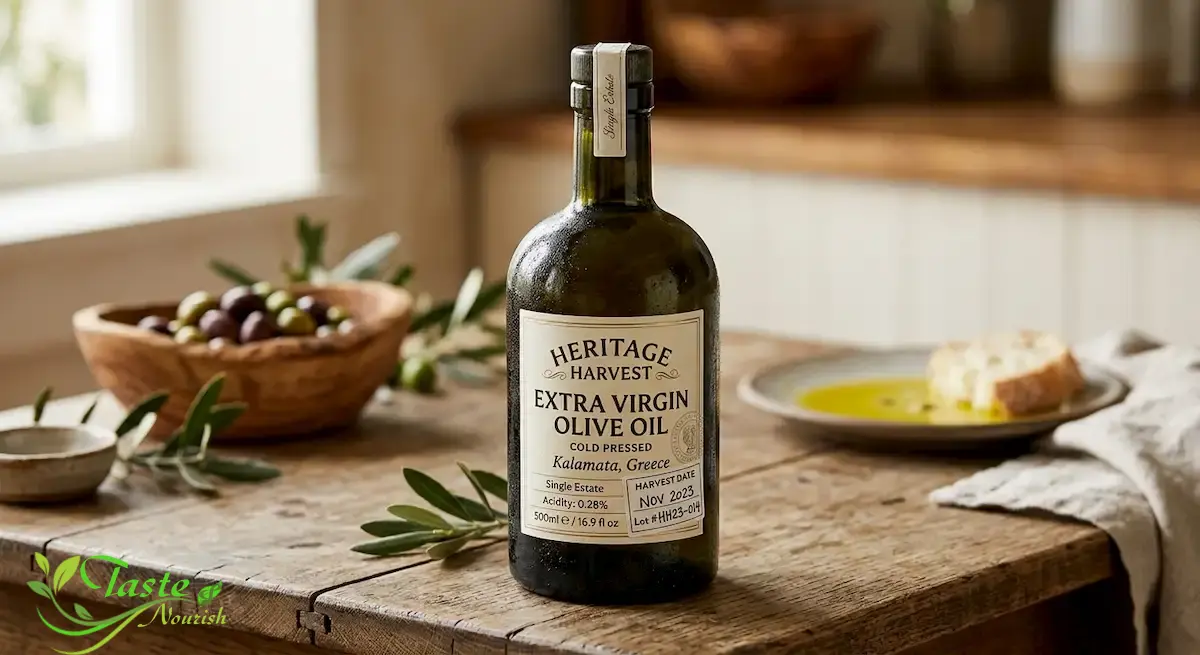
In the U.S., you will rarely see the exact acidity percentage printed on a grocery store label unless a producer chooses to disclose it voluntarily on a technical data sheet. What you will always see is the grade name itself, because that name already reflects where the oil’s acidity falls.
Quick Reference: Olive Oil Grades by Acidity
Grade
Free Fatty Acid Limit
What It Means for You
Extra Virgin Olive Oil
0.8% or less
Highest grade; unrefined, must also pass sensory testing for flavor
Virgin Olive Oil
2.0% or less
Unrefined but with more flavor imperfections than extra virgin
Virgin Olive Oil Not Fit for Human Consumption (Lampante)
Above 2.0%
Must be refined before it can be sold for eating; not for direct food use
U.S. Olive Oil (blend of refined and virgin)
1.0% or less
Milder flavor; often labeled simply “Olive Oil” or “Pure Olive Oil”
U.S. Refined Olive Oil
0.3% or less
Flavorless and odorless; used mainly as a blending base
Low Acidity Olive Oil Meaning: What It Signals About Quality
The low acidity olive oil meaning comes down to one core idea: low free fatty acid content usually points to olives that were healthy at harvest and pressed quickly, before enzymatic breakdown could set in. That is why extra virgin olive oil, the strictest grade, caps acidity at 0.8%.
However, low acidity by itself is not the whole quality picture. An oil can technically meet the 0.8% acidity threshold and still have flavor defects such as rancidity, mustiness, or an off-taste picked up during storage. That is exactly why grading requires both a chemical acidity test and a separate sensory panel evaluation. Acidity tells you about the oil’s chemical history; the sensory test tells you how it actually tastes and smells.
In other words, low acidity is a floor, not a flavor score. Two extra virgin oils can both sit at 0.3% acidity and taste completely different from each other, depending on the olive variety, ripeness at harvest, and how carefully the oil was pressed and stored afterward.
How to Store Olive Oil to Protect Its Acidity and Freshness
Acidity is measured at the time of bottling, but oil quality does not stay frozen in place after that. Poor storage encourages oxidation, a different chemical process than the one that raises free fatty acids, but one that degrades flavor and nutritional value just as surely.
Keep it cool. Food-quality researchers at UC Davis note that olive oil holds up best in a temperature range of roughly 59°F to 64°F.
Keep it dark. Oil left in direct light or near a heat source loses its freshness noticeably faster, according to the UC Davis Olive Center.
Keep the cap on tight. Oxygen exposure speeds up flavor loss, so reseal the bottle fully after each use.
Buy a size you will finish. A large jug that sits half-empty for months gives more headspace for oxidation than a smaller bottle used up quickly.
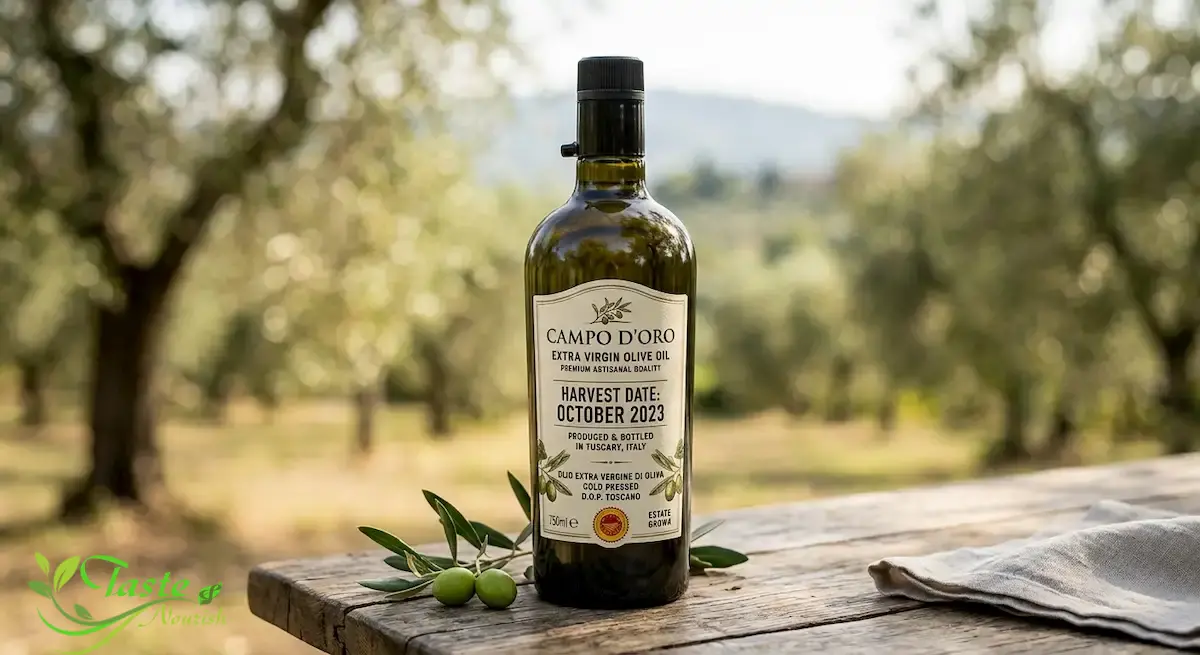
Look for a harvest date, not just a “best by” date. Most bottles skip a harvest date entirely, but the better producers include one, and it is a more reliable freshness signal than a best-by date on its own.
Food Safety Notes
It is worth separating food safety from food quality here. Acidity is primarily a quality and grading marker, not a food-safety measurement in the way that, say, cooking temperature is for meat. That said, oil graded as lampante, or “virgin olive oil not fit for human consumption without further processing,” is not legally sold as a finished cooking or salad oil in the U.S.; by definition it is meant for refining or for non-food purposes instead. As a home cook, you do not need to test acidity yourself.
Buying from a labeled grade you recognize, and storing it properly once it is in your kitchen, covers what you need to know.
Common Mistakes People Make When Judging Olive Oil Acidity
Assuming a higher price always means lower acidity. Price reflects many factors, including origin, harvest method, and marketing, not just the lab-tested acidity number.
Trying to taste the acidity level directly. Free fatty acid content is a chemical measurement, not a taste you can detect as sourness; the pungency and bitterness you notice come from separate flavor compounds.
Believing low acidity guarantees great flavor. As covered above, an oil can meet the acidity cutoff and still have sensory defects, which is why both tests matter.
Storing oil above the stove or on a sunny windowsill. Heat and light degrade freshness regardless of how low the oil’s acidity was at bottling.
Treating “olive oil” and “extra virgin olive oil” as interchangeable. Plain “Olive Oil” is a blend of refined and virgin oils with a higher acidity ceiling and a milder flavor profile.
Assuming a cloudy or unfiltered oil has gone bad. Cloudiness alone is not a spoilage sign; some producers bottle oil unfiltered on purpose for a fresher, more robust flavor.
Ignoring the harvest date in favor of the best-by date. A best-by date can be a year or more out from bottling, while the harvest date tells you how fresh the oil actually is.
Expert Kitchen Tips for Choosing Low-Acidity Olive Oil
Look for a harvest date on the label, and choose the most recent one available.
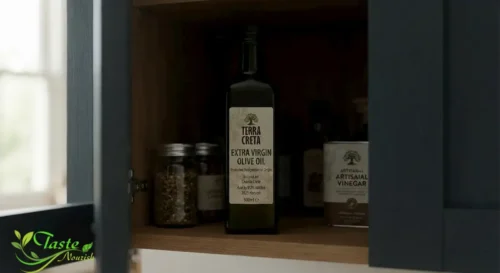
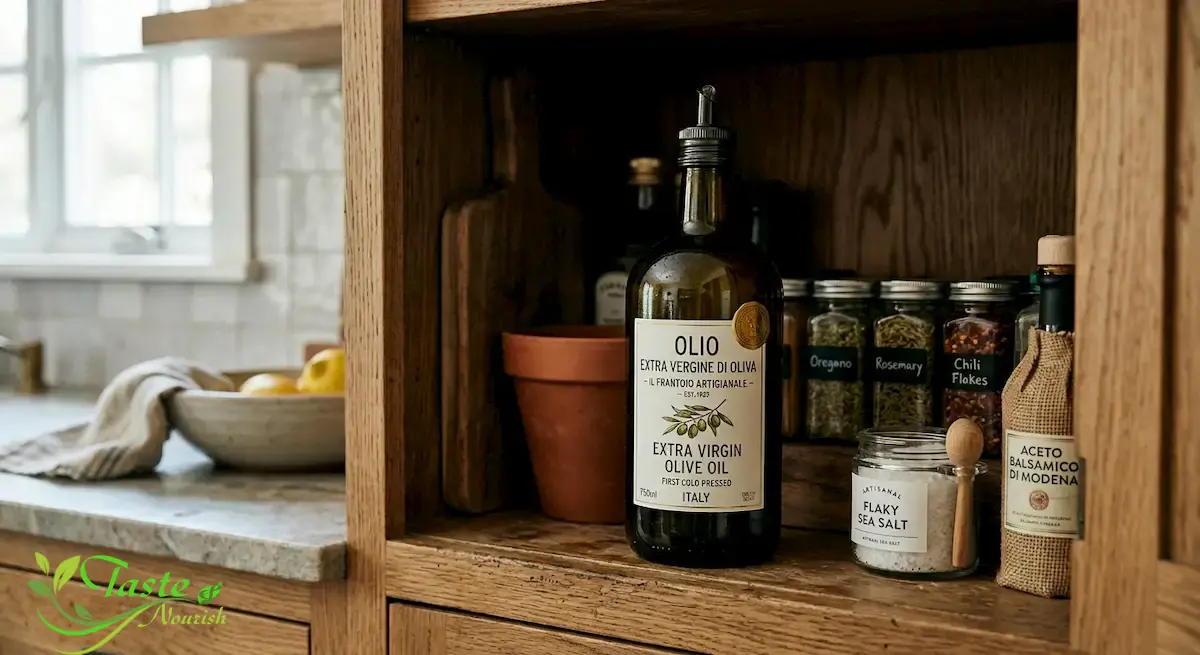
Store your bottle in a cool cabinet away from the stove, oven, and any direct sunlight.
Choose dark glass or opaque containers over clear glass when you have the option.
Buy a bottle size you can realistically use within a couple of months for the best flavor.
Reserve extra virgin olive oil for dressings, dips, and finishing dishes where its flavor stands out.
Save a milder “Olive Oil” blend for high-heat cooking where a delicate flavor is not the priority.
Reseal the cap tightly after every use to limit oxygen exposure.
Do not judge quality by color alone; color varies by olive variety and harvest timing, not by acidity or grade.
Olive Oil Acidity Level Meaning FAQs
What does olive oil acidity level mean?
It refers to the percentage of free fatty acids in the oil, expressed as oleic acid. It is a chemical quality marker used to grade the oil, not an indicator of tartness or sourness you can taste.
What is a good olive oil acidity percentage?
For extra virgin olive oil, the acidity must be 0.8% or lower. Many high-quality extra virgin oils fall well under that ceiling, often between 0.1% and 0.5%, though the label will not usually show the exact figure.
What does low acidity olive oil mean?
Low acidity means the oil has a low percentage of free fatty acids, which generally points to olives that were healthy and pressed quickly after harvest. It signals good handling, though it does not by itself guarantee flavor quality.
Can you taste the acidity level in olive oil?
No. Acidity is a lab-measured chemical value, not a taste sensation. The peppery, bitter, or fruity notes you taste come from separate flavor compounds evaluated in a sensory test, not from the free fatty acid content.
Is high-acidity olive oil unsafe to eat?
Oil with acidity above 2.0%, graded as lampante or “not fit for human consumption without further processing,” is meant for refining rather than direct food use. Oils sold on U.S. grocery shelves under a recognized grade name have already met the acidity requirement for that grade.
Does olive oil acidity affect how long it stays fresh?
Acidity reflects the oil’s condition at the time it was pressed and graded. Once bottled, freshness is mainly protected or lost through storage conditions such as heat, light, and air exposure rather than by the original acidity number changing.
Where can I find the acidity percentage on a bottle?
Most U.S. retail labels do not print the exact acidity percentage. Instead, the grade name on the bottle, such as “Extra Virgin,” “Virgin,” or “Olive Oil,” already reflects which acidity range the oil falls into.
Is extra virgin olive oil always lower acidity than regular olive oil?
Yes. By definition, extra virgin olive oil must have acidity of 0.8% or less, while plain “Olive Oil,” a blend of refined and virgin oils, is allowed up to 1.0%.
Key Takeaways: Olive Oil Acidity Level Meaning
The olive oil acidity level meaning is a measure of free fatty acid content, expressed as a percentage, not a flavor you can taste.
Extra virgin olive oil is capped at 0.8% acidity, virgin olive oil at 2.0%, and blended “Olive Oil” at 1.0%.
Grading combines the acidity test with a separate sensory evaluation, so low acidity alone does not guarantee great flavor.
You will usually see the grade name on the label rather than the raw percentage.
Proper storage, cool, dark, and tightly sealed, protects the oil’s quality after you bring it home.
Conclusion
Understanding the olive oil acidity level meaning turns a confusing label term into a genuinely useful shopping tool. It tells you how the olives were handled before pressing, but it works alongside flavor testing, not in place of it. Look for a recognized grade name, check for a harvest date when you can find one, and store your bottle away from heat and light to protect what that low acidity number represents.
Hanan Abo Samra is the founder of Taste & Nourish, sharing trustworthy nutrition guidance and recipes drawn from 20+ years of hands-on cooking experience. When she's not developing new recipes, Hanan is researching the science behind everyday ingredients to bring readers practical, evidence-based guidance for a healthier lifestyle.