You bought a bottle labeled “extra virgin,” but something feels off. Maybe it tastes flat, or the price seemed too good, or you read a headline about olive oil fraud and started second-guessing everything in your pantry.
Learning how to tell if olive oil is real doesn’t require lab equipment. It comes down to reading the label correctly, tasting for a few specific qualities, and knowing which popular “tests” are actually myths. This guide walks through all of it.
There’s no single home trick that proves with certainty how to tell if olive oil is real, but a few checks together get you close. Look for a harvest date, a specific country or region of origin, and a dark glass or tin container. Then taste it: genuine, fresh extra virgin olive oil should have some bitterness and a peppery bite at the back of your throat, plus a fruity, grassy aroma. Flat, greasy, or crayon-like flavors are red flags. A quality seal from a recognized program adds another layer of confidence.
Key Takeaways
Genuine outright fraud (olive oil diluted with cheap seed oils) is far less common today than viral posts suggest; most “fake oil” complaints are actually about stale or lower-grade oil mislabeled as extra virgin.
The best approach to how to tell if olive oil is real combines label details, a taste and smell check, and recognized quality seals rather than relying on one trick.
Popular myths like refrigerating oil to see if it solidifies or burning it as lamp fuel are not reliable indicators of purity.
A harvest date, single country of origin, and dark packaging are stronger clues than price or brand name alone.
Only laboratory testing (gas chromatography, spectrophotometry, or accredited taste panels) can conclusively confirm authenticity — home checks only help you spot likely red flags.
What You Need to Know About Olive Oil Fraud and Quality
Before you go looking for a definitive olive oil fraud test, it helps to separate two different problems that get lumped together as “fake olive oil.”
The first is genuine adulteration: an oil labeled “olive oil” that’s actually been cut with a cheaper oil like sunflower, canola, or hazelnut oil. This is real fraud, and it does happen, but independent testing programs have found it’s much rarer in North American supermarkets than headlines imply.
The second, far more common problem is quality mislabeling. An oil can be 100% real olive oil and still not deserve the “extra virgin” label on its bottle, because it’s oxidized, was made from damaged or overripe olives, or picked up a fermented flavor during processing. It’s still olive oil. It just isn’t the grade the label claims.
This distinction matters because purity and freshness are not the same thing. An oil’s purity doesn’t change once it’s bottled, but its quality absolutely can degrade from light, heat, and time. A bottle that was genuinely extra virgin at the mill can taste stale a year later purely from poor storage, with no fraud involved at all.
It’s also worth knowing that the United States doesn’t currently have a legally enforceable federal standard of identity specifically for olive oil, though the USDA maintains voluntary quality grading standards aligned with international benchmarks. That gap is part of why label terms like “pure” or “light” can be more marketing than meaningful classification.
How to Tell If Olive Oil Is Real: Step-by-Step
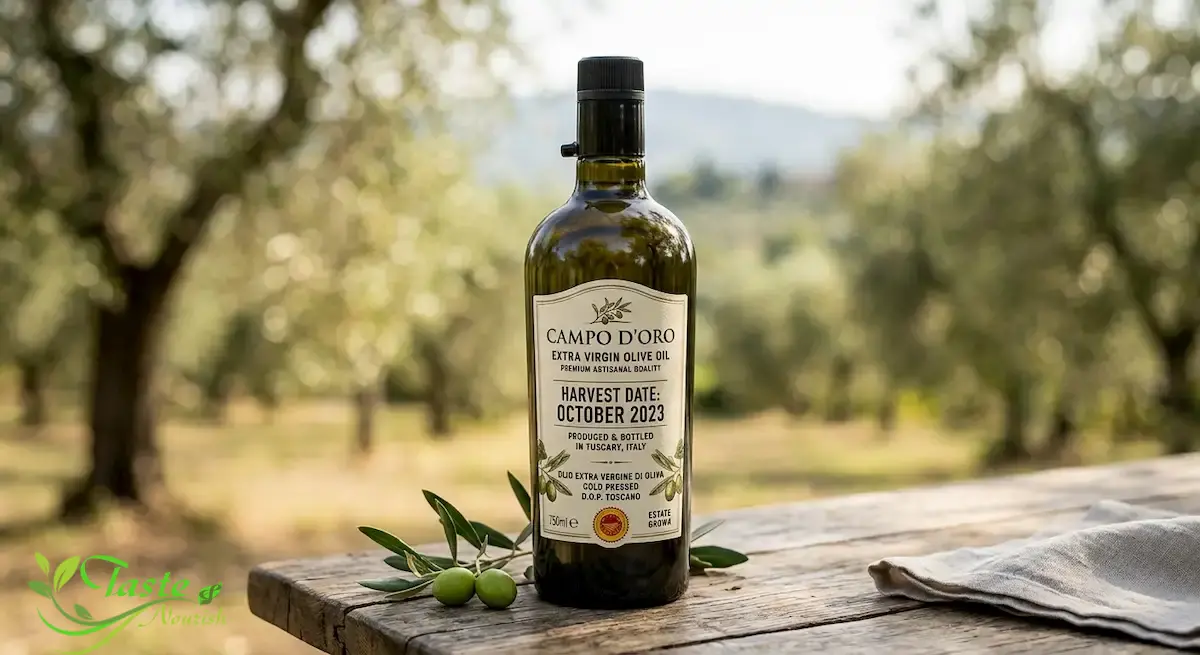
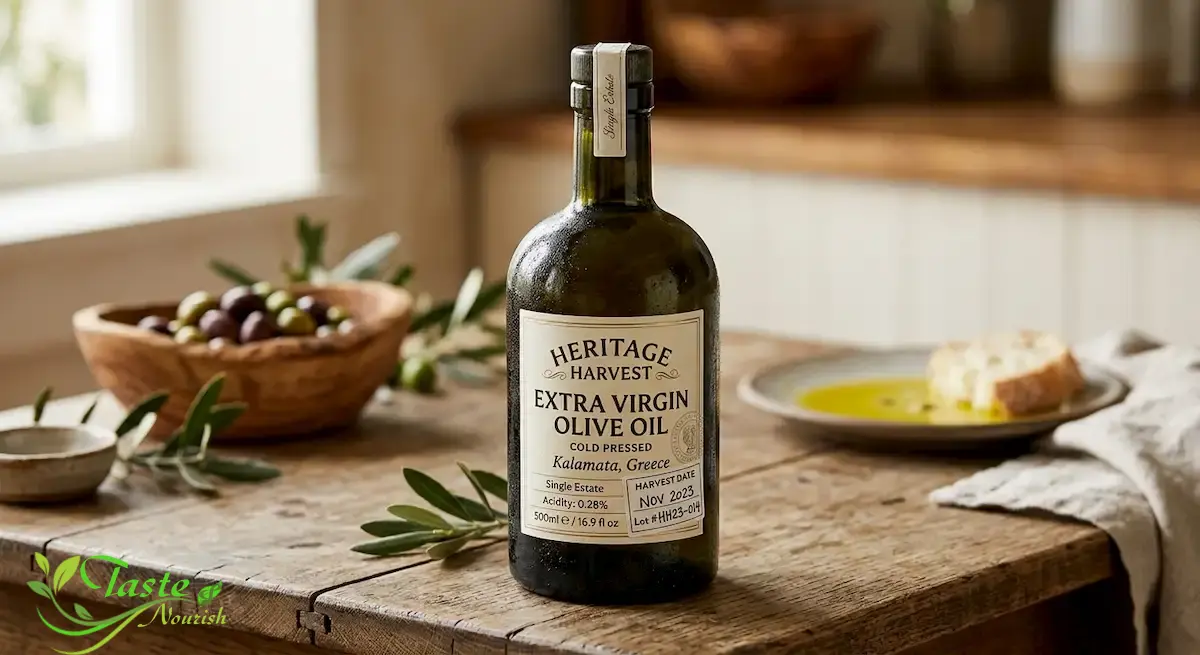
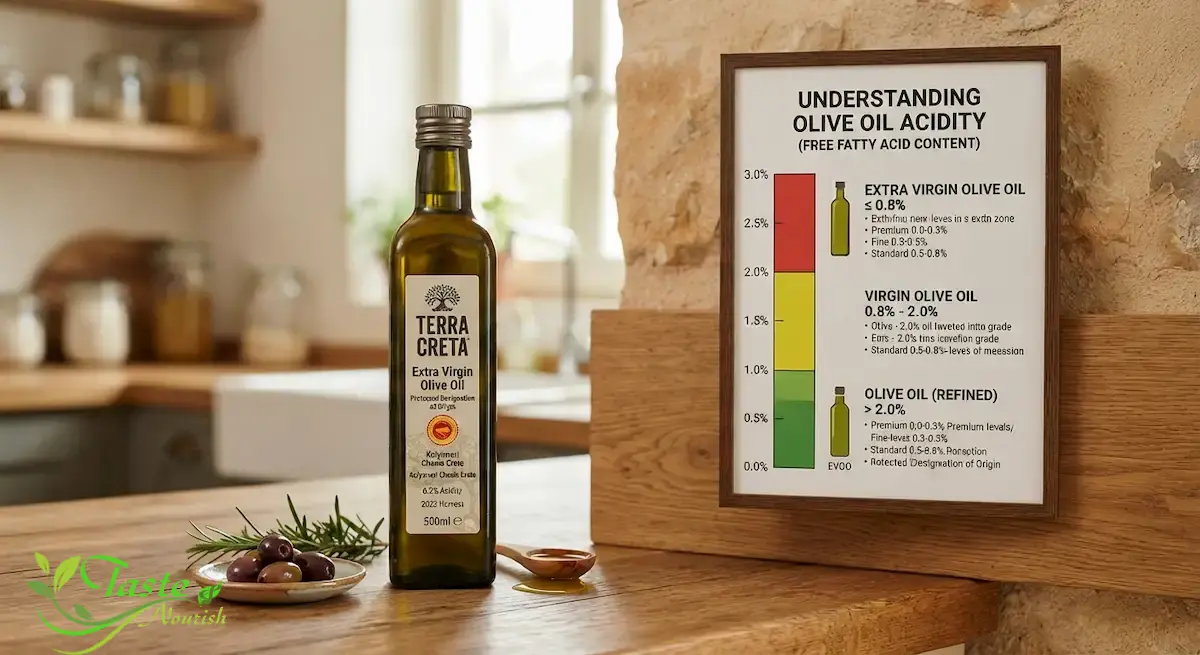
Check the label for a harvest date first. A harvest date (not just a “best by” date) tells you when the olives were pressed. Oils bottled within the past 12 to 18 months are your best bet for both freshness and authenticity.
Look for a specific origin, not just a packing location. “Imported from Italy” or “packed in Italy” can mean the olives were grown elsewhere and only bottled there. Language like “grown and harvested in Spain” or “produced in California” is more specific and traceable.
Scan for a recognized quality seal. Seals such as the NAOOA Certified mark, USDA Quality Monitoring or Grade Certification, USDA Organic, or a European PDO/PGI designation mean the oil has been through some form of third-party testing.
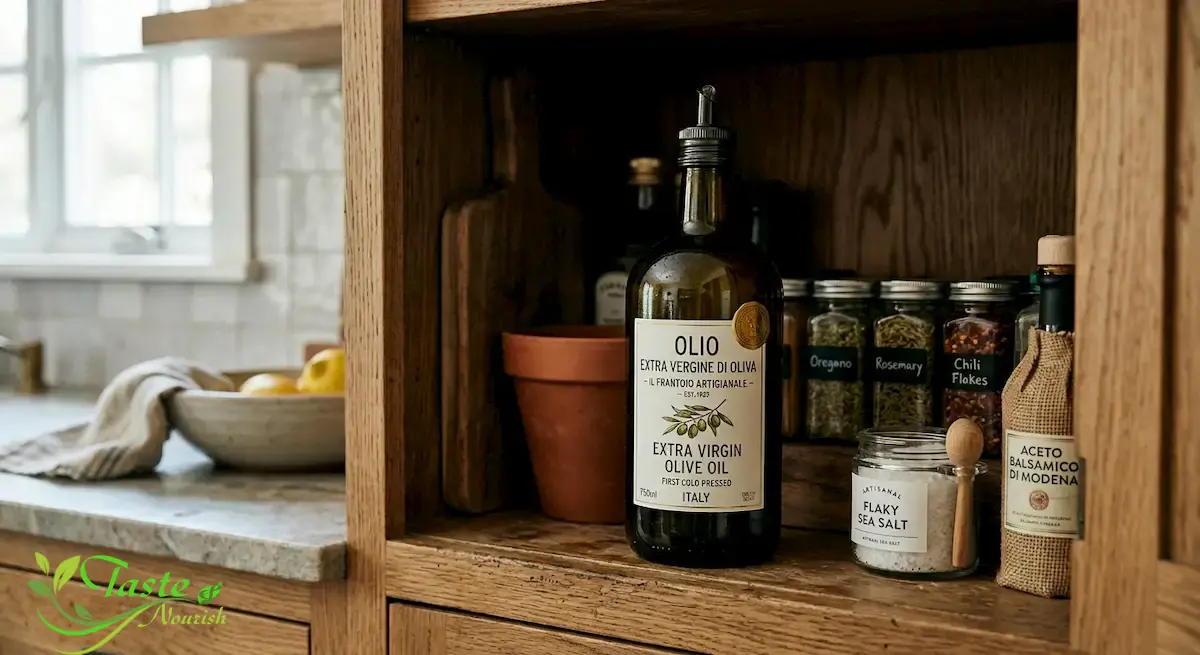
Check the container. Dark glass or tin protects the oil from light-driven oxidation. Clear glass or plastic isn’t automatically fake, but it’s more vulnerable to going stale fast, especially if it’s been sitting under store lighting.
Be skeptical of unusually low prices. Genuine extra virgin olive oil is labor- and land-intensive to produce. A price dramatically below other bottles of the same size and grade is worth a second look.
Taste and smell it. This is the most informative home step, and it’s covered in detail in the next section.
The Best Olive Oil Fraud Test You Can Do at Home
Professional tasters evaluate olive oil the same way a sommelier evaluates wine, using smell and taste rather than sight (they even use colored glasses so bottle color doesn’t bias them). You can borrow a simplified version of this.
Pour a small amount into a glass, cup your hand over the top, and warm it slightly with your palm for a few seconds. Then smell it.
Fresh, genuine extra virgin olive oil usually smells green and fruity, sometimes like grass, tomato leaf, or green apple. Take a small sip and let it spread across your tongue.
Two sensations are good signs: a mild bitterness and a peppery, slightly irritating sensation at the back of your throat that can even make you cough. Both come from natural antioxidant compounds in fresh, high-quality oil, and their absence usually means the oil is old, over-refined, or was never very good to begin with.
Bad signs include a flavor like crayons, putty, or old walnuts (rancidity from oxidation), a musty or fermented taste (a defect called “fustiness”), or a flavor that’s simply flat and greasy with no fruitiness at all. None of these prove the oil was fraudulently cut with another oil, but they do tell you it’s not good extra virgin olive oil, whatever the label says.
Fake Olive Oil Signs to Check Before You Buy
Use this list of fake olive oil signs to check before you commit to a bottle, especially with unfamiliar brands:
No harvest date and only a distant “best by” date with no other detail
Vague origin language like “a blend of oils from EU countries” with no further specifics
Clear plastic bottles sitting under bright store lighting for extended periods
A price far below other extra virgin oils of similar size and origin
Labels that say “pure,” “light,” or “extra light” — these are lower grades, refined and blended, and are not extra virgin at all
A flat, greasy taste with no bitterness or peppery finish
Any rancid, musty, or crayon-like smell or flavor
Sediment, cloudiness in a bottle not labeled “unfiltered,” or an off-color tint that doesn’t match the rest of the batch
Any one of these alone isn’t proof of fraud. Several of them together are a good reason to choose a different bottle.
Popular Tests That Don’t Actually Work
A few home “tests” circulate widely online, and it’s worth knowing why they don’t hold up.
The fridge test. This is the idea that real olive oil solidifies or turns cloudy in the refrigerator while fake oil stays liquid. In reality, whether an oil solidifies depends on its specific fatty acid profile, which varies by olive variety, region, and even harvest conditions. Genuine oils can stay liquid, and oils cut with other vegetable oils can solidify. This test has no real scientific basis for confirming purity.
The lamp test. Burning oil in a makeshift lamp to see how it performs doesn’t reliably distinguish real olive oil from vegetable oil blends either. Both can burn.
Judging by color. A deep green oil isn’t automatically better or more authentic than a golden-yellow one. Color depends heavily on the olive variety and how early or late in the season it was picked, not on purity or quality. This is exactly why professional tasting panels use colored glasses to remove color from the equation entirely.
Assuming only certain countries make “real” olive oil. Spain, Italy, and Greece produce the most olive oil globally, but high-quality, authentic extra virgin olive oil also comes from Portugal, Tunisia, Morocco, Turkey, Australia, Chile, Argentina, and the United States, among others. Country of origin on its own doesn’t guarantee or rule out authenticity.
Best Containers and Where to Buy Olive Oil
Buy from retailers with reasonable turnover, since bottles that sit on shelves for years lose quality even if they were genuine to start. Look specifically for dark glass bottles or tins over clear glass or plastic, since UV light is one of the fastest ways oil degrades.
Buy a size you’ll actually finish. Flavor and antioxidant content start declining once a bottle is opened and exposed to air, so a bottle you’ll use within 8 to 10 weeks of opening is a better choice than a giant tin that sits half-used for six months.
If a bottle carries a lot code, that’s a good sign too. It won’t tell you anything about taste, but it means the producer can trace that batch back to its source and date, which matters if there’s ever a recall or quality dispute.
How to Store Olive Oil So It Stays Genuine and Fresh
Store olive oil in a cool, dark cabinet or pantry away from the stove, oven, and direct sunlight. Heat and light are the two biggest drivers of oxidation, and oxidation is what turns good oil rancid.
Room temperature storage, away from heat sources, is standard and preferred for regular use. Refrigeration isn’t necessary and can cause the oil to thicken or turn cloudy, though it returns to normal once it warms back up; this doesn’t damage the oil, but it’s an unnecessary step for oil you’re using regularly.
Keep the cap tightly closed between uses to limit oxygen exposure. Always reseal the bottle right after pouring.
An unopened bottle stored properly generally holds good quality for up to about two years from the harvest or production date, though it’s best within the first 12 to 18 months. Once opened, plan to use it within 8 to 10 weeks for the best flavor, even though it won’t become unsafe much beyond that window.
Freezing olive oil isn’t standard practice and isn’t necessary for typical kitchen use. If you do freeze it for extended storage, expect it to solidify or turn cloudy in the freezer; this is a physical, not chemical, change, and the oil returns to its normal liquid state once thawed at room temperature.
How to Tell If Olive Oil Has Gone Bad
Rancidity is the main way olive oil “goes bad,” and it’s a quality issue rather than typically a safety hazard, though rancid oil is unpleasant and not something to cook with regularly.
A smell like crayons, old paint, or putty
A stale, greasy, or “cardboard” flavor with no fruitiness
A flavor that tastes flat and waxy instead of sharp or peppery
Any noticeably sour or musty off-smell
Never taste an oil you suspect has spoiled just to confirm it — trust your nose first, and if it smells off, that’s reason enough to discard it.
Common Mistakes to Avoid
Judging quality by color alone. Color reflects olive variety and harvest timing, not purity or freshness.
Trusting the fridge test. It has no reliable connection to authenticity, as explained above.
Buying based on “packed in Italy” language. This tells you where it was bottled, not where the olives grew.
Storing the bottle next to the stove. That’s one of the fastest ways to accelerate oxidation and rancidity.
Buying a huge tin you’ll use slowly. Oil loses its best qualities steadily after opening, so a smaller bottle used up quickly beats a large one that lingers.
Assuming a high price guarantees authenticity. Price is one useful clue among several, not a guarantee on its own.
Skipping the harvest date check. Many shoppers check only the “best by” date, which can be set years out regardless of how old the oil actually is.
Panicking over viral “fake olive oil” claims. Independent, ongoing testing has repeatedly found that the large majority of branded olive oil sold in North American supermarkets is authentic; most quality complaints trace back to staleness or grade mislabeling, not seed-oil dilution.
Expert Kitchen Tips
Do a side-by-side taste test with two brands. Differences in bitterness and pepperiness become much easier to notice with a direct comparison.
Keep your everyday cooking oil and a nicer finishing oil separate. Save the more expensive, fresher bottle for drizzling and salads, where flavor actually shows.
Note the harvest date when you buy, and try to use most of the bottle before the next season’s harvest rolls around.
Buy from stores with good turnover, like specialty grocers or shops that sell a lot of olive oil, rather than a bottle that’s been on a low-traffic shelf for a long time.
If a producer offers traceability, such as a lot number you can look up online, use it. It’s a quick way to confirm the batch and source.
Don’t judge an oil’s cooking performance by smoke point alone. Fresh extra virgin olive oil is more chemically stable at typical cooking temperatures than its smoke point number suggests.
Olive Oil Grades: Variations and What They Actually Mean
Not every bottle labeled “olive oil” is trying to deceive you; sometimes the grade itself is just a different, legitimate product.
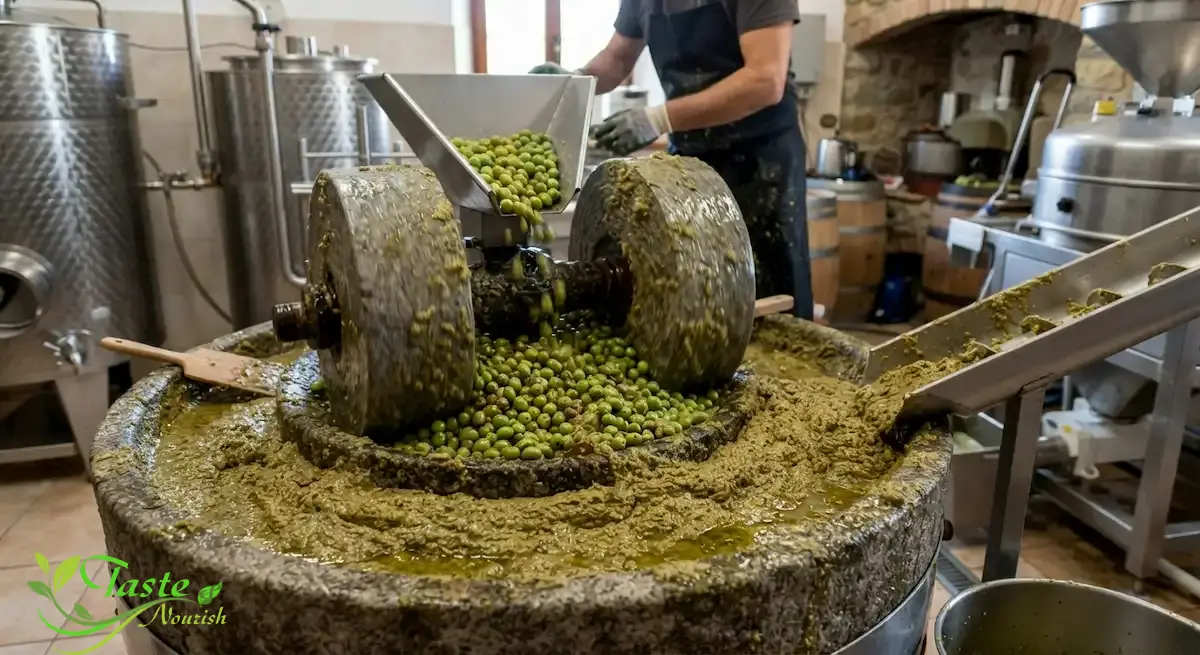
Extra virgin olive oil is the least processed, cold-extracted mechanically with no heat or chemical solvents, and it must meet the strictest limits on acidity and defects.
Virgin olive oil is also mechanically extracted but allowed slightly higher acidity and more sensory imperfections.
“Olive oil,” “pure olive oil,” or “light/extra light olive oil” are blends of refined olive oil (which has been chemically processed to strip out flavor and defects) with a smaller amount of virgin oil added back for taste. These are real olive oil products, just a different, more processed category, and “light” refers to flavor intensity, not calories.
Olive-pomace oil is extracted from the leftover olive pulp using solvents, then refined. It’s a legitimate, cheaper product used mostly in food service, but it’s a different tier entirely from extra virgin.
If you want a substitute with a similar flavor profile for finishing dishes, a good virgin (not extra virgin) olive oil from a reputable seal-certified brand is a reasonable, less expensive alternative that’s still authentic.
Quick Reference: Real vs. Questionable Olive Oil
What to Check
Good Sign
Red Flag
Harvest date
Within the last 12–18 months
No harvest date, only a distant best-by date
Origin
Specific country/region of growth
Vague “packed in” or multi-country blend with no detail
Container
Dark glass or tin
Clear plastic sitting under bright lights
Taste
Bitter, peppery, fruity
Flat, greasy, rancid, or musty
Certification
NAOOA, USDA, PDO/PGI, or organic seal
No seals, no lot code, unusually low price
How to Tell If Olive Oil Is Real FAQs
How do you tell if olive oil is real?
Check for a harvest date, a specific origin, dark packaging, and a recognized quality seal, then taste it: real, fresh extra virgin olive oil should taste bitter and peppery with a fruity aroma, not flat or rancid. No single check is definitive on its own, but together they’re a reliable guide.
What is the best olive oil fraud test I can do myself?
A guided taste and smell test is the most useful home check. Warm a small amount in a glass with your hand, smell for fruitiness, and taste for bitterness and a peppery throat sensation, both signs of fresh, genuine extra virgin oil.
Does the fridge test actually prove olive oil is fake?
No. Whether oil solidifies in the fridge depends on its fatty acid makeup, which varies naturally by olive variety and region. This test doesn’t reliably indicate authenticity in either direction.
How long does olive oil last?
Unopened and stored properly, most extra virgin olive oil holds good quality for up to about two years from harvest, best within the first 12 to 18 months. Once opened, try to use it within 8 to 10 weeks for the best flavor.
Does olive oil need to be refrigerated?
No. A cool, dark cabinet away from heat and light is the standard and preferred storage method. Refrigeration can cause temporary cloudiness or thickening but isn’t required.
Can you freeze olive oil?
Yes, though it isn’t typical for everyday use. Frozen oil will solidify and turn cloudy, then return to normal once thawed at room temperature, since this is a physical change rather than spoilage.
Is cheap olive oil automatically fake?
Not automatically, but an unusually low price compared to similar bottles is a legitimate red flag worth weighing alongside the other checks, since authentic extra virgin production is genuinely costly.
Is most “extra virgin” olive oil on store shelves actually fake?
No. Ongoing independent testing has repeatedly found that the large majority of branded olive oil sold in North American supermarkets is authentic. Most widely cited “fake olive oil” claims actually stem from oils failing freshness or sensory grading standards, not from deliberate dilution with other oils.
Key Takeaways: How to Tell If Olive Oil Is Real
Combine label checks (harvest date, specific origin, quality seals) with a taste and smell test; that’s the most reliable way to approach how to tell if olive oil is real.
Genuine adulteration is less common than online claims suggest; most “fake oil” issues are actually staleness or grade mislabeling.
Skip the fridge test, the lamp test, and color-based judgments — none of them reliably indicate authenticity.
Store oil in a cool, dark place, use opened bottles within 8 to 10 weeks, and buy sizes you’ll actually finish.
Only accredited lab testing can confirm authenticity with certainty; home checks are about spotting red flags, not delivering proof.
Conclusion
Sorting out how to tell if olive oil is real doesn’t require special equipment, just a closer look at the label and a few minutes with your nose and tongue. Check the harvest date and origin, choose dark packaging, watch for recognized seals, and trust a taste test over any viral kitchen trick. Do that consistently, and you’ll end up with better-tasting oil regardless of whether fraud was ever really the issue.
Hanan Abo Samra is the founder of Taste & Nourish, sharing trustworthy nutrition guidance and recipes drawn from 20+ years of hands-on cooking experience. When she's not developing new recipes, Hanan is researching the science behind everyday ingredients to bring readers practical, evidence-based guidance for a healthier lifestyle.