If you’ve ever polished off a bowl of pistachios without really meaning to, you’re not alone. They’re salty, satisfying, and oddly fun to shell. But beyond the snacking appeal, the health benefits of pistachios are backed by a surprising amount of nutrition research, from heart health to blood sugar control.
This guide breaks down what’s actually in pistachios, what the science says about eating them regularly, and how to work them into your diet without overdoing it. We’ll also cover the benefits of eating pistachios for specific health goals, potential downsides, and a few common mistakes worth avoiding.
Quick Answer: What Are the Health Benefits of Pistachios?
The health benefits of pistachios come mainly from their unique nutrient mix: plant protein, fiber, unsaturated fats, potassium, and antioxidant compounds like lutein and gamma-tocopherol. Research suggests regular pistachio consumption may support heart health, help with blood sugar management, and aid weight control when eaten in place of less nutritious snacks. As with most nuts, portion size matters, since pistachios are calorie-dense.
Key Takeaways
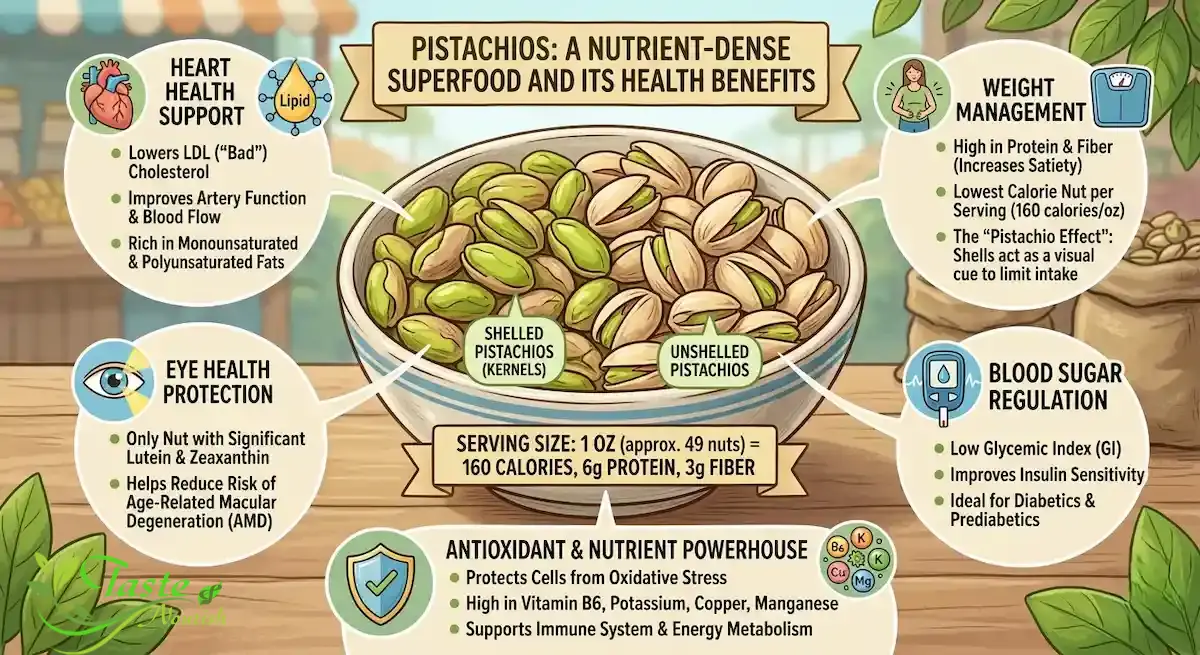
A 1-ounce serving of pistachios (about 49 kernels) has roughly 159 calories, 6 grams of protein, and 3 grams of fiber.
Pistachios are one of the lower-calorie, higher-protein tree nuts, which is part of why the health benefits of pistachios get so much attention from researchers.
Studies link regular pistachio intake to improved cholesterol levels, better blood vessel function, and modest blood sugar benefits.
They contain lutein and zeaxanthin, antioxidants more commonly associated with leafy greens than nuts.
Most healthy adults can enjoy about 1 to 2 ounces (a small handful to two) most days as part of a balanced diet.
People with nut allergies or certain digestive conditions should approach pistachios with caution or avoid them.
What Is a Pistachio?
Pistachios come from the Pistacia vera tree, native to Central and Southwest Asia and now grown widely in the Mediterranean region, Iran, and California. Technically, a pistachio is a seed, not a true nut, but it’s classified and eaten like one.
The kernel’s pale green color comes from chlorophyll and carotenoid pigments, including lutein, which is part of what makes pistachios nutritionally distinct from many other nuts.
Pistachio Nutrition Facts
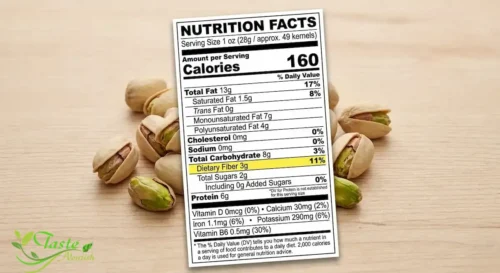
Here’s what you get in a standard 1-ounce (28-gram) serving of raw, unsalted pistachios, according to USDA FoodData Central.
Nutrient
Amount per 1 oz (28g)
Calories
159
Protein
5.8 g
Total Fat
12.6 g
Saturated Fat
1.5 g
Monounsaturated Fat
6.6 g
Polyunsaturated Fat
3.8 g
Carbohydrates
7.9 g
Dietary Fiber
2.9 g
Sugars
2.2 g
Potassium
291 mg
Vitamin B6
~0.5 mg
Copper
~0.36 mg
Pistachios also stand out for their protein-to-calorie ratio compared with most other nuts, and they’re one of the few nuts that supply meaningful amounts of lutein and zeaxanthin.
The Top Health Benefits of Pistachios
1. May Support Heart Health
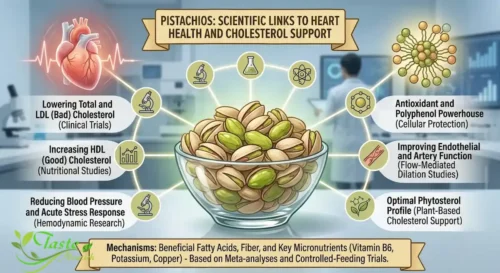
Pistachios are mostly unsaturated fat, and several controlled feeding studies have found that swapping saturated fats for pistachios can improve total and LDL cholesterol levels. Research also suggests they may help lower blood pressure and support healthier blood vessel function.
This lines up with the broader research on tree nuts, which is strong enough that the FDA allows a qualified health claim stating that eating 1.5 ounces of most nuts, including pistachios, daily as part of a diet low in saturated fat may reduce the risk of heart disease.
2. May Help With Blood Sugar Management
Pistachios have a low glycemic index and a favorable mix of fiber, protein, and fat, which can slow the rise in blood sugar after a meal. Some research has found that adding pistachios to a higher-carbohydrate meal blunts the post-meal glucose and insulin spike compared to eating the same meal alone.
This doesn’t mean pistachios “cure” blood sugar issues, but they may be a useful addition for people trying to manage glycemic response as part of a broader eating pattern.
3. May Support Weight Management
It seems counterintuitive that a calorie-dense food could help with weight control, but the fiber, protein, and fat combination in pistachios promotes fullness. Shelling pistachios yourself may also naturally slow down eating pace, and some research has noted that people tend to eat fewer pistachios than expected when they have to remove the shells themselves.
One study comparing pistachios to an equal-calorie pretzel snack found lower body mass index and triglycerides in the pistachio group, though this was a single study and shouldn’t be treated as a guarantee of results.
4. Rich in Antioxidants
Pistachios contain gamma-tocopherol (a form of vitamin E), phytosterols, and polyphenols, all of which have antioxidant properties. These compounds may help reduce oxidative stress in the body, which is linked to chronic disease risk over time.
5. May Support Eye Health
Pistachios are one of the only nuts that contain notable amounts of lutein and zeaxanthin, antioxidants that accumulate in the retina and are more typically associated with spinach and kale. These compounds are studied for their potential role in supporting long-term eye health, particularly related to age-related macular degeneration.
6. May Support Gut Health
Pistachios are a decent source of fiber, and fiber feeds the beneficial bacteria in your gut. Some preliminary research suggests pistachio consumption may favorably shift gut microbiota composition, though most of this evidence so far comes from animal studies and small human trials.
7. Nutrient-Dense Plant Protein Source
Compared with other nuts, pistachios have one of the higher protein contents relative to their calorie count. This makes them a reasonable option for people looking to add more plant-based protein to their diet without a large calorie load.
Scientific Evidence Behind the Health Benefits of Pistachios
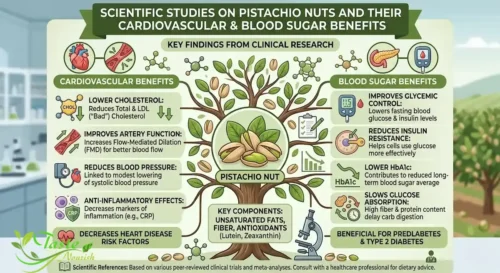
A widely cited review in Nutrition Reviews examined pistachio composition and concluded that their unsaturated fat profile, potassium, and antioxidant content contribute to favorable effects on blood lipids and vascular health, based on multiple randomized cardiovascular trials.
A later review in Natural Product Research reinforced these findings, concluding that pistachio consumption is associated with improved antioxidant status, anti-inflammatory activity, glycemic control, and endothelial function, while also noting that pistachios have a lower fat and calorie content than several other popular nuts.
On the population level, CDC survey data shows that nut and seed consumption, which includes pistachios, is associated with better overall diet quality among U.S. adults, though only a minority of adults actually meet recommended nut intake levels.
It’s worth noting that most of the strongest pistachio research comes from short- to medium-term controlled feeding studies rather than long-term outcome trials, so researchers describe the evidence as promising but not fully conclusive.
Potential Risks and Side Effects
Calorie density: It’s easy to overeat pistachios without noticing, which can work against weight goals.
Digestive discomfort: Large amounts of fiber and FODMAPs in pistachios can cause bloating or gas in sensitive individuals.
Sodium content: Salted or roasted varieties can add significant sodium if eaten in large quantities.
Allergic reactions: Pistachios belong to the cashew family and can trigger allergic reactions, sometimes severe, in people with tree nut allergies.
Who Should Avoid Pistachios?
Anyone with a diagnosed tree nut or pistachio allergy.
People with a history of anaphylaxis to cashews or mangoes, since cross-reactivity is possible within this plant family.
Individuals with certain FODMAP-sensitive digestive conditions, such as active IBS flare-ups, who may need to limit portion size.
Anyone on a strict low-potassium or low-phosphorus diet, such as some people with advanced kidney disease, should check with a healthcare provider first.
How Many Pistachios Should You Eat a Day?
Most nutrition guidance points to about 1 ounce (roughly 49 kernels, or a small handful) as a reasonable daily serving for general health. Some research on cardiovascular benefits has used up to 2 ounces per day, but that amount adds a meaningful number of calories, so it’s worth factoring into your overall intake rather than adding it on top of everything else.
If you’re new to eating pistachios regularly, starting with a smaller portion can help you gauge digestive tolerance before working up to a full serving.
How to Choose the Best Pistachios
Look for shells that are naturally split, which is normal and doesn’t indicate spoilage.
Choose raw or dry-roasted, unsalted varieties if you’re watching sodium intake.
Avoid pistachios with a musty or off smell, which can indicate rancidity or mold.
Check the color: kernels should be green to pale green, not dull brown or discolored.
Buy from brands with good turnover, since nuts sold in bulk bins can sit for a long time.
Storage Tips
Store shelled pistachios in an airtight container in the refrigerator for up to six months.
In-shell pistachios kept in a cool, dry pantry will generally stay fresh for a few months.
For longer storage, pistachios can be frozen for up to a year without a major loss in quality.
Keep them away from heat and direct sunlight, which speeds up rancidity in the unsaturated fats.
Best Ways to Eat or Cook Pistachios
Eat them plain as a snack, ideally in-shell to naturally slow down portion size.
Chop and sprinkle over salads, yogurt, or oatmeal for added crunch and protein.
Blend into a dairy-free pesto in place of pine nuts.
Use ground pistachios as a crust for fish or chicken.
Stir into baked goods like muffins, biscotti, or granola bars.
Add to grain bowls or roasted vegetable dishes for texture.
Common Mistakes to Avoid
Eyeballing portions: Pistachios are easy to overeat straight from the bag. Measuring out a serving helps keep calories in check.
Choosing heavily salted varieties as a daily habit: This can add up in sodium over time, especially for people managing blood pressure.
Assuming more is always better: Extra pistachios beyond a normal serving add calories without proportionally more benefit.
Storing them at room temperature long-term: This shortens freshness and can lead to rancid-tasting nuts.
Myths vs. Facts About Pistachio Health Benefits
Myth
Fact
Pistachios are too high in fat to be healthy.
Most of the fat is unsaturated, and research links this fat profile to improved, not worsened, cholesterol levels.
Eating pistachios will automatically cause weight gain.
Studies generally show neutral or favorable effects on weight when pistachios replace other snacks rather than being added on top of a normal diet.
All nuts offer the same health benefits.
Nuts share overlapping benefits, but pistachios are notably higher in lutein, zeaxanthin, and potassium than many other tree nuts.
Roasted pistachios have no nutritional value left.
Roasting causes minor nutrient losses but pistachios retain most of their protein, fiber, and mineral content.
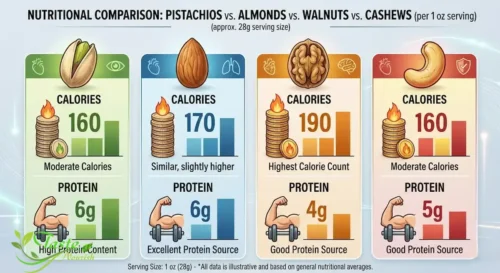
Pistachios vs. Other Popular Nuts
Nut (1 oz)
Calories
Protein
Fiber
Pistachios
159
5.8 g
2.9 g
Almonds
164
6.0 g
3.5 g
Walnuts
185
4.3 g
1.9 g
Cashews
157
5.2 g
0.9 g
Pistachios land in a middle ground: fewer calories than walnuts, comparable protein to almonds, and notably more fiber than cashews.
FAQs About the Health Benefits of Pistachios
Are pistachios good for cholesterol?
Research suggests pistachios may help improve total and LDL cholesterol levels when they replace saturated fat sources in the diet, though results vary between individuals.
Can pistachios help with diabetes?
Some studies suggest pistachios may help moderate post-meal blood sugar spikes due to their fiber, protein, and fat content, but they should complement, not replace, medical guidance for diabetes management.
Are pistachios good for weight loss?
They can fit into a weight-loss plan when eaten in controlled portions and used to replace less nutritious snacks, thanks to their protein and fiber content that supports fullness.
How many pistachios is a healthy serving?
About 1 ounce, or roughly 49 kernels, is a standard serving used in most nutrition research.
Are shelled or in-shell pistachios healthier?
Nutritionally they’re the same, but in-shell pistachios may help with portion control since shelling takes time and effort.
Do pistachios raise blood pressure because of sodium?
Raw or unsalted pistachios are naturally low in sodium. Salted varieties can contribute meaningful sodium if eaten frequently in large amounts.
Conclusion
The health benefits of pistachios come down to a genuinely useful nutrient package: unsaturated fats, plant protein, fiber, and antioxidants that few other snacks can match in one small handful. The research isn’t a guarantee of dramatic results, but it consistently points toward supportive roles in heart health, blood sugar management, and overall diet quality.
As with most nutrition decisions, portion size and context matter more than any single food. Pistachios work best as one part of a varied, balanced diet rather than a stand-alone fix.
**Hanan Abo Samra** shares practical cooking insights, delicious recipes, and evidence-based nutrition information. Drawing on more than 20 years of hands-on cooking experience, she creates helpful food content that combines everyday cooking knowledge with information from reliable scientific sources. Her goal is to help readers better understand the foods they eat, explore their nutritional benefits, and prepare delicious meals with confidence.