If you have a head of broccoli sitting in the crisper and no real plan for it, this broccoli bites recipe is the easiest way to turn it into something the whole table will actually eat. These cheesy baked broccoli bites are golden on the outside, tender in the middle, and held together with just eggs, cheese, and breadcrumbs. No deep fryer, no odd ingredients, and no forty-minute prep list. If you’ve been searching for an easy broccoli cheese bite recipe that survives contact with picky eaters, this is the one to bookmark.
This broccoli bites recipe combines finely chopped broccoli, eggs, cheddar, mozzarella, and breadcrumbs, formed into small mounds and baked at 375°F until golden, about 20 to 22 minutes. It takes roughly 40 minutes start to finish, makes about two dozen bites, and works as a side dish, snack, lunchbox item, or appetizer.
Key Takeaways
This broccoli bites recipe takes about 40 minutes total and makes roughly 24 bite-sized pieces.
Patting the cooked broccoli dry before mixing is the single biggest factor in whether the bites hold together.
Broccoli is a strong source of vitamin C and vitamin K, and a good source of fiber and folate, according to USDA data.
Research on broccoli’s sulfur compounds, particularly sulforaphane, is promising but still developing, so cautious language (“may help,” “is linked to”) is more accurate than firm health claims.
These bites freeze well both before and after baking, which makes this recipe easy to prep ahead.
What Are Broccoli Bites, Exactly?
Broccoli bites are small, bite-sized patties or clusters made from finely chopped broccoli bound together with egg, cheese, and some kind of starch, usually breadcrumbs. They’re baked (or sometimes air-fried) until the outside turns golden and slightly crisp while the inside stays soft and cheesy.
Think of them as a cross between a tater tot and a mini frittata, but built around a vegetable instead of a starch. They’re popular for a few practical reasons: they’re a low-effort way to get more vegetables into a meal, they reheat well, and they’re easy to pick up and eat without utensils, which makes them a natural fit for lunchboxes, party trays, or a quick side dish on a weeknight.
Because the broccoli is chopped small and mixed with cheese, the flavor is much milder than steamed or roasted broccoli on its own. That’s often what makes this style of recipe work for people, including kids, who wouldn’t normally reach for a plain vegetable side.
The Easy Broccoli Bites Recipe, Step by Step
This is the full, tested version of the broccoli bites recipe, written the way you’d actually want to follow it in your kitchen: no vague measurements, no mystery steps.
Recipe Overview
Prep time: 15 minutes
Cook time: 20 to 22 minutes
Total time: about 40 minutes
Yield: approximately 24 bites
Method: baked, oven or air fryer
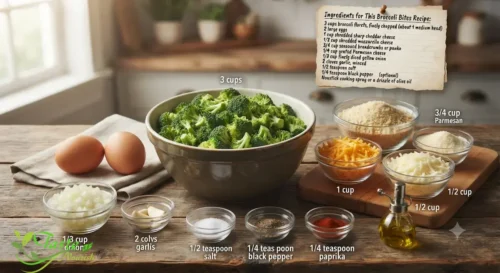
Ingredients for This Broccoli Bites Recipe
3 cups broccoli florets, finely chopped (about 1 medium head)
2 large eggs
1 cup shredded sharp cheddar cheese
1/2 cup shredded mozzarella cheese
3/4 cup seasoned breadcrumbs or panko
1/4 cup grated Parmesan cheese
1/3 cup finely diced yellow onion
2 cloves garlic, minced
1/2 teaspoon salt
1/4 teaspoon black pepper
1/4 teaspoon smoked paprika (optional)
Nonstick cooking spray or a drizzle of olive oil
Instructions
Preheat the oven to 375°F (190°C). Line a baking sheet with parchment paper and lightly grease it or coat it with nonstick spray.
Steam or microwave the chopped broccoli for 3 to 4 minutes, just until it turns bright green and slightly tender. Let it cool for a few minutes, then press it firmly between paper towels to remove as much excess moisture as possible. This step matters more than any other one in the recipe; wet broccoli is the number one reason bites fall apart.
In a large bowl, whisk the eggs. Add the cheddar, mozzarella, Parmesan, breadcrumbs, diced onion, garlic, salt, pepper, and smoked paprika. Stir until combined.
Fold in the cooled, dried broccoli and mix until every piece is coated in the egg-and-cheese mixture.
Scoop about 1.5 tablespoons of the mixture per bite, pack it gently into a small mound with your hands, and place it on the prepared baking sheet, spacing the bites about an inch apart.
Bake for 20 to 22 minutes, until the bites are golden brown on top and firm to the touch. For extra crispness, flip them halfway through baking.
Let the bites rest on the pan for 5 minutes before serving; they firm up noticeably as they cool.
Broccoli Bites Recipe Tips and Variations
Tip: Squeeze the broccoli in a clean kitchen towel instead of paper towels if you want to remove even more moisture.
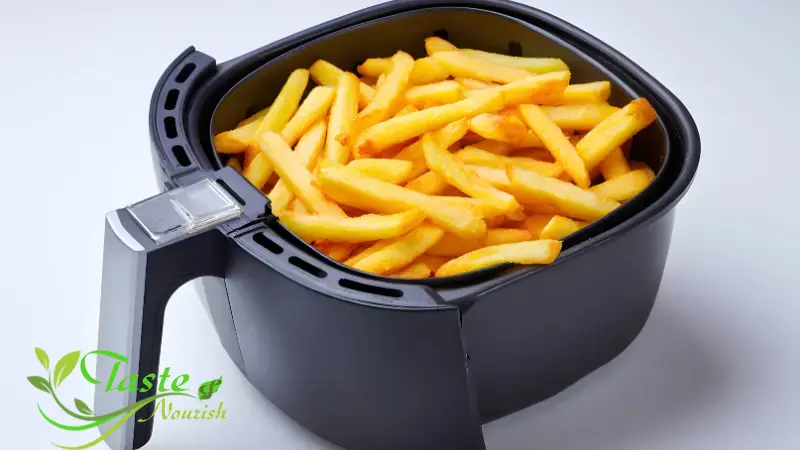
Air fryer version: Cook at 375°F for 10 to 12 minutes, shaking the basket halfway through, for a crispier exterior with less oven time.
Spice it up: Add a pinch of red pepper flakes or a few dashes of hot sauce to the mixture.
Swap the cheese: Sharp cheddar can be swapped for pepper jack, gouda, or a Mexican cheese blend.
Gluten-free option: Use gluten-free breadcrumbs or crushed rice crackers in place of regular breadcrumbs.
Dipping sauces: Ranch, marinara, honey mustard, and a garlic yogurt dip all work well alongside these.
Estimated Nutrition Per Bite
Based on the ingredients above, each bite comes out to roughly 50 to 60 calories, with the majority of that coming from cheese and eggs. This is an estimate based on the recipe as written, not a lab-tested figure, and will shift depending on the exact brands and cheese quantities you use.
Broccoli Nutrition Facts
Before getting into the recipe itself, it’s worth knowing what broccoli brings to the table nutritionally, since that’s a big part of why this vegetable shows up in so many “better for you” recipes. According to USDA FoodData Central, raw broccoli is low in calories and carbohydrates but relatively high in fiber, vitamin C, and vitamin K.
Nutrient
Amount per 100g (raw)
% Daily Value*
Calories
34 kcal
—
Protein
2.8 g
6%
Carbohydrates
6.6 g
2%
Dietary fiber
2.6 g
9%
Vitamin C
89.2 mg
99%
Vitamin K
102 mcg
85%
Folate
63 mcg
16%
Potassium
316 mg
7%
Calcium
47 mg
4%
*Percent Daily Values are based on a 2,000-calorie diet. One cup of chopped raw broccoli weighs about 91 grams, so the numbers above scale down slightly for a typical serving size.
Health Benefits of Broccoli
Broccoli’s biggest nutritional strength is its vitamin C content. A 100-gram serving provides close to a full day’s worth, which supports immune function and skin health. Vitamin C is also an antioxidant, meaning it may help offset some of the everyday oxidative stress the body deals with.
Broccoli is also one of the more concentrated food sources of vitamin K, a nutrient that plays a central role in blood clotting and is involved in bone metabolism. Getting enough vitamin K from food is generally considered part of a healthy eating pattern, though it does come with one important caveat covered in the risks section below.
Fiber is another strong point. At 2.6 grams per 100 grams, broccoli contributes meaningfully to daily fiber needs, which most Americans fall short of. Fiber supports digestion and may help with satiety, meaning it can help you feel fuller for longer as part of a meal.
Despite this, most U.S. adults simply aren’t eating enough vegetables of any kind. A CDC analysis of national survey data found that only about 10% of adults met the recommended vegetable intake, which is 2 to 3 cup-equivalents per day depending on age and sex. A recipe like this one, which sneaks a full head of broccoli into a snack format, is a genuinely practical way to close some of that gap.
What the Research Says About Broccoli
Broccoli belongs to the cruciferous vegetable family, along with cauliflower, cabbage, and Brussels sprouts. These vegetables contain compounds called glucosinolates, which break down into isothiocyanates when the plant is chopped or chewed. The most studied of these in broccoli is sulforaphane.
A peer-reviewed review published in the National Library of Medicine’s PubMed Central database describes sulforaphane as a compound with promising anticancer activity in laboratory and animal studies, and notes that epidemiological research has linked higher intake of cruciferous vegetables to lower risk of several cancer types, including breast, colorectal, and lung cancer.
It’s worth being precise about what that evidence actually shows. Much of the sulforaphane research is preclinical, meaning it comes from cell or animal studies rather than large human clinical trials, and the human studies that do exist are often small.
So while it’s fair to say broccoli consumption may support long-term health and that research suggests a protective association with certain cancers, it would be inaccurate to say broccoli or sulforaphane prevents or cures any disease. Cautious, evidence-based language is the honest way to describe where the science currently stands.
Potential Risks and Side Effects
For most healthy people, broccoli is very well tolerated, but there are a few things worth knowing.
Broccoli contains raffinose, a complex sugar that the body can’t fully break down in the small intestine. When it reaches the large intestine, gut bacteria ferment it, which can lead to gas or bloating, especially if you’re not used to eating much fiber. Cooking broccoli, rather than eating it raw, tends to make it easier to digest for most people.
Broccoli and other cruciferous vegetables also contain naturally occurring goitrogenic compounds, which in very large amounts and under specific conditions may interfere with thyroid hormone production. For the average person eating normal, food-level amounts of broccoli, this isn’t considered a meaningful concern; it becomes more relevant in the context of extremely high raw intake combined with iodine deficiency, which is uncommon in a typical U.S. diet.
The more clinically significant consideration is vitamin K. Because broccoli is a concentrated source of it, and vitamin K plays a direct role in blood clotting, sudden large changes in broccoli intake can affect people who take blood-thinning medication. This is covered in more detail below.
Who Should Be Cautious About Eating Broccoli?
People taking the anticoagulant medication warfarin (brand name Coumadin) are the main group who need to pay attention to broccoli intake. According to the National Institutes of Health’s Office of Dietary Supplements, vitamin K can interact with warfarin, and people on this medication are generally advised to keep their vitamin K intake roughly consistent from day to day rather than avoiding it altogether. A sudden increase, like eating a large amount of broccoli after not having any in weeks, could affect how well the medication works.
People with a diagnosed thyroid condition who are advised by their doctor to limit raw cruciferous vegetables should follow that specific guidance, since individual medical circumstances vary. And anyone with a known sensitivity or allergy to broccoli or related vegetables should, obviously, skip it. Outside of these situations, broccoli is considered a safe, standard part of a balanced diet for the general population.
How Much Broccoli Should You Eat?
There’s no broccoli-specific quota, but it fits within general vegetable recommendations. Federal dietary guidance, reflected in the CDC data cited earlier, suggests adults aim for 2 to 3 cup-equivalents of vegetables per day as part of an overall healthy eating pattern, with variety across vegetable types being more important than maximizing any single one.
A serving of this broccoli bites recipe (roughly 4 to 5 bites) uses a meaningful portion of that daily vegetable target in a single sitting, which is part of what makes it a useful recipe to keep in rotation rather than a once-in-a-while novelty.
How to Choose the Best Broccoli
Good broccoli starts at the grocery store or farmers market, and a few visual cues make it easy to pick well.
Look for tight, compact florets in a deep, uniform green (sometimes with a slight purple tinge, which is normal). Avoid heads with yellowing buds, which signal the broccoli is past its peak.
The stalk should feel firm and snap crisply, not bend or feel rubbery.
Avoid heads with visible black spots, sliminess, or a strong, unpleasant smell, all signs of spoilage.
Smaller, tighter heads are often more tender; very large heads can sometimes have woodier stalks.
For this recipe specifically, one medium head of broccoli, chopped down to the florets and the tender part of the stalk, is enough to yield about 3 cups of finely chopped broccoli.
Storage Tips for This Broccoli Bites Recipe
Fresh, uncooked broccoli should go straight into the refrigerator. According to the USDA’s FoodKeeper App, raw broccoli stored unwashed in the crisper drawer generally stays at good quality for about 3 to 5 days. Storing it loosely, rather than in a tightly sealed bag, helps prevent the trapped moisture that speeds up spoilage.
Once you’ve made the bites, storage is simple. Baked broccoli bites keep well in an airtight container in the refrigerator for 3 to 4 days. Reheat them in an oven or air fryer at 350°F for about 5 to 8 minutes to bring back some of the crispness; microwaving works in a pinch but tends to leave them softer.
These bites also freeze extremely well, which makes this an easy recipe to batch. You can freeze them baked (cool completely, then freeze on a tray before transferring to a freezer bag) for up to 2 to 3 months, or freeze the unbaked mixture, scooped into mounds, on a parchment-lined tray, then bake straight from frozen with a few extra minutes added to the cook time.
Best Ways to Eat or Cook Broccoli
Broccoli is genuinely versatile. Steaming for 3 to 5 minutes keeps it bright green and crisp-tender while preserving more of its water-soluble vitamin C than boiling does, since boiling can leach nutrients into the cooking water. Roasting at high heat brings out a nuttier, slightly caramelized flavor. Sautéing with garlic and olive oil is a fast weeknight option, and raw broccoli holds up well in a crunchy salad or with a dip.
Baking it into cheesy bites, as in this recipe, is really just another cooking method dressed up as a snack. It uses a quick steam or microwave step to soften the broccoli first, then finishes with dry baking heat to build texture on the outside, which is exactly the kind of format that makes vegetables more appealing to reluctant eaters without needing to disguise the flavor entirely.
Common Mistakes When Making Broccoli Bites
The most common mistake is skipping the moisture removal step. Broccoli holds a surprising amount of water even after a short steam, and if that water goes straight into the mixture, the bites turn soggy and won’t hold their shape in the oven.
Chopping the broccoli too coarsely is another frequent issue. Large chunks don’t bind well with the egg and cheese mixture and make the bites more likely to crumble when you pick them up.
Overcrowding the baking sheet traps steam around each bite instead of letting hot, dry air circulate, which leads to pale, soft bites instead of golden, crisp ones. Give them real space, and use two baking sheets if needed rather than packing everything onto one.
Finally, pulling the bites off the pan too early is an easy mistake to make since they look done before they’re fully firm. Broccoli bites continue to set as they cool, so resist the urge to grab one straight out of the oven.
Myths vs Facts About Broccoli
Myth
Fact
Raw broccoli is always healthier than cooked broccoli.
Cooking method matters more than raw-versus-cooked in isolation. Light steaming retains most nutrients well, while boiling can leach water-soluble vitamins like vitamin C into the cooking water.
The stalk should be thrown away.
The stalk is edible and nutritious. Peeling the tough outer layer and slicing or dicing the inside makes it just as usable as the florets.
Frozen broccoli is nutritionally inferior to fresh.
Frozen broccoli is typically flash-frozen shortly after harvest, which can preserve nutrients at least as well as “fresh” broccoli that has spent days in transit and storage.
Broccoli alone can prevent cancer.
Research links cruciferous vegetable intake to lower risk for some cancers, but no single food prevents disease. Broccoli is one part of an overall healthy dietary pattern, not a stand-alone cure.
Baked vs Air-Fried vs Pan-Fried: A Quick Comparison
This broccoli bites recipe is written for the oven, but it’s worth knowing how the cooking method changes the result if you want to adapt it.
Method
Approximate Time
Added Fat
Texture
Baked (oven)
20–22 minutes
Light spray or drizzle
Golden, evenly cooked, moderately crisp exterior
Air-fried
10–12 minutes
Light spray
Crispier exterior, faster cook time, smaller batches
Pan-fried
6–8 minutes
2–3 tablespoons oil
Very crisp outside, more added fat and calories per bite
Frequently Asked Questions
Can I make this broccoli bites recipe ahead of time?
Yes. You can mix the ingredients up to a day ahead and refrigerate the mixture, or fully bake the bites and reheat them later. Both options work well for meal prep.
Can I use frozen broccoli instead of fresh?
You can, as long as you thaw it completely and squeeze out as much liquid as possible first. Frozen broccoli tends to hold extra water, so this step is even more important than with fresh broccoli.
Are broccoli bites actually healthy?
They’re a reasonable way to work more vegetables, protein, and calcium into a meal, though the cheese and breadcrumbs mean they’re not the same as plain steamed broccoli. In moderation, as part of a balanced plate, they fit comfortably into a healthy eating pattern.
Can I make this easy broccoli cheese bite recipe dairy-free?
You can substitute a dairy-free shredded cheese blend, though the texture and browning will differ somewhat from real cheese, since dairy-free cheeses melt and bind differently.
Why do my broccoli bites keep falling apart?
This almost always comes down to excess moisture in the broccoli, or not packing the mounds firmly enough before baking. Dry the broccoli thoroughly and press each portion together firmly with your hands.
Can I air-fry this broccoli bites recipe instead of using the oven?
Yes. Set the air fryer to 375°F and cook for about 10 to 12 minutes, shaking the basket halfway through so the bites brown evenly on all sides.
Conclusion
This broccoli bites recipe earns its spot in regular rotation because it’s genuinely simple, forgiving of substitutions, and turns a plain vegetable into something people reach for without being asked twice. The technique behind it, drying the broccoli well and giving the bites space in the oven, applies just as easily to other vegetables if you want to riff on the formula later. Whether it ends up as a weeknight side, a lunchbox staple, or a party appetizer, it’s the kind of recipe worth keeping on hand.
“Adults Meeting Fruit and Vegetable Intake Recommendations — United States, 2019.” Morbidity and Mortality Weekly Report, Centers for Disease Control and Prevention. https://www.cdc.gov/mmwr/volumes/71/wr/mm7101a1.htm
“Sulforaphane: A Broccoli Bioactive Phytocompound with Cancer Preventive Potential.” PubMed Central, National Library of Medicine, National Institutes of Health. https://pmc.ncbi.nlm.nih.gov/articles/PMC8508555/
Hanan Abo Samra is the founder of Taste & Nourish, sharing trustworthy nutrition guidance and recipes drawn from 20+ years of hands-on cooking experience. When she's not developing new recipes, Hanan is researching the science behind everyday ingredients to bring readers practical, evidence-based guidance for a healthier lifestyle.