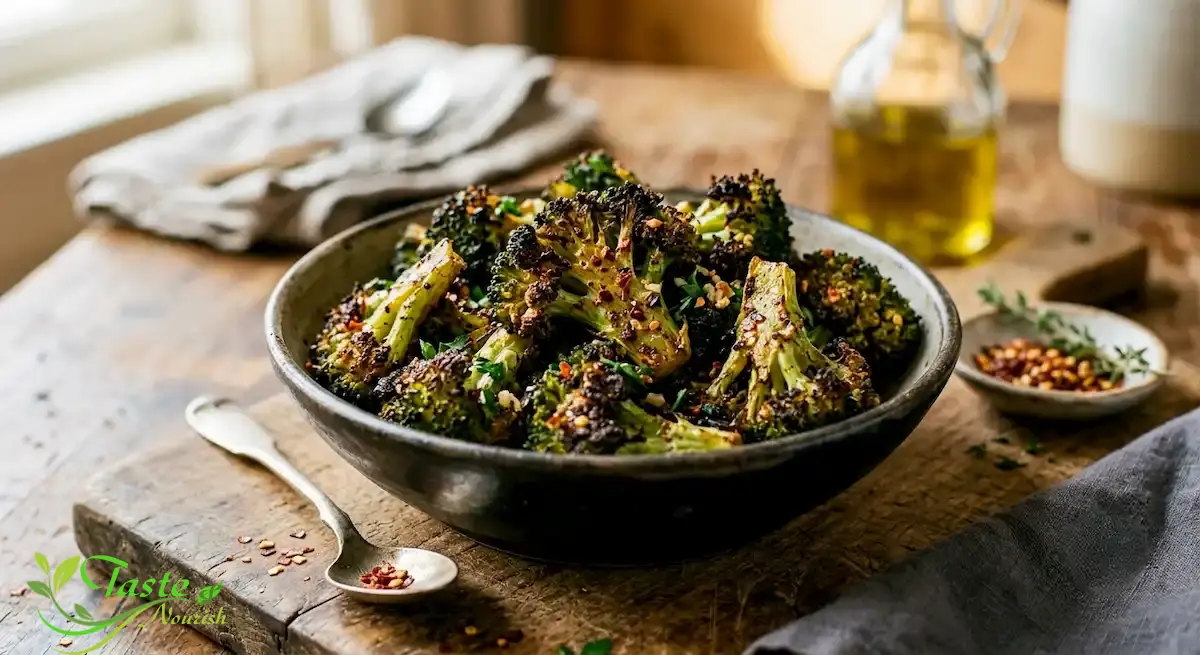
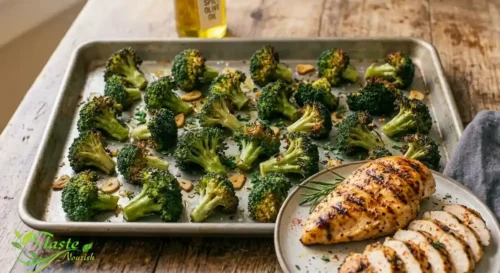
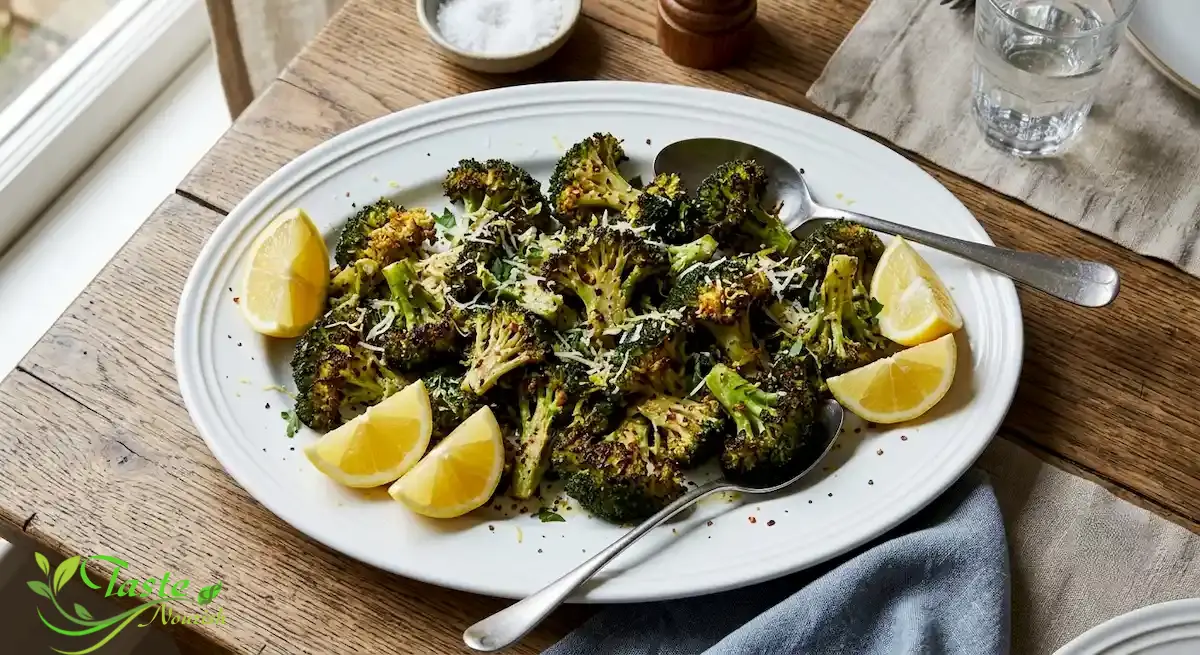
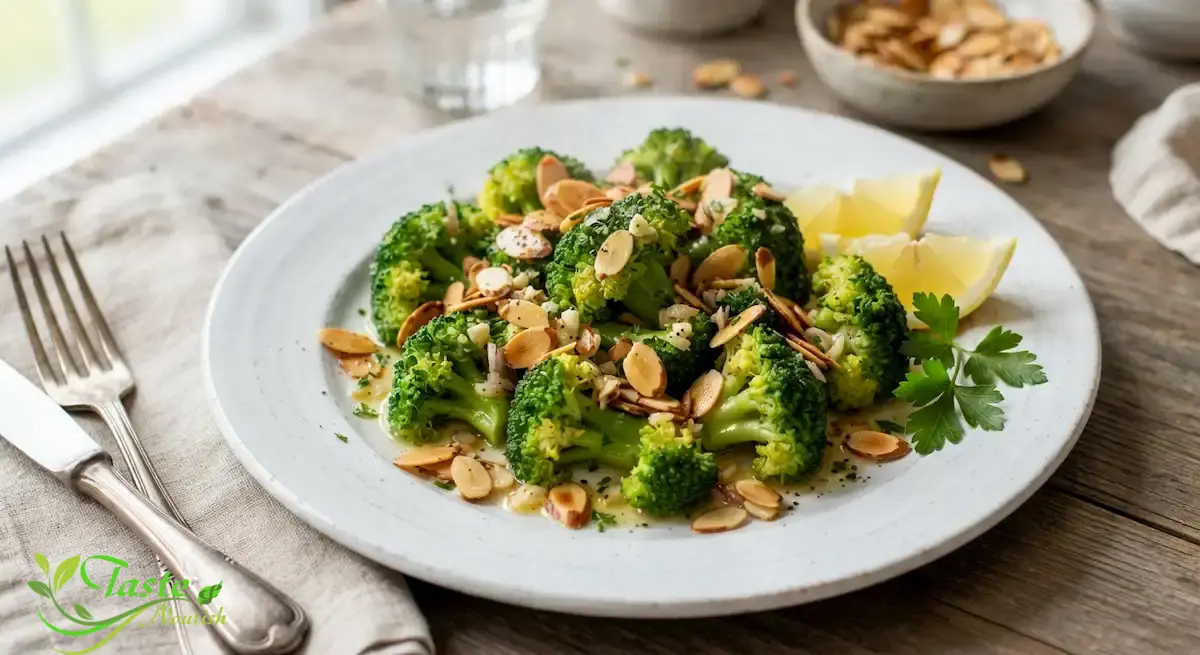
If you’ve been roasting broccoli the same way for years, this spicy roasted broccoli recipe brings a flavorful upgrade with crispy, charred edges, garlic, and a touch of heat. Made with simple pantry staples, it comes together in about 30 minutes for an easy weeknight side dish.
Broccoli is also packed with essential nutrients, and roasting brings out its natural sweetness while creating irresistible caramelized edges. This guide shows you how to make perfectly crispy roasted broccoli while exploring its nutritional benefits.
Quick Answer: Spicy Roasted Broccoli Recipe at a Glance
This spicy roasted broccoli recipe tosses fresh florets in olive oil, garlic, and red pepper flakes, then roasts them at high heat (425°F) until the edges char and the stems turn tender, about 18 to 22 minutes. It serves four as a side dish, uses one sheet pan, and can be made as mild or as fiery as you like by adjusting the amount of chili flake. Broccoli itself is low in calories, high in fiber and vitamin C, and part of the cruciferous vegetable family that researchers have studied for its possible role in cancer prevention.
Key Takeaways
This spicy roasted broccoli recipe takes about 30 minutes total, from chopping to plate, and needs only one sheet pan.
One cup of raw broccoli has roughly 31 calories and covers a large share of your daily vitamin C needs, according to USDA data.
Cruciferous vegetables like broccoli contain compounds called glucosinolates, which break down into substances that may support the body’s natural defenses against cell damage.
People on blood-thinning medication like warfarin don’t need to avoid broccoli — consistency in vitamin K intake matters more than elimination.
The heat level in this dish is fully adjustable, so it works for spice lovers and for anyone who just wants a little warmth.
What Is Broccoli?
Broccoli (Brassica oleracea var. italica) is a member of the cabbage family, related to cauliflower, kale, Brussels sprouts, and collard greens. What you’re actually eating is a cluster of unopened flower buds attached to an edible stalk, which is a detail that surprises a lot of people the first time they hear it.
It grows best in cooler weather and is sold fresh, frozen, and occasionally canned, though fresh and frozen are by far the most common in American grocery stores. Fresh heads should feel firm and heavy for their size, with tightly closed buds in a deep green or slightly purple-green shade.
How to Make the Best Spicy Roasted Broccoli Recipe
This is where the real fun happens. The method is simple, but a few small details make the difference between soggy broccoli and the crispy, charred kind you actually want.
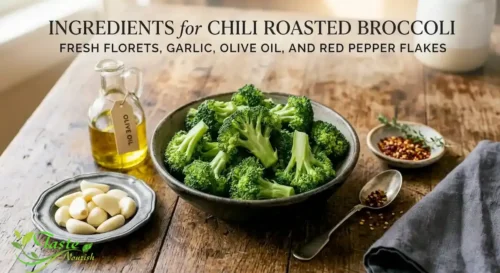
Ingredients for This Chili Roasted Broccoli
1 large head broccoli (about 1.5 pounds), cut into florets
1 to 1.5 teaspoons red pepper flakes, adjusted to taste
1/2 teaspoon smoked paprika (optional, for depth)
1/2 teaspoon kosher salt
1/4 teaspoon black pepper
Juice of half a lemon
Optional finishers: grated parmesan, toasted sesame seeds, or chopped scallions
Prep time: 10 minutes. Cook time: 18 to 22 minutes. Total time: about 30 minutes. Serves 4 as a side dish.
Step-by-Step Instructions
Preheat the oven to 425°F. Line a large sheet pan with parchment paper if you’d like an easier cleanup.
Cut the broccoli into similarly sized florets, keeping a flat cut side on each piece where possible, since that flat surface is what browns best.
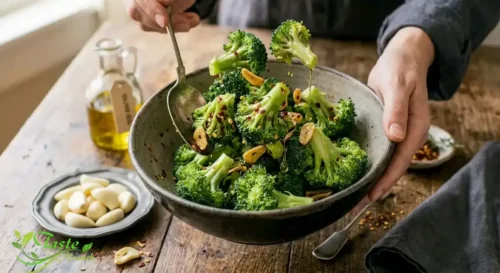
In a large bowl, toss the florets with olive oil, garlic, red pepper flakes, smoked paprika, salt, and pepper until every piece is evenly coated.
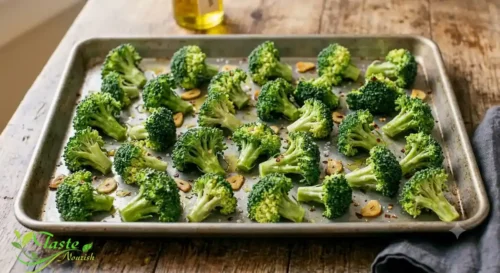
Spread the broccoli in a single layer on the sheet pan, cut side down, leaving space between pieces so they roast instead of steam.
Roast for 18 to 22 minutes, flipping halfway through, until the edges are deeply browned and the stems are fork-tender.
Pull the pan from the oven, squeeze fresh lemon juice over the top, and add any optional toppings you’re using.
Serve immediately, while the edges are still crisp.
3 Tips for Nailing This Spicy Roasted Broccoli Recipe Every Time
Don’t crowd the pan. Broccoli piled on top of itself steams instead of roasting, and you’ll lose that crispy char.
Dry the florets well after washing. Leftover water on the surface creates steam in the oven and stops browning before it starts.
Use a genuinely hot oven, at least 425°F. Anything cooler will cook the broccoli through before the edges have a chance to caramelize.
Easy Spicy Broccoli Side Dish Recipe Variations
Swap the red pepper flakes for gochugaru or a spoonful of chili crisp for a different kind of heat.
Toss the hot broccoli with soy sauce and a splash of rice vinegar right after roasting for a sweet-spicy glaze.
Finish with grated parmesan and lemon zest for a richer, cheesier version.
For a milder dish, cut the red pepper flakes down to a small pinch, or swap in a mild chili powder instead.
Broccoli Nutrition Facts
Broccoli is one of those rare foods that delivers a lot of nutrition for very few calories. Here’s how a standard one-cup serving breaks down, based on USDA FoodData Central.
Nutrient
Raw broccoli, 1 cup chopped (91g)
Calories
31
Protein
2.6 g
Total carbohydrates
6 g
Dietary fiber
2.4 g
Total fat
0.3 g
Vitamin C
About 81 mg (roughly 90% of the Daily Value)
Potassium
About 288 mg
Cooking changes these numbers somewhat, since a cup of cooked broccoli is more compact than a cup of raw florets. A cup of boiled, drained broccoli comes in around 55 calories, 3.7 grams of protein, and 5 grams of fiber, per USDA data. Some vitamin C is lost during cooking because it’s heat-sensitive and water-soluble, but quicker methods like roasting, steaming, or microwaving preserve more of it than a long boil does.
Health Benefits of Broccoli
Broccoli’s benefits mostly come down to three things: fiber, vitamin C, and a family of plant compounds called glucosinolates. None of these make broccoli a cure-all, but the research on each is fairly solid.
Digestive support: The fiber in broccoli may help support regular digestion and feed beneficial gut bacteria, since fiber generally isn’t broken down until it reaches the colon.
Immune and skin support: Vitamin C plays a role in immune function and collagen production, and broccoli is one of the more concentrated vegetable sources of it, according to the NIH Office.
Cell protection: When broccoli is chopped or chewed, an enzyme reaction converts glucosinolates into compounds like sulforaphane, which research suggests may help the body process and clear out potentially harmful substances.
Heart-healthy nutrients: Broccoli supplies potassium and fiber, two nutrients tied to cardiovascular health in general dietary patterns, though broccoli alone isn’t going to move the needle on its own.
Scientific Evidence
Broccoli’s connection to cancer prevention gets more attention than almost any other health claim tied to this vegetable, so it’s worth being precise about what the science actually shows.
According to the National Cancer Institute, chewing and digesting cruciferous vegetables breaks down glucosinolates into compounds such as indole-3-carbinol and sulforaphane, and these compounds have been shown in animal studies to inhibit cancer development in organs including the bladder, breast, colon, liver, lung, and stomach.
The proposed mechanisms include helping protect cells from DNA damage and helping the body inactivate certain carcinogens. Population-level studies have also found an inverse relationship between higher cruciferous vegetable intake and the risk of some cancers, particularly lung and colorectal cancer, in observational research.
That said, evidence in humans for other cancers, including breast and prostate cancer, has been described as more limited and inconsistent than the animal data would suggest, so it’s fair to say broccoli may support long-term health rather than claim it prevents disease outright.
Potential Risks & Side Effects
Broccoli is safe for the vast majority of people, but a few things are worth knowing before you make it a daily habit.
Gas and bloating: The same fiber that supports digestion can cause gas or bloating in some people, especially if you increase your intake quickly.
Vitamin K and blood thinners: Broccoli is a meaningful source of vitamin K, which can interact with the medication warfarin, according to Mayo Clinic.
Spice tolerance: The chili flakes in this recipe can bother people with acid reflux or a sensitive stomach, though the heat level here is easy to dial back.
Thyroid considerations: Cruciferous vegetables contain compounds sometimes called goitrogens, which in very large, mostly raw quantities may interfere with thyroid function in people who already have low iodine intake or an existing thyroid condition. Normal cooked servings aren’t typically a concern for most people.
Who Should Avoid It?
Very few people need to avoid broccoli entirely, but a couple of groups should pay closer attention to how much they eat and how consistently.
People taking warfarin or similar blood thinners don’t need to cut broccoli out of their diet. Mayo Clinic’s guidance is that the key is keeping vitamin K intake roughly consistent from week to week, rather than avoiding vitamin K-rich vegetables altogether, since sudden increases or decreases can affect how the medication works. Anyone managing a chronic condition like this should talk with their doctor or pharmacist before making major changes to how much broccoli, kale, or spinach they eat.
People with diagnosed thyroid conditions, particularly untreated hypothyroidism, may want to ask their healthcare provider about how much raw cruciferous vegetable is reasonable for them. People with a known sensitivity to spicy foods, active acid reflux, or IBS may also want to start with a smaller portion of this particular dish, or dial the chili flakes back significantly.
How Much Should You Eat?
There’s no broccoli-specific daily target, but it fits neatly into general vegetable guidance. The USDA’s MyPlate recommends most adults aim for about 2 to 3 cups of vegetables per day, with 1.5 to 2.5 cups per week specifically from the dark-green vegetable subgroup that broccoli belongs to, alongside spinach, kale, and similar greens.
A single serving of this roasted broccoli recipe, roughly 1 to 1.5 cups of florets, comfortably covers a solid chunk of your dark-green vegetable target for the day without any special planning.
How to Choose the Best Broccoli
Look for heads with tightly closed, compact florets in a deep green or slightly purple-green color. Avoid heads where the buds have started to yellow, flower, or look loose and separated, since that signals the broccoli is past its prime.
The stalk should feel firm and snap cleanly rather than bend, and the cut end shouldn’t look dried out, woody, or discolored. Smaller to medium heads are often more tender than oversized ones, which can have a thicker, more fibrous stalk.
Storage Tips
Keep fresh broccoli unwashed in the refrigerator, ideally in a loosely closed or perforated bag, and use it within 3 to 5 days for the best texture and flavor. Washing it ahead of time introduces moisture that speeds up spoilage.
If you want to keep broccoli longer, blanching it briefly in boiling water, cooling it in ice water, and freezing it in an airtight bag works well and keeps it usable for several months. Frozen broccoli is a completely reasonable substitute in most cooked recipes, including this one, though it releases more water when roasted.
Common Mistakes to Avoid With This Spicy Roasted Broccoli Recipe
The most common mistake is overcrowding the pan, which traps steam and leaves you with soft, dull-green broccoli instead of crispy, browned edges. A close second is skipping the pre-roast dry-off, since wet florets behave the same way as an overcrowded pan.
Another frequent issue is under-seasoning before roasting and trying to fix it after. Salt and oil need contact with the broccoli before it hits the heat to actually penetrate the florets, so seasoning only at the end leaves the inside bland even if the outside tastes fine.
Broccoli Myths vs. Facts
Myth: Cooking broccoli destroys all of its nutritional value. Fact: Some vitamin C is lost during cooking because it’s sensitive to heat, but quicker methods like roasting, steaming, or microwaving limit that loss, and nutrients like fiber and minerals are largely unaffected by cooking.
Myth: If you’re on blood thinners, you have to cut broccoli out of your diet completely. Fact: According to Mayo Clinic, the priority is keeping your vitamin K intake fairly consistent, not eliminating vitamin K-rich vegetables like broccoli altogether.
Myth: A spicy roasted broccoli recipe is only for people who love very hot food. Fact: The heat in this dish comes entirely from the amount of red pepper flake you add, so it’s just as easy to make a mild version as a fiery one.
Roasting vs. Steaming vs. Microwaving: Which Cooking Method Wins?
Method
Flavor and Texture
Nutrient Retention
Best For
Roasting
Caramelized, crisp edges, deep flavor
Good, with some vitamin C loss from higher heat
This spicy roasted broccoli recipe and other bold-flavored sides
Steaming
Bright green, tender-crisp, mild flavor
Very good, among the best for preserving vitamin C
Quick, no-fuss weeknight sides
Microwaving
Soft texture, mild flavor, fastest method
Good, especially with short cook times
Speed and small portions
Boiling
Softest texture, can turn mushy if overcooked
Lower, since water-soluble vitamins leach into the water
Least recommended if flavor and nutrients both matter
Spicy Roasted Broccoli Recipe FAQs
Is roasted broccoli actually healthy, or does roasting cancel out the benefits?
Roasting is one of the gentler cooking methods for preserving nutrients, especially compared to boiling. You’ll lose a small amount of vitamin C at high heat, but fiber, minerals, and the plant compounds tied to broccoli’s other benefits stay largely intact.
Can I make this chili roasted broccoli less spicy for kids?
Yes. Cut the red pepper flakes down to a small pinch, or leave them out of the initial toss and offer them as a topping for adults at the table instead.
How do I keep roasted broccoli from turning soggy?
Dry the florets thoroughly after washing, use a hot oven of at least 425°F, and give the pieces enough space on the pan so they aren’t touching. Crowding is the single biggest cause of soggy broccoli.
Can I use frozen broccoli for this spicy roasted broccoli recipe?
You can, though it releases more moisture as it cooks, so the edges won’t crisp up quite as much as with fresh florets. Pat frozen broccoli dry after thawing, or roast it a few minutes longer to help the extra water evaporate.
What goes well with spicy roasted broccoli?
It pairs naturally with grilled chicken, salmon, or steak, and works just as well tossed into a grain bowl, folded into pasta, or served alongside eggs for a savory breakfast plate.
An easy spicy roasted broccoli recipe made with olive oil, garlic, and red pepper flakes, roasted until crispy and charred in about 30 minutes.
Ingredients
1 large head broccoli (about 1.5 pounds), cut into florets
3 tablespoons olive oil
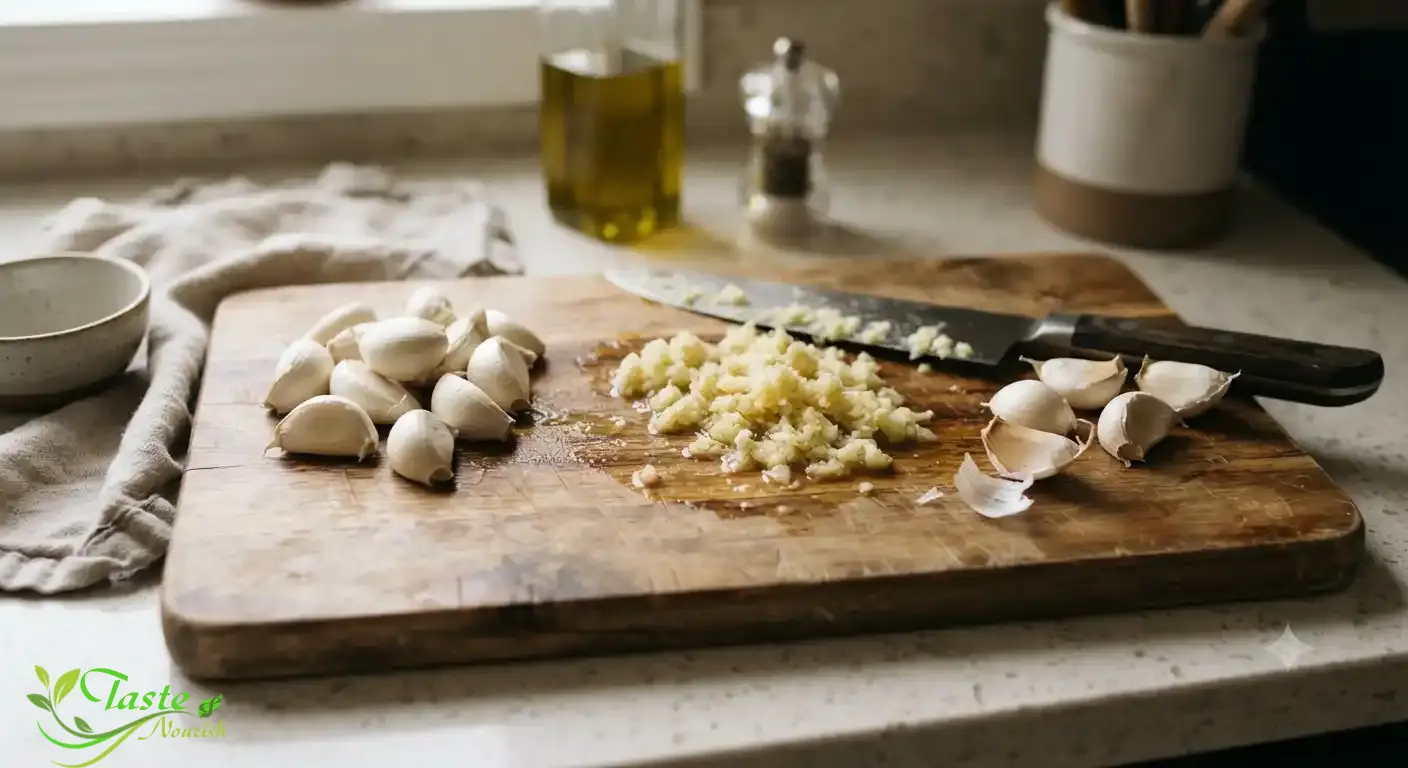
3 to 4 cloves garlic, minced
1 to 1.5 teaspoons red pepper flakes
1/2 teaspoon smoked paprika (optional)
1/2 teaspoon kosher salt
1/4 teaspoon black pepper
Juice of half a lemon
Optional: grated parmesan, toasted sesame seeds, or chopped scallions
Directions
Preheat the oven to 425°F. Line a large sheet pan with parchment paper if desired.
Cut the broccoli into similarly sized florets with a flat cut side where possible.
Toss the florets in a large bowl with olive oil, garlic, red pepper flakes, smoked paprika, salt, and pepper until evenly coated.
Spread the broccoli in a single layer on the sheet pan, cut side down, leaving space between pieces.
Roast for 18 to 22 minutes, flipping halfway, until the edges are browned and the stems are fork-tender.
Remove from the oven, squeeze fresh lemon juice over the top, and add any optional toppings.
Serve immediately while hot and crispy.
Conclusion
A good spicy roasted broccoli recipe doesn’t need much to succeed: a hot oven, a little oil, some garlic and chili, and broccoli that isn’t crowded on the pan. What you get in return is a side dish with real texture, genuine flavor, and a nutritional profile that backs up why broccoli has stuck around as a kitchen staple for so long. Whether you’re making it as an easy spicy broccoli side dish recipe for a weeknight dinner or dressing it up with parmesan for company, the technique stays the same, and it’s one worth having in permanent rotation.
References
FoodData Central. U.S. Department of Agriculture, Agricultural Research Service. https://fdc.nal.usda.gov/
Hanan Abo Samra is the founder of Taste & Nourish, sharing trustworthy nutrition guidance and recipes drawn from 20+ years of hands-on cooking experience. When she's not developing new recipes, Hanan is researching the science behind everyday ingredients to bring readers practical, evidence-based guidance for a healthier lifestyle.