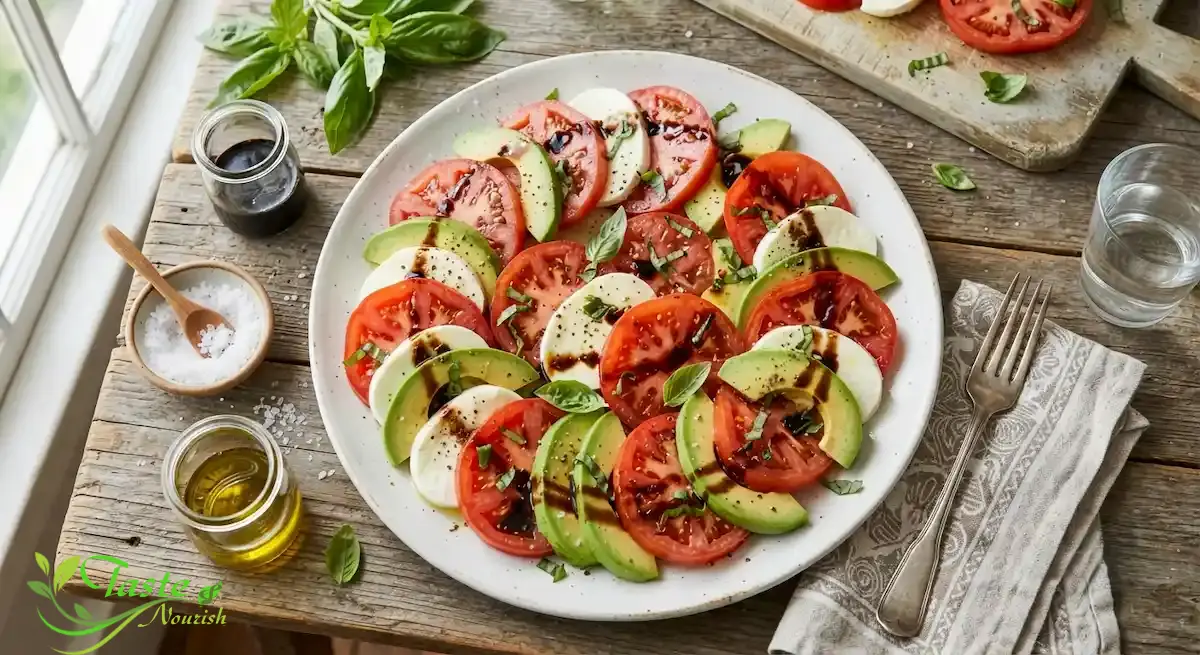
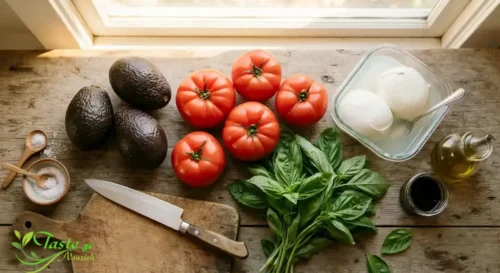
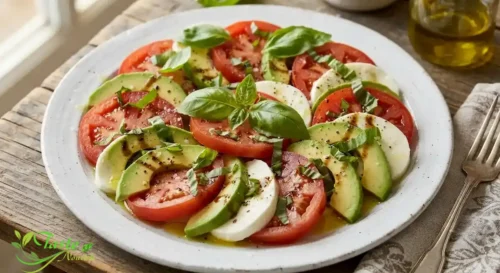
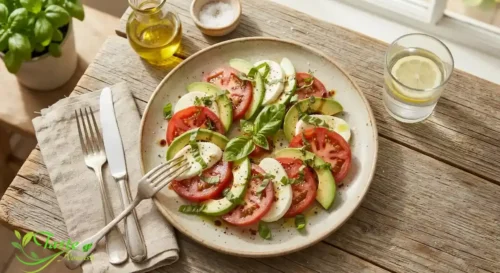
Caprese salad has been a summer table staple for decades, and for good reason: ripe tomatoes, milky mozzarella, and fresh basil barely need help to taste good. But add creamy avocado to the mix, and you get something even better. This avocado caprese salad recipe keeps everything you love about the original dish while adding fiber, healthy fats, and a richer, more satisfying bite.It takes about ten minutes to put together, needs no cooking, and works as a side dish, a light lunch, or a topping for grilled chicken or crusty bread.
Below, you’ll find the full recipe along with a practical look at the nutrition, the research behind the health claims you’ve probably seen online, and answers to the questions people actually ask before they buy the ingredients.
An avocado caprese salad recipe combines sliced avocado, fresh tomato, and fresh mozzarella with basil, olive oil, and a drizzle of balsamic. It takes under 15 minutes, delivers roughly 350 to 400 calories per serving with fiber, monounsaturated fat, protein, and calcium, and works well as a side dish, light lunch, or sandwich topping. It’s naturally gluten-free and easy to adapt for dairy-free or vegan diets.
Key Takeaways
This avocado caprese salad recipe needs just six main ingredients and no cooking.
Avocado adds fiber and monounsaturated fat that a traditional caprese salad doesn’t have.
Research from the Nurses’ Health Study and Health Professionals Follow-Up Study links regular avocado intake to lower cardiovascular risk.
Fresh mozzarella made from pasteurized milk is generally considered safe, but people who are pregnant or immunocompromised should double-check the label.
The salad is naturally low in carbs and gluten-free, making it easy to fit into most eating patterns.
What Is an Avocado Caprese Salad?
Traditional caprese salad, or insalata caprese, originated on the island of Capri and traditionally uses just three main components: tomato, fresh mozzarella, and basil, dressed simply with olive oil and salt. An avocado caprese salad adds sliced or cubed avocado into that same arrangement, layering or tossing it with the tomato and cheese.
The avocado doesn’t compete with the other flavors; it mellows them. Its buttery texture fills in the gaps between the juicy tomato and the springy mozzarella, and its mild flavor lets the basil and good olive oil still stand out. Some versions add a balsamic glaze for sweetness and acidity, while others keep it purely savory with just salt, pepper, and oil.
Avocado Caprese Salad Recipe: Nutrition Facts at a Glance
The numbers below come from USDA FoodData Central figures for each core ingredient, measured per 100 grams (about 3.5 ounces) of the raw food.
Ingredient (100g)
Calories
Protein
Fat
Fiber
Standout nutrient
Avocado
160
2g
14.7g (mostly monounsaturated)
6.7g
Potassium, about 485mg
Tomato, raw
18
0.9g
0.2g
1.2g
Vitamin C and lycopene
Fresh mozzarella
250 to 280
22 to 28g
17 to 22g
0g
Calcium, roughly 450 to 505mg
A typical serving of this salad, made with about half an avocado, one medium tomato, and two ounces of fresh mozzarella, comes out to roughly 350 to 400 calories, 15 to 17 grams of protein, and around 6 grams of fiber. That fiber number matters: a plain caprese salad without avocado usually has less than 1 gram per serving.
Easy Avocado Caprese Recipe: Step-by-Step
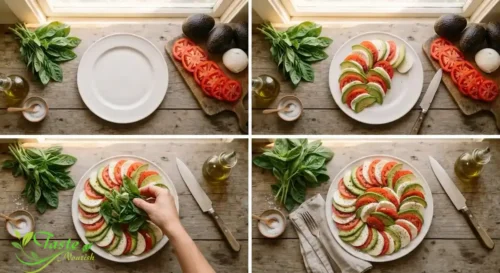
This easy avocado caprese recipe comes together with basic knife skills and no stovetop required.
Slice the tomatoes, mozzarella, and avocado into rounds of similar thickness, about a quarter inch each.
Arrange the tomato, mozzarella, and avocado slices in alternating, slightly overlapping rows on a platter, or stack them for individual servings.
Tuck whole or torn basil leaves between the layers.
Drizzle evenly with olive oil, followed by the balsamic glaze if using.
Season with salt and pepper just before serving, and eat right away for the best texture.
Health Benefits of Avocado, Tomato, and Mozzarella
Heart-Healthy Fats from Avocado
Avocado’s fat is about two-thirds monounsaturated, the same type found in olive oil. Diets that lean on monounsaturated fat instead of saturated fat are consistently linked to better cholesterol profiles, and this is one reason avocado is often recommended as a swap for butter or mayonnaise.
Antioxidants from Tomato
Tomatoes are one of the richest everyday sources of lycopene, the pigment that gives them their red color. Lycopene is a carotenoid antioxidant, and research suggests it may help protect blood vessels from oxidative damage, though scientists are still working out exactly how much of an effect diet alone provides.
Protein and Calcium from Mozzarella
Fresh mozzarella is a solid source of complete protein and calcium without the heavy sodium load of aged, hard cheeses. A two-ounce portion covers a meaningful share of daily calcium needs, which supports bone density over the long run.
What Does the Research Actually Say?
A large, long-running study published in the Journal of the American Heart Association followed nearly 111,000 adults across the Nurses’ Health Study and the Health Professionals Follow-Up Study for three decades. People who ate at least two servings of avocado a week had a 16% lower risk of cardiovascular disease and a 21% lower risk of coronary heart disease compared with those who rarely ate avocado.
The researchers also found that swapping foods like butter, margarine, or processed meat for an equivalent amount of avocado was tied to a similarly lower risk.
A Harvard T.H. Chan School of Public Health researcher involved in that study noted that recommending an avocado swap for saturated-fat foods is a simple, well-accepted change that clinicians can suggest to patients working on heart health.
On the tomato side, a peer-reviewed review published in the journal Molecules examined how lycopene may act as a cardio-protective compound, pointing to its role in reducing oxidative stress linked to cardiovascular risk factors. The evidence here is described as promising but not conclusive, and researchers note that whole tomatoes and tomato products appear to be a more reliable source of usable lycopene than isolated supplements.
It’s worth being clear-eyed about this evidence: these are observational and mechanistic studies, not proof that eating one salad changes anyone’s individual heart disease risk. They do, however, support the general idea that these ingredients fit comfortably into a heart-conscious eating pattern.
Potential Risks and Side Effects
For most healthy adults, an avocado caprese salad carries very little risk. That said, a few things are worth knowing before you dig in.
Avocado is calorie-dense, so portion size matters if you’re watching total calorie intake.
People on blood thinners like warfarin are sometimes advised to keep their vitamin K intake consistent, and avocado is a moderate source of vitamin K.
Fresh mozzarella and other soft, high-moisture cheeses carry a higher theoretical risk of Listeria contamination than hard, aged cheeses, even when pasteurized.
Tomatoes are acidic and can aggravate acid reflux or heartburn in people who are sensitive to acidic foods.
Who Should Avoid This Avocado Tomato Mozzarella Salad?
According to FDA food , people who are pregnant, are age 65 or older, or have a weakened immune system are advised to be cautious with soft cheeses, since Listeria can survive refrigeration and, in rare cases, contaminate cheese even after pasteurization.
If you fall into one of these groups, check that any fresh mozzarella you buy is made from pasteurized milk, keep it well chilled, and consider using it within a few days of opening. If you have a known allergy to dairy or a diagnosed avocado or latex-fruit sensitivity, this salad isn’t for you as written, though the recipe adapts easily with a dairy-free cheese alternative.
How Much Avocado Caprese Salad Should You Eat?
There’s no single “correct” portion, but it helps to think in terms of the produce guidelines most adults are already trying to hit. The CDC recommends adults consume 1.5 to 2 cup-equivalents of fruit and 2 to 3 cup-equivalents of vegetables daily. A generous serving of this salad, built around one tomato and half an avocado, comfortably counts toward both goals in a single sitting.
As a general guide, half an avocado and two ounces of mozzarella per person keeps the dish satisfying without pushing calories or saturated fat too high. If you’re eating it as a full meal rather than a side, a whole avocado and a bit more cheese is reasonable, especially if you’re adding grilled chicken or a slice of crusty bread on the side.
How to Choose the Best Ingredients
The quality of this salad rides almost entirely on the produce, since there’s no cooking to mask a mediocre tomato or an underripe avocado.
Avocado: Look for fruit that yields gently to firm pressure without feeling mushy. A slight give at the stem end, with the small cap still attached or easy to remove, is a good sign of ripeness.
Tomato: Choose tomatoes that feel heavy for their size and smell faintly sweet at the stem. Vine-ripened, in-season tomatoes have noticeably more flavor than winter greenhouse varieties.
Mozzarella: Fresh mozzarella packed in whey or water, not the shredded, low-moisture kind meant for pizza, is what you want here. Check the label for “pasteurized” and use it close to the sell-by date.
Basil: Bright green, unblemished leaves with no dark spots hold their flavor best and won’t wilt as quickly once torn.
Storage Tips
This salad is best assembled just before serving, since tomato releases liquid and avocado begins to brown once cut. If you need to prep ahead, store the sliced tomato, avocado, and mozzarella in separate airtight containers in the refrigerator, and combine them right before eating.
If you do have leftovers already dressed, a squeeze of lemon or lime juice over the avocado slices slows browning somewhat, and pressing plastic wrap directly onto the surface limits air exposure. Even with these tricks, plan to eat leftovers within a day, since the texture and color degrade quickly after that.
Common Mistakes When Making Avocado Caprese Salad
Using underripe avocado, which is firm but tastes grassy and doesn’t have the creamy texture the dish depends on.
Slicing everything too far in advance, which lets the tomato weep and the avocado brown before serving.
Skipping the salt, which is what actually pulls the flavors of the tomato and mozzarella together.
Using cold mozzarella straight from the fridge instead of letting it sit at room temperature for 15 to 20 minutes, which mutes its flavor and texture.
Drowning the salad in balsamic glaze, which can overpower the mild avocado and basil.
Myths vs Facts
Myth
Fact
Avocado is too fattening to eat regularly.
Most of its fat is monounsaturated, the type generally linked to healthier cholesterol levels when it replaces saturated fat.
Fresh mozzarella is always risky to eat.
Mozzarella made from pasteurized milk is considered low-risk for most healthy adults, though pregnant or immunocompromised people should stay cautious with any soft cheese.
Cooking tomatoes destroys their nutritional value.
Cooking actually increases the bioavailability of lycopene, even though it reduces vitamin C content somewhat.
This salad is only good in summer.
It’s best with peak-season tomatoes, but ripe avocado and good mozzarella are available year-round, so it works in any season with a bit of ingredient care.
Avocado Caprese Salad Recipe vs. Traditional Caprese Salad
Feature
Avocado Caprese Salad
Traditional Caprese Salad
Calories per serving
About 350 to 400
About 220 to 260
Fiber per serving
Around 6g
Under 1g
Primary fat source
Avocado and olive oil
Olive oil only
Texture
Creamier, more filling
Lighter, brighter
Best for
A light meal or a more filling side
A classic appetizer or small side
Conclusion
This avocado caprese salad recipe takes a dish that already works and gives it more staying power without much extra effort. The avocado adds fiber and heart-healthy fat, the tomato brings its familiar lycopene and vitamin C, and the mozzarella rounds it out with protein and calcium.
It comes together in minutes, adapts easily to what you have on hand, and holds its own as a side dish, a light lunch, or a topping for something heartier. Buy good produce, slice it just before serving, and season it properly, and the rest takes care of itself.
Avocado Caprese Salad Recipe FAQs
Is this avocado caprese salad recipe healthy?
Yes, in the context of an overall balanced diet. It combines fiber, monounsaturated fat, protein, calcium, and antioxidants from whole foods, though portion size still matters since avocado and cheese both add up in calories.
Can I make this salad ahead of time?
You can prep the ingredients ahead, but store them separately and assemble just before serving. Combined, the tomato releases liquid and the avocado starts to brown within an hour or two.
What can I use instead of balsamic glaze?
A squeeze of fresh lemon juice, a drizzle of good olive oil with flaky salt, or a light pesto all work well if you want to skip the balsamic entirely.
Is this avocado caprese salad recipe keto-friendly?
It’s naturally low in carbohydrates, largely from healthy fats and protein, which makes it a reasonable fit for most low-carb or keto eating patterns, though anyone tracking macros closely should account for the balsamic glaze if using it.
Can I substitute the mozzarella with a dairy-free option?
Yes. Several plant-based mozzarella-style cheeses melt and slice similarly to the real thing, though the flavor and texture will differ somewhat from traditional fresh mozzarella.
References
FoodData Central. U.S. Department of Agriculture, Agricultural Research Service. https://fdc.nal.usda.gov/
Pacheco, L.S., et al. “Avocado Consumption and Risk of Cardiovascular Disease in US Adults.” Journal of the American Heart Association, hosted by the National Library of Medicine. https://pmc.ncbi.nlm.nih.gov/articles/PMC9075418
“Adults Meeting Fruit and Vegetable Intake Recommendations — United States, 2019.” Morbidity and Mortality Weekly Report, Centers for Disease Control and Prevention. https://www.cdc.gov/mmwr/volumes/71/wr/mm7101a1.htm
Hsieh, M.J., et al. “Cardiovascular Disease and Possible Ways in Which Lycopene Acts as an Efficient Cardio-Protectant against Different Cardiovascular Risk Factors.” Molecules, hosted by the National Library of Medicine. https://pmc.ncbi.nlm.nih.gov/articles/PMC9147660/
Hanan Abo Samra is the founder of Taste & Nourish, sharing trustworthy nutrition guidance and recipes drawn from 20+ years of hands-on cooking experience. When she's not developing new recipes, Hanan is researching the science behind everyday ingredients to bring readers practical, evidence-based guidance for a healthier lifestyle.