
Basmati Rice: Nutrition, Benefits, Risks, and How to Cook It Right
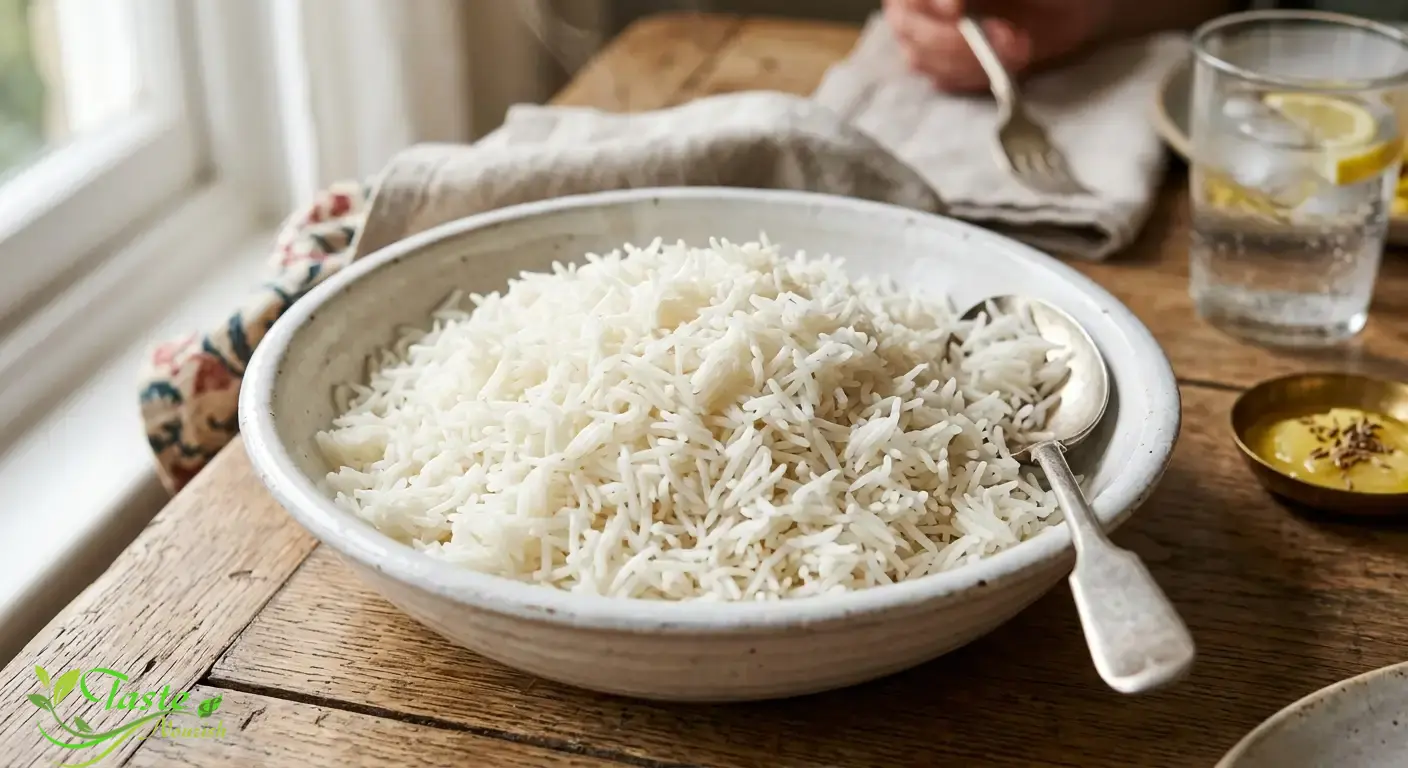
Basmati rice has a way of announcing itself before it even hits the plate. That warm, almost buttery aroma drifting from the pot is not your imagination — it is a real compound, and it is one of the reasons this grain has been prized for centuries. But beyond the fragrance, basmati rice raises a lot of practical questions.
Is it actually healthier than regular white rice? How does it compare on blood sugar? Is there anything to worry about with arsenic? This guide walks through all of it, grounded in nutrition data and peer-reviewed research rather than kitchen folklore.
Basmati Rice Nutrition Facts
Basmati rice is primarily a carbohydrate food, with modest protein and negligible fat. According to data compiled by the USDA database, a typical 100-gram serving of cooked basmati rice provides roughly the values below. Because brand, milling, and cooking method all shift these numbers slightly, treat this as a representative range rather than an exact label.
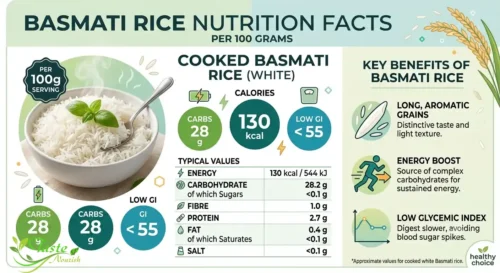
| Nutrient (per 100g, cooked) | White Basmati | Brown Basmati |
|---|---|---|
| Calories | ~130 kcal | ~123 kcal |
| Carbohydrates | ~28 g | ~26 g |
| Protein | ~2.5–3 g | ~2.7 g |
| Fat | ~0.3–0.5 g | ~1 g |
| Fiber | ~0.4–0.7 g | ~1.5–1.8 g |
| Glycemic Index (approx.) | 50–58 | 50–58 (often lower end) |
Key takeaway: Basmati rice is not a significant source of protein or fiber on its own, so pairing it with legumes, vegetables, or lean protein is what turns it into a genuinely balanced meal. Brown basmati keeps the bran layer, which roughly doubles or triples the fiber content compared with white basmati.
Potential Health Benefits of Basmati Rice
Blood Sugar and Glycemic Index
Basmati rice’s glycemic index generally falls between 50 and 58, which is notably lower than the 70-plus GI typical of standard long-grain white rice or jasmine rice. This is largely attributed to basmati’s higher amylose content, which slows starch digestion. A 2025 systematic review published via PubMed Central examining cooking methods and rice glycemic response found that preparation technique — not just variety — meaningfully affects how basmati and other rice types behave in the body, with some cooking methods lowering measured GI values compared to others.
This lower relative GI may help basmati fit more comfortably into a blood-sugar-conscious diet compared with higher-GI rice, though “lower GI” does not mean “no impact” — portion size still matters.
Weight Management Considerations
At roughly 130 calories per 100 grams cooked, basmati rice is not calorically different from most cooked white rice. Its potential edge for weight management comes from its GI profile and grain structure, which may support steadier energy levels and reduce the rapid hunger rebound sometimes associated with high-GI carbohydrates. A half-cup to one-cup cooked portion, paired with protein and vegetables, is a reasonable serving for most adults working toward a calorie-controlled goal.
A Gluten-Free Grain
Basmati rice, like all true rice, is naturally gluten-free, making it a safe carbohydrate base for people with celiac disease or non-celiac gluten sensitivity — as long as it is not cross-contaminated during processing or cooked alongside gluten-containing ingredients.
Relatively Lower Arsenic Levels Among Rice Varieties
All rice absorbs some arsenic from soil and water, but not equally. Testing summarized in the FDA’s own risk assessment work and corroborated by independent consumer testing has repeatedly found that basmati rice — particularly white basmati grown in India, Pakistan, or California — tends to test lower in inorganic arsenic than many domestically grown long-grain, jasmine, or arborio varieties.
This does not make basmati “arsenic-free,” but it may be a reasonable factor to weigh if arsenic exposure is a concern for your household.
How to Cook Basmati Rice
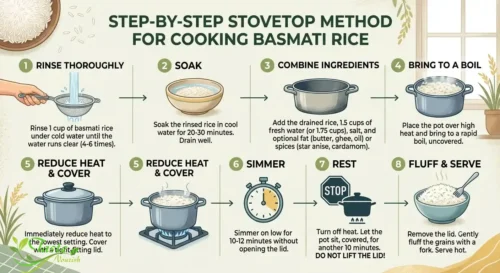
Stovetop Method
- Rinse 1 cup of basmati rice under cold water until the water runs mostly clear, which removes surface starch and helps prevent gumminess.
- Optionally soak the rinsed rice for 20–30 minutes; this can improve grain elongation and slightly shorten cook time.
- Combine the rice with 1¾ cups of water in a saucepan and bring to a boil.
- Reduce heat to low, cover, and simmer for about 12–15 minutes without lifting the lid.
- Remove from heat and let it rest, covered, for 5–10 minutes before fluffing with a fork.
Rice Cooker or Instant Pot Method
A rice cooker generally handles basmati well using a 1:1.5 rice-to-water ratio on the white rice setting. In an electric pressure cooker, a common approach is a 1:1 rice-to-water ratio with a natural pressure release, which tends to keep the grains intact and separate rather than mushy.
What Is Basmati Rice?
Basmati is a long-grain aromatic rice variety native to the Indian subcontinent. The name comes from the Sanskrit word vasmati, meaning “fragrant,” and that fragrance is largely due to a naturally occurring compound called 2-acetyl-1-pyrroline, which forms in the grain during growth.
Unlike short or medium-grain rice, basmati grains are slender and elongate significantly during cooking, often stretching to nearly double their raw length. This elongation, combined with a relatively high amylose content, is what gives properly cooked basmati its light, separate, non-sticky texture — a texture cooks specifically choose for pilafs and biryanis where clumping would ruin the dish.
Basmati is sold in both white and brown forms. White basmati has had the bran and germ removed, while brown basmati keeps those layers intact, which changes its nutrition profile, cooking time, and shelf life.
Where Basmati Rice Comes From
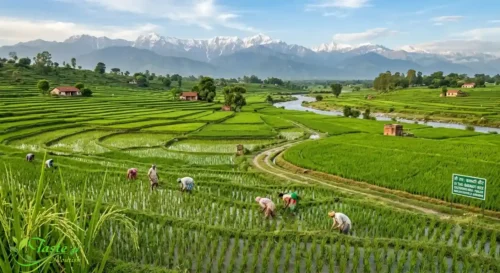
Basmati rice has been cultivated for centuries in the fertile plains at the foothills of the Himalayas, in what is now northern India and Pakistan. The specific combination of snow-fed irrigation water, soil composition, and climate in this region is widely credited with producing basmati’s signature aroma and grain quality — a connection strong enough that India secured a domestic Geographical Indication (GI) tag for basmati rice in 2016, and Pakistan has pursued its own recognition for the name.
Today, basmati is grown almost exclusively in a defined belt spanning Punjab, Haryana, Uttarakhand, Himachal Pradesh, and parts of Uttar Pradesh in India, along with Punjab province in Pakistan. Attempts to grow “true” basmati elsewhere in the world have had limited success, since the variety’s defining traits are closely tied to this specific growing region rather than the seed alone.
Taste, Aroma, and Texture
Why Basmati Smells and Tastes the Way It Does
The nutty, slightly floral aroma of basmati is not subtle — it is often described as a “popcorn-like” scent, and that comparison is more literal than people realize. The same aromatic compound responsible for basmati’s smell, 2-acetyl-1-pyrroline, is also found in popcorn and fresh bread crust, which is why the comparison feels so intuitive.
Flavor-wise, basmati is mild and slightly sweet, without the stickiness or blandness some associate with everyday white rice. Aging the rice — a practice many premium brands use — intensifies both the aroma and the firmness of the cooked grain.
Texture After Cooking
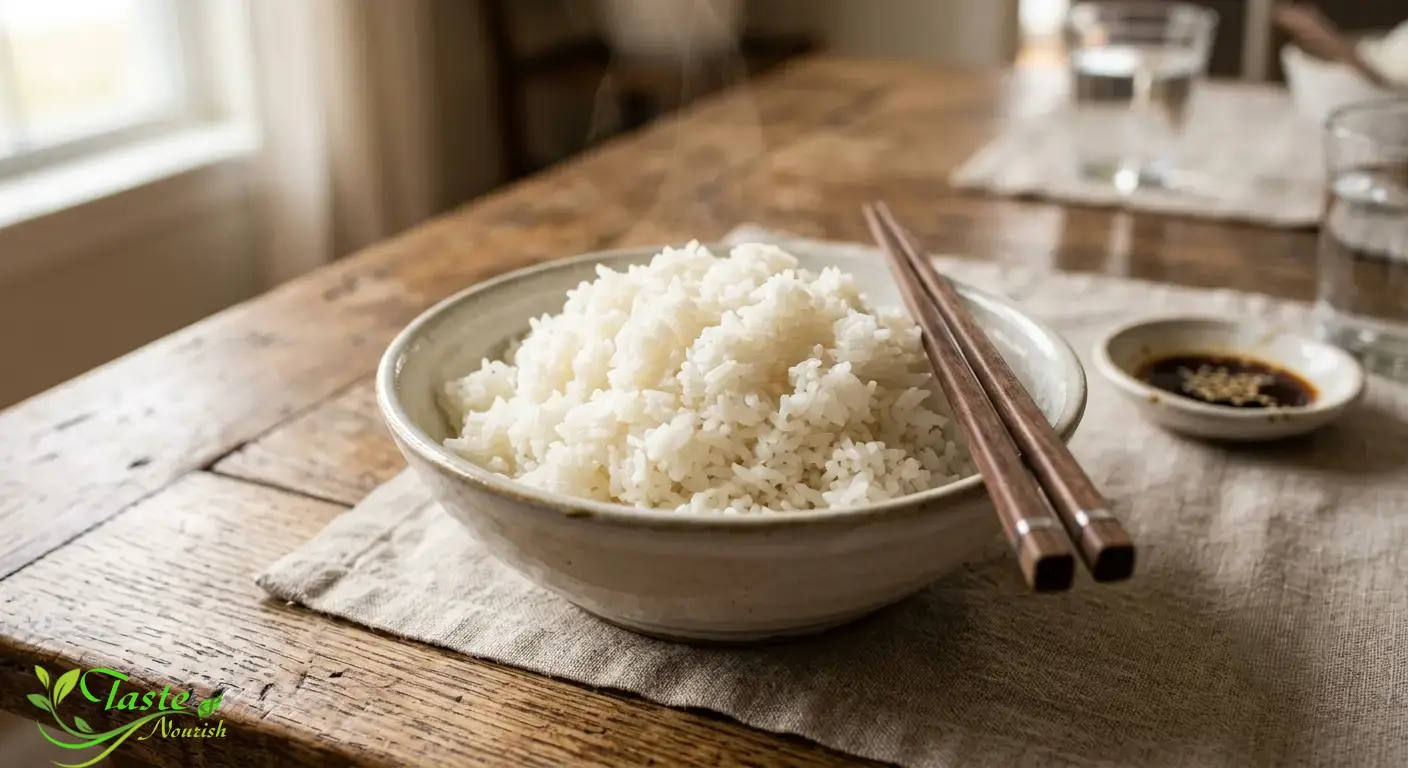
Properly cooked basmati grains stay separate rather than clumping together. This comes down to starch structure: basmati contains a higher ratio of amylose to amylopectin than many other rice varieties, and amylose resists the swelling and stickiness that amylopectin-heavy rice (like sushi rice or short-grain white rice) produces.
Risks and Who Should Be Cautious
Arsenic in Rice: What the Research Actually Shows
Rice is one of the few staple grains that reliably takes up arsenic from soil and irrigation water, and the FDA’s Arsenic in Rice and Rice Products Risk Assessment confirms that arsenic levels in U.S. rice and rice-based foods, while variable, are consistently higher than in most other commonly eaten grains. Inorganic arsenic — the form of greater health concern — is not acutely toxic at typical dietary levels, but long-term, repeated exposure is the concern researchers focus on.
This matters most for infants and young children, who eat more rice relative to body weight than adults. A peer-reviewed risk assessment published in Nutrients and indexed on PubMed Central specifically evaluated arsenic exposure from rice cereal and other rice-based foods in infants and toddlers, underscoring why many pediatric guidelines recommend varying grain sources rather than relying on rice as a primary staple for very young children.
Practical ways to reduce arsenic exposure from any rice, basmati included, include rinsing rice thoroughly before cooking, cooking it in excess water (similar to pasta) and draining the surplus, and rotating rice with other grains like quinoa, barley, or oats rather than eating rice daily.
Blood Sugar Is Still a Consideration for People With Diabetes
It’s tempting to read “lower glycemic index” as “diabetes-friendly without limits,” but that oversimplifies things. A widely cited meta-analysis published in The BMJ found that higher overall white rice consumption is associated with increased risk of type 2 diabetes, particularly in populations that eat rice as a dominant daily staple.
Basmati’s comparatively lower GI may soften this effect somewhat, but portion control, pairing with protein and fiber, and overall dietary pattern still matter more than the rice variety alone.
Who Should Be Extra Careful
- Infants and toddlers: Should not rely on rice or rice cereal as a primary daily grain, per pediatric arsenic-exposure guidance.
- Pregnant women: May want to diversify grain sources given arsenic’s developmental sensitivity profile.
- People with diabetes or prediabetes: May benefit from measuring portions and pairing rice with protein, fat, and non-starchy vegetables to blunt the glucose response.
- People on a low-fiber-restricted diet: Should note that white basmati offers minimal fiber compared with brown basmati or other whole grains.
Basmati Rice vs. Other Rice Varieties
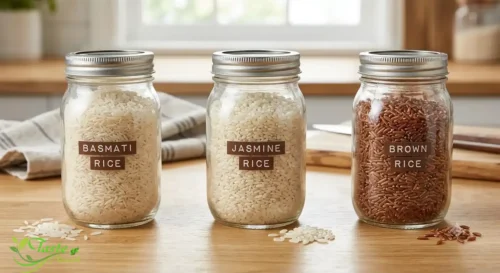
| Variety | Glycemic Index | Aroma | Relative Arsenic Level | Best For |
|---|---|---|---|---|
| Basmati (white) | 50–58 | Strong, nutty/floral | Lower average | Pilafs, biryani, curries |
| Jasmine (white) | 89–109 | Mild, floral | Moderate-higher average | Thai/Southeast Asian dishes |
| Standard long-grain white | 70+ | Neutral | Moderate | Everyday side dish |
| Brown rice (long-grain) | 50–68 | Nutty, earthy | Higher average (bran retains more) | Whole-grain bowls, higher fiber needs |
Pro tip: If you already eat jasmine or standard long-grain white rice daily and want a simple swap that may lower your glycemic load without switching to brown rice altogether, basmati is one of the easiest substitutions — it cooks similarly and needs only a slightly adjusted water ratio.
How to Buy Good Basmati Rice
Quality varies more in basmati than most people expect, since aging, grain length, and origin all affect the final result. A few things worth checking on the package or at the store:
- Look for “aged” basmati (often 1–2 years) — aging reduces moisture and intensifies aroma and firmness.
- Check grain length and uniformity; longer, more uniform grains generally indicate higher grade basmati.
- Confirm origin — genuine basmati is grown in specific regions of India or Pakistan; some blends labeled “basmati-style” are not true basmati.
- Choose brown basmati if fiber is a priority, understanding it will take longer to cook.
Storing Basmati Rice Properly
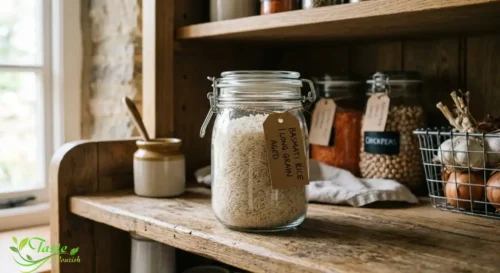
Uncooked white basmati rice stores well in an airtight container in a cool, dry pantry, typically remaining good for a year or more. Brown basmati has a shorter shelf life — usually around six months at room temperature — because the intact bran layer contains oils that can turn rancid; refrigerating or freezing brown basmati extends this considerably.
Cooked basmati rice should go into the refrigerator within two hours of cooking and is generally best used within four to six days. When reheating, make sure the rice is heated through to a safe internal temperature, since cooked rice left at room temperature can support bacterial growth, particularly from Bacillus cereus.
Common Basmati Rice Cooking Mistakes
- Skipping the rinse: Leaves excess surface starch, resulting in clumpy, gummy rice.
- Lifting the lid while simmering: Releases steam needed for even cooking and can leave the rice undercooked or unevenly textured.
- Using too much water: Basmati needs less water than many other long-grain rices; overdoing it produces mushy, broken grains.
- Skipping the rest period: Fluffing immediately after cooking, without letting the rice rest, tends to break the delicate grains.
Culinary Uses Around the World
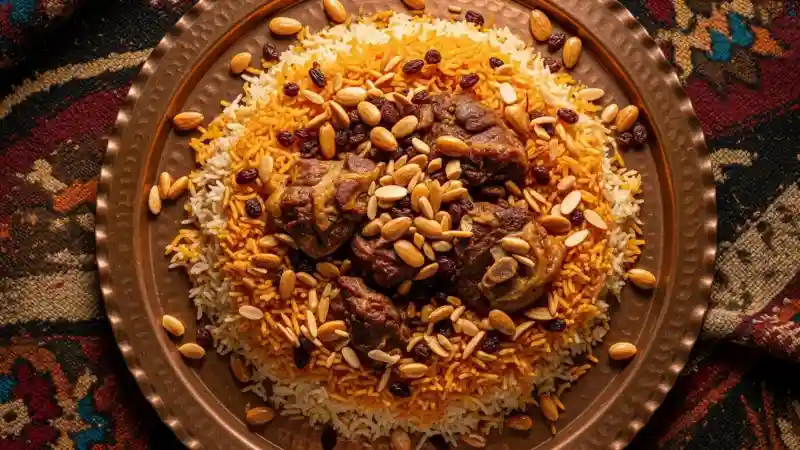
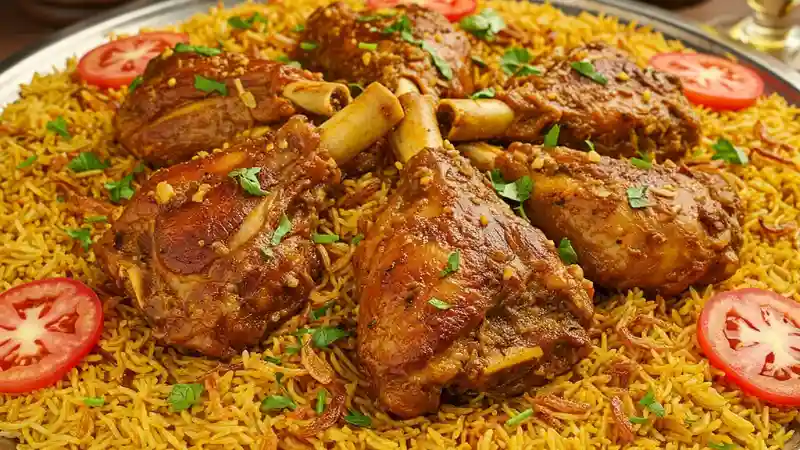
Basmati’s ability to stay light and separate makes it the standard choice for dishes where texture matters as much as flavor. In South Asian cooking, it forms the backbone of biryani and pulao, where its grains need to hold their shape around meat, vegetables, and spices without turning to mush. In Middle Eastern and Gulf cuisines, basmati anchors dishes like mandi, kabsa, and machboos.
It also works well in simpler global preparations — pilafs, rice salads, and as a fragrant side to curries, dals, and grilled proteins.
Common Myths About Basmati Rice
Myth: Basmati rice is calorie-free or “diet rice.” Reality: it has a similar calorie count to most cooked white rice; its main advantage is a comparatively lower glycemic index, not fewer calories.
Myth: All basmati rice is equally low in arsenic. Reality: while basmati tends to test lower on average than several other rice types, levels still vary by growing region and batch, and no rice variety is arsenic-free.
Myth: Soaking basmati rice is mandatory. Reality: soaking can improve texture and slightly shorten cooking time, but thorough rinsing matters more for preventing gummy rice.
Myth: Brown basmati has no meaningful advantage over white. Reality: brown basmati retains more fiber, B vitamins, and minerals due to the intact bran layer, even though both forms share a similar glycemic index range.
Conclusion
Basmati rice earns its reputation honestly. It brings a distinctive aroma and texture that few other rice varieties can match, a comparatively favorable glycemic index among white rices, and — per FDA and independent testing — generally lower average arsenic levels than several common alternatives.
It is not a health food in the sense of being nutrient-dense on its own, and it is not immune to the broader cautions that apply to rice generally, particularly around arsenic exposure in young children and portion control for people managing blood sugar.
Used thoughtfully — rinsed, portioned sensibly, and paired with protein and vegetables — basmati rice fits comfortably into a balanced, varied diet.
Basmati Rice FAQs
Q1. Is basmati rice healthier than regular white rice?
Basmati generally has a lower glycemic index than standard long-grain or jasmine white rice, which may help moderate blood sugar response, but its calorie and macronutrient profile is otherwise fairly similar to other white rice varieties.
Q2. Can people with diabetes eat basmati rice?
Basmati’s moderate GI (50–58) may make it a more favorable choice than higher-GI rice varieties, but portion size and pairing with protein and fiber still matter. People with diabetes should check with their healthcare provider about how rice fits their individual meal plan.
Q3. Does basmati rice contain arsenic?
Yes — all rice, including basmati, contains some arsenic from soil and water absorption. Testing referenced by the FDA and independent labs has found basmati, especially white basmati from India, Pakistan, or California, tends to average lower than several other rice types, though levels still vary by batch and origin.
Q4. What’s the difference between white and brown basmati rice?
Brown basmati retains the bran and germ, giving it more fiber, B vitamins, and minerals, along with a firmer texture and longer cooking time. White basmati has these layers milled away, resulting in a lighter texture, a shorter cooking time, and a longer pantry shelf life.
Q5. How long does basmati rice last once cooked?
Cooked basmati rice is generally safe for four to six days when refrigerated promptly in an airtight container. It should be reheated thoroughly and not left at room temperature for extended periods, since cooked rice can support bacterial growth if handled improperly.
How to Cook Perfect Basmati Rice
4
servings5
minutes15
minutes130
kcalIngredients
1 cup basmati rice
1 3/4 cups water
Pinch of salt (optional)
2–3 tablespoons of olive oil or any preferred cooking oil (optional)
Directions
- Rinse 1 cup of basmati rice under cold water until the water runs mostly clear
- Soak the rinsed rice for 20–30 minutes to improve grain elongation.
- Combine the rice with 1¾ cups of water in a saucepan and bring to a boil.
- Reduce heat to low, cover, and simmer for 12–15 minutes without lifting the lid.
- Remove from heat, let rest covered for 5–10 minutes, then fluff with a fork.
References
- U.S. Department of Agriculture, FoodData Central. “Basmati Rice, Basmati — Food Details.” https://fdc.nal.usda.gov/fdc-app.html#/food-details/2429932/nutrients
- U.S. Food and Drug Administration. “Arsenic in Rice and Rice Products Risk Assessment Report.” https://www.fda.gov/files/food/published/Arsenic-in-Rice-and-Rice-Products-Risk-Assessment-Report-PDF.pdf
- National Center for Biotechnology Information (NIH/NLM), PubMed Central. “Risk Assessment of Arsenic in Rice Cereal and Other Dietary Sources for Infants and Toddlers in the U.S.” https://www.ncbi.nlm.nih.gov/pmc/articles/PMC4847023/
- National Center for Biotechnology Information (NIH/NLM), PubMed Central. “Effects of Cooking Techniques on the Nutritional Profile, Glycemic Index, and Sensory Evaluation of Rice: A Systematic Review.” https://pmc.ncbi.nlm.nih.gov/articles/PMC12567974/
- Hu, E.A., Pan, A., Malik, V., Sun, Q. “White Rice Consumption and Risk of Type 2 Diabetes: Meta-Analysis and Systematic Review.” BMJ, 2012;344:e1454, via PubMed Central. https://pmc.ncbi.nlm.nih.gov/articles/PMC3307808/