
Orange Juice: Nutrition, Benefits, and How to Enjoy It
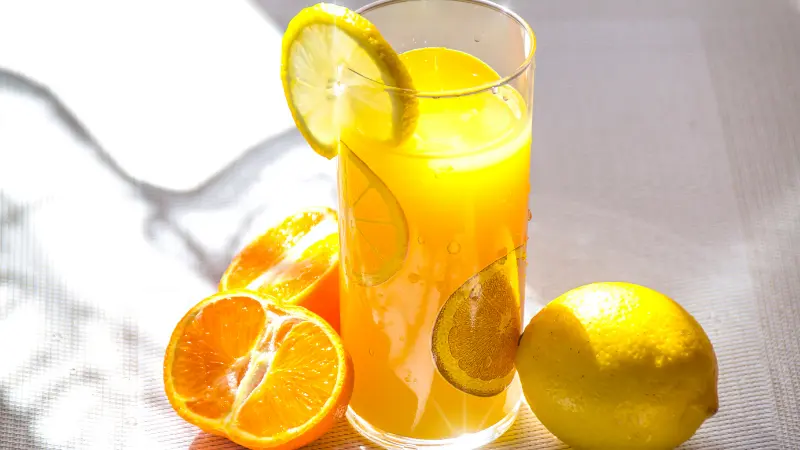
Orange juice benefits are real, but they are narrower than the carton suggests, and the drawbacks are easy to overlook. I want to be clear about what the research does and does not show before getting into the details.
This guide covers what is in a glass, which health claims hold up, how fresh, carton, and fortified juice differ, how much is reasonable, and the varieties and blends people ask about most.
Quick Answer
Orange juice benefits are mostly nutritional: a glass supplies vitamin C, potassium, and folate. Trial results for blood pressure and cholesterol are small and mixed, and claims about colds, weight loss, or detox are weak. Juice is also a concentrated source of sugar with little fiber, so a small glass is a more sensible default than a large one.
Key Takeaways: Orange Juice Benefits
- The best-supported orange juice benefits are nutritional, such as helping the body absorb iron from plant foods when juice is part of the same meal.
- Label wording matters: “100% juice,” “from concentrate,” “fortified,” and “juice drink” are four different products, and only the last is built around added sugar.
- Pasteurized juice is the safer choice for young children, pregnant people, older adults, and anyone with a weakened immune system.
- Whole oranges remain the better daily default for fiber, and juice works best as an add-on rather than a replacement.
- Some people have specific reasons for care, including those taking fexofenadine (Allegra), managing diabetes, or prone to kidney stones or enamel erosion.
- Blends and variations such as blood orange or mandarin juice are mainly flavor choices, and the research on them is thinner than on standard orange juice.
What Is Orange Juice?
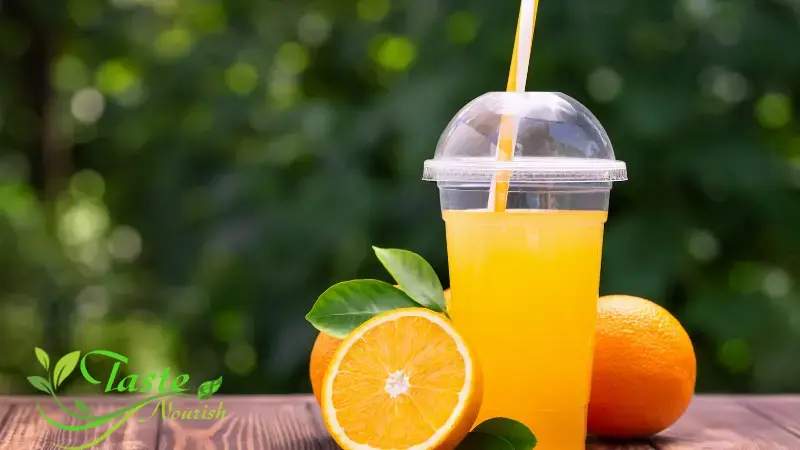
Orange juice is the liquid pressed from oranges, most often sweet varieties. It reaches shoppers squeezed to order, chilled in cartons, reconstituted from concentrate, or fortified with added nutrients.
One label distinction matters from the start. “100% juice” is fruit juice only, while “juice drink,” “cocktail,” and “orange beverage” products are typically diluted and sweetened. The 2025–2030 Dietary Guidelines for Americans tell people to avoid sugar-sweetened beverages, including fruit drinks.
Orange Juice Nutrition Facts
The table uses the USDA FoodData Central entry for raw orange juice, per 1 cup (248 g, about 237 mL). Percent Daily Values follow FDA’s Daily Value reference table.
| Nutrient | Amount | % Daily Value |
|---|---|---|
| Calories | 112 | n/a |
| Total carbohydrate | 25.8 g | 9% |
| Total sugars | 20.8 g | no DV |
| Dietary fiber | 0.5 g | 2% |
| Protein | 1.7 g | 3% |
| Total fat | 0.5 g | 1% |
| Vitamin C | 124 mg | 138% |
| Folate | 74 mcg DFE | 19% |
| Potassium | 496 mg | 11% |
| Thiamin (B1) | 0.22 mg | 18% |
| Calcium | 27 mg | 2% |
By FDA’s thresholds, a cup is high in vitamin C (20% DV or more) and a good source of folate, potassium, and thiamin (10–19% DV). Protein, fat, and fiber are minimal.
Packaged juice varies by brand and processing, so your carton’s Nutrition Facts panel is the better guide to what you actually drink. Labels are not required to list vitamin C unless it has been added to the food, so its absence from a panel does not prove the juice is low in it.
Is Orange Juice Healthy? The Sugar and Fiber Trade-Off
Orange juice is a nutrient-dense drink with one real downside: it delivers its sugar in liquid form, with little of the fiber a whole orange carries. Whether it is “healthy” depends on how much you drink and what it replaces.
Health bodies treat the sugars differently. The WHO counts sugars naturally present in fruit juices as free sugars and recommends keeping free sugars under 10% of energy, with below 5% (roughly 25 grams a day) as a conditional target for added benefit. A cup of raw juice contains 20.8 g of sugars, per the USDA entry. The U.S. guidelines separate naturally occurring sugars in foods such as fruit from added sugars, while still cautioning about juice portions (covered below).
For body weight, the scientific report behind the U.S. guidelines drew on an umbrella review of 54 meta-analyses of added sugars, sugar-sweetened drinks, and 100% juice. It reported that 100% juice is linked to weight gain in children with high certainty, but not in adults. It also described the evidence for other health outcomes as limited and less conclusive than for soda.
That is reassuring for adults, with a practical caveat: a glass of juice is easy to add on top of a diet instead of swapping it in for something else.
Orange Juice Benefits, Ranked by Strength of Evidence
The commonly cited benefits do not all rest on the same footing. Here they are, from best supported to least.
Vitamin C, potassium, and folate: well established
These are nutrient facts rather than disease claims. Vitamin C is needed to make collagen, and the NIH notes that the ascorbic acid in foods such as juice has equivalent bioavailability to supplemental ascorbic acid. The same fact sheet lists adult RDAs of 90 mg for men and 75 mg for women, so a cup of raw juice exceeds a day’s need. Folate and potassium are smaller but useful contributions.
Absorbing iron from plant foods: well established
Vitamin C improves absorption of nonheme iron, the form found in plant foods and fortified products. The NIH suggests eating plant iron sources with vitamin C foods such as citrus fruits. A small glass of juice with a lentil or bean meal or iron-fortified cereal is a practical way to apply that. It is a mealtime strategy, not a treatment for iron deficiency, so anyone who has been told they are low in iron should follow their clinician’s plan.
Blood pressure and cholesterol: small and mixed
A meta-analysis of eight randomized trials in overweight and obese adults found systolic blood pressure about 1 mmHg lower and HDL cholesterol higher with orange juice. Total cholesterol, triglycerides, LDL, glucose, insulin, and CRP did not change. A separate meta-analysis of 10 randomized trials reported lower total cholesterol, LDL, fasting glucose, and CRP, with effects holding up mainly where people drank 500 mL (about 17 fl oz) or more a day.
The two analyses pooled different trials and populations, which helps explain the disagreement. A 1 mmHg change is small. Serving reality check: those trial amounts are more than double a small glass, so they do not describe what one serving does. Some juice trials have also had citrus-industry funding, which does not invalidate them but is worth knowing.
Hesperidin and other flavanones: promising but early
Orange juice is a source of hesperidin, a flavanone studied for blood vessel effects. In a randomized crossover trial of 24 healthy, overweight men, diastolic blood pressure was lower after four weeks of 500 mL a day of orange juice, or of a control drink with added hesperidin, than after a placebo drink. That points to hesperidin as one active compound. It cannot show an effect for the general population, since it was a single small trial in one group at about two cups a day.
Kidney stones: preliminary
In a randomized crossover study of 13 volunteers, orange juice raised urinary pH and citrate and lowered the calculated supersaturation of calcium oxalate, though urinary oxalate was higher. It was short, tiny, and used far more juice than most people drink, so it cannot say whether orange juice prevents stones. For how lemon compares, see our guide to lemon benefits ranked by evidence.
Colds and immunity: weak at the amount in a glass
A Cochrane review of placebo-controlled trials using at least 200 mg of vitamin C a day found that regular supplementation did not reduce how often people in the general population caught colds, though it modestly shortened them. A cup of juice supplies less than that threshold, and the trials used supplements, so they say little about juice.
Weight loss, skin, and detox claims: not supported
Nothing reviewed here supports orange juice as a weight-loss tool, a skin treatment, or a detox. Vitamin C is involved in collagen production, but that does not show that drinking juice improves skin. “Detox” has no meaning in this context, since the liver and kidneys do that work and juice is not a cleanse.
Fresh-Squeezed, Carton, From Concentrate, and Fortified Juice
| Type | What it is | Main difference | Watch for |
|---|---|---|---|
| Fresh-squeezed | Pressed at home or to order | No heat treatment | Food safety if unpasteurized |
| Not from concentrate | Pressed, pasteurized, packaged | Closest commercial match to fresh | Ingredient list |
| From concentrate | Water removed, then added back | Processing differs; compare panels | Added ingredients |
| Fortified | Calcium, sometimes vitamin D, added | Extra minerals, same sugar | Amounts vary by brand |
| Juice drink or cocktail | Diluted juice, usually sweetened | Not 100% juice | Added sugars |
Nutrient content varies by product, so compare labels rather than assuming fresh always beats carton or the reverse. The NIH notes that vitamin C can fall with prolonged storage and heat, which is one reason juice squeezed at home is best drunk soon.
The NIH lists calcium-fortified orange juice among food sources of calcium, and the amount depends on the brand. Some brands also add vitamin D. Fortification does not change the sugar content, so portion advice applies equally. If you rely on fortified juice for calcium, read the panel, and shake the carton if it says to.
Orange Juice vs. a Whole Orange
Both are strong vitamin C sources: the NIH lists 93 mg in three-quarters of a cup of juice and 70 mg in one medium orange. The difference is what comes with it. A glass of juice is typically squeezed from more than one orange, you drink it faster than you would eat the fruit, and the fiber is largely left behind.
In three large U.S. cohorts, each extra three servings a week of fruit juice was associated with a slightly higher risk of type 2 diabetes (hazard ratio 1.08), while whole oranges showed essentially no association (0.99). The juice category there combined several fruit juices, not orange juice alone, and these are observational findings. A meta-analysis of prospective studies found no significant association for 100% juice specifically, so the evidence is mixed.
The 2025–2030 guidelines say to eat whole fruits in their original form and set a goal of two fruit servings a day for a 2,000-calorie pattern. Juice fits inside that, not instead of it.
How Much Orange Juice Should You Drink?
There is no official daily number for adults. The 2025–2030 U.S. guidelines say 100% juice should be consumed in limited portions or diluted with water.
Three different “amounts” get confused: the standard serving used in the table (1 cup), the glass you actually pour, which is often larger, and your own needs, which depend on your diet and health. The 500 mL amounts in trials are research doses, not recommendations.
I’d start with a small glass of about 4 to 6 fl oz (120 to 180 mL) with a meal, and treat anything bigger as an occasional pour.
Who Should Be Careful With Orange Juice
Most healthy adults can drink orange juice in moderation without problems. These situations deserve more thought:
- Taking fexofenadine (Allegra). Orange, grapefruit, and apple juice can inhibit a gut transporter and reduce how much fexofenadine is absorbed. Take it with water and ask your pharmacist about timing.
- Diabetes or prediabetes. The findings above are associations, not individual advice. Ask your clinician or dietitian how juice fits your plan.
- Kidney stones or kidney disease. The stone research is small and mixed. People who have been told to limit potassium should check before making juice a habit.
- Reflux or a sensitive stomach. Some people find citrus juice aggravates symptoms. Responses vary, so notice your own pattern.
- Teeth. Even natural orange juice is higher in acid than plain water. The American Dental Association suggests treating it as occasional, rinsing with water afterward, and waiting an hour before brushing.
- Citrus allergy. Uncommon, but a reason to avoid it entirely.
Buying and Storing Orange Juice Safely
Choose pasteurized juice if you are pregnant, older, feeding young children, or have a weakened immune system. FDA lists these groups as at higher risk from untreated juice and requires a warning label on packaged untreated juice. Juice squeezed to order and sold by the glass may not carry that label, so ask whether it has been treated.
Keep opened and fresh juice refrigerated at 40°F (4°C) or below, and do not leave perishable foods out for more than two hours. Shelf life depends on the product and how cold your fridge runs, so follow the carton’s directions rather than a rule of thumb. Untreated fresh-squeezed juice is the most perishable, so make smaller batches.
A swollen or leaking container, visible mold, fizzing, or a sharp fermented smell means the juice should go out. Do not taste juice to judge whether it is safe. If there is any doubt, throw it out.
Easy Ways to Use Orange Juice
- Pair a small glass with an iron-rich plant meal such as lentil soup or an iron-fortified cereal.
- Cut it half and half with sparkling water and ice for a spritzer that stretches a pour.
- Simmer juice down by about half to make a glaze for roasted carrots, salmon, or chicken.
- Use the zest in dressings and baking, where it adds orange flavor without juice’s sugar.
- Freeze juice in ice cube trays and use the cubes to chill smoothies or sparkling water.
- Stir a splash into a vinaigrette to round off the acidity of vinegar.
Orange Juice Varieties and Blends
These are the variations and blends readers ask about most. Evidence for most of them is thin, so the notes below separate flavor from health claims.
Orange juice with pulp
Pulp is the fibrous juice-sac material left in or added back to the juice. It adds texture, and some flavanones, including hesperidin, are concentrated in the membranes and white pith, so pulpy juice may carry more of them than fully strained juice. How much depends on how it is made. Pulp does not make juice equivalent to whole fruit, since the fiber in a glass stays small. No trial cited here compares pulp with no-pulp juice, so the evidence is low. For a homemade version, see our recipe for orange juice with pulp.
Blood orange juice
Blood oranges get their red-purple color from anthocyanins, pigments that regular oranges lack. Much of the research on those compounds is laboratory-based or small, and evidence for health outcomes from blood orange juice is thinner than for standard juice. Sugar and acidity are still part of the picture. Treat it as a flavor choice. The blood orange juice recipe shows how to make it at home.
Mandarin orange juice
Mandarins, tangerines, and clementines are a related but distinct citrus group. Nutrient amounts differ by variety, so the figures in the table above do not transfer. Research on mandarin juice itself is limited, which puts the evidence level at low. It is a flavor decision more than a health upgrade. Our guide to mandarin orange juice covers how to make it.
Sparkling orange juice
Sparkling orange juice is either juice diluted with carbonated water or a ready-made bottled product. A homemade version fits the guidelines’ advice to dilute juice with water, because each glass holds less juice and so less sugar. Two cautions: carbonation raises a drink’s acidity, and bottled versions may contain added sugar. The benefit here is arithmetic, not a studied health effect. Our recipe for sparkling orange juice shows one way to build it.
Diet orange juice
“Diet” or “light” orange juice often means a product with less sugar than standard juice, typically made with added water and sometimes low-calorie sweeteners, so ingredients vary. The American Dental Association’s summary notes that the 2025–2030 guidelines also call for limiting low-calorie non-nutritive sweeteners. A homemade version built from diluted juice avoids the question. The evidence depends entirely on the formulation, and the word “diet” carries no health claim. See the diet orange juice recipe for a homemade approach.
Pineapple orange juice
Pineapple and orange juice together give a sweeter, tropical flavor, and vitamin C comes from both fruits. Nothing about the pairing has been tested for health outcomes in the research cited here, and the sugar adds up as with any juice, so the portion guidance above still applies. Nutrition simply tracks the ingredients. For a simple version, try our pineapple orange juice recipe.
Orange and mango juice
Mango adds sweetness and carotenoids, yellow-orange pigments, some of which the body converts to vitamin A. Because mango is itself sweet, a blend is not automatically lower in sugar than plain orange juice, and the result depends on the ratio and any added sweeteners. No trials on this blend are cited here, so the evidence is limited to the ingredients themselves. For a version you can make at home, see orange and mango juice.
Orange and carrot juice
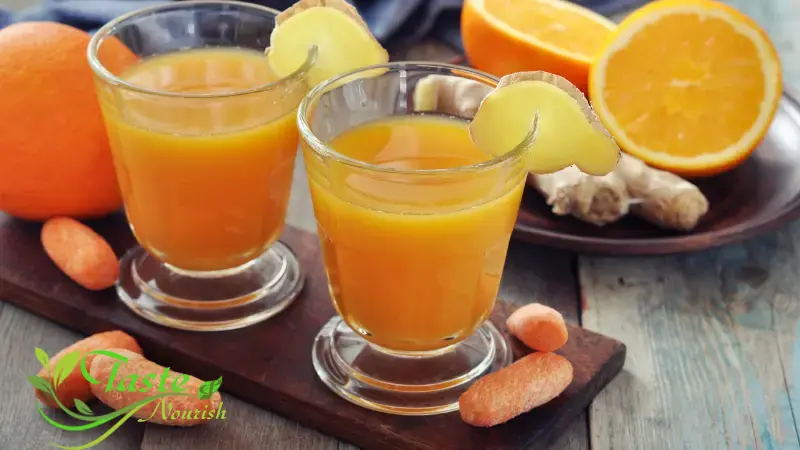
Carrot juice contributes carotenoids, including beta-carotene, and softens the sharpness of orange. In a blend, the nutrient profile shifts toward carotenoids, and sweetness depends on the ratio. As with other blends, there is little research on the combination itself, so benefits should be inferred from the ingredients rather than promised. Our guide to orange and carrot juice blends covers benefits, nutrition, and recipes in more depth.
Frequently Asked Questions
How much orange juice can children drink?
The American Academy of Pediatrics recommends no juice for children under 1 year and, at most, 4 fl oz (120 mL) daily for ages 1 to 3. Its limits rise to 4 to 6 fl oz for ages 4 to 6 and 8 fl oz (240 mL) for ages 7 to 18. The AAP favors whole fruit for older children because it provides fiber and less sugar than juice.
Is there a best time to drink orange juice?
The research reviewed here does not identify a best time of day, so choose based on how it sits with you. Having it with a meal works well on two counts: the American Dental Association advises eating acidic foods such as citrus as part of a meal, and the vitamin C pairs with plant-based iron. If juice on an empty stomach triggers heartburn, take it with food or skip it.
Does cooking with orange juice destroy its vitamin C?
Partly, yes. Vitamin C is water soluble and destroyed by heat, so simmering juice into a glaze reduces what survives. Use glazes and sauces for flavor, and rely on raw juice or whole fruit if vitamin C is the goal.
Can you freeze orange juice?
Yes, in a container with some headspace, since liquid expands as it freezes. Thaw it in the refrigerator and shake or stir, because it may separate and the flavor may change slightly. Freezing does not make questionable juice safe, so start with juice that has been handled properly.
Bottom Line
My practical take is that orange juice is a fine part of a varied diet and a poor substitute for whole fruit. I’d buy 100% juice, pour a small glass with a meal, and keep oranges in the fruit bowl for everything else.
Conclusion
If you enjoy orange juice, there is no need to give it up, and no need to treat it as a health product either. The sensible next step is to check your carton for added sugars and your medications for interactions, then decide how much juice earns its place in your day. Whatever you choose, the orange juice benefits are best captured in small, mealtime amounts.
Explore Orange Juice by Topic
- Orange and carrot juice benefits and recipes: What carrot adds to orange juice, with nutrition notes and blended juice recipes.
- Orange juice with pulp: homemade method: A homemade juice recipe and method that keeps the pulp in the glass.
- Blood orange juice at home: Recipe and method for juicing blood oranges at home.
- Mandarin orange juice recipe: A recipe for turning mandarins into fresh juice.
- Sparkling orange juice recipe: A simple recipe for fizzy orange juice made with carbonated water.
- Lighter diet orange juice: A recipe for a lighter version of orange juice.
- Pineapple and orange juice blend: A tropical two-juice recipe combining pineapple and orange.
- Orange and mango juice blend: A recipe that blends orange juice with mango.
This article offers general nutrition information and is not medical advice. If you have diabetes, kidney disease, a food allergy, or take prescription medication, check with your doctor, pharmacist, or a registered dietitian before changing how much juice you drink.