
Do Bell Peppers Change Color? 5 Fascinating Facts About Ripening
Do Bell Peppers Change Color? 5 Amazing Facts About Green, Red & Yellow Peppers
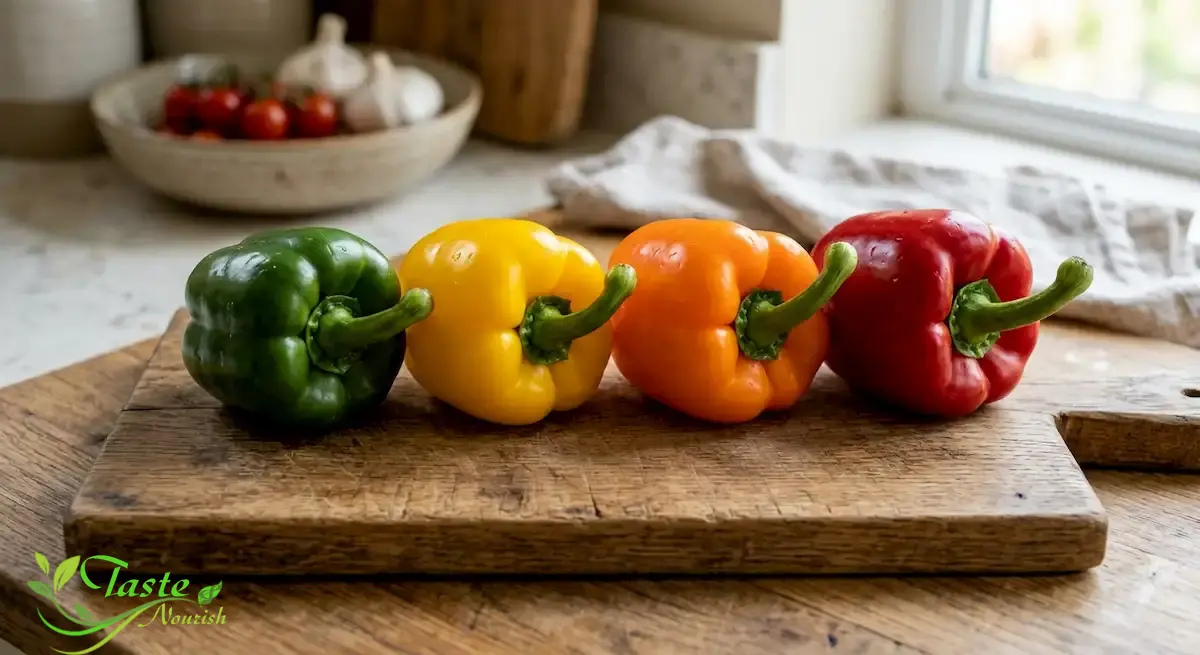
You bring home a green pepper, and a week later a red one sits beside it at the store for twice the price. Do bell peppers change color, or are they different vegetables? The answer depends on the variety, how long the pepper stayed on the plant, and whether it began ripening before it was picked. Here is how green, red, yellow, and orange peppers are related, what you can and cannot ripen on your counter, and why the green ones cost less.
Quick Answer: Do Bell Peppers Change Color?
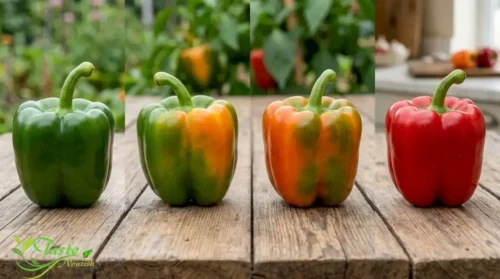
Yes. Do bell peppers change color? Every bell pepper starts green. On the plant, most varieties ripen to red, yellow, orange, or another mature color as chlorophyll breaks down and carotenoid pigments build up. Variety sets the final color: yellow and orange varieties usually stay yellow and orange, and a few stay green. Color change is tied to the plant. A uniformly green pepper picked at full size usually will not turn red on the counter, while a pepper that has already started to color can keep going if it is held warm.
How a Bell Pepper Changes Color
What happens inside the pepper
Every bell pepper fruit is green at first and ripens to a color that depends mostly on its variety, according to University of Maryland Extension. The green comes from chlorophyll. Plant biochemists at Ruhr University Bochum mapped ripening in bell peppers (Capsicum annuum) at the protein level. They describe a shift from fruit that photosynthesizes and is rich in chlorophyll and starch to fruit that no longer photosynthesizes and is rich in carotenoids, as explained in their university press release. In plain terms, the green pigment is taken apart and yellow, orange, or red pigments take its place.
Which pigments appear depends on the variety. Mississippi State University Extension notes that lutein and zeaxanthin are found in green peppers, violaxanthin in yellow ones, and capsanthin is what makes fully mature bell peppers red.
How long the color change takes
Timing is easiest to follow in one place. The figures below come from different extension sources and start counting at different points, so read each row on its own.
| Stage | Typical timing | What it depends on |
|---|---|---|
| Transplant to mature green | 70 to 80 days | Variety |
| Mature green to full color | 2 to 3 additional weeks | Variety |
| Flowering to full color (red, yellow, orange) | 35 to 45 days | Temperature and variety |
The first two rows come from University of Maryland Extension, which counts from transplanting. The third comes from Utah State University Extension, which counts from the flower. Because they begin at different points, they do not contradict each other. If you grow your own, expect colored fruit to arrive weeks after green fruit from the same plant is ready.
What changes besides color
Flavor shifts along with color. Mississippi State University Extension says peppers get sweeter as they ripen: green is slightly bitter and the least sweet, and red is the sweetest. Virginia Tech Extension adds that most varieties allowed to mature on the plant turn red, sweeten, and gain vitamin A and C. The nutrition section later in this article puts a few USDA numbers on that.
Why Bell Peppers Come in Different Colors
Two separate things produce the rainbow in a produce bin, and mixing them up causes most of the confusion. One is ripeness, meaning how long the fruit has stayed on the plant. The other is variety, meaning what the pepper is genetically set to become. Mississippi State Extension puts it the same way: variety and time on the plant together determine a bell pepper’s color and ripeness.
| Factor | What it controls | What it means for you |
|---|---|---|
| Ripeness | Whether the pepper is still green or has started to color | One plant can carry green and colored fruit at the same time |
| Variety | The mature color: red, yellow, orange, brown, white, or green | A ripe yellow pepper is not a red pepper that stopped early |
| Growing conditions | How quickly color develops | Time to full color depends on temperature as well as variety |
Are bell peppers the same plant?
At the species level, mostly yes. The Ruhr University researchers identify bell peppers as Capsicum annuum, and University of Maryland Extension says hot peppers are mostly in that same species as sweet types. Same species does not mean same plant, though. A red-ripening variety and a variety that stays green at maturity are different cultivars, which is why seed catalogs list them separately.
Do Bell Peppers Change Color the Same Way in Every Variety?
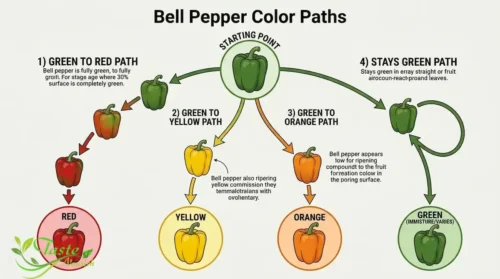
No. Green to red is the textbook path, and Mother Earth News notes that varieties maturing to red far outnumber those maturing to orange or yellow. The range is wider than that, though. Mississippi State Extension lists yellow, orange, red, and purple as common mature colors and mentions varieties that finish nearly white or almost black. University of Maryland Extension’s list of ripe colors includes brown and green. Genetics research on pepper fruit explains why: the mature color of a cultivated pepper is controlled by several genes, and domestication produced yellow, orange, brown, and white ripe fruit.
| Color path | Where it shows up | What it means at the store |
|---|---|---|
| Green to red | The most common path | A green pepper may be an unripe pepper of a red-ripening variety |
| Green to yellow or orange | Yellow and orange varieties | A ripe yellow or orange pepper is unlikely to turn red later |
| Green to purple, brown, or nearly white or black | Some varieties | Harvest color may not match the supermarket norm |
| Stays green | Varieties that are still green when ripe | The pepper can be ripe even though it never colored |
Because paths vary, a plant or seed tag predicts a pepper’s final color far better than its shade on any single day.
Are green bell peppers just unripe red peppers?
Sometimes, and you cannot tell by looking. Mississippi State Extension says green bell peppers appear first and are the least ripe. The Ruhr University plant biochemist quoted in the press release says the green peppers common in supermarkets are unripe. Illinois Extension draws a useful line: green bell varieties are usually picked when fully grown and firm, while colored varieties can be harvested green or left to ripen to red, yellow, orange, or brown.
So a green pepper is an unripe pepper of some variety. Often it would have ripened to red, sometimes it was bred for another color, and occasionally it is a variety that stays green. A red pepper is a green pepper that finished ripening, not one that went past ripe.
Do yellow and orange bell peppers turn red?
It depends on the variety. Research on pepper genetics reports that the yellow ripe-fruit color is recessive to red and linked to the gene for capsanthin-capsorubin synthase, the enzyme behind the red pigments. When that gene is not working, the pepper cannot make red pigment and ripens yellow. A yellow or orange pepper from the store is therefore usually a finished pepper of a yellow or orange variety, not a red one in waiting.
Some pepper types do pass through yellow and orange on the way to red. Mother Earth News gives the sweet banana pepper as an example. This is one more reason to rely on the variety label rather than guess from color.
Do green peppers turn yellow?
Some do. A green pepper of a yellow-ripening variety will yellow on the plant. Off the plant, the odds drop. A New Mexico State University Extension specialist looked at exactly this question and noted that peppers are classified as non-climacteric, so green bell peppers kept on a windowsill should not be expected to turn yellow.
Do Bell Peppers Change Color After You Pick Them?
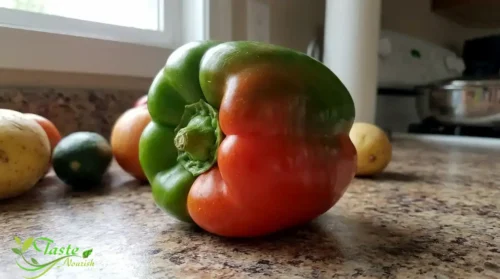
Partly, and the dividing line is whether the pepper had started to color. Bell peppers are non-climacteric: they do not ripen after harvest the way tomatoes and bananas do, and they produce very little ethylene, according to the UC Davis Postharvest Technology Center. The Ruhr University researchers make the same contrast with tomatoes. University of Maryland Extension states that peppers do not ripen further after harvest.
UC Davis adds an important exception. To accelerate color change, it recommends holding partially colored peppers at 68 to 77°F (20 to 25°C) with high humidity, above 95 percent. Mother Earth News similarly says peppers picked just as they begin to change color keep ripening indoors. These statements fit together: a pepper with a blush may finish, and a uniformly green one probably will not.
How to ripen a partially colored pepper on the counter
- Look for the first sign of color. A streak or patch of yellow, orange, or red on the skin means ripening has begun. A glossy, evenly green pepper has not started and is unlikely to change.
- Keep it warm. Aim for 68 to 77°F (20 to 25°C), the range UC Davis gives for color development in partially colored peppers. A kitchen counter away from the stove is usually close.
- Keep the pepper whole and keep humidity high. UC Davis ties firmness directly to water loss. An uncut skin loses water slowly, and a loosely closed perforated bag can help hold humidity.
- Skip the banana. UC Davis says bell peppers respond very little to ethylene, so a ripe banana or tomato in the bag is unlikely to help.
- Check daily and stop when the color suits you. If nothing has changed after several days, use the pepper as it is. A green pepper is still a perfectly good pepper.
Where the refrigerator fits
Use the refrigerator after the color is where you want it, not before. UC Davis reports that storage at 45°F (7.5°C) gives peppers the longest shelf life, and that chilling injury begins to appear after about two weeks at 41°F (5°C). Colored peppers are less sensitive to chilling than green ones. University of Minnesota Extension says peppers keep for a week or more in the refrigerator but can develop pitted skin after too long there.
How to Choose a Pepper Color for the Job
Color tells you the ripeness stage, but firmness tells you the condition. Utah State University Extension describes the best peppers as firm, plump, and smooth-skinned, so check those first and then pick a color for how you plan to use it.
| Color | Flavor | Where it works |
|---|---|---|
| Green | Slightly bitter, the least sweet | Stir-fries, stuffed peppers, and cooked sauces where a savory edge helps |
| Yellow and orange | Sweeter than green, with variety differences | Raw in salads and on vegetable trays |
| Red | The sweetest | Roasting, raw dipping, and dishes where sweetness should lead |
Ripe red peppers are a natural fit for roasting, which concentrates their sweetness. Our roasted red pepper and feta dip shows one way to put them to work.
Raw, colorful pieces also earn their keep on a snack spread. For ideas on assembling one, see the appetizer platter ideas article, or try the no-cook veggie and hummus bites.
On the Plant: Pick Green or Wait for Color?
Both choices are legitimate. Virginia Tech Extension advises harvesting sweet peppers while still green for maximum yield, and University of Minnesota Extension says you do not need to wait for red because many varieties have good quality when green. Waiting buys sweetness and, per Virginia Tech, more vitamin A and C.
The cost of waiting is time. Colored varieties need the extra two to three weeks described earlier, and fruit that stays on the plant longer has more chances to be damaged. A University of Minnesota Extension horticulturist made that point to Marketplace in a report on pepper pricing.
To get color sooner, check the “days to maturity” estimate in the seed or plant description, which University of Minnesota Extension recommends, and favor earlier varieties. Utah State Extension notes that time to full color depends on temperature as well as variety.
Why Green Bell Peppers Cost Less
Green peppers cost less mainly because they take less time and yield more per plant. Virginia Tech’s advice to harvest green for maximum yield is the grower’s side of that. The Marketplace report above explains that longer time on the plant raises the chance of damage, which can reduce yield and push the price up.
The Counter, in its reporting on pepper economics, gives an illustration: a plant picked regularly for green fruit might produce ten peppers where one allowed to ripen fully might yield only three or four. Treat that as an example, not a rule. Prices also vary by region, season, and variety, and in some markets the colored peppers are the bargain.
The same reporting notes that picking green fruit regularly encourages the plant to keep flowering. That is part of why green peppers dominate bins: the economics favor them even though many of them would have ripened to another color.
Troubleshooting Color Problems
A green pepper stays green on the counter
The pepper had not started to ripen when it was picked, and bell peppers do not ripen after harvest the way climacteric fruit does. Use it as a green pepper. Next time, choose one with a visible blush if you want to finish it at home.
The pepper colors up but turns soft or wrinkled
Water loss is the cause. UC Davis notes that peppers held above 45°F (7.5°C) lose more water and shrivel, and room temperature is well above that. Stop warm ripening as soon as the color suits you and move the pepper to cooler storage. If it is already soft, cook it rather than serving it raw.
Pitting, water-soaked spots, or a dark seed cavity after refrigeration
These are the chilling-injury symptoms UC Davis describes, along with decay, and green peppers are more sensitive than colored ones. Prevent it by using peppers within days rather than weeks. If a pepper is soft, slimy, or moldy, discard it.
Common Mistakes to Avoid
- Leaving every pepper on the plant to color. An Ask Extension answer warns that this cuts off further blossoming and fruit set, so pick some peppers green.
- Waiting for color past the first frost. University of Maryland Extension notes that frost injures top growth. Utah State Extension advises gathering mature green and slightly colored fruit at season’s end, and you can finish those indoors with the counter method above.
- Buying by color alone. A vivid red pepper that is wrinkled or soft is worse than a firm green one, so check firmness first.
Bell Pepper Nutrition at a Glance

These approximate values are per 100 g of raw sweet pepper, from USDA FoodData Central entries for green sweet pepper and red sweet pepper. One cup of sliced pepper weighs 92 g, which is roughly 18 calories for green and 24 for red.
| Per 100 g, raw | Green | Red |
|---|---|---|
| Calories | 20 | 26 |
| Protein | 0.9 g | 1.0 g |
| Carbohydrate | 4.6 g | 6.0 g |
| Fat | 0.2 g | 0.3 g |
| Fiber | 1.7 g | 2.1 g |
The biggest gap is vitamin C: about 80 mg per 100 g in green and 128 mg in red. Variety and ripeness change these numbers, so check the label on what you bought.
Do Bell Peppers Change Color?: FAQs
Can bell peppers be purple, brown, or white, and do those colors change?
Yes, some varieties are. Virginia Tech Extension shows miniature bell peppers that change from purple to orange as they mature, and Mississippi State Extension mentions varieties that mature to nearly white or almost black. The color a pepper shows at harvest may therefore be a stage rather than its final shade.
Do hot peppers such as jalapeños change color the same way?
They follow the same pattern of ripening from green to a mature color, but they are often eaten earlier. University of Minnesota Extension says jalapeños can be used green and Hungarian wax peppers when yellow. Illinois Extension notes that hot varieties are hottest when allowed to ripen fully, and UMass Extension adds that hot peppers generally become more pungent as they mature.
Is a red pepper with green patches ripe?
It is partly ripened and fine to eat. Expect a flavor likely somewhere between a green and a fully red pepper. If it is still firm and you want more color, the counter method above applies.
Does a sunny windowsill help peppers change color?
Light is not the trigger. The New Mexico State University Extension column notes that fruit do not need light to ripen. Warmth and humidity are the factors UC Davis lists for color development in partially colored peppers.
Can a pepper get too ripe on the plant?
Quality does decline eventually. Utah State Extension recommends harvesting peppers when they are fully colored but still firm, so once the color is even and the skin is smooth, it is time to pick.
My Bottom Line
I treat a pepper’s color as a ripeness label and buy the color I want to eat. I would not count on a fully green pepper to turn red on the counter, and I would only try to finish one that already shows a blush.
Key Takeaways: Do Bell Peppers Change Color?
- Do bell peppers change color? Yes. Every bell pepper starts green, and most ripen on the plant to red, yellow, orange, or another variety-specific color.
- Variety sets the finish line. Red is the most common, yellow and orange varieties usually do not go red, and some peppers stay green when ripe.
- A green pepper with no blush rarely ripens after picking. A partly colored one can keep going at 68 to 77°F (20 to 25°C) with high humidity.
- Ripe peppers are sweeter, and red has more vitamin C than green in USDA data, about 128 mg versus 80 mg per 100 g.
- Green peppers cost less mainly because they are harvested sooner and let the plant keep producing.
Conclusion
Do bell peppers change color? They do, but the plant does the work, and variety decides where the color ends up. Read the color you buy as a finished product, look for a blush if you want to ripen one at home, and use warmth rather than refrigeration to finish it.
Explore Peppers by Topic
- Roasted pepper and feta dip: A dip recipe built around roasted red peppers and feta.
- No-cook veggie and hummus appetizer: A no-cook appetizer that pairs raw vegetables with hummus.
- Game day appetizer platter ideas: Appetizer platter ideas for game day gatherings, to pair with colorful vegetables.