Raw chicken spoils faster than most other meats, and it’s one of the leading causes of foodborne illness when it’s mishandled. Knowing how to tell if chicken is fresh — both at the grocery store and right before you cook it — protects your family and keeps you from wasting money on meat that’s already turned. This guide walks through exactly what to look for, smell, and feel, plus what the dates on the package actually mean.
The fastest way to tell if chicken is fresh is to check three things: color, smell, and texture. Fresh raw chicken should be a pale pink to slightly yellowish color, have little to no odor, and feel slightly tacky but not slimy or sticky. If the chicken smells sour, sulfur-like, or “off” in any way, has a gray or greenish tint, or feels slippery and slick to the touch, it has likely spoiled and should be thrown out rather than cooked.
Key Takeaways
Learning how to tell if chicken is fresh comes down to checking color, smell, and texture together — not just one factor alone.
Fresh raw chicken has a mild smell or none at all; any sour, ammonia-like, or sulfur odor means it should be discarded.
A slightly tacky surface is normal, but slimy, sticky, or filmy chicken is a clear sign of spoilage.
Sell-by and use-by dates are useful guides, but they don’t override what your senses tell you.
When in doubt, throw it out — tasting or cooking questionable chicken to “test” it is never safe.
What You Need to Know Before You Buy or Cook Chicken
Raw chicken is one of the more perishable proteins in your fridge. Even when it’s been kept cold the entire time, bacteria like Salmonella and Campylobacter can be present without changing how the chicken looks or smells, which is why proper cooking temperature matters just as much as freshness checks.
Freshness signs tell you whether the meat has started to break down and spoil — they don’t guarantee the chicken is free of harmful bacteria, according to the CDC’s guidance on foodborne germs and illness.
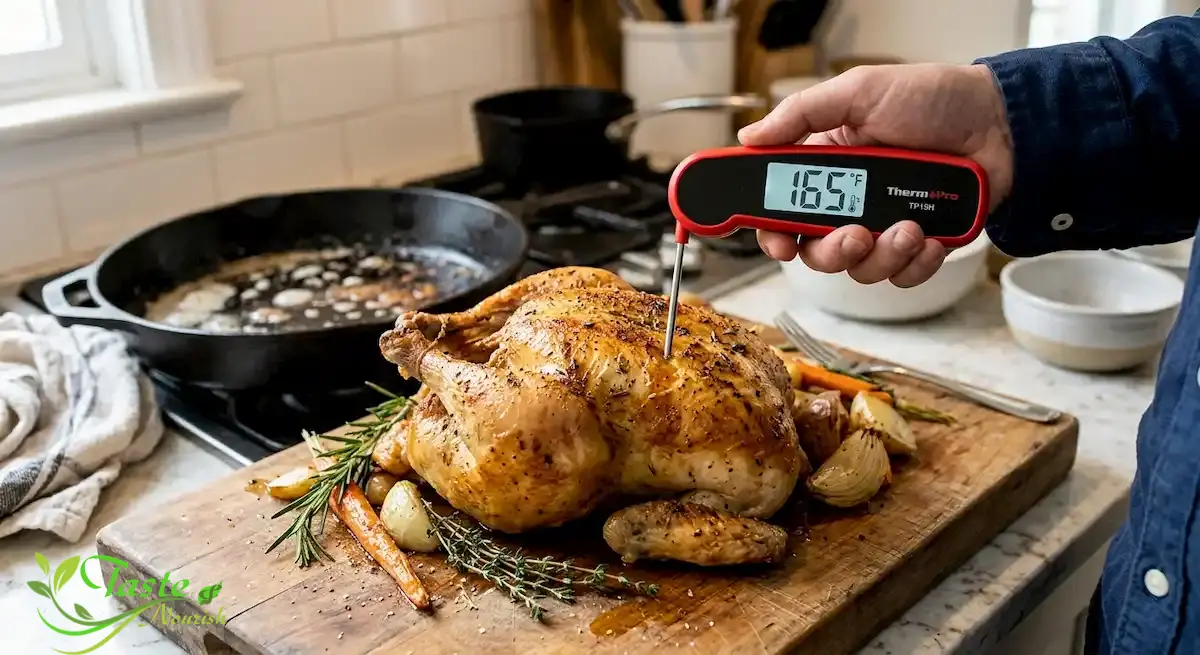
That means freshness checks and food safety are two related but separate things. A freshness check tells you whether the chicken is still good to cook. Safe internal cooking temperature is what actually kills the bacteria that can make you sick.
Signs of Fresh Raw Chicken
Color
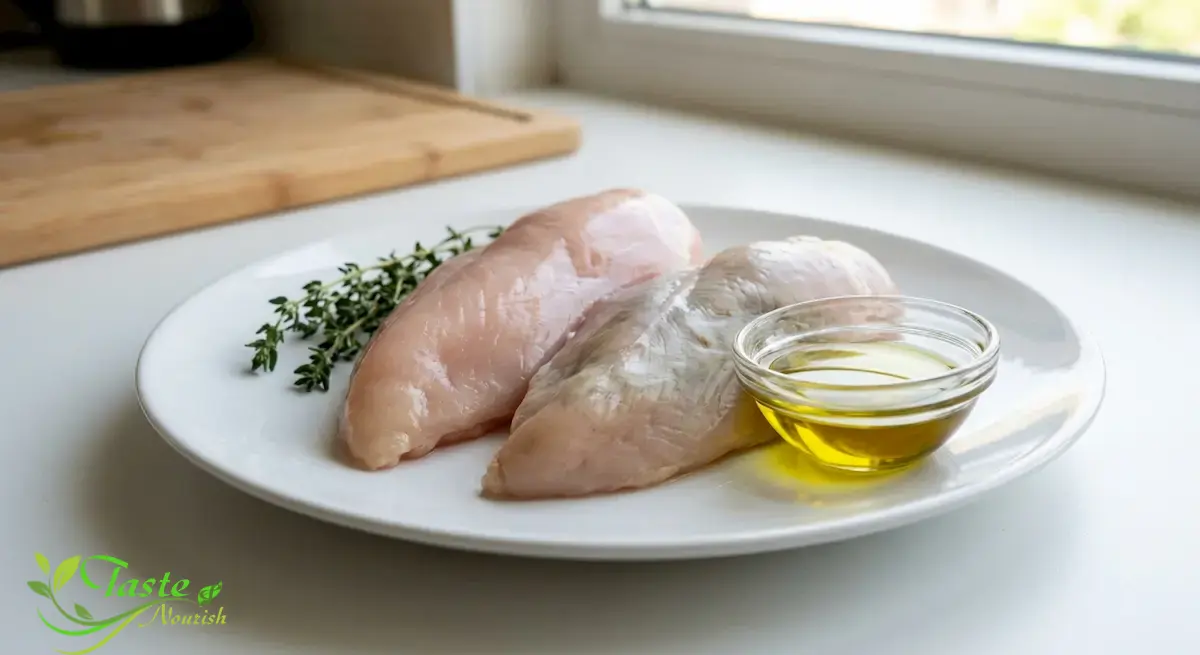
Fresh raw chicken should look pale pink, sometimes with a slightly yellowish tint from the fat. The color can vary a little depending on the chicken’s diet and breed, so a bit of variation from package to package is normal. What’s not normal is chicken that looks gray, has greenish patches, or has dark, dull spots — these are signs the meat is starting to break down.
Smell
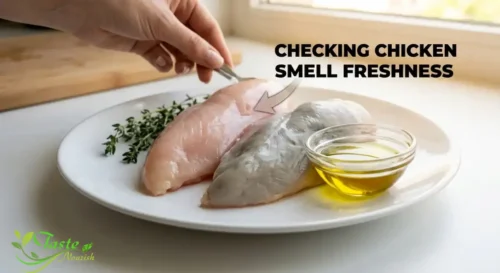
This is often the most reliable of all the signs of fresh raw chicken. Fresh chicken has a very mild smell, or almost no smell at all. If you open the package and immediately notice a sour, sulfurous, or ammonia-like odor, the chicken has spoiled. Trust your nose here — spoilage odors in chicken are usually unmistakable once you catch a whiff.
Texture
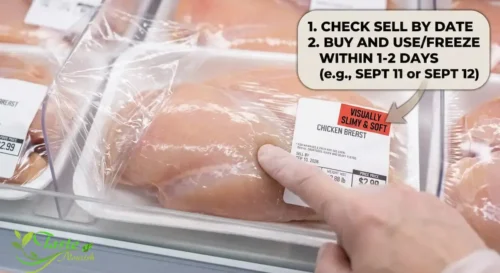
Fresh chicken should feel slightly moist and a little tacky, almost like the surface of a ripe piece of fruit. What you don’t want is chicken that feels slimy, sticky, or leaves a film on your fingers. That slick texture is caused by bacterial growth on the surface and is one of the clearest signs the meat is past its prime.
Packaging
Before you even open the package, check it for excess liquid, a puffed-up or bloated look, or any tears. A little natural liquid (sometimes tinted pink) is normal, but a package that’s swollen or leaking heavily can indicate bacterial growth has produced gas, which is a spoilage sign.
How to Tell If Chicken Is Fresh When Buying at the Store
Good fresh chicken buying tips start before the chicken even leaves the store shelf. A few extra seconds of checking can save you from bringing home meat that’s already close to spoiling.
Check the temperature of the display case. Raw chicken should be stored in a case that feels cold, ideally at or below 40°F. If the meat case feels warm or the chicken feels less than cold to the touch through the packaging, skip it.
Look at the color through the package. Hold the package up to the light and check for the pale pink color described above. Avoid packages where the chicken looks grayish or has visible dark spots.
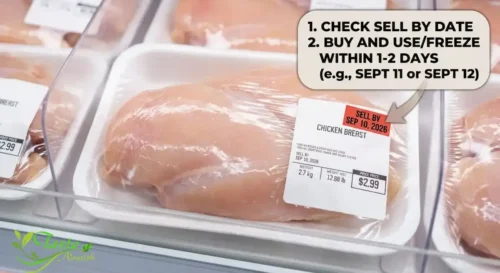
Check the sell-by or use-by date. Choose the package with the latest date available, especially if you don’t plan to cook it that day.
Inspect the packaging itself. Avoid packages that are torn, leaking excessively, or appear puffed up, as this can trap bacteria-produced gas inside.
Pick up the package and check for excess liquid. A little liquid is normal, but a package sitting in a large pool of liquid may have been sitting out or improperly refrigerated.
Put chicken in a separate bag at checkout. This keeps raw juices from dripping onto other groceries and prevents cross-contamination on your way home.
How to Check Chicken Freshness at Home Before Cooking
Even chicken that looked fine at the store can change once it’s been in your fridge for a few days. Before you cook it, do a quick check:
Take the chicken out of its packaging over the sink.
Look at the color under good light, checking for any gray, green, or unusually dark patches.
Smell it directly, since packaging can mute odors.
Touch the surface to check whether it feels tacky (normal) or slimy (spoiled).
Check the sell-by or use-by date on the label as a secondary reference point, not the only factor.
If it passes all four checks — color, smell, texture, and date — it’s safe to cook. If even one of these seems off, it’s better to discard it than to risk it.
Understanding Sell-By, Use-By, and Best-By Dates
These dates confuse a lot of home cooks, and they don’t all mean the same thing:
Sell-by date — This tells the store how long to display the product for sale. It’s a guide for retailers, not a strict safety deadline for you as the consumer.
Use-by date — This is the manufacturer’s estimate of when the product will be at peak quality. It’s the most relevant one to pay attention to for chicken.
Best-by date — This refers to flavor and quality, not safety, and is used less often on raw poultry than on packaged or shelf-stable foods.
None of these dates are a guarantee of safety on their own. According to FoodSafety.gov’s cold food storage guidance, raw chicken should be cooked or frozen within one to two days of purchase regardless of the date printed on the package, because bacteria can grow even before that date passes if the chicken hasn’t been kept consistently cold.
How to Tell If Chicken Has Gone Bad
While the freshness checks above tell you chicken is good, it’s just as important to recognize when it’s crossed over into spoiled territory. Signs that raw chicken is no longer safe to cook include:
A strong sour, sulfur, or ammonia-like smell
Gray, green, or dull discoloration across large portions of the meat
A slimy or sticky film on the surface that doesn’t wash off easily
A puffed-up or bloated package, which can indicate gas from bacterial growth
Chicken that has been left at room temperature for more than two hours (or one hour above 90°F)
If you notice any of these signs, throw the chicken away. Never taste raw or questionable chicken to check if it’s safe — some of the bacteria responsible for foodborne illness, including Salmonella, don’t change the taste, smell, or appearance of the meat at all, according to the USDA’s Chicken from Farm to Table guide.
How to Store Chicken to Keep It Fresh Longer
Once you’re home, how you store chicken has a direct effect on how long it stays fresh.
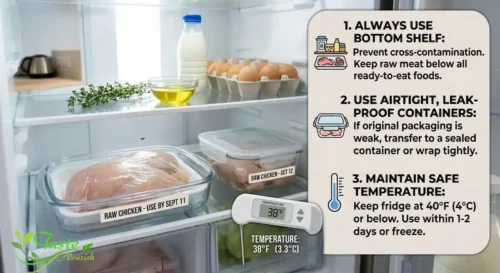
Refrigerator: Store raw chicken at 40°F or below and plan to cook it within one to two days.
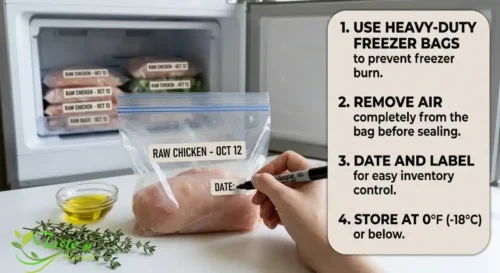
Freezer: If you won’t cook it within that window, freeze it. Chicken kept at 0°F stays safe indefinitely, though quality is best within about nine months for whole chicken and about a year for cut-up pieces, per USDA guidance on safe cold storage.
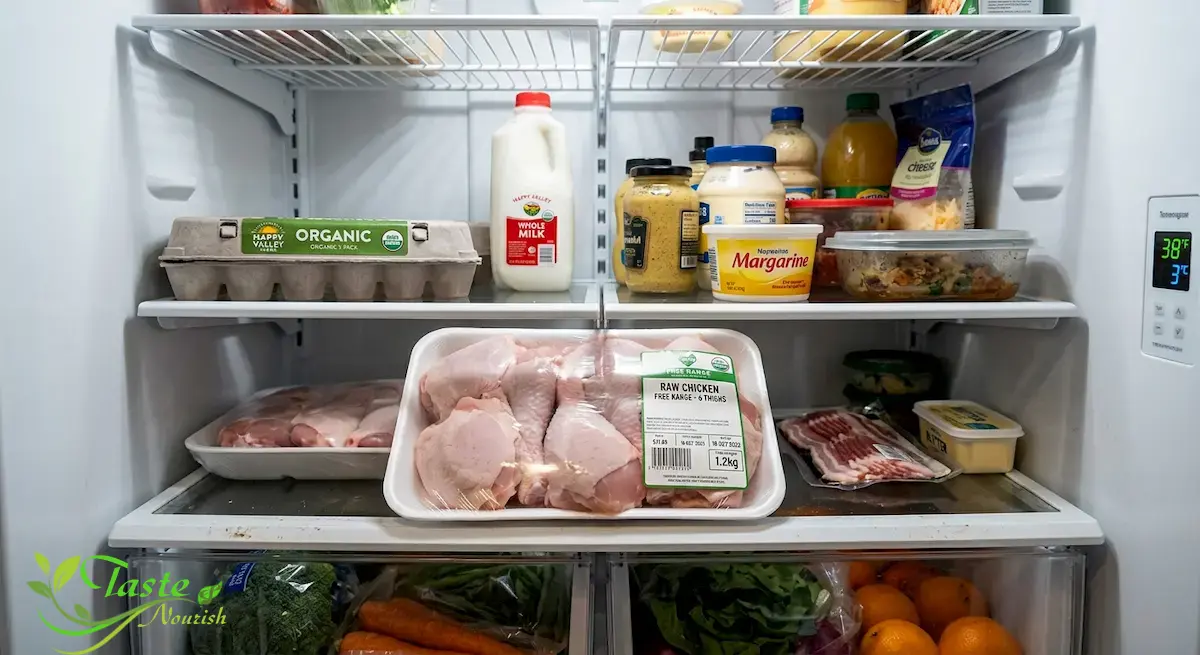
Container placement: Keep raw chicken on the bottom shelf of the fridge in a container or on a plate to catch any drips, preventing juices from contaminating other foods.
Original packaging: It’s fine to store chicken in its original packaging in the fridge short-term, but if you’re freezing it, rewrap it in freezer paper or a freezer bag with the air pressed out to prevent freezer burn.
Common Mistakes to Avoid
Relying only on the date on the package. A date within range doesn’t guarantee freshness if the chicken hasn’t been kept cold consistently. Always check color, smell, and texture too.
Rinsing raw chicken before checking or cooking it. Rinsing doesn’t remove bacteria and instead splashes contaminated water around your sink and counters.
Ignoring a slightly off smell. A faint sour note usually gets stronger, not weaker, once cooked. If it smells even slightly off raw, don’t cook it hoping heat will fix it.
Leaving chicken out to thaw on the counter. This lets the outer layer sit in the temperature danger zone long enough for bacteria to multiply, even if the inside is still frozen.
Buying chicken that’s been sitting on top of the display case ice. Chicken should be nestled in the cold section, not resting where it’s exposed to warmer air.
Judging freshness by color alone. Slight color variation is normal and doesn’t always mean spoilage, just as normal-looking chicken doesn’t always mean it’s bacteria-free.
Storing chicken on a high fridge shelf. This risks drips contaminating ready-to-eat foods below it.
Expert Kitchen Tips
Buy chicken last during your grocery trip and head straight home, especially in warm weather, to limit the time it spends outside refrigeration.
Keep a cooler bag in your car for grocery trips longer than 30 minutes, particularly during summer months.
If a package feels warmer than the rest of the meat case, don’t buy it, even if the date looks fine.
When freezing chicken, label the bag with the date so you’re not guessing later how long it’s been stored.
Use separate cutting boards for raw chicken and produce to avoid cross-contamination, regardless of how fresh the chicken looks.
If you’re unsure about a smell, step away and come back to it after a minute — strong spoilage odors are usually confirmed on a second check, not just imagined.
How to Tell if Chicken Is Fresh FAQs
How do you tell if chicken is fresh without cutting into it?
Check the package for excess liquid or bloating, look at the color through the plastic, and smell it once opened. These three checks work well even before you cut or separate the pieces.
What is the best way to check fresh chicken buying tips at the store?
Check the temperature of the display case, choose the package with the furthest-out date, and avoid any packaging that’s torn, leaking, or puffed up.
Does chicken need to smell bad to be spoiled?
Not always. Some bacteria that cause foodborne illness don’t produce a noticeable smell or taste change, which is why proper storage and cooking temperature matter even when chicken smells and looks normal.
How long does raw chicken last in the fridge?
Raw chicken should be cooked or frozen within one to two days of purchase when stored at 40°F or below.
Can you freeze chicken to keep it fresh longer?
Yes. Freezing at 0°F keeps chicken safe indefinitely, though quality is best when whole chicken is used within about nine months and cut pieces within about a year.
Why does chicken sometimes turn gray in the fridge?
Gray or dull discoloration usually signals the early stages of spoilage caused by bacterial growth and oxidation. It’s a sign to check smell and texture closely before deciding whether to cook it.
Is it safe to cook chicken that smells slightly off if I cook it thoroughly?
No. Cooking does not remove the toxins some spoilage bacteria produce, and it won’t make chicken with an off smell safe to eat. If it smells off, discard it.
Conclusion
Checking color, smell, texture, and packaging together gives you a reliable answer whenever you’re wondering how to tell if chicken is fresh, whether you’re standing in the grocery aisle or about to cook dinner. Pair those checks with proper cold storage and safe cooking temperatures, and you’ll reduce your risk of foodborne illness while making sure you’re not throwing away chicken that was actually still good.
Hanan Abo Samra is the founder of Taste & Nourish, sharing trustworthy nutrition guidance and recipes drawn from 20+ years of hands-on cooking experience. When she's not developing new recipes, Hanan is researching the science behind everyday ingredients to bring readers practical, evidence-based guidance for a healthier lifestyle.