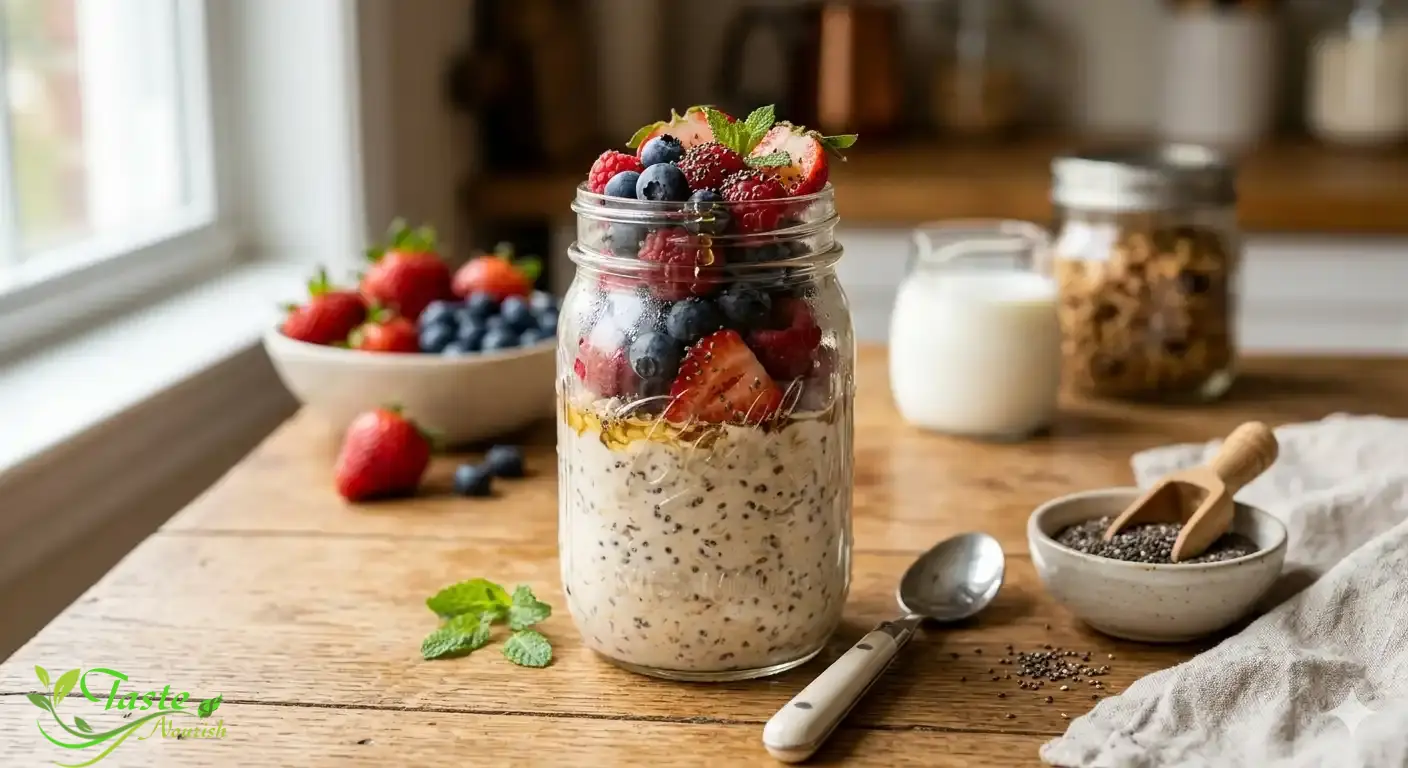

Chia Seed Overnight Oats: The Creamy, No-Cook Breakfast You Prep in 5 Minutes
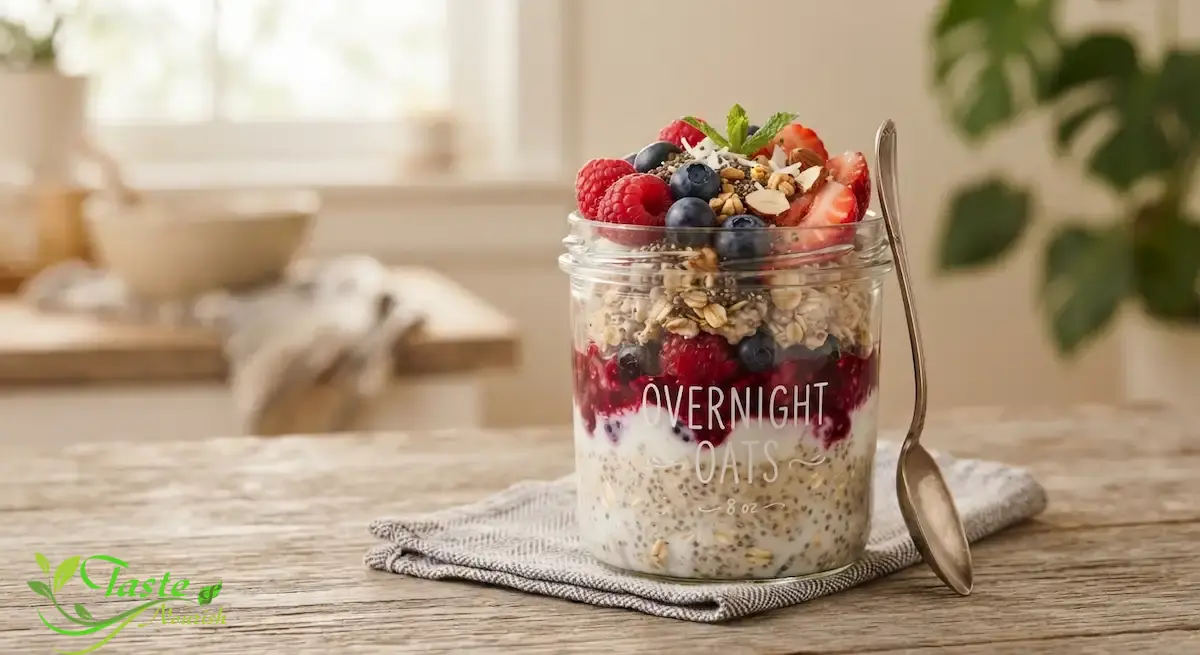
Chia seed overnight oats are the easiest make-ahead breakfast in your rotation: no stove, no timer, no standing over a pot stirring. You combine rolled oats, chia seeds, and milk in a jar the night before, and by morning the chia has thickened everything into a rich, pudding-like bowl you can eat cold, straight from the fridge. The trick isn’t the ingredient list — it’s the ratio and the timing, and getting both right is the difference between a creamy bowl and a gluey or watery one.
Quick Answer
To make chia seed overnight oats, stir together rolled oats, chia seeds, milk, and a pinch of salt in a jar, mix in your sweetener and vanilla, then refrigerate for at least 4 hours (ideally 8–12 hours overnight). The chia seeds absorb liquid and form a gel that thickens the oats into a soft, creamy texture. Stir once about 5–10 minutes after mixing to prevent the chia from clumping, then leave it covered in the fridge until you’re ready to eat.
Key Takeaways: Chia Seed Overnight Oats
- Old-fashioned rolled oats give the best texture for chia seed overnight oats — instant oats turn mushy, and steel-cut oats stay too firm without cooking.
- A ratio of roughly 1 tablespoon of chia seeds per 1/2 cup of oats and 3/4 cup of liquid produces a thick but spoonable consistency.
- Stirring twice — once right after mixing and once about 5 to 10 minutes later — keeps the chia seeds from clumping at the bottom of the jar.
- A minimum soak of 4 hours works in a pinch, but a full overnight soak of 8 to 12 hours gives the oats time to soften completely.
- Chia seed overnight oats keep well in the fridge for several days, which makes them one of the simplest breakfasts to batch-prep for the whole week.
What Makes This Different From Regular Overnight Oats?
Plain overnight oats rely on the oats themselves to soften and thicken as they sit in liquid. Adding chia seeds changes the texture entirely. Chia seeds are covered in a soluble fiber called mucilage, and when it contacts liquid, it swells into a gel within minutes.
That gel does two things: it thickens the whole jar into something closer to a pudding, and it holds the mixture together even before the oats have fully softened. The result is a creamier, denser bowl than oats alone would give you, plus a small boost of fiber, plant-based omega-3 fatty acids, and protein — USDA nutrient data lists chia seeds as a notable source of fiber, protein, and healthy fats relative to their size. Combined with the oats, a bowl like this can meaningfully contribute toward a day’s fiber intake; the Dietary Guidelines for Americans recommend adults get roughly 22 to 34 grams of fiber per day, an amount most people fall short of.
Ingredients
This makes 2 servings (about 1 heaping cup each). It scales up cleanly — just multiply everything by however many jars you need.
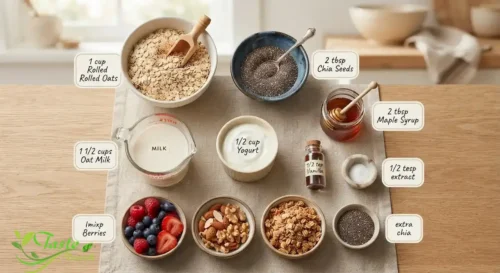
- 1 cup old-fashioned rolled oats
- 2 tablespoons chia seeds
- 1 1/2 cups milk of choice (dairy, oat, almond, or soy)
- 1/2 cup plain or vanilla yogurt (optional, for extra creaminess and protein)
- 1 to 2 tablespoons maple syrup or honey, to taste
- 1/2 teaspoon vanilla extract
- Pinch of fine salt
- Toppings: fresh fruit, nuts, nut butter, granola, or extra chia seeds
Ingredient Notes
Rolled oats: Old-fashioned rolled oats are the right choice here. They soften fully over a long soak without breaking down into mush, so you get distinct, tender flakes rather than a gluey paste. Quick oats will work if that’s what you have, but they soak up liquid faster and turn softer and slightly gummier. Steel-cut oats are too dense to soften properly without cooking and will still taste raw and chewy after an overnight soak — skip them for this recipe.
Whole oats also contain beta-glucan, a soluble fiber; the FDA has authorized a claim that soluble fiber from whole oats, eaten as part of a diet low in saturated fat and cholesterol, may help reduce the risk of coronary heart disease, though a single bowl of overnight oats won’t reach the daily amount studied on its own.
Chia seeds: Black and white chia seeds are nutritionally interchangeable and behave the same way in liquid, so use whichever you have. Because chia seeds are one of the plant-based sources of alpha-linolenic acid (ALA), an essential omega-3 fatty acid, they add nutritional value beyond just thickening the oats. There’s no good substitute for the thickening effect — ground flaxseed will add fiber but won’t gel the same way, so if you swap it in, expect a thinner, more traditional overnight-oats texture.
Milk: Any milk works, dairy or plant-based. Thicker milks like oat milk or whole milk give a richer, creamier result; thinner milks like almond milk give a lighter texture. If you’re using a very thick plant milk, you may want to start with slightly more liquid and adjust after the first stir.
Yogurt (optional): Stirring in yogurt makes the finished oats noticeably creamier and adds protein, but it’s not required. If you skip it, replace the 1/2 cup with an extra 1/4 cup of milk so the ratio of liquid to oats stays balanced.
Sweetener: Maple syrup and honey both work well and dissolve easily into cold liquid. Taste the mixture before refrigerating — cold food reads as less sweet than the same mixture at room temperature, so it’s worth erring slightly sweeter than you think you want.
How to Make Chia Seed Overnight Oats
1. Combine the dry ingredients first. In a jar or bowl, stir together the rolled oats, chia seeds, and salt. Mixing the chia seeds into the dry oats before adding any liquid helps distribute them evenly, which is the single biggest factor in avoiding clumps later.
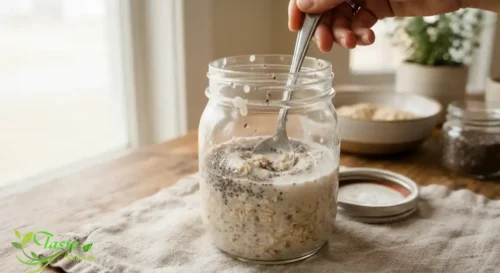
2. Add the liquid ingredients. Pour in the milk, yogurt (if using), maple syrup or honey, and vanilla extract. Stir or whisk vigorously for about 30 seconds, making sure to scrape the bottom of the jar so no dry oats or chia seeds are stuck there.
3. Let it sit, then stir again. Set the jar aside on the counter for 5 to 10 minutes. This is the window when chia seeds tend to sink and clump together before the gel has fully formed. Give it one more thorough stir at the end of this rest to break up any clumps.
4. Cover and refrigerate. Seal the jar with a lid and refrigerate for at least 4 hours, though a full overnight soak of 8 to 12 hours gives the best texture — the oats need that time to soften completely, not just the chia to gel.
5. Stir and check the consistency in the morning. The mixture should be thick, creamy, and pudding-like, holding its shape on a spoon but still easy to stir. If it’s thicker than you’d like, stir in a splash of milk until it loosens to the consistency you want.
6. Top and serve. Add your toppings just before eating, cold from the fridge, or gently warmed.
How to Get the Best Texture
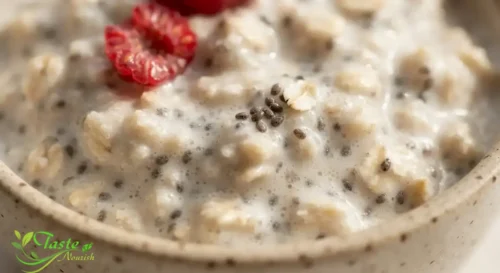
The texture of chia seed overnight oats comes down to two things happening at once: the chia gelling and the oats softening. Chia seeds do most of their thickening in the first 30 minutes, but oats need much longer — several hours — to fully soften and lose any raw, chalky bite. That’s why a jar that looks thick and “done” after an hour can still taste undercooked at the oat level. Give it the full soak time even if the texture seems ready earlier.
The other key is that first 5-to-10-minute stir. Chia seeds are denser than the liquid around them, so if you walk away right after mixing, they’ll settle and stick together in a layer at the bottom of the jar instead of gelling evenly throughout. One extra stir early on solves this completely.
How to Serve Chia Seed Overnight Oats
Chia seed overnight oats are meant to be eaten cold, straight from the fridge, which is part of what makes them such a fast breakfast. If you prefer a warm bowl, microwave it in 20-second intervals, stirring between each, until it reaches the temperature you like — it won’t scorch or curdle the way it would if you tried to cook it directly on the stove.
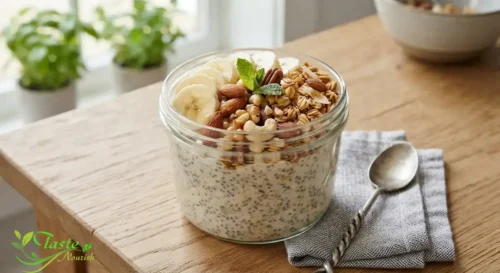
Add toppings right before eating rather than the night before. Fresh fruit, granola, and nuts all lose their texture if they sit in the liquid overnight — fruit can turn mushy or discolor, and granola softens and loses its crunch.
Toppings and Add-Ins
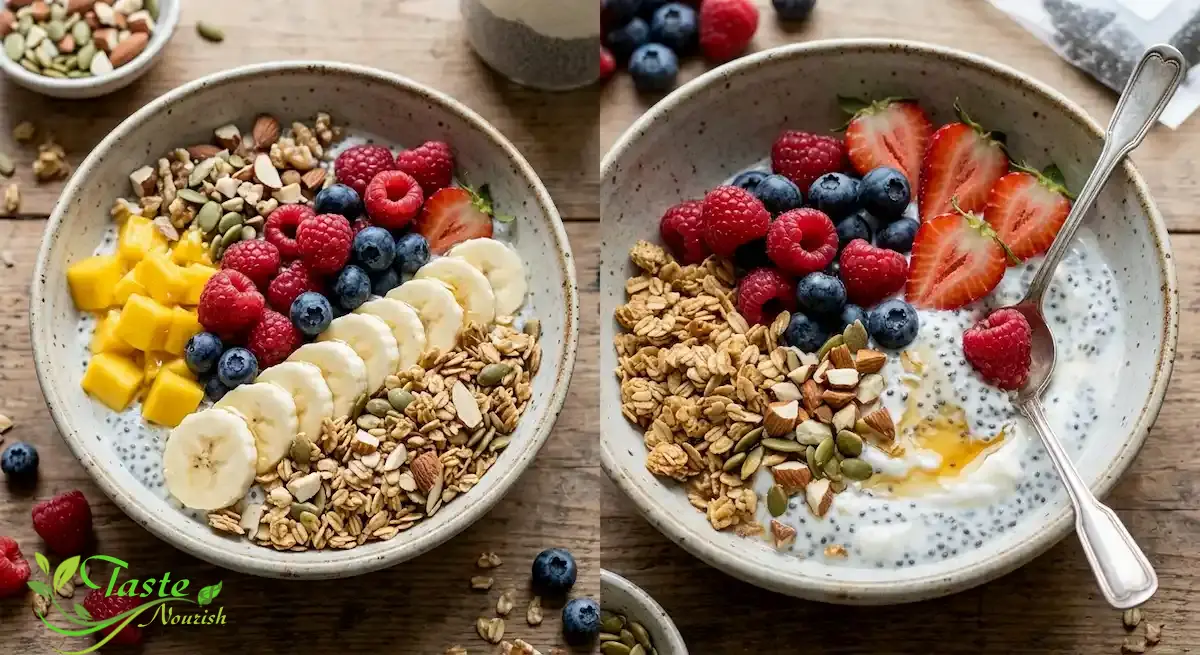
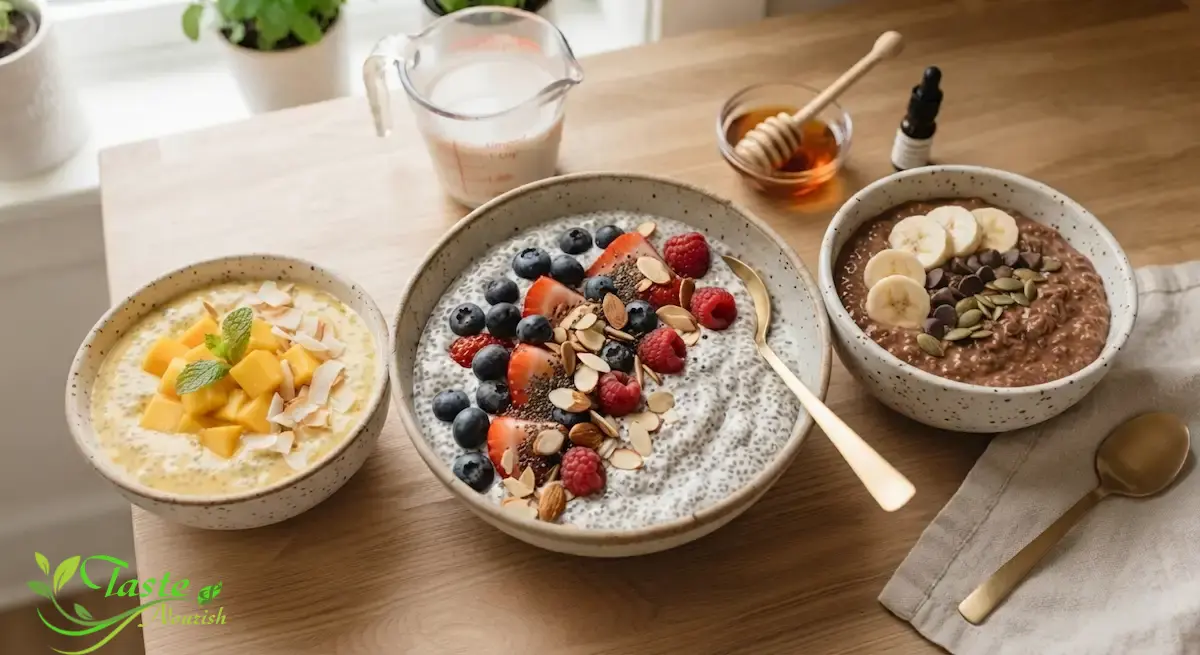
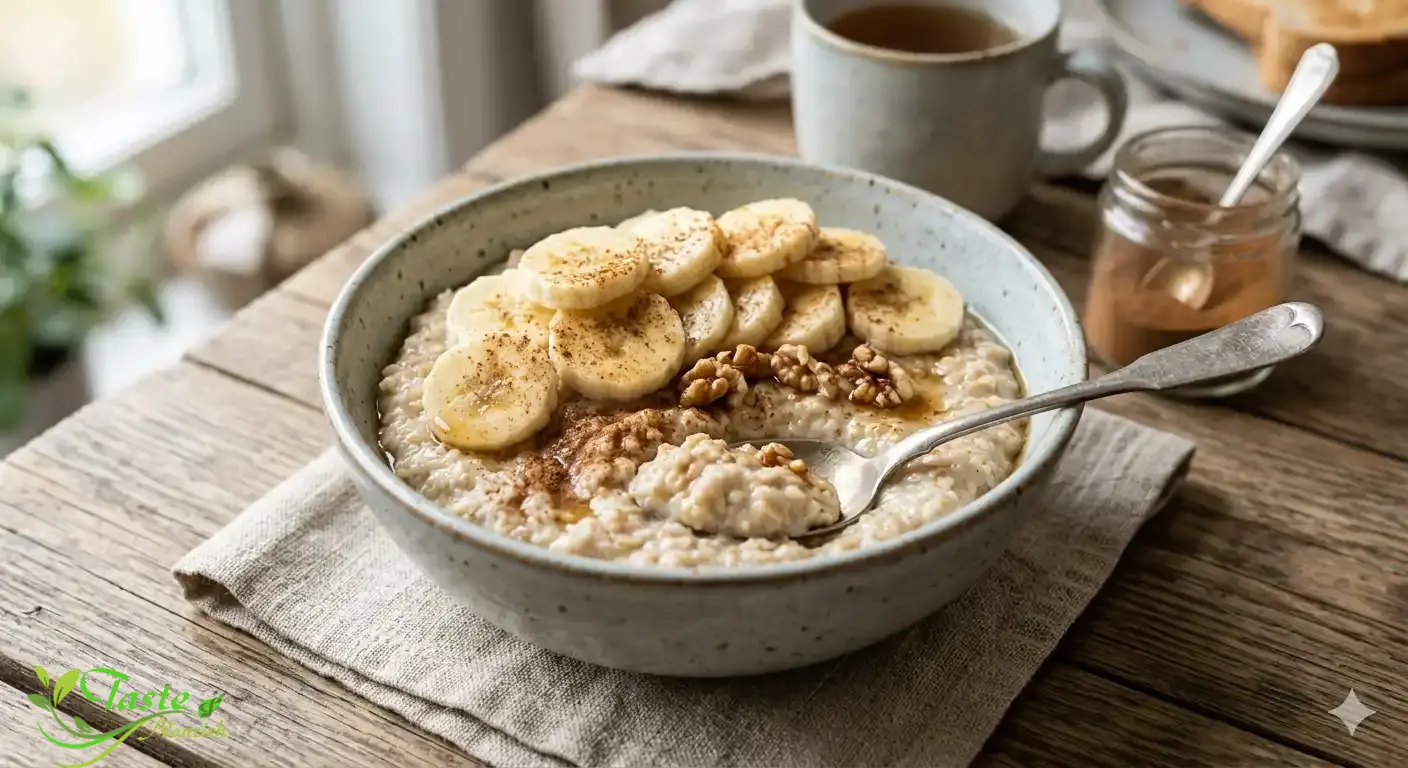
- Fresh fruit — berries, sliced banana, or diced mango add sweetness and moisture without needing more sugar in the base.
- Nuts and seeds — chopped almonds, walnuts, or pumpkin seeds add crunch to contrast the soft, creamy base.
- Nut butter — a spoonful of peanut or almond butter swirled in adds richness and a little extra protein.
- Granola — for crunch, but add it right at serving time so it doesn’t go soft.
- Cinnamon or cocoa powder — stir into the base mixture before refrigerating for a flavor variation rather than sprinkling on top.
Make-Ahead and Meal-Prep Ideas
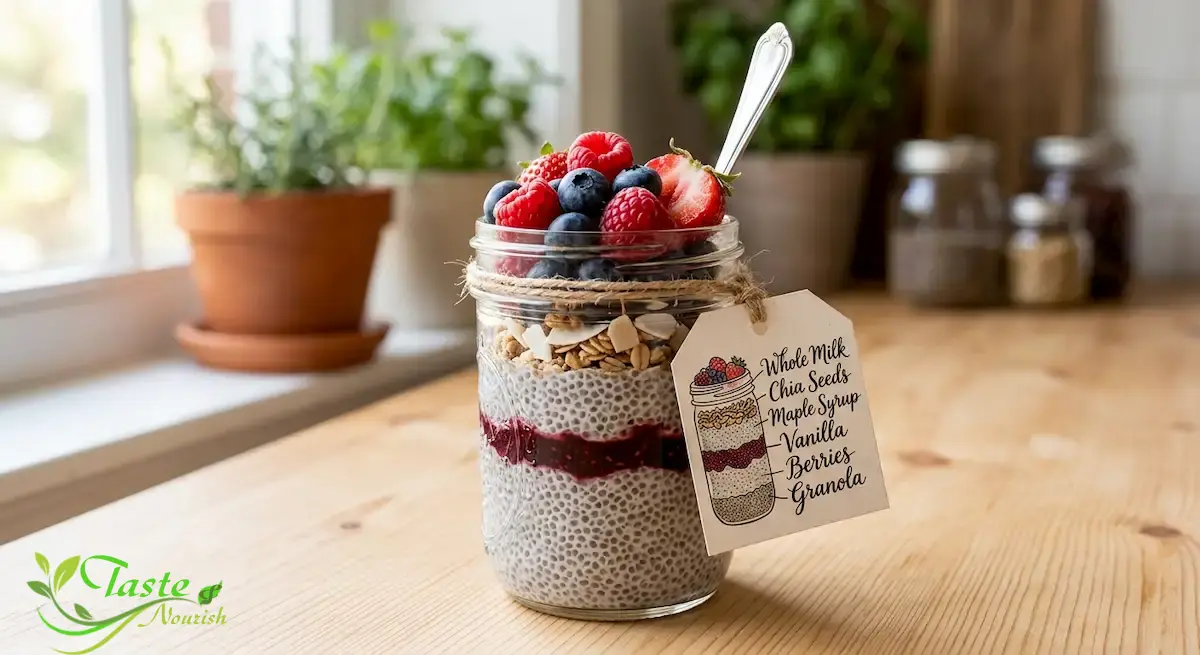
Chia seed overnight oats are naturally suited to batch prep since the whole point is making them in advance. Multiply the recipe and portion it into individual jars — mason jars or any container with a tight lid work well — so each morning you can grab one and go. Keep toppings like fruit, granola, and nuts stored separately and add them just before eating so they stay fresh and don’t lose their texture sitting in the liquid for days.
If you’re prepping several jars at once, it’s easiest to mix the full batch in a large bowl or pitcher, give it that first stir and 5-to-10-minute rest, stir again, and then divide it evenly into jars before refrigerating.
Storage
Keep chia seed overnight oats covered in the refrigerator. The USDA recommends keeping prepared perishable foods refrigerated for no more than 3 to 4 days, and that guidance applies here since the mixture contains dairy or plant milk and, if used, yogurt. Store each portion in an airtight container or a jar with a sealed lid — this keeps the top layer from drying out and prevents the oats from picking up odors from other food in the fridge.
Expect the texture to keep thickening slightly over the first day or two as the chia seeds continue absorbing liquid. If a batch feels too thick by day three or four, stir in a splash of milk to loosen it back up before eating.
Common Mistakes
- Not stirring right after mixing. Chia seeds sink and clump together if the mixture sits undisturbed, leaving pockets of gelled chia instead of an evenly thickened jar. Stir immediately after combining, then again after 5 to 10 minutes.
- Using instant oats. Instant oats are cut smaller and processed to cook faster, which means they break down further in liquid and turn the finished texture soft and slightly gluey rather than distinctly tender.
- Getting the liquid ratio wrong. Too little liquid and the oats stay dry and chalky in the center; too much and you end up with a soupy bowl that never firms up. Stick close to the 3/4 cup liquid per 1/2 cup oats ratio and adjust gradually from there.
- Not tasting the sweetness before refrigerating. Cold food mutes sweetness, so a mixture that tastes perfectly sweet at room temperature can taste flat the next morning. Taste right after mixing and lean slightly sweeter than you think you need.
- Skipping the overnight soak. A short soak thickens the chia but doesn’t give the oats enough time to soften fully, leaving a raw, chewy bite even though the jar looks thick.
- Storing it uncovered. An open container lets the top layer dry out and absorb smells from the fridge. Always use a tight-fitting lid.
- Adding toppings before refrigerating. Fruit, granola, and nuts all lose their texture if they sit in the liquid overnight. Add them right before eating instead.
Troubleshooting
My oats are too thick. This usually means the chia-to-liquid ratio was a little high, or the jar sat in the fridge for several days and the chia kept absorbing liquid. Stir in a tablespoon or two of milk at a time until it loosens to the texture you want.
My oats are too thin or soupy. Either there wasn’t quite enough chia relative to the liquid, or the jar didn’t sit long enough for the chia to fully gel. Stir in an extra teaspoon of chia seeds and let it rest in the fridge for another 30 to 60 minutes — it will thicken noticeably.
The chia seeds clumped together instead of spreading evenly. This happens when the mixture wasn’t stirred again in that first 5-to-10-minute window after combining. There’s no fix once it’s fully set except stirring vigorously to redistribute the gelled clumps, which works reasonably well even after the fact.
The oats still taste a little raw or chalky. The soak time was likely too short. Give it more time in the fridge — a full 8 to 12 hours is what fully softens rolled oats, not just the minimum 4-hour mark.
Variations
- Higher-protein: Stir in a scoop of your preferred protein powder with the liquid ingredients, or lean on the yogurt addition and use Greek yogurt specifically for its higher protein content.
- Chocolate: Whisk 1 to 2 tablespoons of unsweetened cocoa powder into the liquid mixture before refrigerating.
- Apple cinnamon: Stir in grated apple and a pinch of cinnamon with the other ingredients; the apple softens further overnight.
- Dairy-free and vegan: Use a plant-based milk and plant-based yogurt, and choose maple syrup instead of honey.
- Lower-sugar: Skip the added sweetener and rely on the natural sweetness of fresh fruit stirred in at serving time.
Chia Seed Overnight Oats FAQs
Can I make chia seed overnight oats ahead for the whole week?
Yes. Portion the recipe into individual jars and refrigerate them, keeping toppings separate until you’re ready to eat. They keep well for several days when stored properly.
Do I really need to soak them overnight, or is there a faster method?
A 4-hour soak in the fridge is enough for the chia to gel and the oats to soften somewhat, but a full 8-to-12-hour overnight soak gives noticeably better texture, since the oats need more time than the chia does.
Can I eat chia seed overnight oats warm?
Yes. Microwave the portion in 20-second intervals, stirring between each, until it reaches your preferred temperature.
Can I use quick oats or steel-cut oats instead of rolled oats?
Quick oats will work but produce a softer, slightly gummier texture. Steel-cut oats aren’t a good substitute here — they stay too firm and chewy without actual cooking, even after an overnight soak.
Why did my chia seed overnight oats turn out too thick or too thin?
Too thick usually means too much chia relative to liquid, or several days of continued absorption in the fridge — fix it by stirring in more milk. Too thin means not enough chia or not enough soak time — fix it by adding a bit more chia and letting it rest longer.
Can I freeze chia seed overnight oats?
Freezing isn’t recommended. Both the softened oats and the gelled chia lose their texture once thawed, separating into a watery, grainy mixture instead of the creamy consistency you get from refrigeration.
What milk works best?
Any milk works — dairy or plant-based. Richer milks like whole milk or oat milk give a creamier result, while lighter milks like almond milk give a thinner, lighter texture. Choose based on the consistency you prefer.
Can I add protein powder?
Yes. Whisk it in with the other liquid ingredients before refrigerating so it dissolves fully instead of clumping.
Conclusion
Chia seed overnight oats reward a little bit of technique — mixing the dry ingredients first, stirring twice in that first stretch, and giving the jar a full overnight soak — with a genuinely creamy, no-cook breakfast that’s ready before you even wake up. Once you’ve got the ratio and timing down, it’s one of the easiest breakfasts to keep in steady rotation, with endless room for flavor changes through toppings and mix-ins.