Pull open any refrigerator case at the grocery store and you’ll find dozens of yogurt options staring back at you — plain, Greek, skyr, plant-based, low-fat, whole-milk, and every flavor combination in between. That variety is part of why yogurt nutrition questions come up so often. Is Greek yogurt really better for you? Does the sugar content matter? Can people with lactose intolerance still enjoy it?
Yogurt has been part of human diets for thousands of years, with its roots tracing back to fermentation practices in Central Asia and the Middle East long before refrigeration existed. What started as a practical way to preserve milk has become one of the most researched fermented foods in modern nutrition science.
This guide walks through what’s actually in a cup of yogurt, what the science says about its benefits, who should be cautious, and how to choose a product that fits your goals.
What Is Yogurt? A Quick Overview
Yogurt is milk that has been fermented by live bacterial cultures, which convert lactose (milk sugar) into lactic acid. That process is what gives yogurt its characteristic tang and thickened texture. Depending on the milk used and how the yogurt is processed, the final product can range from thin and pourable to thick enough to hold a spoon upright.
Flavor-wise, plain yogurt sits somewhere between tart and creamy, while flavored versions lean sweet.
How Yogurt Is Made
Production starts with pasteurized milk that’s heated, then cooled to a temperature that favors bacterial growth. Manufacturers add starter cultures — typically Lactobacillus bulgaricus and Streptococcus thermophilus — which ferment the milk for several hours until it reaches the desired thickness and acidity.
Some producers strain the fermented product afterward to remove excess liquid whey, which concentrates the protein and creates the thicker consistency associated with Greek-style yogurt. Others add stabilizers, fruit, or sweeteners after fermentation is complete.
Main Types of Yogurt You’ll Find in Stores
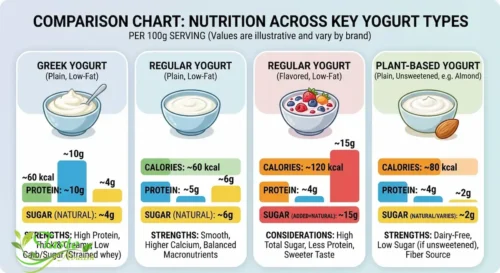
Regular yogurt is unstrained and tends to be thinner, with a milder tang. Greek yogurt is strained to remove whey, giving it a denser texture and a notably higher protein content per serving. Icelandic skyr is strained even further and is technically a fresh cheese, though it’s marketed and eaten like yogurt.
Australian-style yogurt is typically unstrained but made with whole milk for a creamier mouthfeel. Plant-based yogurts, made from soy, coconut, almond, or oat milk, have grown quickly in popularity, though their protein and calcium content vary widely and often need fortification to match dairy versions.
Yogurt Nutrition Facts: What’s Actually in a Cup
Nutrition content varies significantly depending on the type of milk used, whether the yogurt is strained, and how much sugar is added during processing.
The U.S. Department of Agriculture’s FoodData Central database is the most reliable public source for verifying nutrition values for specific products, since even yogurts labeled similarly can differ by brand. The table below shows typical, rounded values for common yogurt types — always check the label on your specific product, since manufacturers vary.
Yogurt Type (6 oz / 170g)
Calories
Protein
Fat
Carbs
Sugar
Plain, whole milk
~150
8g
8g
11g
11g (natural)
Plain, low-fat
~150
12g
4g
17g
17g (natural)
Plain, nonfat
~130
13g
0g
18g
18g (natural)
Greek, nonfat, plain
~100
17g
0g
6g
6g (natural)
Greek, whole milk, plain
~190
17g
10g
8g
8g (natural)
Flavored, fruit-on-bottom
~230
9g
2.5g
43g
~30g (mostly added)
Calories, Protein, and Fat
Straining is the biggest driver of protein density in yogurt. Because the straining process removes much of the liquid whey, Greek and Icelandic-style yogurts pack noticeably more protein into the same serving size compared to regular yogurt. Fat content depends entirely on the milk used — whole milk, low-fat (2%), and nonfat (skim) versions of the same yogurt brand can have very different calorie counts.
None of these choices is inherently “correct”; it depends on your calorie needs, satiety preferences, and how the yogurt fits into your overall diet.
Carbs and Sugar: Natural vs. Added
Plain yogurt’s carbohydrate content comes almost entirely from lactose, the natural sugar in milk. Flavored yogurts are a different story — a single 6-ounce fruit-on-the-bottom cup can carry 15 to 20+ grams of added sugar on top of the natural lactose already present.
The nutrition label distinguishes the two through the “Includes X g Added Sugars” line, which is worth checking every time, especially for anyone monitoring blood sugar or trying to reduce added sugar intake generally.
Key Takeaway: Plain and unsweetened yogurts get all their sugar naturally from lactose. Flavored yogurts often add sweeteners on top — checking the “Added Sugars” line on the label is the fastest way to tell the difference.
Key Vitamins and Minerals
Yogurt is one of the more concentrated dietary sources of calcium, and according to the NIH Office of Dietary Supplements, milk, yogurt, and cheese are rich natural sources of calcium, contributing about 72% of calcium intake in the United States from dairy products and dairy-containing foods.
A single cup of yogurt typically provides somewhere around 25–35% of the Daily Value for calcium, though the exact amount depends on the product. Beyond calcium, yogurt is also a source of vitamin B12, riboflavin, phosphorus, potassium, and zinc, and many brands fortify their products with vitamin D, which supports calcium absorption.
Science-Backed Health Benefits of Yogurt
The research on yogurt and health has grown substantially over the past two decades, though it’s worth noting upfront that most of this evidence is observational or based on limited clinical data — meaning yogurt is associated with certain benefits rather than proven to cause them outright. Here’s what the current evidence actually supports.
Gut Health and Probiotics
Yogurt made with live active cultures is one of the most accessible probiotic foods in a typical grocery store. These live bacteria may help support a healthy gut microbiome, though the specific strains and quantities matter — not every yogurt on the shelf still contains live cultures, since some products are heat-treated after fermentation, which kills the bacteria. Looking for a “Live & Active Cultures” seal on the packaging is a reliable way to confirm a product retains its probiotic content.
Bone Health and Calcium
Calcium needs shift throughout life, and the NIH Office of Dietary Supplements publishes age- and sex-specific recommended intakes to help guide daily targets. Most adults need somewhere between 1,000 and 1,200 milligrams of calcium per day, with higher needs during adolescence and after menopause. Because yogurt delivers both calcium and protein in a single food, it’s often recommended as part of a bone-supportive eating pattern, particularly for people who don’t get enough calcium from other sources.
Blood Sugar and Type 2 Diabetes Risk
This is one of the more notable recent developments in yogurt research. In March 2024, the FDA announced in a letter of enforcement discretion that it does not intend to object to the use of certain qualified health claims regarding the consumption of yogurt and reduced risk of type 2 diabetes, provided the claims are worded so as not to mislead consumers.
The approved wording specifies that eating yogurt regularly — at least 2 cups (3 servings) per week — may reduce the risk of type 2 diabetes, based on limited scientific evidence.
It’s an important nuance: the FDA itself describes the supporting evidence as limited, and the claim applies to yogurt as a food category rather than any specific brand or formulation. Yogurt is not a treatment for diabetes, and this claim shouldn’t be read as one.
Heart Health and Weight Management
Fermented dairy foods, including yogurt, have been associated in observational research with neutral or favorable cardiovascular outcomes, a shift from older assumptions that all dairy fat was harmful to heart health.
The 2025–2030 Dietary Guidelines for Americans now recognize fermented dairy foods like yogurt for their potential role in supporting gut and microbiome health, and the updated guidelines give more flexibility for whole and full-fat dairy products rather than restricting recommendations to low-fat and fat-free options exclusively.
Separately, yogurt’s protein content may contribute to feelings of fullness, which is one reason it’s frequently included in weight-management eating patterns — though portion size and added sugar content still matter quite a bit here.
Yogurt and Lactose Intolerance
Lactose intolerance is common, and many people assume it rules out dairy entirely — but yogurt is often an exception. The National Institute of Diabetes and Digestive and Kidney Diseases estimates that about 68% of the world’s population has reduced ability to digest lactose after infancy, with prevalence varying widely by region and ethnicity.
The fermentation process that creates yogurt breaks down a portion of the lactose in the milk before it ever reaches your plate, and yogurts containing live active cultures may further aid lactose digestion, since those bacteria produce their own lactase enzyme.
Greek and other strained yogurts tend to be even better tolerated, since straining removes additional lactose along with the whey. Anyone managing lactose intolerance may find it worth experimenting with small portions of live-culture, strained yogurt to see how their body responds, rather than assuming all dairy is off the table.
Risks and Who Should Be Cautious
Yogurt is generally well tolerated, but a few considerations are worth flagging. Flavored and dessert-style yogurts can carry a surprising amount of added sugar — some approach the sugar content of a small dessert once fruit purees, syrups, and mix-ins are factored in.
Sodium can also creep up in certain flavored or “protein-boosted” products, so it’s worth a label check if you’re watching sodium intake. People with a milk protein allergy, which is distinct from lactose intolerance, need to avoid dairy yogurt entirely, since this is an immune reaction rather than a digestive one.
Anyone who is immunocompromised or has specific digestive conditions should talk with a healthcare provider before making probiotic-rich foods a significant part of their diet, since individual medical circumstances vary.
How to Choose the Best Yogurt
With so many products marketed as “healthy,” label literacy makes a real difference in choosing a yogurt that actually fits your goals.
Reading the Nutrition Label Like a Pro
Start with the added sugar line rather than the total sugar line, since total sugar includes natural lactose that isn’t a concern in the same way. Next, glance at the ingredient list — a short list dominated by milk and live cultures is generally a good sign, while a long list of gums, syrups, and artificial flavorings suggests a more processed product.
Finally, compare protein to calories; yogurts with a favorable protein-to-calorie ratio tend to be more filling per calorie, which matters if satiety is a priority for you.
Pro Tip: Buy plain, unsweetened yogurt and add your own fruit, honey, or granola at home. It’s usually cheaper than pre-flavored versions and gives you full control over how much sugar ends up in your bowl.
Greek vs. Regular vs. Skyr vs. Plant-Based
Each style has genuine trade-offs rather than a single “best” answer.
Type
Protein
Texture
Best For
Regular yogurt
Moderate
Thin, pourable
Smoothies, cooking, milder tang
Greek yogurt
High
Thick, creamy
Protein-focused eating, savory dips
Skyr (Icelandic)
Very high
Extra thick
Maximum protein, minimal sugar
Plant-based yogurt
Variable, often lower
Varies by base
Dairy-free or vegan diets
Plant-based yogurts deserve a closer look before assuming they’re a like-for-like swap. Soy-based versions tend to come closest to dairy yogurt in protein content, while coconut and almond-based versions are often much lower in protein and may need calcium and vitamin D fortification to match dairy’s nutrient profile. Checking the label matters just as much here as with dairy yogurt, if not more.
Cooking and Everyday Uses for Yogurt
Beyond the breakfast bowl, plain yogurt is a genuinely versatile kitchen ingredient. Swapping it in for sour cream or mayonnaise in dips, dressings, and marinades cuts fat and adds protein without sacrificing much creaminess.
Whisked into curries, soups, or pan sauces near the end of cooking (off high heat, to prevent curdling), yogurt adds tang and body the same way crème fraîche does. It also works well as a tenderizing marinade base for chicken or lamb, since the mild acidity helps break down proteins before grilling or roasting. And for baking, plain yogurt can replace some of the butter or oil in muffins and quick breads, keeping the crumb moist while trimming saturated fat.
Common Yogurt Myths, Debunked
A few persistent myths are worth clearing up. First, not all yogurt counts as a meaningful probiotic food — heat-treated products lose their live cultures during processing, so the “probiotic” benefit only applies to products that retain them.
Second, Greek yogurt isn’t automatically the healthier choice; a heavily sweetened, flavored Greek yogurt can carry just as much added sugar as a regular flavored one, even with the higher protein content.
Third, the assumption that lactose-intolerant individuals must avoid all yogurt doesn’t hold up well against the evidence — as covered above, many people with lactose intolerance tolerate live-culture, strained yogurt reasonably well, though individual tolerance still varies.
Conclusion
Yogurt’s nutrition profile is genuinely strong — a solid source of protein, calcium, and, in the right products, live probiotic cultures. But “yogurt” isn’t one single food nutritionally; a plain, unsweetened Greek yogurt and a candy-sweet, fruit-bottom cup share a name and little else on the label.
The most useful habit is a simple one: flip the container over, check the added sugar line, look for a short ingredient list, and choose the version that actually matches what you’re trying to accomplish, whether that’s more protein, better lactose tolerance, or simply a food you enjoy eating regularly.
FAQs About Yogurt Nutrition
Is yogurt good for weight loss?
Yogurt can support weight-management goals because of its protein content, which may help with feelings of fullness. Plain, unsweetened varieties tend to be the better choice for this purpose, since flavored versions can add significant calories and sugar without much additional benefit.
What’s the healthiest type of yogurt to buy?
There isn’t one universally “healthiest” yogurt — it depends on your goals. Plain Greek or skyr yogurt with live active cultures and no added sugar is a strong default choice for most people focused on protein and lower sugar intake.
Can I eat yogurt every day?
For most people, daily yogurt consumption fits comfortably within a balanced diet, and the 2025–2030 Dietary Guidelines for Americans recommend three servings of dairy per day, which yogurt can help fulfill. As with any food, portion size and added sugar content are worth keeping in mind.
Does yogurt really help with digestion?
Yogurt containing live active cultures may support digestive health and gut microbiome balance, though results vary by individual and by the specific bacterial strains in a given product. Not all yogurt retains live cultures, so checking the label is important if digestive support is your goal.
Is Greek yogurt better than regular yogurt?
Greek yogurt generally has more protein per serving because of the straining process, but it isn’t automatically “better” — regular yogurt still offers calcium, probiotics, and a milder flavor that some people prefer, particularly for cooking and smoothies.
Hanan Abo Samra is the founder of Taste & Nourish, sharing trustworthy nutrition guidance and recipes drawn from 20+ years of hands-on cooking experience. When she's not developing new recipes, Hanan is researching the science behind everyday ingredients to bring readers practical, evidence-based guidance for a healthier lifestyle.