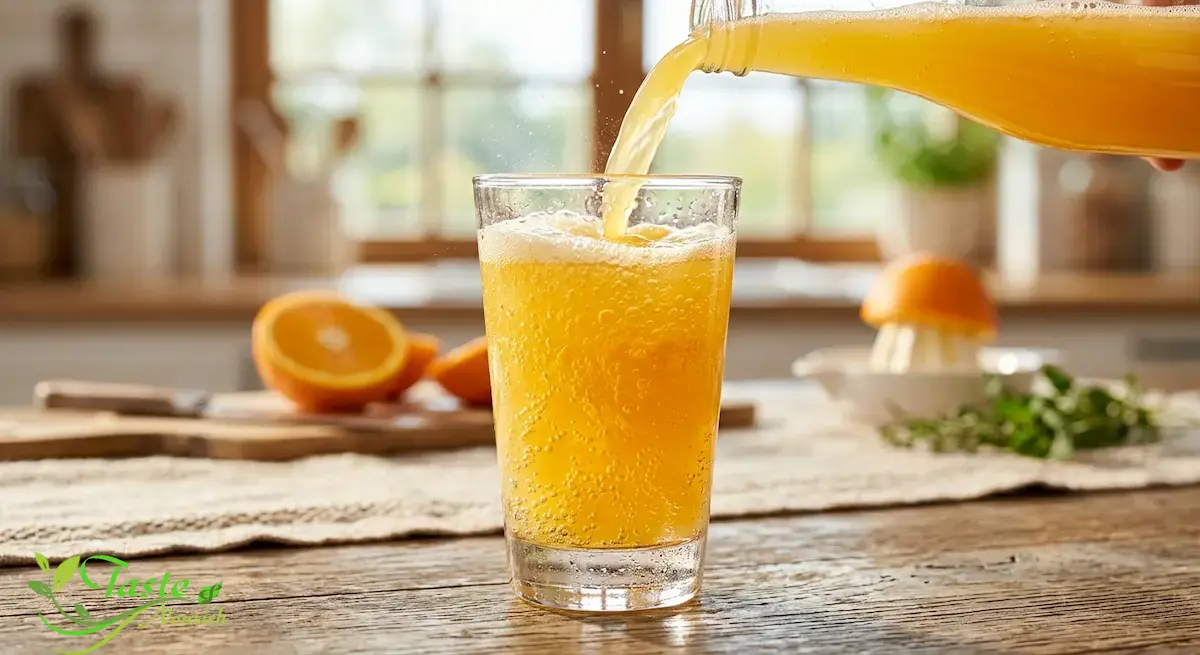
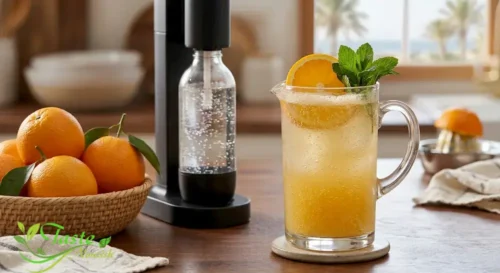
Sparkling orange juice turns a simple glass of juice into something lighter, brighter, and more refreshing. Fresh-squeezed oranges meet ice-cold bubbles in equal parts, so you taste real citrus without the heaviness of a full glass of juice. The trick is keeping that fizz alive. This recipe shows you which oranges to choose, how cold the juice should be, and how to pour without a foam-over. It also covers how to handle homemade juice safely, so every glass tastes fresh and sparkles from the first sip to the last.
To make sparkling orange juice, squeeze 2 cups of fresh juice, chill it until very cold, and combine it with an equal amount of cold plain sparkling water right before serving. Pour the sparkling water slowly down the side of the glass and stir once. A teaspoon of lemon juice brightens flat-tasting oranges.
Key Takeaways: Sparkling Orange Juice
Sparkling orange juice needs about 5 to 6 medium oranges for 2 cups of juice, mixed 1:1 with plain sparkling water.
Temperature matters more than technique. Cold juice and cold sparkling water hold their bubbles far longer than room-temperature ones.
Juice oranges such as Valencia are the most forgiving. Navel orange juice can turn bitter soon after squeezing, so serve it quickly.
Keep the juice and the sparkling water separate until each glass is poured. Never add ice to the pitcher.
Home-squeezed juice is unpasteurized. People at higher risk of foodborne illness should use pasteurized juice instead.
Why This Recipe Works
The 1:1 ratio keeps orange in front. Each cup holds only half a cup of juice, so the drink is lighter and less sugary than plain juice but still tastes clearly of orange.
Carbonation does the work of sugar. The slight carbonic bite sharpens the flavor, so most sweet oranges need no added sweetener.
It needs no special equipment. A hand juicer, a strainer, and a pitcher are enough. There is no blending, and so no ice-chopped, watery texture.
It scales easily. The ratio is by volume, so the same proportions work for one glass or a pitcher.
Choosing the Right Oranges
The oranges set the flavor, because nothing else in this drink hides them.
Valencia, Hamlin, and other juice oranges: balanced sweet-tart flavor, very juicy, and my first choice for this drink.
Navel oranges — sweet and easy to find, but their juice can develop a noticeable bitterness a short time after squeezing. Juice them close to serving time.
Cara Cara oranges — sweet, low in acid, and slightly pink. Add the lemon juice, and drink the juice soon, as with other navels.
Choose oranges that feel heavy for their size, with smooth, thin skin and no soft spots. A medium orange typically gives about ⅓ to ½ cup of juice, depending on variety and ripeness.
Sparkling Orange Juice Ingredients
Makes 4 servings of about 1 cup (8 fl oz / 240 ml) each.
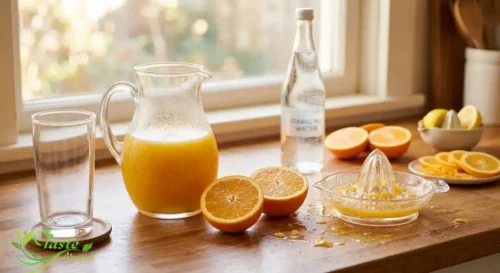
5 to 6 medium oranges (about 2½ to 3 pounds / 1.1 to 1.4 kg), enough for 2 cups (480 ml) juice
2 cups (480 ml) plain sparkling water or club soda, very cold
1 to 2 teaspoons fresh lemon juice, optional
Ice cubes, optional (large cubes, or frozen orange juice cubes)
Orange wheels or strips of orange zest, for serving
You will also need a citrus juicer or reamer, a fine-mesh strainer, a pitcher or jar with a lid, and a long spoon.
Ingredient notes: The oranges provide the sweetness, acidity, and aroma. The sparkling water dilutes the juice and adds lift. The optional lemon juice sharpens oranges that taste flat. Choose unsweetened sparkling water. Sweetened sodas turn this into a different, much sweeter drink.
Useful Substitutions
Store-bought orange juice: Use 100% not-from-concentrate juice, preferably pasteurized. It is usually sweeter and less acidic than fresh, so the lemon juice is worth adding. Avoid “orange drink” or “cocktail” products, which add sugar and make the result cloying.
Tangerine or mandarin juice: sweeter and lower in acid. Skip the lemon and expect a softer, rounder flavor.
Mineral water: gives sharper, longer-lasting bubbles but adds a faint mineral taste. Club soda is slightly salty and seltzer is neutral, so seltzer lets the orange speak most clearly.
Lime juice for lemon: adds a greener, slightly more bitter edge. Use half the amount.
How to Make Sparkling Orange Juice
1. Wash everything first. Wash your hands, then rinse the oranges under plain running water, scrubbing with a clean produce brush. Dry them with a clean towel. Skip soap or produce wash. The FDA advises washing produce under running water even when you will not eat the peel, because the knife can carry surface germs into the fruit (FDA).
2. Cut and juice. Roll each orange firmly on the counter for a few seconds, then halve it crosswise. Squeeze with a reamer or hand press until you have 2 cups of juice. Ease off once the white pith is exposed, because grinding it into the juice adds bitterness.
3. Strain. Pour the juice through a fine-mesh strainer to remove seeds. Straining out most of the pulp also reduces foaming later. For a more rustic drink, stir a few tablespoons of pulp back in.
4. Taste and adjust. If the juice tastes flat or very sweet, stir in 1 teaspoon of lemon juice, taste again, and add up to another teaspoon. The juice should taste slightly sharper than you want the final drink, because the sparkling water will soften it.
5. Chill thoroughly. Cover and refrigerate for 1 to 2 hours, until very cold. Refrigerating the oranges beforehand shortens this step. Refrigerate the sparkling water too, still unopened.
6. Combine in the glass. If using ice, add it first. Pour ½ cup (120 ml) juice into each glass, tilt the glass, and pour ½ cup (120 ml) sparkling water slowly down the inner side. Stir once, lifting from the bottom.
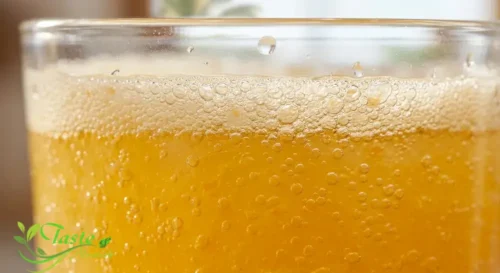
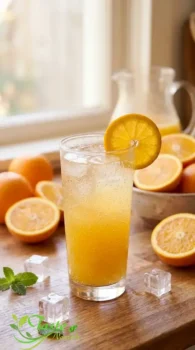
7. Serve right away. Garnish with an orange wheel, or twist a strip of zest over the glass to release its oils. The foam should settle within about half a minute, leaving a lively, bubbly drink.
For a pitcher, pour the chilled juice in, then add the sparkling water slowly down the side and stir only once or twice. Serve within a few minutes.
Keeping the Fizz
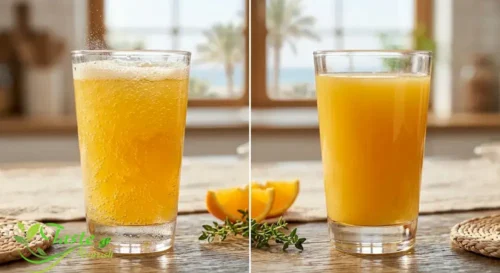
Carbon dioxide stays dissolved better in cold liquids, so warm juice or warm sparkling water loses its bubbles quickly. Open the sparkling water at the last minute. Large bottles that have been opened and re-capped go flat faster than you expect.
Ice should cool the drink without watering it down. Large cubes melt more slowly than small ones. For the best flavor, freeze some of the orange juice in an ice tray and use those cubes. They chill the drink while adding orange flavor rather than diluting it. Keep ice out of the pitcher, because it melts and weakens the whole batch.
Troubleshooting Flavor and Fizz
Flat Drink
Cause: Warm juice, a bottle opened too early, or vigorous stirring.
Solution: Chill the juice longer and use a freshly opened, cold bottle. Pour gently and stir once. A small splash of fresh cold sparkling water can revive a drink that has begun to flatten.
Foaming Over
Cause: Pulp and tiny particles give bubbles places to form, so unstrained or room-temperature juice foams heavily.
Solution: Strain the juice, make sure everything is cold, tilt the glass, and pour slowly down the side.
Too Sweet
Cause: Very ripe oranges or sweet varieties such as Cara Cara.
Solution: Add 1 teaspoon of lemon juice to the pitcher, or increase the sparkling water in the glass by 2 tablespoons.
Too Tart
Cause: Underripe oranges or blood oranges.
Solution: Skip the lemon. Stir 1 teaspoon of honey or simple syrup into the juice before chilling, since sweeteners dissolve poorly in cold, fizzing liquid.
Bitter
Cause: Pressing the pith or seeds, or letting navel orange juice sit for a long time.
Solution: Squeeze gently, strain out the seeds, and serve navel juice soon after squeezing. A pinch of sugar can soften mild bitterness, but it will not fully fix a strongly bitter batch.
Weak or Watery
Cause: Too much ice, bland oranges, or over-dilution.
Solution: Use fewer or larger ice cubes, switch to orange juice cubes, or use 3 parts juice to 2 parts sparkling water. Expressing a strip of zest over the glass also boosts orange aroma.
Separating or Cloudy
Cause: Fresh juice naturally settles as pulp sinks.
Solution: This is normal. Stir the chilled juice before pouring each glass.
Food Safety for Homemade Juice
Fresh-squeezed juice has not been pasteurized or otherwise treated, so it needs more care than a carton from the store. The FDA notes that untreated juice can be contaminated, and that children, older adults, pregnant women, and people with weakened immune systems risk serious illness from drinking it (FDA juice safety guidance). For those groups, use pasteurized juice in this recipe.
Keep juice cold. The FDA advises keeping perishable fresh-cut produce at 40°F or below (FDA), and I would treat fresh juice the same way. Wash the knife, cutting board, and juicer parts after use, and do not leave the pitcher out for long on a table.
Quality and safety are different things. A sour, yeasty, or fermented smell, or fizzing and bubbling in juice you did not carbonate, means the juice has spoiled, so discard it. A normal look and smell does not prove the juice is safe, and you should never taste a questionable juice to check.
Making Sparkling Orange Juice Ahead and Storing It
Do not mix the full drink ahead of time. The fizz fades within minutes in a glass and not much longer in a pitcher. Instead, squeeze and chill the juice up to a day ahead, and add the sparkling water as you serve.
Store the juice in a covered jar or pitcher at 40°F or below, filled close to the top to limit air exposure. For the best flavor and color, I would drink it within 24 hours, since the fresh taste dulls and the color darkens slightly over time. That is a quality guideline rather than a safety guarantee, and refrigeration does not pasteurize juice. Stir before pouring.
Leftover mixed drink will be flat but not necessarily unusable. Refrigerate it promptly and covered, and finish it within the same 24-hour window.
You can freeze plain juice (not the mixed drink) in an ice tray or a freezer-safe container, leaving about 1 inch of headspace for expansion. Thaw in the refrigerator and stir well, as the texture may separate and the flavor can be slightly less bright. Freezing does not make unpasteurized juice safer.
Variations
Blood orange: The color is deep ruby and the flavor tarter and more berry-like. Skip the lemon and add 1 teaspoon of honey to the juice if it tastes sharp.
Orange-ginger: Steep 3 or 4 thin slices of fresh ginger in the chilled juice for about 30 minutes, then strain. It adds gentle warmth without extra sugar.
Herb-scented: Gently press a mint leaf or small rosemary sprig in the bottom of each glass before pouring. Remove it before serving if it begins to overpower the orange.
Tangerine or mandarin: Use the same quantity of juice for a sweeter, softer drink, and omit the lemon.
Serving Suggestions
Serve in tall glasses or wine glasses, so there is room for the bubbles and the aroma. The drink is best cold, with a few large ice cubes or orange juice cubes. It suits brunch spreads, such as eggs, pastries, or fruit and yogurt, and works as a lighter alternative to soda at a warm-weather gathering.
Nutrition
Approximate nutrition per serving (1 cup / 8 fl oz: ½ cup fresh orange juice + ½ cup sparkling water)
Nutrient
Approximate Amount
Calories
55
Carbohydrates
13 g
Sugar (naturally occurring, none added)
10 g
Protein
1 g
Fat
Less than 1 g
Fiber
Less than 1 g
Vitamin C
About 60 mg
These are calculated estimates, not laboratory values. They are based on USDA data for raw orange juice at roughly 112 calories and 21 g of sugar per cup (USDA FoodData Central), halved for this serving. They exclude the optional lemon juice, ice, and garnish. Actual values vary with the oranges. The 60 mg of vitamin C is about two-thirds of the 90 mg Daily Value (NIH Office of Dietary Supplements). Because orange juice is low in fiber compared with whole oranges, a whole orange is a different nutritional choice from a glass of juice, not a better or worse one.
From My Kitchen
I recommend squeezing the oranges the same day you plan to serve, chilling the juice until it is very cold, and keeping the sparkling water sealed until the last moment. If you want a drink that tastes clearly of orange rather than soda, I would begin with equal parts and move toward more juice only after tasting. I would also keep ice out of the pitcher and use orange juice cubes in the glass instead.
Sparkling Orange Juice Recipe FAQs
What is the best ratio of juice to sparkling water?
Equal parts is the balanced starting point. Use 2 parts juice to 1 part sparkling water for a stronger orange flavor, or 1 part juice to 2 parts sparkling water for a lighter, more refreshing drink with about a third less juice per glass than the base recipe.
Can I use store-bought orange juice?
Yes. Choose 100% not-from-concentrate juice, chill it well, and consider adding the lemon juice because bottled juice tends to be sweeter and less acidic than fresh. Avoid sweetened orange drinks.
Is sparkling orange juice lower in sugar than regular orange juice?
Per glass, yes. A serving here has roughly half the juice, and therefore about 10 g of sugar compared with about 21 g in a cup of plain juice (USDA FoodData Central). The sugar is the same kind, though, and the WHO counts sugars naturally present in fruit juice among free sugars, which it advises limiting to under 10% of total energy intake (WHO). It is still worth considering within your overall intake.
Can I make a big batch for a party?
Yes, but keep the chilled juice in the refrigerator and combine in smaller pitchers rather than one large one. Add the sparkling water only shortly before serving, and refill by making a fresh pitcher instead of topping off a flat one.
Can I use frozen orange juice concentrate?
Yes. Prepare it according to the package directions, chill it fully, and mix it as above. The flavor is usually sweeter and less fresh than squeezed juice, so the lemon juice is especially helpful. Check that the product is pasteurized.
A fresh-squeezed orange juice drink mixed 1:1 with cold sparkling water, with an optional splash of lemon juice, served immediately to keep the bubbles lively.
Ingredients
5 to 6 medium oranges (about 2½ to 3 pounds), for 2 cups (480 ml) juice
2 cups (480 ml) cold plain sparkling water or club soda
Ice cubes
1 to 2 teaspoons fresh lemon juice, optional
Ice or frozen orange juice cubes, optional
Orange wheels or zest, for serving
Directions
Wash hands. Rinse and scrub the oranges under running water, then dry them.
Halve and juice the oranges to make 2 cups, avoiding heavy pressure on the pith.
Strain the juice. Add 1 teaspoon of lemon juice if it tastes flat, adding up to 1 teaspoon more.
Refrigerate until very cold, 1 to 2 hours.
Add ice to glasses if using. Pour in ½ cup juice per glass.
Pour ½ cup sparkling water slowly down the side of each tilted glass. Stir once.
Garnish and serve immediately.
Notes
Use pasteurized juice for children, older adults, pregnant women, and anyone with a weakened immune system.
Store plain juice, covered, at 40°F or below, and drink within 24 hours for best quality.
Add the sparkling water last. Never refrigerate the combined drink expecting it to stay fizzy.
Conclusion
Sparkling orange juice works because equal parts of bright citrus juice and cold bubbles give a lighter drink that still tastes like oranges. Chilling both ingredients thoroughly and adding the sparkling water last is the most useful habit for keeping it lively, from the first glass to the last.
**Hanan Abo Samra** shares practical cooking insights, delicious recipes, and evidence-based nutrition information. Drawing on more than 20 years of hands-on cooking experience, she creates helpful food content that combines everyday cooking knowledge with information from reliable scientific sources. Her goal is to help readers better understand the foods they eat, explore their nutritional benefits, and prepare delicious meals with confidence.