
Blood Orange Juice Nutrition: Calories, Sugar, Vitamin C
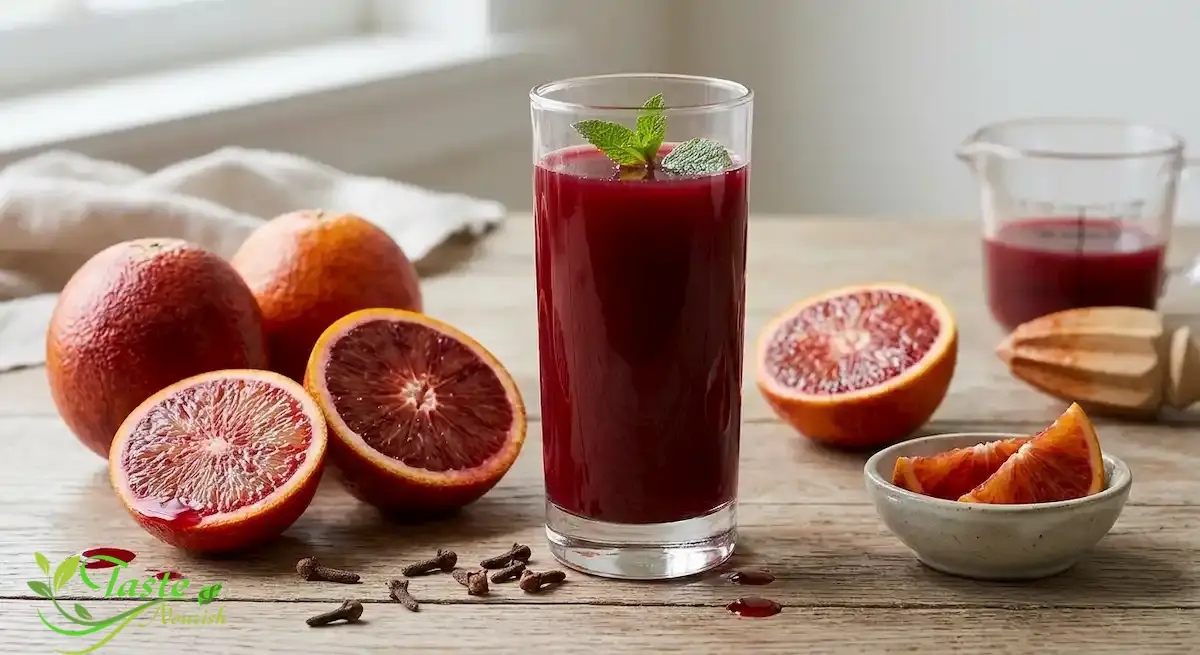
Blood orange juice looks dramatically different from the orange juice in your fridge, but does the nutrition label change too? Blood orange juice nutrition is closer to regular juice than the color suggests: similar calories, similar natural sugar, and almost no fiber. The real difference is anthocyanins, the pigments that turn the glass ruby red.
Below you’ll find approximate numbers per cup and per smaller pour, how vitamin C compares with regular orange juice, and what changes between Moro, Tarocco, and Sanguinello. You’ll also find a sensible daily amount, so you know what a glass actually gives you before you pour one.
Quick Answer: Blood Orange Juice Nutrition per Cup
Blood orange juice nutrition is close to regular orange juice: about 105–120 calories, 25–28 g carbohydrate, and 20–25 g naturally occurring sugar per cup (240 mL), with almost no fiber. It typically supplies 60–120 mg of vitamin C, and its red color comes from anthocyanins, pigments regular oranges mostly lack.

Key Takeaways: Blood Orange Juice Nutrition
- One cup (240 mL) of fresh, strained juice has roughly 105–120 calories and 20–25 g of sugar, all naturally occurring, plus only about 0.5 g of fiber.
- Blood orange juice nutrition for vitamin C is not an upgrade on regular orange juice. Lab analyses report similar or somewhat lower amounts.
- Anthocyanins are the real difference. Amounts vary widely by variety, climate, and season, so no single number fits every glass.
- Juice lacks the fiber of the whole fruit, so a small glass is a better habit than a large one.
- Freshly squeezed juice is usually unpasteurized. Wash the fruit, refrigerate the juice, and take extra care if you are pregnant, older, immunocompromised, or serving children.
Blood Orange Juice Nutrition Facts per Cup
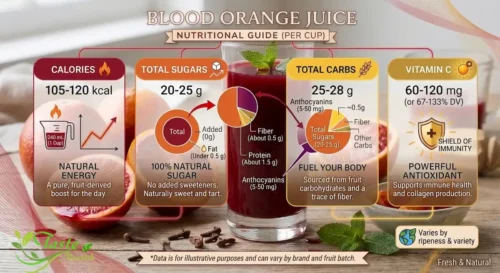
No USDA entry exists specifically for blood orange juice, so the table below is an estimate. It combines USDA FoodData Central values for raw orange juice with published analyses of blood orange juice.
| Nutrient | Approximate amount per 1 cup (240 mL) | Note |
|---|---|---|
| Calories | 105–120 kcal | Nearly all from sugars |
| Total carbohydrate | 25–28 g | |
| Sugars | 20–25 g | Naturally occurring; 0 g added in fresh juice |
| Fiber | About 0.5 g | Strained juice; slightly more with pulp |
| Protein | About 1.5 g | |
| Fat | Under 0.5 g | |
| Potassium | About 450–500 mg | |
| Vitamin C | About 60–120 mg | Varies by variety, ripeness, and storage |
| Anthocyanins | About 5–50 mg | Very wide range; see the variety section |
These are calculated estimates, not laboratory values. The base is the USDA FoodData Central entry for raw orange juice, at about 45 calories and 50 mg of vitamin C per 100 g. I adjusted the sugar upward slightly because one Spanish trial of Moro and Tarocco fruit measured soluble solids around 12.5–13.6 °Brix.
Blood Orange Juice Calories, Sugar Content, and Carbs by Glass Size

Almost every calorie in the glass comes from natural sugars. Fresh juice has no added sugar, and the carbohydrate count is essentially the sugar plus a trace of fiber. Most people pour less than a full cup, so these are the numbers that matter in practice.
| Glass size | Calories | Sugar | Carbohydrate |
|---|---|---|---|
| 4 fl oz (120 mL) | 55–60 | 10–12 g | 13–14 g |
| 6 fl oz (180 mL) | 80–90 | 15–19 g | 19–21 g |
| 8 fl oz (240 mL) | 105–120 | 20–25 g | 25–28 g |
Fiber is the one place juice falls short. Straining removes nearly all of it, and leaving the pulp in adds only a little. If you want that fuller texture, our guide to juicing with the pulp left in shows how to make it.
Vitamin C in Blood Orange Juice
A cup usually covers most or all of an adult’s daily vitamin C. The NIH Office of Dietary Supplements lists the recommended intake as 90 mg for men and 75 mg for women. Most people in the United States already get enough from food, so this drink is a pleasant contributor, not a necessity.
Blood orange juice is also not a vitamin C upgrade over regular orange juice. A Spanish study of blood orange varieties measured roughly 32–42 mg per 100 mL. That works out to about 75–100 mg per cup, compared with roughly 120 mg per cup in USDA’s raw orange juice entry. Vitamin C also declines with time, and the same NIH fact sheet notes that prolonged storage reduces it. Fresh juice drunk the same day will give you more than a bottle that has sat open.
Anthocyanins in Blood Orange Juice: Why It Is Red

The color comes from anthocyanins, mainly a pigment called cyanidin-3-glucoside. Regular oranges contain very little of it. The flavanone hesperidin and other citrus compounds are present in blood and regular orange juice alike, as described in a clinical study on Moro juice. Blood oranges need cool temperatures to build up the pigment, which is why color and anthocyanin content change with growing region, weather, and harvest date.
The amounts are very uneven. Published measurements range from a few milligrams to more than 200 mg per liter of juice, so a cup could supply anywhere from roughly 5 to 50 mg. Color is a rough visual guide within the same variety: deep ruby-purple juice generally carries more pigment than pale pink juice.
Lab tests do link higher anthocyanin content with higher measured antioxidant capacity, as analyses of Moro and Sanguinello juice show. That is a test-tube measurement, though, and it does not prove a health effect. Human research on blood orange juice is still thin. The study above, for example, had 12 overweight women drink 500 mL daily for four weeks and looked at changes in gut bacteria. That is too small to build drinking advice on.
Blood Orange Juice Nutrition by Variety: Moro vs Tarocco vs Sanguinello

The three main commercial types differ mostly in pigment. Vitamin C and sugar overlap too much between studies to name a consistent winner.
| Variety | Reported anthocyanins in juice | What to expect |
|---|---|---|
| Moro | About 90–200 mg/L | Deepest, near-burgundy color in most comparisons |
| Sanguinello (also spelled Sanguinelli) | About 45–100 mg/L | Pigment varies by season; one trial gave it the highest vitamin C |
| Tarocco Rosso | About 16–45 mg/L | Paler, rosier juice |
| Tarocco Ippolito | High in one trial | Tarocco is a family of selections, so pigment varies within it |
These ranges come from different studies, regions, and seasons, so read them as a pattern and not as exact values. In the Spanish trial mentioned above, Sanguinelli (101 mg/L) and Moro (90 mg/L) were similar and both far above Tarocco Rosso (16 mg/L). A later comparison found Moro near 196 mg/L, with Tarocco Rosso and Sanguinelli around 45 mg/L. If pigment is what you are after, Moro is the safest bet, and the color itself is the best clue.
Blood Orange Juice Nutrition vs Regular Orange Juice
On calories, sugar, and carbohydrate, the two are close. Vitamin C is similar or a little lower in blood orange juice, and anthocyanins are the main thing only blood orange juice offers. Blood oranges are the same species as navel and Valencia oranges (Citrus sinensis), so a blood orange and a navel orange are also close on basic nutrition per fruit. The difference is pigment, plus a slightly different, berry-leaning flavor. For the wider picture of what a glass of regular juice offers, see our article on the benefits of regular orange juice.
Blood Orange Juice vs Whole Blood Orange

Fiber is the clearest gap between the juice and the fruit. The table uses regular-orange values from USDA FoodData Central, as compiled by the Florida Department of Citrus. Blood oranges are in the same general range, though they are often smaller.
| ½ cup orange juice (120 g) | 1 whole orange (141 g) | |
|---|---|---|
| Calories | 59 | 65 |
| Sugars | 11 g | 13 g |
| Fiber | 0.3 g | 3.4 g |
| Vitamin C | 38 mg | 63 mg |
A cup of juice carries roughly the sugar of one and a half to two oranges, with a fraction of the fiber. The whole fruit is slower to eat, more filling, and harder to overdo.
Is Blood Orange Juice Healthy? How Much per Day
It is a nutrient-containing fruit juice that fits into a balanced diet in moderate portions. It is not a detox, a fat burner, or a cure for anything. The 2025–2030 Dietary Guidelines for Americans advise consuming 100% fruit juice in limited portions or diluting it with water, and eating whole fruit for most of your fruit.
A practical serving is a 4–6 oz glass (120–180 mL) counted as part of your fruit for the day, not on top of it. Cutting the juice half and half with sparkling or plain water halves the calories and sugar per glass while keeping the flavor. People with diabetes should count the roughly 25 g of carbohydrate in a full cup and ask their care team how juice fits. Anyone on a potassium-restricted diet, such as with advanced kidney disease, should ask a clinician before making it a habit.
Making Fresh Juice: What Changes the Numbers
Expect about 2–4 medium blood oranges per cup of juice, depending on size and juiciness. Straining lowers fiber, while skipping the strainer keeps a little more. Wash and scrub the fruit before cutting or squeezing it, since the FDA notes that bacteria on the outside can spread to the inside when produce is peeled, cut, or squeezed. Refrigerate the juice promptly and drink it the same day for the best flavor and vitamin C. For quantities and technique, see our blood orange juice recipe.
Fresh-squeezed juice is normally unpasteurized. The FDA warns that infants and young children, pregnant people, older adults, and people with weakened immune systems are at greatest risk from untreated juice. Those groups should choose pasteurized juice or boil untreated juice first.
Store-Bought Blood Orange Juice: What to Check
Bottled juice is often pasteurized, which is the safer choice for the groups above, but the labels vary a lot. A survey of commercial blood orange beverages found blood orange juice content ranging from about half a percent up to 100%, and some products added other juices or colorants. Commercial 100% blood orange juice in the same study averaged only about 2.4 mg of anthocyanins per 100 g, at the low end of the fresh-juice ranges above. Look for “100% juice” and no added sugar on the label. A drink labeled “blood orange” can be mostly something else.

Blood Orange Juice Nutrition FAQs
Is blood orange juice okay if I am watching my blood sugar?
It can fit, but it acts like other fruit juice. A cup has about 25 g of carbohydrate and almost no fiber, so the sugar arrives faster than it would from the whole fruit. A smaller glass, diluted juice, or juice taken with a meal that includes protein and fiber are sensible ways to soften the effect. Personal targets belong to your doctor or dietitian.
Why is my homemade juice paler or browner than the photos?
Variety, ripeness, and growing climate drive the color more than anything you do in the kitchen. Tarocco fruit gives rosier juice than Moro, and fruit from a warm season may be barely pigmented. Heat and long storage can also dull anthocyanin color, so serve it cold and soon after juicing.
Does store-bought blood orange juice have the same nutrition as fresh?
Not necessarily. Calories and sugar are often similar if the product is 100% juice, but vitamin C and anthocyanin amounts differ with the fruit, the processing, and the storage time. Blended or flavored products can differ more, so read the ingredient list.
Can children drink blood orange juice?
Juice is not recommended for infants, and older children need smaller limits than adults. Choose pasteurized juice for young children, and ask your pediatrician about a daily amount.
Does straining remove nutrients?
It removes most of the small amount of fiber and some of the compounds that cling to pulp. Calories, sugar, and most of the vitamin C stay in the liquid. The difference is real but modest, and it does not turn juice into a high-fiber food either way.
Conclusion
The honest summary of blood orange juice nutrition is that it is orange juice with a different, deeper pigment and no big shift in calories, sugar, or vitamin C. Treat it as a flavorful part of your fruit intake, pour a small glass, and eat whole oranges for the fiber. If you juice at home, wash the fruit first and drink the juice the same day.
Explore Juices by Topic
- Blood Orange Juice Recipe: step-by-step method for squeezing and serving fresh blood orange juice at home.
- Orange Juice Benefits Explained: a look at what regular orange juice offers nutritionally and in everyday use.
- Making Orange Juice With Pulp: how to keep the pulp in for a thicker, fuller juice.
- Diet Orange Juice Ideas: a recipe-focused take on a lighter style of orange juice.