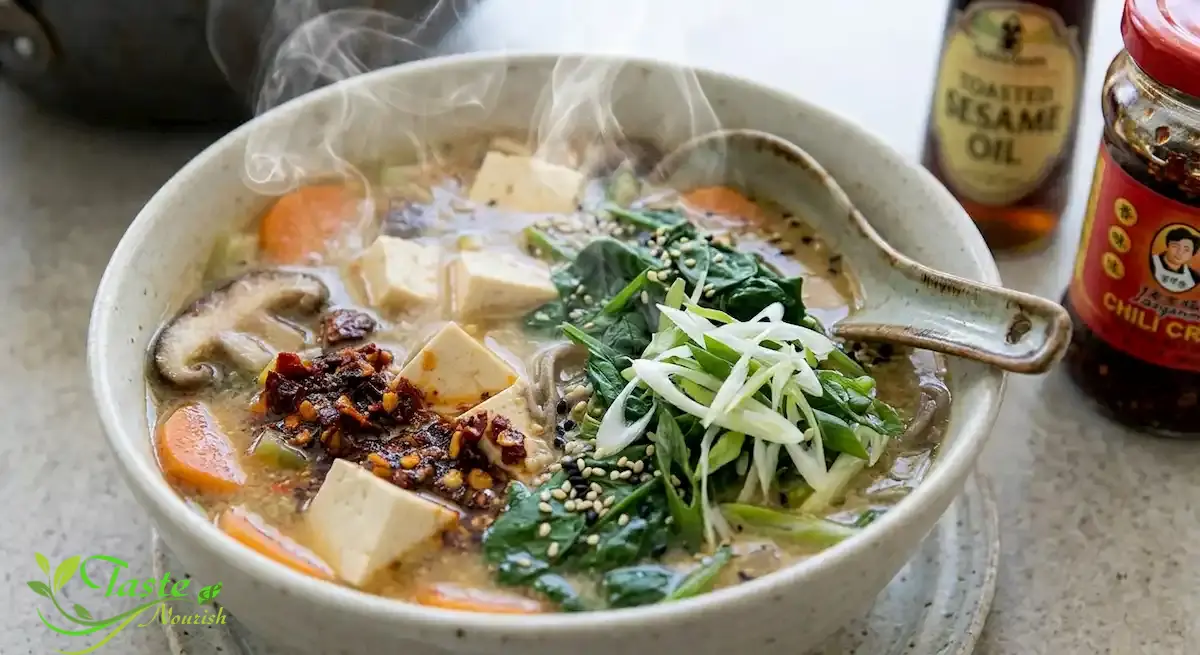
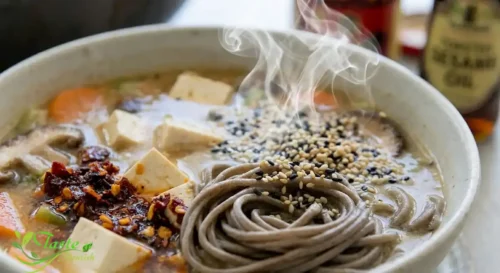
When you want something warm, savory, and satisfying without a long cooking project, this ginger miso soup recipe delivers. Browned mushrooms add depth, fresh ginger brings gentle heat, and tofu and spinach make the bowl filling. A final stir of miso, added off the boil, ties it all together. It is a warming ginger miso soup you can make in one pot in about 40 minutes.
I developed this ginger miso soup recipe around three choices. First, I brown the mushrooms well before adding anything else, because that step builds most of the soup’s savory depth. Second, I use three tablespoons of fresh ginger and let it simmer in the broth, which gives a steady, warming heat rather than a sharp bite. Third, I whisk the miso with a ladleful of hot broth and stir it in off the boil, so the flavor stays bright.
I recommend low-sodium broth and tasting before you add any extra miso, since brands vary a lot in saltiness. I like firm tofu here because it holds its shape in hot broth. I cook noodles separately when I want a heartier bowl, so the soup stays clear. For leftovers, I refrigerate the soup within two hours and reheat it gently to 165°F, then add a small spoonful of fresh miso and a few drops of rice vinegar if the flavor seems faded.
Quick Answer: How to Make Ginger Miso Soup
For this ginger miso soup recipe, brown sliced mushrooms in oil, then cook carrots, scallion whites, ginger, and garlic. Add vegetable broth and simmer for about 10 minutes. Stir in tofu and spinach, then remove the pot from direct heat. Whisk the miso with a ladleful of hot broth, stir it back in, and finish with rice vinegar and toasted sesame oil. Do not boil the soup after the miso goes in.
Key Takeaways
This ginger miso soup recipe builds flavor in layers: browned mushrooms first, then ginger and garlic, then a short simmer in broth.
Whisk the miso with a ladleful of hot broth and add it off the boil, so the soup stays smooth and the flavor stays bright.
Use low-sodium broth, and taste before adding salt, since miso supplies plenty on its own.
Cook noodles separately, and add tofu and spinach only at the end, so they keep their texture.
Refrigerate leftovers within 2 hours, keep them for 3 to 4 days, and reheat gently until they reach 165°F.
What Makes This Warming Ginger Miso Soup Different
Traditional Japanese miso soup is typically a simple dashi-based soup with miso stirred in near the end. This version borrows the miso-last method but works as a more filling, vegetable-forward meal. It uses vegetable broth instead of dashi, and three tablespoons of ginger give it real warmth without making it fiery.
The result is a light but substantial soup, which is why this warming ginger miso soup suits cold evenings, a cold-weather lunch, or a quick weeknight dinner. It is also an easy ginger miso soup recipe for beginners, because the only step that needs attention is how you add the miso.
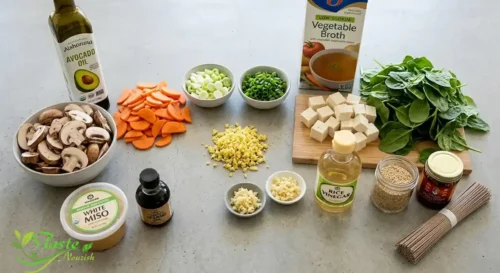
Ingredients for Ginger Miso Soup
This recipe makes 4 servings of about 1¾ cups each.
1 tablespoon neutral oil, such as avocado or canola
8 ounces shiitake or cremini mushrooms, sliced ¼ inch thick (stems removed if using shiitake)
1 medium carrot, peeled and sliced into thin half-moons, about ⅛ inch thick
4 scallions, white and light green parts sliced thin; dark green parts sliced separately for garnish
3 tablespoons finely grated or minced fresh ginger (from a 3-inch piece)
3 garlic cloves, minced
6 cups low-sodium vegetable broth
1 (14-ounce) block firm tofu, drained, patted dry, and cut into ¾-inch cubes
4 packed cups baby spinach (about 4 ounces)
¼ cup white or yellow miso, plus up to 2 more tablespoons to taste
2 teaspoons unseasoned rice vinegar
1 teaspoon toasted sesame oil
Optional additions and garnishes:
Toasted sesame seeds
Chili crisp or red pepper flakes
6 to 8 ounces soba or udon noodles, cooked separately (see serving notes below)
Ingredient Notes
Miso: White or yellow miso is milder and slightly sweet, so it lets the ginger stand out. Red miso is saltier and more pungent. If you use it, start with 3 tablespoons and add more gradually. Brands vary widely in saltiness, so the amount in the recipe is a starting point.
Ginger: Grating releases more juice and gives a stronger, more even heat. Mincing leaves small pieces you can bite into. Choose firm, smooth-skinned ginger, and peel it by scraping the skin off with the edge of a spoon.
Broth: Low-sodium broth matters because miso adds a lot of salt. This soup needs no added table salt.
Tofu: Firm tofu holds its shape in hot broth. Soft or silken tofu is more traditional in some miso soups, but it breaks apart easily in a soup this hearty.
Nutrition Information
These are approximate estimates per serving (1 of 4), based on standard values for the ingredients above. They do not include noodles or optional garnishes. Brands of miso, broth, and tofu vary, so treat the numbers as a guide.
Nutrient
Approximate amount per serving
Calories
about 220
Protein
about 14 g
Carbohydrates
about 17 g
Fiber
about 3 g
Fat
about 10 g
Sodium
about 800 to 1,000 mg
Sodium is the number that varies most, because it depends heavily on your miso and broth. If you need to limit sodium, see the FAQ below.
How to Make This Ginger Miso Soup Recipe
1. Prep everything first. Slice the mushrooms, carrot, and scallions, grate the ginger, mince the garlic, and cube the tofu. The cooking moves quickly once the pot is hot.
2. Brown the mushrooms. Heat the oil in a large pot or Dutch oven over medium-high heat. Add the mushrooms in a single layer if possible. Cook, stirring only occasionally, for 5 to 6 minutes, until their liquid has evaporated and the edges are golden brown.
3. Soften the vegetables. Reduce the heat to medium. Add the carrot and scallion whites and cook for 2 minutes, stirring, until the scallions look glossy.
4. Add the aromatics. Stir in the ginger and garlic. Cook for 30 to 60 seconds, until very fragrant. Do not let the garlic brown, or it will turn bitter.
5. Simmer the broth. Pour in the vegetable broth and scrape up any browned bits from the bottom of the pot. Bring to a gentle simmer, with small bubbles breaking the surface, then partly cover and cook for 8 to 10 minutes, until the carrot slices are tender but still hold their shape.
6. Warm the tofu. Add the tofu and simmer gently for 3 to 4 minutes, just to heat it through. Stir carefully so the cubes stay intact.
7. Wilt the spinach. Stir in the spinach and cook for about 1 minute, until just wilted. Turn the heat to low or remove the pot from the burner. The soup should be steaming but no longer bubbling.
8. Add the miso off the boil. Ladle about 1 cup of hot broth into a small bowl. Whisk in the ¼ cup miso until completely smooth, then pour the mixture back into the pot and stir gently.
9. Finish and taste. Stir in the rice vinegar and toasted sesame oil. Taste, and add more miso 1 teaspoon at a time if you want it saltier or deeper in flavor. Warm gently for a minute if needed, without letting it boil.
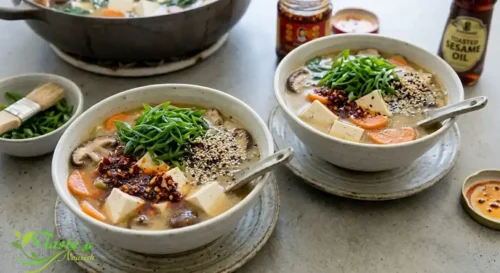
10. Serve. Ladle into bowls and top with the dark green scallion slices, sesame seeds, and chili crisp if using.
Tip: Whisking the miso in a separate bowl with hot broth keeps it from clumping, so you do not end up with salty pockets in the soup. If your miso is thick or stubborn, press it through a small fine-mesh strainer with the back of a spoon.
How to Balance the Broth and Seasoning
This is a brothy soup, not a stew. About 6 cups of broth to the vegetables and tofu gives each bowl enough liquid to sip, with plenty to eat. If you prefer a soupier bowl, add ½ to 1 cup more broth or hot water, then stir in an extra teaspoon or two of miso so the flavor does not thin out.
Taste in this order: salt from the miso, brightness from the rice vinegar, then heat from the ginger. If the soup tastes flat, the fix is usually more miso or a few more drops of vinegar, not table salt. If it tastes one-note, the sesame oil and a pinch of chili flakes add depth without adding salt.
Tip: Taste the broth before adding the miso. Some vegetable broths are already quite salty, and a salty broth means you will need less miso than the recipe suggests.
How to Serve Ginger Miso Soup
Serve it right away, while the soup is steaming but not scalding, since miso tastes best when it is hot and fragrant rather than boiling.
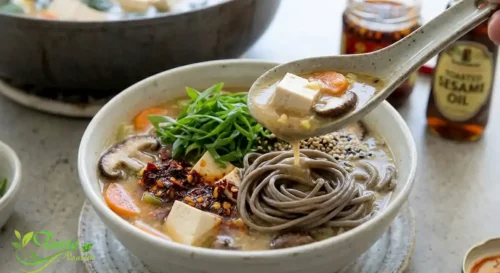
To turn it into a heartier meal, cook 6 to 8 ounces of soba or udon noodles separately according to the package directions, then drain and divide them among the bowls before ladling the soup over them. Cooking noodles in a separate pot keeps the broth from turning cloudy and starchy. Cooked rice also works well. Add about ½ cup to each bowl.
Storage and Reheating
Let the soup cool slightly, then refrigerate it within 2 hours of cooking. According to the USDA Food Safety and Inspection Service, leftovers can be kept in the refrigerator for 3 to 4 days. Store the soup in shallow, airtight containers so it cools quickly.
The tofu and mushrooms hold up well in the fridge, but the spinach softens further and the miso flavor mellows slightly. To reheat, warm the soup gently on the stove or in the microwave, covered, stirring occasionally.
The USDA advises reheating leftovers until they reach 165°F, checked with a food thermometer. This is well below boiling, so you can reach it without a vigorous boil, which would dull the miso. If the flavor tastes faded afterward, stir in a teaspoon of fresh miso and a few drops of rice vinegar off the heat.
Make-Ahead Option
For the best texture and flavor, make the soup through step 5 (the simmered vegetable broth), refrigerate it, and finish it when you are ready to eat. Reheat the base until simmering, then add the tofu, spinach, and miso as directed. This keeps the spinach bright and the miso fresh.
Can You Freeze Ginger Miso Soup?
You can, but the results are only fair. Frozen tofu turns spongy and chewier, and the spinach loses its fresh texture. Miso is also best added fresh for flavor.
If you plan to freeze it, freeze only the simmered broth with mushrooms, carrots, and aromatics, before adding the tofu, spinach, and miso. Cool it quickly, pack it into freezer-safe containers with a little headspace, and use it within about 2 to 3 months for the best quality. Thaw it in the refrigerator overnight, reheat until simmering, and then add fresh tofu, spinach, and miso.
Troubleshooting Ginger Miso Soup
Too salty: Add ½ to 1 cup hot water or unsalted broth, plus extra tofu or spinach to rebalance. A few more drops of rice vinegar can make the saltiness seem less sharp.
Tastes bland: Stir in miso 1 teaspoon at a time, tasting after each addition. If it is salty enough but still flat, add a splash of rice vinegar or a little more grated ginger.
Miso is clumpy or gritty: Whisk it into a ladleful of hot broth first, and strain it if needed. Do not drop it straight into the pot.
Ginger is too sharp or harsh: Simmer the soup a few minutes longer, off direct high heat, to let it mellow, or add a small pinch of sugar or a teaspoon of maple syrup.
Carrots are still firm: Slices thicker than ⅛ inch take longer. Simmer 2 to 3 minutes more before adding the tofu.
Tofu is crumbling: It was likely stirred too hard, or the tofu was too soft. Stir gently, and use firm or extra-firm tofu.
Soup looks cloudy or settles: This is normal. Miso naturally clouds the broth and can settle on standing, so give the soup a quick stir before serving.
Ginger Miso Soup Variations
Vegan: The recipe is vegan as written, provided your vegetable broth and miso contain no fish-derived ingredients such as bonito. Some miso and broths do, so check the label.
Gluten-free: Some miso is made with barley. Choose a miso labeled gluten-free, and use certified gluten-free noodles or rice if you add them.
Spicy: Stir in ½ teaspoon red pepper flakes with the garlic, or top each bowl with chili crisp.
More protein: Add 1 cup shelled edamame along with the tofu.
Different greens: Swap the spinach for 3 to 4 cups chopped baby bok choy or kale. Add sturdier greens with the tofu and simmer 2 to 3 minutes, until tender.
Deeper broth: Replace the vegetable broth with 6 cups of prepared dashi. Check that it is vegetarian first if that matters to you.
ginger miso soup recipe FAQs
Can I boil miso soup?
It is best to avoid it. Heat dulls miso’s flavor and aroma, so keep the soup below a boil after the miso goes in. Gentle heat that leaves the soup steaming is enough.
What is the best miso for this soup?
White or yellow miso is a good starting point, because it is mild and lets the ginger come through. Red miso gives a stronger, saltier flavor, so use less of it.
Can I use ground ginger instead of fresh?
Fresh ginger is much better here, because it gives the soup its bright, warming character. If you only have ground ginger, start with ½ teaspoon, add it with the garlic, and taste before adding more. The flavor will be different, and less fresh.
How can I make the soup less salty or lower in sodium?
Use low-sodium broth, reduce the miso to 3 tablespoons, and add more vegetables to stretch the broth. Add miso gradually and stop when the soup tastes seasoned. If you follow a sodium-restricted diet for medical reasons, check with your doctor or dietitian about suitable amounts.
Can I substitute something for the tofu?
Yes. Shelled edamame is the simplest swap, added at the same stage as the tofu. You can also leave the tofu out and serve the soup over cooked noodles or rice for a lighter bowl.
How long does it take to make ginger miso soup?
About 15 minutes of prep and 25 minutes of cooking, or around 40 minutes in total. Most of that time goes to browning the mushrooms and simmering the broth, which is where the flavor is built.
Why does my soup taste flat even though I added plenty of miso?
Usually it needs brightness, not more salt. A small splash of rice vinegar often fixes it. If the soup has been reheated, stir in a teaspoon of fresh miso, since the original miso flavor fades with heat and time.
A savory, brothy ginger miso soup with browned mushrooms, carrots, tofu, and spinach, finished with miso stirred in off the boil.
Ingredients
1 tablespoon neutral oil, such as avocado or canola
8 ounces shiitake or cremini mushrooms, sliced 1/4 inch thick (stems removed if using shiitake)
1 medium carrot, peeled and sliced into thin half-moons, about 1/8 inch thick
4 scallions, white and light green parts sliced thin; dark green parts sliced separately for garnish
3 tablespoons finely grated or minced fresh ginger (from a 3-inch piece)
3 garlic cloves, minced
6 cups low-sodium vegetable broth
1 (14-ounce) block firm tofu, drained, patted dry, and cut into 3/4-inch cubes
4 packed cups baby spinach (about 4 ounces)
1/4 cup white or yellow miso, plus up to 2 more tablespoons to taste
2 teaspoons unseasoned rice vinegar
1 teaspoon toasted sesame oil
Toasted sesame seeds, for garnish (optional)
Chili crisp or red pepper flakes, for serving (optional)
6 to 8 ounces soba or udon noodles, cooked separately (optional)
Directions
Heat the oil in a large pot or Dutch oven over medium-high heat. Add the mushrooms and cook, stirring only occasionally, for 5 to 6 minutes, until their liquid has evaporated and the edges are golden brown.
Reduce the heat to medium. Add the carrot and scallion whites and cook for 2 minutes, stirring.
Stir in the ginger and garlic. Cook for 30 to 60 seconds, until very fragrant, without letting the garlic brown.
Pour in the vegetable broth and scrape up any browned bits from the bottom of the pot. Bring to a gentle simmer, partly cover, and cook for 8 to 10 minutes, until the carrot slices are tender but still hold their shape.
Add the tofu and simmer gently for 3 to 4 minutes, just to heat it through. Stir carefully so the cubes stay intact.
Stir in the spinach and cook for about 1 minute, until just wilted. Turn the heat to low or remove the pot from the burner so the soup is steaming but no longer bubbling.
Ladle about 1 cup of hot broth into a small bowl. Whisk in the 1/4 cup miso until completely smooth, then pour the mixture back into the pot and stir gently.
Stir in the rice vinegar and toasted sesame oil. Taste, and add more miso 1 teaspoon at a time if you want it saltier or deeper in flavor. Warm gently for a minute if needed, without letting it boil.
Ladle into bowls and top with the dark green scallion slices, sesame seeds, and chili crisp if using.
Conclusion
A good ginger miso soup depends on three things: browning the mushrooms well, simmering the ginger long enough to mellow it, and keeping the miso off the boil. Follow those steps, adjust the seasoning at the end, and you will have a warm, balanced bowl that comes together in under an hour.
**Hanan Abo Samra** shares practical cooking insights, delicious recipes, and evidence-based nutrition information. Drawing on more than 20 years of hands-on cooking experience, she creates helpful food content that combines everyday cooking knowledge with information from reliable scientific sources. Her goal is to help readers better understand the foods they eat, explore their nutritional benefits, and prepare delicious meals with confidence.