

Tomato Basil Soup Recipe: Rich, Silky & Ready in 50 Minutes
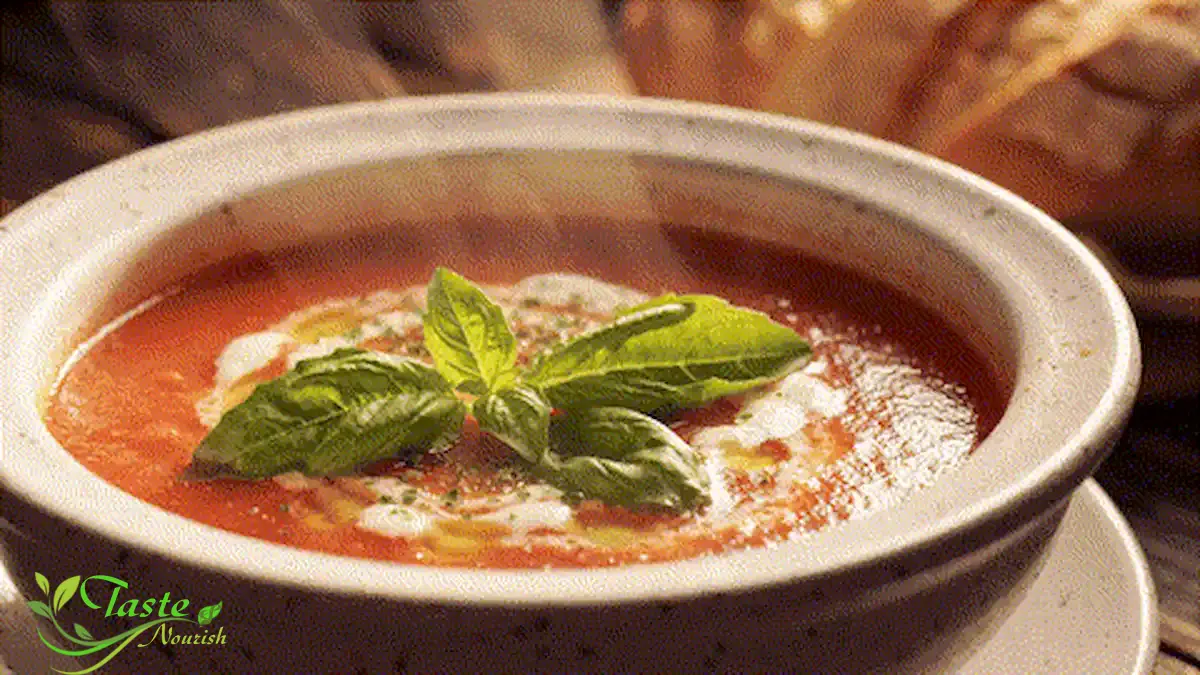
Some soups need a special occasion — this tomato basil soup recipe doesn’t. In about 50 minutes, canned tomatoes, garlic, and fresh basil turn into a silky, deeply savory soup with a natural sweetness that needs no cream to feel rich. Whether you serve it with a grilled cheese or on its own, this is the version worth keeping on repeat.
Quick Answer
This tomato basil soup recipe turns canned tomatoes, sautéed garlic, and fresh basil into a rich, velvety soup in under an hour. Cook the aromatics and tomato paste first to build flavor, simmer with broth until the tomatoes break down, blend smooth, then stir in basil and a splash of cream just before serving.
Key Takeaways
- This tomato basil soup recipe works with canned tomatoes year-round or fresh, ripe tomatoes when they’re in season.
- Cooking the tomato paste before adding liquid is the single biggest flavor upgrade — it caramelizes rather than just dissolving.
- Fresh basil goes in near the end of cooking so its aroma stays bright instead of turning muddy.
- Cream is optional; the soup is naturally rich from the olive oil, aromatics, and reduced tomatoes.
- A gentle simmer, not a hard boil, keeps the texture smooth and prevents scorching on the bottom of the pot.
Why You’ll Love This Recipe
It’s faster than most homemade tomato soup recipes that call for roasting fresh tomatoes, but it doesn’t taste like a shortcut. The tomato paste step does the work that long roasting usually handles, building sweetness and depth in a couple of minutes instead of an hour in the oven.
It’s also flexible. Leave out the cream for a lighter, dairy-free pot, or add it for something closer to a creamy tomato soup recipe you’d order in a restaurant. Either way, the base recipe stays the same.
Ingredients
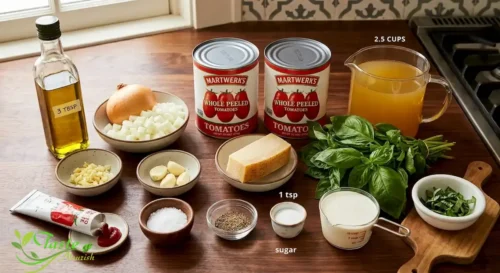
- 3 tablespoons olive oil
- 1 medium yellow onion, diced
- 4 garlic cloves, minced
- 3 tablespoons tomato paste
- 2 (28-ounce) cans whole peeled tomatoes, with their juices
- 2 to 3 cups vegetable or chicken broth
- 1 teaspoon sugar, optional
- 1 teaspoon kosher salt, plus more to taste
- 1/2 teaspoon black pepper
- 1 cup fresh basil leaves, loosely packed, plus extra for garnish
- 1/2 cup heavy cream, optional
- 1 parmesan rind, optional
Ingredient Notes
Whole peeled tomatoes, crushed by hand as they go into the pot, generally taste fresher than pre-crushed or diced canned tomatoes, which are often packed with calcium chloride to hold their shape and end up slightly firmer and more acidic. San Marzano-style tomatoes are a safe bet for balanced sweetness.
Fresh basil is doing real work here, not just garnishing — dried basil has a flatter, dustier flavor and won’t give the soup the same bright, slightly peppery finish. If fresh basil truly isn’t available, use one teaspoon of dried for every tablespoon of fresh called for, and add it earlier in the simmer since dried herbs need more time to rehydrate and release flavor.
A parmesan rind simmered in the pot and removed before blending adds a savory depth that’s hard to replicate otherwise; it’s a small addition but a noticeable one.
Substitutions
To make a homemade tomato soup recipe from fresh tomatoes instead of canned, use about 3 pounds of ripe, in-season tomatoes: blanch, peel, and roughly chop them before adding to the pot. Fresh tomatoes hold more water than canned, so expect a slightly longer simmer to reach the same consistency.
Swap the heavy cream for full-fat coconut milk for a dairy-free version — it adds richness with a faint coconut note, which pairs surprisingly well with basil. Evaporated milk is a lighter, less rich substitute for cream, though the soup will taste noticeably thinner.
Kitchen Tools Needed
An immersion blender is the easiest way to purée this soup directly in the pot. Without one, a countertop blender works, but blend hot soup in small batches, remove the center cap of the lid, and cover the opening loosely with a kitchen towel — hot liquid expands quickly and can force the lid off if the blender is sealed and full.
How to Make This Tomato Basil Soup Recipe
Build the Flavor Base
- Heat the olive oil in a large pot or Dutch oven over medium heat. Add the onion and cook, stirring occasionally, for 5 to 7 minutes, until it turns soft and translucent but not browned.
- Add the garlic and cook for 30 seconds, just until fragrant — garlic burns quickly and turns bitter, so keep it moving.
- Stir in the tomato paste and cook for 1 to 2 minutes, stirring constantly. It will darken slightly and smell noticeably sweeter and toastier; this is the step that gives the soup its depth.
Simmer and Develop Flavor
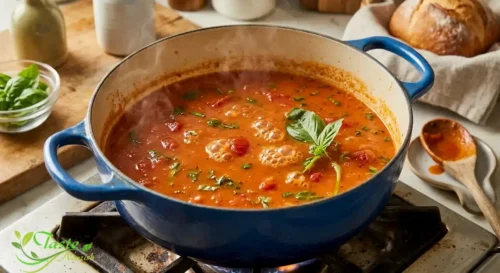
- Add the canned tomatoes, crushing them with a spoon or your hands as they go in, along with 2 cups of broth, the sugar, salt, and pepper. Add the parmesan rind here if using.
- Bring to a gentle simmer, then reduce the heat to low. Simmer uncovered for 20 to 25 minutes, stirring occasionally, until the tomatoes have broken down completely and the soup has reduced and thickened slightly.
- Remove the parmesan rind. Stir in most of the basil, reserving a few leaves for garnish, and let it wilt into the soup for the last minute of cooking.
Blend and Finish
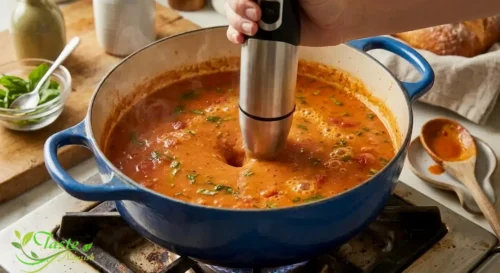
- Purée the soup until smooth using an immersion blender, or in batches in a countertop blender following the venting method above.
- Reduce the heat to low and stir in the cream, if using. Let it warm through for a minute or two without returning to a boil, which helps it incorporate smoothly instead of separating.
- Taste and adjust the seasoning. If the soup tastes flat, it usually needs more salt rather than more of anything else. Serve topped with the reserved basil and a drizzle of olive oil.
Expert Tips
Add the broth gradually rather than all at once. Two cups is enough for most canned tomatoes; add the third cup only if the soup looks too thick after simmering, since it’s easy to thin a soup and harder to concentrate one back down.
If the soup tastes sharp or acidic even after simmering, a small pinch of baking soda — no more than an eighth of a teaspoon — will neutralize some of the acidity. Add it slowly, since too much leaves a soapy, chalky aftertaste and can affect texture.
Warm the cream slightly before adding it, or temper it with a ladle of hot soup first, especially if the soup is still quite hot. This reduces the risk of the dairy curdling on contact with the acidic tomatoes.
Common Mistakes to Avoid
Skipping the tomato paste sauté. Adding tomato paste straight into the liquid instead of cooking it first leaves it tasting raw and slightly metallic rather than sweet and concentrated. The fix is simple: give it those 1 to 2 minutes in the oil before anything else goes in.
Boiling instead of simmering. A hard boil breaks the soup’s texture, encourages scorching on the bottom of the pot, and can cause cream to separate. Keep the heat low enough that the surface shows lazy bubbles, not a rolling boil.
Adding basil too early. Basil simmered for the full cooking time turns dull in both color and flavor, losing the fresh, peppery brightness it’s added for. Stir it in during the last minute or two instead.
Using low-quality canned tomatoes. Thin, watery, or overly acidic canned tomatoes are difficult to fix with seasoning alone. Whole peeled tomatoes from a reputable brand make a noticeable difference in the final flavor.
Recipe Variations
Creamy Tomato Basil Soup
For a fuller creamy tomato soup recipe, increase the cream to 3/4 cup and stir in 1/4 cup of finely grated parmesan along with it. The cheese adds body as well as flavor.
Roasted Tomato Basil Soup
When using fresh, in-season tomatoes, roast them at 425°F with the onion and garlic for about 30 minutes before adding to the pot. Roasting caramelizes their natural sugars and adds a smoky depth that a stovetop simmer alone won’t produce.
Canned Tomato Soup Upgrade
Short on time but starting from a store-bought canned tomato soup? Sauté the onion and garlic separately, then stir them into the heated canned soup along with a splash of cream, fresh basil, and a parmesan rind while it warms through. It won’t taste identical to the from-scratch version, but it closes much of the gap.
Spicy Tomato Basil Soup
Add 1/2 teaspoon of crushed red pepper flakes along with the garlic for gentle background heat that doesn’t compete with the basil.
Serving Suggestions
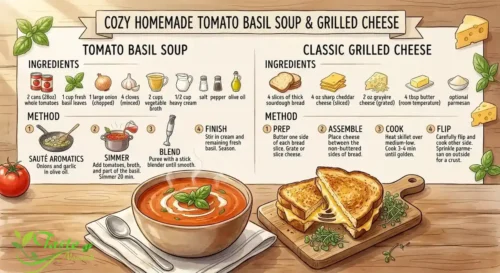
Tomato soup and grilled cheese is the pairing for a reason — the acidity in the soup cuts through the richness of melted cheese and butter-crisped bread. Sharp cheddar or gruyère both hold up well against the tomato’s brightness.
For a lighter meal, serve it alongside a simple green salad with a vinaigrette, or with crusty bread for dipping. A few parmesan crisps or a scattering of croutons add texture without much extra effort.
Nutrition Information
These values are an estimate per serving (about 1.5 cups, made with cream) and will vary based on the exact broth, tomatoes, and cream used.
| Nutrient | Approximate Amount |
|---|---|
| Calories | 190 |
| Total Fat | 13g |
| Carbohydrates | 15g |
| Protein | 3g |
| Fiber | 3g |
| Sodium | 620mg |
Tomatoes are a well-documented source of vitamin C and potassium, according to USDA , and cooked tomato products like this soup are a commonly studied source of lycopene, the carotenoid responsible for their red color. A peer-reviewed umbrella review found that higher tomato and lycopene intake was associated with lower rates of several chronic health outcomes in the populations studied, though the authors note the certainty of evidence varies and more research is needed before drawing firm conclusions (Tomato and Lycopene and Multiple Health Outcomes: Umbrella Review, published in Advances in Nutrition). This is not a reason to treat the soup as medicinal — it’s simply a well-studied ingredient with a favorable nutritional profile.
Storing and Reheating This Tomato Basil Soup Recipe
Let the soup cool slightly, then refrigerate it in an airtight container within two hours of cooking, following the standard two-hour rule for leftovers outlined by the USDA Food Safety and Inspection Service. Stored this way, it keeps well in the refrigerator for 3 to 4 days, which lines up with general guidance for cooked soups and stews from the federal Cold Food Storage Chart on FoodSafety.gov.
To freeze, cool the soup completely first — ideally the version without cream, since dairy-based soups are more prone to separating in the freezer. Freeze in airtight containers for up to 3 months, leaving an inch of headspace for expansion. The FDA’s guidance on safe food storage notes that keeping the freezer at 0°F or below preserves quality as well as safety.
Reheat gently on the stovetop over medium-low heat, stirring occasionally, rather than microwaving on high, which can cause uneven heating and make cream separate. If the soup was frozen without cream, stir it in fresh after reheating for the smoothest texture.
Make Ahead
The soup base can be made up to 2 days ahead through the blending step and refrigerated. Reheat gently and stir in the fresh basil and cream just before serving for the best color and texture.
Tomato Basil Soup Recipe
6
servings15
minutes35
minutes190
kcalA rich, silky tomato basil soup made from canned tomatoes, garlic, and fresh basil, ready in about 50 minutes with no cream required.
Ingredients
3 tablespoons olive oil
1 medium yellow onion, diced
4 garlic cloves, minced
3 tablespoons tomato paste
2 (28-ounce) cans whole peeled tomatoes, with their juices
2 to 3 cups vegetable or chicken broth
1 teaspoon sugar (optional)
1 teaspoon kosher salt, plus more to taste
1/2 teaspoon black pepper
1 cup fresh basil leaves, loosely packed, plus extra for garnish
1/2 cup heavy cream (optional)
1 parmesan rind (optional)
Directions
- Heat the olive oil in a large pot or Dutch oven over medium heat. Add the onion and cook, stirring occasionally, for 5 to 7 minutes, until soft and translucent but not browned.
- Add the garlic and cook for 30 seconds, just until fragrant.
- Stir in the tomato paste and cook for 1 to 2 minutes, stirring constantly, until it darkens slightly and smells sweeter and toastier.
- Add the canned tomatoes, crushing them as they go in, along with 2 cups of broth, the sugar, salt, and pepper. Add the parmesan rind if using.
- Bring to a gentle simmer, then reduce heat to low. Simmer uncovered for 20 to 25 minutes, stirring occasionally, until the tomatoes have broken down and the soup has thickened slightly.
- Remove the parmesan rind. Stir in most of the basil, reserving a few leaves for garnish, and let it wilt for the last minute of cooking.
- Purée the soup until smooth with an immersion blender, or in batches in a countertop blender.
- Reduce heat to low and stir in the cream, if using. Warm through for a minute or two without boiling.
- Taste and adjust seasoning. Serve topped with reserved basil and a drizzle of olive oil.
Notes
- Use whole peeled tomatoes, crushed by hand, for a fresher taste than pre-crushed canned tomatoes.
- For dairy-free: swap heavy cream for full-fat coconut milk.
- To fix acidic soup: add a small pinch of baking soda (no more than 1/8 teaspoon).
- Use whole peeled tomatoes, crushed by hand, for a fresher taste than pre-crushed canned tomatoes.
Tomato Basil Soup Recipe FAQs
Can I use fresh tomatoes instead of canned?
Yes. Use about 3 pounds of ripe tomatoes, blanched and peeled, in place of the canned tomatoes. Because fresh tomatoes hold more water, let the soup simmer a little longer to reach the same thickness.
What’s the best way to fix soup that tastes too acidic?
Start with a small pinch of sugar, which is often enough to balance sharpness. If it’s still too tart, add baking soda in tiny increments — an eighth of a teaspoon at a time — tasting as you go.
Why does my soup taste bitter or flat instead of bright?
This is usually either burnt garlic or basil that simmered too long. Cook garlic just until fragrant, and stir fresh basil in during the last minute of cooking rather than at the start.
Can I make this tomato basil soup recipe dairy-free?
Yes — use olive oil throughout, vegetable broth, and swap the cream for full-fat coconut milk or a cashew cream. Skip the parmesan rind or use a plant-based alternative.
Do I have to blend the soup completely smooth?
No. For a chunkier, more rustic texture, pulse the soup only a few times, or blend half of it and stir it back into the rest.
Can I freeze tomato basil soup that already has cream in it?
You can, but the texture may separate slightly when thawed. Whisking it vigorously while reheating, or blending it briefly again, usually brings it back together.
Conclusion
The difference between an average pot of soup and a tomato basil soup recipe worth making again comes down to two moments: giving the tomato paste time to caramelize before the liquid goes in, and stirring the basil in at the very end so it stays bright instead of turning dull. Get those two steps right, and everything else falls into place.
References
- FoodData Central, U.S. Department of Agriculture, Agricultural Research Service — https://fdc.nal.usda.gov/
- “Tomato and Lycopene and Multiple Health Outcomes: Umbrella Review,” PubMed, National Library of Medicine — https://pubmed.ncbi.nlm.nih.gov/33131949/
- “Leftovers and Food Safety,” Food Safety and Inspection Service, U.S. Department of Agriculture — https://www.fsis.usda.gov/food-safety/safe-food-handling-and-preparation/food-safety-basics/leftovers-and-food-safety
- “Cold Food Storage Chart,” FoodSafety.gov, U.S. Department of Health and Human Services — https://www.foodsafety.gov/food-safety-charts/cold-food-storage-charts
- “Are You Storing Food Safely?,” U.S. Food and Drug Administration — https://www.fda.gov/consumers/consumer-updates/are-you-storing-food-safely