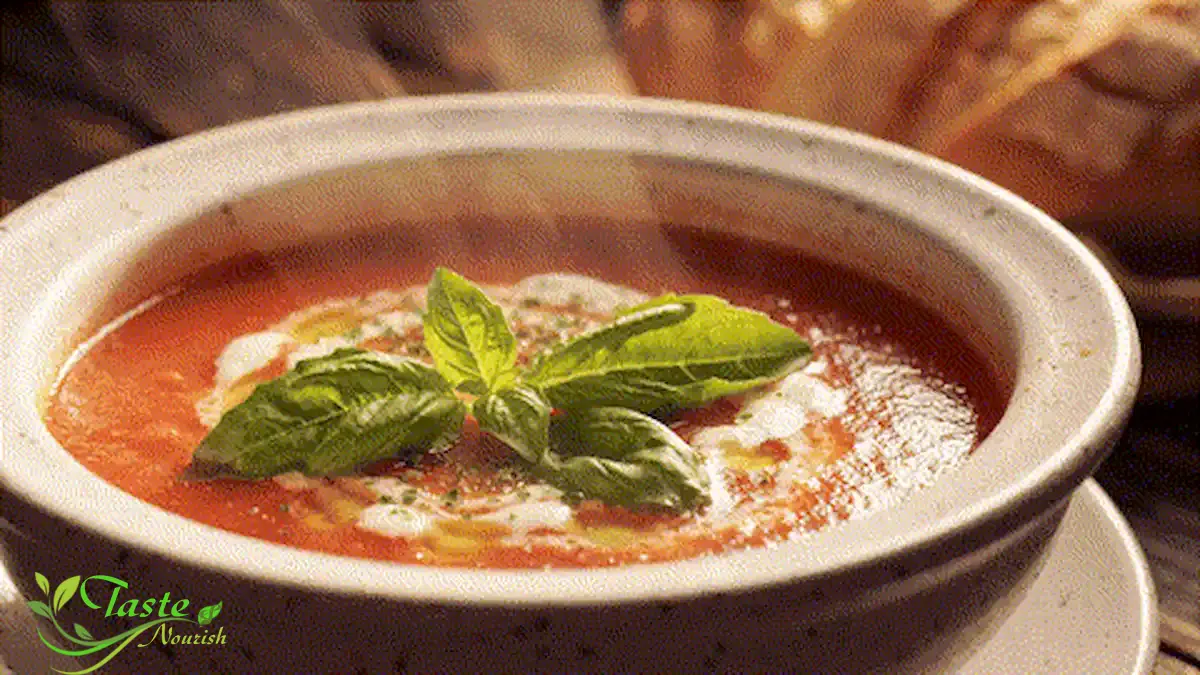

Creamy Homemade Tomato Soup Recipe That Never Curdles

A really good bowl of tomato soup comes down to two things: how much flavor you build into the tomatoes before they hit the blender, and how you fold in the cream without breaking it. This creamy homemade tomato soup recipe leans on a quick sauté of aromatics, slow-simmered canned or fresh tomatoes, and a tempering trick that keeps the dairy silky instead of curdled.
It comes together in under an hour from pantry staples, and it tastes far deeper than anything from a can.
Quick Answer: Creamy Homemade Tomato Soup
This creamy homemade tomato soup recipe simmers canned or fresh tomatoes with sautéed onion, garlic, and tomato paste, then blends the mixture smooth and finishes it with tempered heavy cream and fresh basil. The whole pot takes about 50 minutes, serves six, and turns out silky and deeply tomato-flavored without any curdling.
Recipe at a Glance
| Prep Time | Cook Time | Total Time | Yield | Difficulty |
|---|---|---|---|---|
| 15 minutes | 35 minutes | 50 minutes | 6 servings (about 1½ cups each) | Easy |
Key Takeaways
- This creamy homemade tomato soup recipe gets its depth from browning tomato paste and slow-simmering the tomatoes before blending, not from extra cream.
- Tempering the cream — stirring a ladle of hot soup into it before adding it to the pot — is the one step that prevents curdling.
- A pinch of baking soda or sugar balances the tomatoes’ acidity without dulling their flavor.
- Canned whole peeled tomatoes and ripe fresh tomatoes both work; canned gives more consistent results outside of peak summer.
- The soup keeps 3 to 4 days refrigerated and is the classic dipping partner for a grilled cheese sandwich.
What Makes This Tomato Soup So Creamy
Most lackluster tomato soups skip a step: browning the tomato paste. Cooking it in the fat for a minute or two before adding liquid deepens its flavor from tinny to roasted and slightly sweet. That single move, plus a full simmer that lets the tomatoes break down completely, is what gives this soup body — the cream just rounds out what’s already there.
The other detail that separates a silky bowl from a grainy, split one is temperature control when the dairy goes in. Cream curdles when it meets a hot, acidic liquid too fast; this recipe avoids that by tempering, which is covered in detail below.
Ingredients
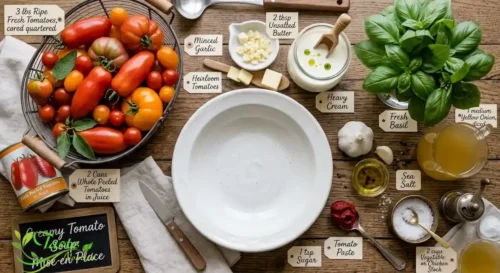
- 2 tablespoons unsalted butter
- 1 tablespoon olive oil
- 1 medium yellow onion, diced
- 3 garlic cloves, minced
- 2 tablespoons tomato paste
- 2 (28-ounce) cans whole peeled tomatoes, with their juice (or 3 pounds ripe fresh tomatoes, cored and quartered)
- 2 cups vegetable or chicken stock
- 1 teaspoon sugar, or a pinch of baking soda
- ½ cup heavy cream, plus a splash for serving
- ¼ cup packed fresh basil leaves, plus more for garnish
- Salt and freshly ground black pepper, to taste
Ingredient Notes
Canned whole peeled tomatoes, ideally San Marzano-style, give the most reliable flavor since they’re picked and canned at peak ripeness year-round. If you’re working with fresh tomatoes in summer, use the ripest, reddest ones you can find — pale or mealy tomatoes will make a thin, flat-tasting soup.
Tomato paste is doing more work here than it looks like it should. Look for a tube or can that’s deep brick-red, not orange, since color is a decent proxy for concentration and sweetness.
Substitutions
Heavy cream can be swapped for full-fat coconut milk or a cashew cream for a dairy-free version; both change the flavor slightly but won’t curdle if you still temper them in.
Vegetable stock keeps the soup vegetarian without much flavor trade-off. Fresh tomatoes can replace canned in season, though the soup may need an extra 10 minutes of simmering to reduce the added liquid from fresh tomatoes’ higher water content.
How to Make Creamy Homemade Tomato Soup: Step-by-Step
- Melt the butter with the olive oil in a large pot or Dutch oven over medium heat. Add the onion and cook, stirring occasionally, for 5 to 7 minutes, until soft and translucent but not browned.
- Stir in the garlic and tomato paste. Cook for 1 to 2 minutes, stirring constantly, until the paste darkens slightly and smells sweet and roasted rather than sharp.
- Add the tomatoes (crushing whole ones with a spoon as you go), the stock, and the sugar or baking soda. Bring to a gentle simmer, then reduce the heat so it bubbles lazily, uncovered, for 20 to 25 minutes. The tomatoes should collapse completely and the soup should smell rounded and sweet rather than sharply acidic.
- Stir in the basil, then blend the soup until smooth. An immersion blender in the pot is easiest; with a countertop blender, work in batches, fill it no more than halfway, and vent the lid to let steam escape so it doesn’t pop off.
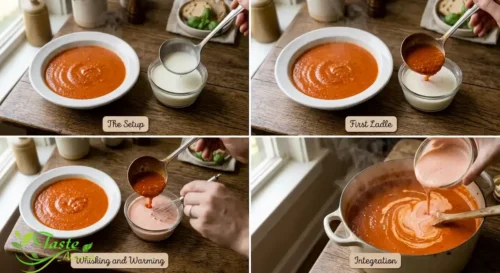
- Return the blended soup to low heat. Ladle about ½ cup of the hot soup into the cream and whisk to combine, then stir this tempered mixture back into the pot.
- Warm the soup gently over low heat for another minute or two without letting it boil. Season with salt and pepper, tasting and adjusting for acidity.
- Serve hot, with a swirl of extra cream and a few torn basil leaves on top.
The Key Technique: Tempering Cream So It Never Curdles
Cream curdles in tomato soup for one main reason: cold dairy proteins seize up when they’re dropped straight into a hot, acidic liquid. The sudden shock separates the fat and protein from the liquid, leaving the soup grainy or flecked.
Tempering solves this by raising the cream’s temperature gradually. Stirring a small amount of hot soup into the cream first warms it slowly and starts blending the two liquids on a small scale before they’re combined in the full pot. From there, keeping the heat low and never letting the soup boil again is what keeps everything smooth through serving.
Getting the Right Consistency
Canned tomatoes packed in juice give this soup a fairly predictable liquid volume, but a few things still affect thickness. If the soup tastes concentrated but looks thinner than you’d like after blending, simmer it uncovered for another 5 to 10 minutes to reduce it rather than adding more cream, which mutes the tomato flavor.
If it’s thicker than you want, thin it with stock, a quarter cup at a time, off the heat before rewarming.
Blending the soup fully — skins, seeds, and all — is what gives it body without relying on flour or extra dairy. Skipping the blending step, or only partially blending, is the most common reason homemade tomato soup ends up watery instead of velvety.
Common Mistakes to Avoid
- Adding cold cream straight into simmering soup. This is the top cause of curdling. Temper the cream first, as described above, every time.
- Rushing the tomato paste. Adding liquid before the paste has had a minute or two in the hot fat leaves the soup tasting raw and tinny instead of rounded.
- Blending a full, sealed blender jar of hot soup. Steam builds pressure quickly and can force the lid off. Work in small batches and vent the lid, or use an immersion blender.
- Boiling the soup after the cream goes in. Even properly tempered cream can separate if the soup returns to a hard boil. Keep it at a gentle simmer or lower once dairy is added.
- Skipping the acid balance. Very acidic canned tomatoes can taste sharp or metallic. A pinch of baking soda or a teaspoon of sugar mellows this without making the soup sweet.
Recipe Variations
Roasted Tomato Basil Soup
For a deeper, sweeter tomato basil soup recipe, halve fresh Roma tomatoes, toss with olive oil, and roast at 425°F for 30 to 35 minutes until charred at the edges before adding them to the pot in place of canned tomatoes. Roasting caramelizes their natural sugars and adds a smoky note that plain simmering doesn’t produce.
Spicy Tomato Soup
Add ½ teaspoon of red pepper flakes with the garlic, or stir in a minced chipotle pepper in adobo sauce along with the tomatoes for smoky heat that plays well against the cream.
Dairy-Free Version
Replace the heavy cream with full-fat coconut milk, tempered the same way. The flavor leans slightly tropical but blends surprisingly well with the basil.
Upgrading a Can of Store-Bought Tomato Soup
Short on time and starting from a can instead of this recipe? Sauté a minced garlic clove in butter, stir in the canned soup, and simmer for 5 minutes with a splash of cream and a few torn basil leaves. It won’t taste identical to the homemade version, but it closes a good part of the gap in about 10 minutes.
What to Serve With Creamy Tomato Soup
Tomato soup and grilled cheese is the pairing for a reason: the sandwich’s crisp, buttery crust and stretchy cheese are a textural contrast the smooth soup doesn’t have on its own, and the bread makes an ideal dipper for scooping up the last bit in the bowl. A sharp cheddar or a blend of cheddar and gruyère on sourdough holds up particularly well.

Beyond grilled cheese, this soup works with crusty bread and butter, a simple arugula salad with lemon vinaigrette to cut the richness, or a scattering of croutons and shaved parmesan on top.
Nutrition Information
Values are estimated per 1½-cup serving and will vary based on the exact tomatoes, stock, and cream used, according to general nutrient data from USDA FoodData Central.
| Nutrient | Approximate Amount |
|---|---|
| Calories | ~195 kcal |
| Total Fat | ~14 g |
| Saturated Fat | ~8 g |
| Carbohydrates | ~15 g |
| Fiber | ~3 g |
| Sugars | ~8 g |
| Protein | ~3 g |
| Sodium | ~550–650 mg |
Tomatoes are a well-known dietary source of vitamin C, and according to the National Institutes , vitamin C acts as an antioxidant in the body and supports immune function, though cooking reduces some of the vitamin’s content since it’s heat-sensitive.
Tomatoes also contain lycopene, the pigment responsible for their red color; an umbrella review of tomato and lycopene research found that higher tomato and lycopene intake was associated with lower rates of several chronic health outcomes in observational studies, though the researchers noted the overall quality of evidence was mostly low to moderate.
Notably, a clinical study on processed tomato products that included ready-to-serve tomato soup found that regularly consuming tomato-based foods measurably raised participants’ blood lycopene levels. None of this makes tomato soup a treatment for any condition, but it’s a reasonable way to work more lycopene and vitamin C into a meal.
If sodium is a concern, use low-sodium stock and no-salt-added canned tomatoes, then salt to taste at the end.

Storing and Reheating
Refrigerate leftover soup in an airtight container within two hours of cooking, and use it within 3 to 4 days, per USDA food safety . Reheat gently on the stovetop over low heat, stirring often, and bring it just to a simmer rather than a full boil to protect the cream’s texture.
If reheating a large batch, USDA recommends dividing it into smaller, shallow containers first so it cools quickly and safely in the refrigerator.
Creamy soups can freeze less predictably than broth-based ones, since dairy sometimes separates or turns slightly grainy after thawing. If you plan to freeze a batch, it’s worth making the soup through step 4 (before adding the cream) and freezing that tomato base instead, then stirring in freshly tempered cream after reheating.
If you do freeze the finished, creamy soup, a brisk whisk or a quick pass with an immersion blender after reheating will smooth out most separation.
Creamy Homemade Tomato Soup Recipe FAQs
Can I use fresh tomatoes instead of canned?
Yes, as long as they’re very ripe. Use about 3 pounds of quartered fresh tomatoes in place of the canned, and expect to simmer the soup a bit longer to cook off their extra moisture.
Why did my tomato soup curdle, and can I fix it?
Curdling almost always comes from adding cold cream to hot, acidic soup too quickly. If it’s already happened, blending the soup again with an immersion blender will smooth out mild curdling; severe separation is harder to fully reverse.
Can I make this soup dairy-free?
Yes. Full-fat coconut milk or a cashew cream both work as substitutes for the heavy cream — just temper them into the soup the same way.
Can you freeze creamy tomato soup?
You can, but the texture holds up best if you freeze the soup before adding the cream and stir in fresh cream after reheating. If you freeze it with the cream already added, whisking it well after reheating helps smooth out any separation.
What’s the difference between tomato soup and tomato bisque?
Bisque traditionally starts with a shellfish stock and uses more cream, resulting in a richer, thicker soup. This tomato soup is lighter and vegetable-based, though the finished texture is similarly smooth.
Do I need to peel fresh tomatoes before using them?
Not necessarily — the skins blend in completely once the soup is puréed. If you prefer a perfectly smooth soup with zero risk of skin flecks, blanch the tomatoes in boiling water for 30 seconds, then peel before cooking.
Creamy Homemade Tomato Soup Recipe
6
servings15
minutes35
minutes195
kcalA creamy homemade tomato soup made with sautéed onion, garlic, browned tomato paste, and slow-simmered tomatoes, finished with tempered heavy cream so it never curdles.
Ingredients
2 tablespoons unsalted butter
1 tablespoon olive oil
1 medium yellow onion, diced
3 garlic cloves, minced
2 tablespoons tomato paste
2 (28-ounce) cans whole peeled tomatoes, with their juice (or 3 pounds ripe fresh tomatoes, cored and quartered)
2 cups vegetable or chicken stock
1 teaspoon sugar, or a pinch of baking soda
1/2 cup heavy cream, plus a splash for serving
1/4 cup packed fresh basil leaves, plus more for garnish
Salt and freshly ground black pepper, to taste
Directions
- Melt the butter with the olive oil in a large pot over medium heat. Add the onion and cook 5 to 7 minutes until soft and translucent.
- Stir in the garlic and tomato paste. Cook 1 to 2 minutes, stirring constantly, until the paste darkens slightly.
- Add the tomatoes, stock, and sugar or baking soda. Simmer uncovered 20 to 25 minutes until the tomatoes collapse completely.
- Stir in the basil, then blend the soup until smooth using an immersion blender or a countertop blender in vented batches.
- Ladle about 1/2 cup of the hot soup into the cream and whisk to combine, then stir the tempered mixture back into the pot.
- Warm gently over low heat for 1 to 2 minutes without boiling. Season with salt and pepper to taste.
- Serve hot with a swirl of extra cream and torn basil leaves on top.
Conclusion
The difference between an average pot of soup and a great one usually comes down to two small habits: cooking the tomato paste until it deepens in color, and tempering the cream instead of dumping it in cold. Get those two details right, and this creamy homemade tomato soup recipe turns out silky and rich every time, whether you’re serving it on its own or alongside a grilled cheese sandwich.
References
- FoodData Central, U.S. Department of Agriculture, Agricultural Research Service.
- Vitamin C: Fact Sheet for Consumers, National Institutes of Health, Office of Dietary Supplements.
- Tomato and Lycopene and Multiple Health Outcomes: Umbrella Review, National Library of Medicine, PubMed.
- Processed Tomato Products as a Source of Dietary Lycopene: Bioavailability and Antioxidant Properties, National Library of Medicine, PubMed.
- Leftovers and Food Safety, U.S. Department of Agriculture, Food Safety and Inspection Service.